
BIM Coordination for Raleigh General Contractors — Practical, Local Solutions for Clearer Builds
BIM coordination is the organized process of bringing trade models together, validating geometry, and resolving conflicts before crews reach the field. Done right, it cuts rework, tightens schedules, and gives general contractors a clearer scope of work — especially on Raleigh projects where tight sites and many subcontractors increase coordination risk. This guide explains what BIM coordination looks like in practice, the measurable advantages for GCs, how VDC consulting supports project controls, the layout and scanning tools commonly used here, and how advanced clash detection improves sequencing and prefabrication. We also show how these methods feed into field layout workflows and highlight local service capabilities from Conway Coordination and Layout Services (CCLS). Throughout, we focus on actionable steps and real tools — Trimble robotic total stations, 3D point clouds, and repeatable processes GCs can use to reduce errors and control cost and schedule risk on Raleigh projects.
What is BIM Coordination and Why Raleigh GCs Should Care
BIM coordination combines discipline models into a single federated model, runs validation and clash checks, and drives timely issue resolution so systems go in with minimal interference. It depends on a shared data environment, disciplined version control, and regular coordination cycles that turn design intent into buildable models. For Raleigh contractors, coordination addresses local constraints — tight urban footprints, phased campus projects, and dense subcontractor teams — by clarifying routing, access, and staging before crews mobilize. The upshot: fewer RFIs, cleaner shop drawings, and a straightforward model-to-field path that supports on-time delivery.
These short-cycle wins compound across a project and naturally feed into the sequencing and constructability improvements VDC consulting formalizes. That’s why contractors invest in coordination early and carry it through procurement and field verification.
How BIM Integration Improves Project Results
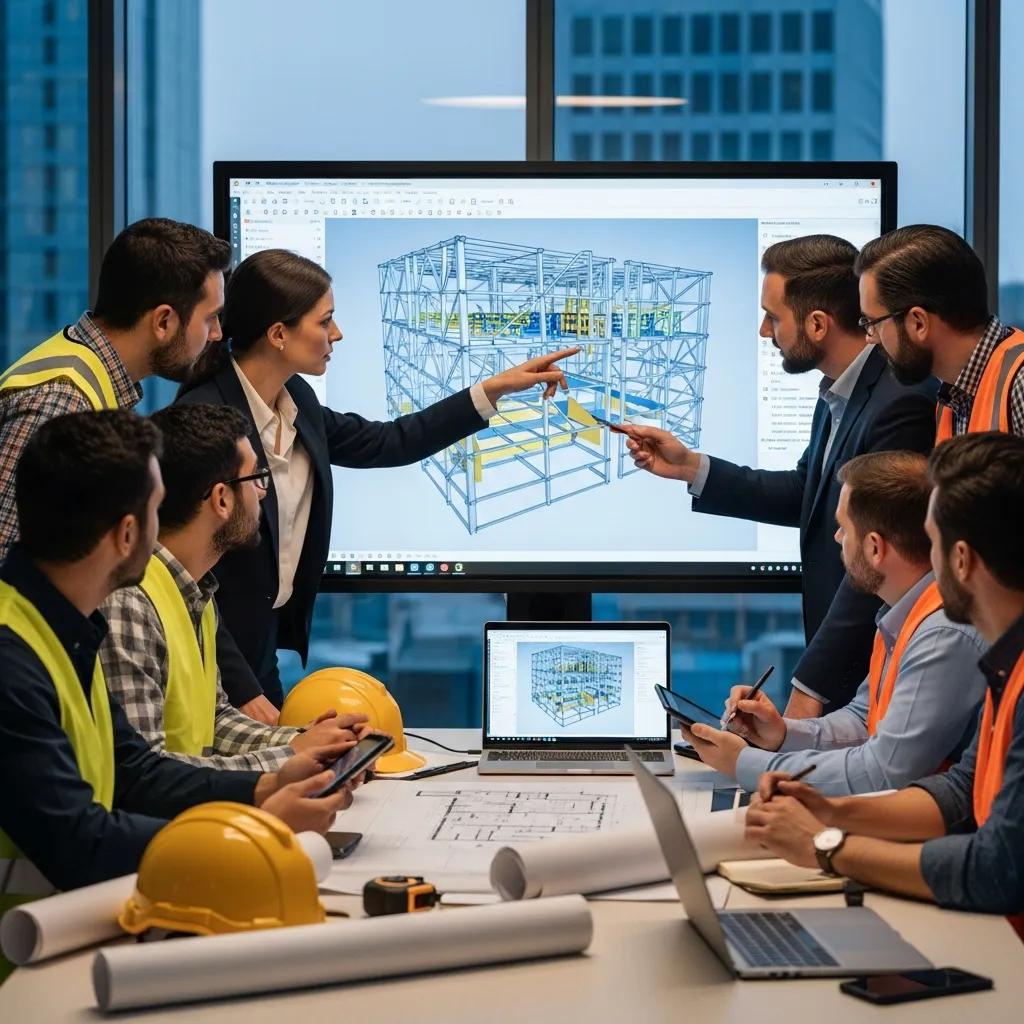
Integration drives better outcomes by making clashes and phasing visible before install. Automated clash checks combined with focused coordination meetings reduce field conflicts that cause rework or downtime. Federated 3D/4D visualizations validate access, clearances, and means-and-methods, which shortens approvals and improves subcontractor alignment. Deliverables such as coordinated shop drawings and fabrication packages enable prefabrication, cutting site labor and compressing schedules. Together, these elements lower risk and increase predictability for project managers and superintendents.
Equally important: when coordination finds issues, the same models guide layout control and as-built capture so teams close the loop between model and reality.
Core Components of Effective BIM Coordination for GCs
The essentials are model aggregation, clash detection and issue tracking, LOD and deliverable standards, and structured coordination meetings with clear owners and deadlines. Aggregation pulls Revit or native discipline files into a federated tool (Navisworks or a cloud CDE), enabling checks and visualization. Clash detection combines automated scans and manual reviews to separate hard clashes from softer coordination items, then produces prioritized issue logs with responsibility and timelines. Regular coordination enforces version control and ensures resolved issues update fabrication and layout packages the field uses to build accurately.
Put simply: gather models, validate geometry, assign and resolve issues, then release verified coordination models for procurement, prefabrication, and field layout.
Key Benefits of BIM Services for Raleigh General Contractors
BIM services deliver measurable improvements across cost, schedule, quality, and risk for contractors working in Raleigh’s diverse market. Centralized coordination reduces site conflicts, supports 4D sequencing for logistics, and enables 5D cost scenarios for faster budget decisions. That translates into fewer change orders, more reliable milestones, and smoother handoffs to field teams and trades. Below are the primary contractor-facing benefits and how each adds value.
Main contractor benefits from BIM coordination:
- Less rework and fewer errors: coordinated models catch spatial conflicts early, cutting field corrections.
- Better schedule performance: 4D sequencing ties model elements to tasks so logistics and the critical path are optimized.
- Improved cost predictability: 5D ties quantities to budgets for quicker impact analysis on changes.
- Smoother subcontractor coordination: clear model deliverables reduce RFIs and speed shop drawing approvals.
- Fabrication readiness: fabrication-ready geometry supports prefabrication and reduces on-site labor.
These benefits form the foundation VDC consulting uses to codify digital workflows and QA/QC practices across the project lifecycle.
How BIM reduces rework — quick comparison:
| Rework Reduction Mechanism | How It Works | Typical Outcome |
|---|---|---|
| Automated clash detection | Finds hard geometric interferences before fabrication | Fewer field corrections and on-site clashes |
| Model-based shop drawing review | Delivers coordinated fabrication geometry directly to trades | Faster approvals and better prefabrication |
| Early constructability review | Visualizes sequencing and access limits during design | Fewer design-driven change orders |
Blending automated checks with disciplined review produces the most reliable rework reductions. Next, we explain how VDC consulting embeds these mechanisms into GC project management.
Conway Coordination and Layout Services (CCLS) provides local Raleigh support that maps directly to these outcomes. Family-owned and operated, CCLS combines Robotic Total Station layout, VDC construction and consulting services, 3D scanning and point cloud rendering, plus BIM modeling and coordination to put model-driven workflows into field practice. For GCs seeking a consultative partner, CCLS aligns services to project milestones and subcontractor workflows with a focus on precision and collaboration.
How VDC Consulting Supports Raleigh Project Management
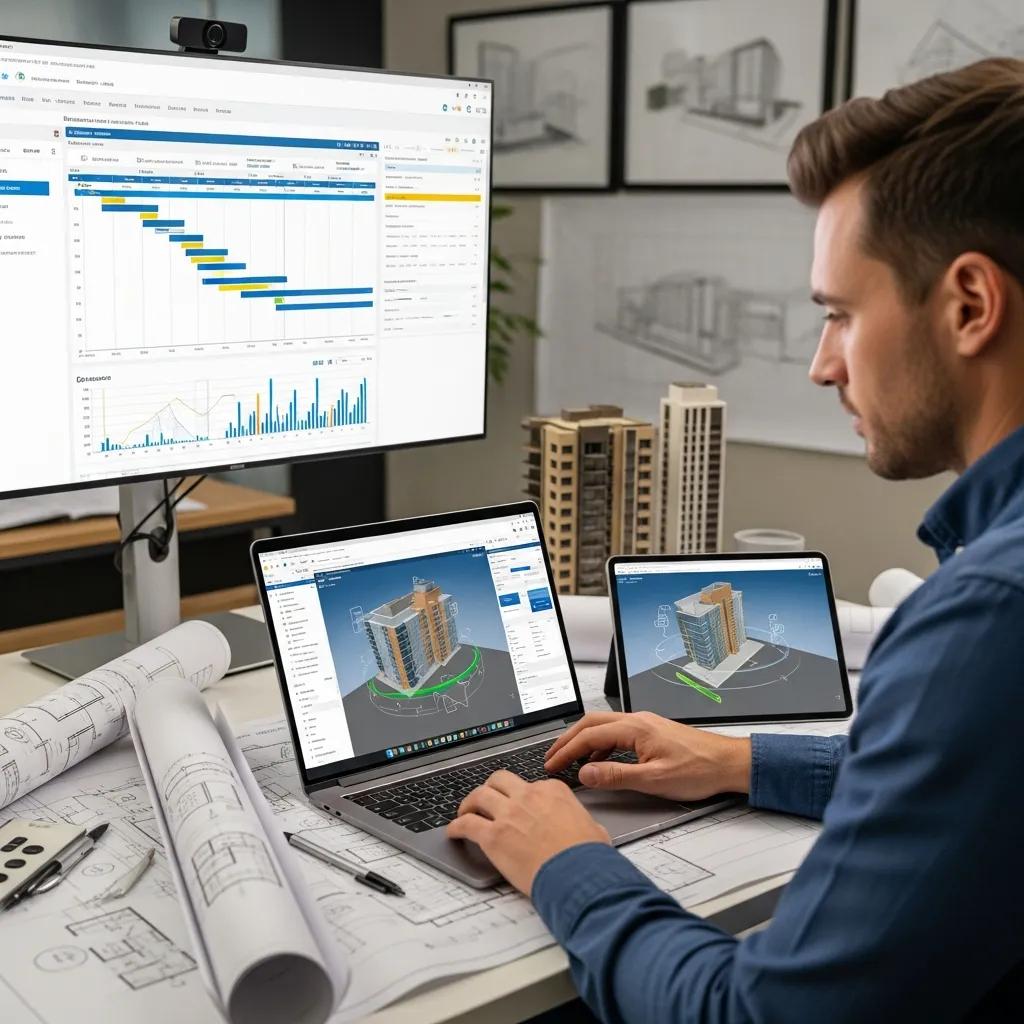
VDC consulting takes BIM coordination further by formalizing digital workflows, defining required data, and advising project managers on process changes that reduce handoffs and errors. At its core, VDC designs workflows: it maps the critical data exchanges between design, procurement, fabrication, and field layout, then prescribes tools, acceptance criteria, and schedules so model updates arrive when needed. For Raleigh projects, VDC also ties sequencing choices to site logistics and permitting timelines to improve milestone reliability. Standardized QA/QC and 4D simulations help managers visualize risk and test alternatives with confidence.
Key digital workflows VDC typically optimizes:
- Model handoff and version control — one source of truth for downstream teams.
- QA/QC checks embedded in model delivery — prevents late-stage geometry issues.
- Fabrication and shop drawing readiness — turning coordinated models into prefabrication packages.
These workflows reduce information loss between design and execution. Below we show how CCLS applies VDC consulting in practice.
CCLS pairs VDC frameworks with hands-on model validation, clash identification, and field verification to deliver actionable outputs — verified layout points and fabrication-ready models. The sequence is simple: define data requirements, validate coordination models, then translate verified geometry to field layout. That helps Raleigh GCs adopt predictable digital workflows and align subcontractors on shared deliverables. For contractors considering VDC support, CCLS bridges model coordination and execution planning.
What Digital Workflows Does VDC Optimize for GCs?
VDC connects model data to field actions by optimizing model handoffs, QA/QC, fabrication coordination, and layout integration. Handoff processes set naming conventions, level/zone splits, and metadata so teams can reliably extract quantities and geometry. QA/QC combines automated checks and manual reviews to confirm LOD and model accuracy before release. For fabrication, VDC produces shop-ready geometry and assembly details to support prefabrication and vendor coordination. Finally, model-to-field workflows convert verified geometry into control points and stakeout instructions for robotic total stations so the field builds to the coordinated model.
These workflows create traceability from model change to field impact, which improves collaboration and reduces risk across teams.
How VDC Integration Improves Collaboration and Lowers Risk
VDC reduces risk by creating a common data environment where issue ownership, version history, and resolution timelines are visible to all stakeholders. Shared platforms and standardized tags trigger notifications when coordination issues appear or close, improving accountability and response time. Linking coordination outcomes to procurement and sequencing ensures long-lead items and prefabrication orders reflect the latest geometry, cutting the chance of fabrication errors or schedule slippage. A clear responsibility matrix also speeds dispute resolution and lets GCs focus on execution rather than reconciling information.
This clarity is essential for multi-trade coordination, which depends on precise clash detection and timely resolution to avoid costly on-site conflicts.
Technologies Behind Precision Layout and BIM Coordination in Raleigh
Modern layout and coordination workflows in Raleigh rely on field hardware, scanning systems, and BIM software. Field-grade Trimble Robotic Total Stations provide accurate stakeout and verification so model points translate reliably to the jobsite. 3D laser scanners capture existing conditions as point clouds that integrate with Revit and other platforms to create validated as-built models. Coordination tools like Navisworks or cloud model viewers aggregate disciplines for clash detection, 4D sequencing, and collaborative review. Each technology plays a defined role in closing the gap between design intent and physical construction.
Quick technology-to-use mapping:
- Trimble Robotic Total Station: stakeout and control point verification for precise layout.
- 3D Laser Scanners / Point Clouds: rapid capture of existing conditions for as-built modeling.
- Revit / Navisworks: model authoring, aggregation, and clash detection for coordination.
- Cloud-based CDEs: version control and shared review environments for distributed teams.
How these tools work together helps teams decide where to invest in equipment, training, or subcontracted expertise. Next we outline Trimble workflows and model-to-field practices.
| Technology | Primary Use | Benefit / Field Example |
|---|---|---|
| Trimble Robotic Total Station | Precise stakeout and control verification | Converts model coordinates into accurate field layout points |
| 3D Laser Scanning | Existing conditions capture and point cloud creation | Validates geometry and reduces as-built discrepancies |
| Revit / Navisworks | Model authoring and federated coordination | Enables clash detection and 4D sequencing for procurement |
Understanding how these technologies interoperate guides effective investment and partnership decisions. Below we describe the Trimble robotic total station workflow in more detail.
How Trimble Robotic Total Stations Deliver Accurate Layout
Trimble robotic total stations drive stakeout from model-derived coordinates, reducing manual measurement variance. The field workflow starts by establishing control points tied to the project datum, then importing model coordinates into the instrument for stakeout. Robotic stations enable one-person operation with remote control, improving efficiency while holding layout tolerances. They also produce recorded stakeout logs and as-built captures that can be compared back to the model, closing the validation loop and documenting any discrepancies before work continues.
This model-to-field connection pairs well with 3D scanning, which captures existing geometry and verifies installed systems against the coordination model.
Role of 3D Scanning and Point Clouds in Coordination
3D scanning and point cloud rendering create an objective geometric record for modeling existing conditions and validating installed work. Scanners capture thousands of points that register into a cohesive cloud aligned with project control, letting modelers reconcile design geometry with reality. Point cloud-to-BIM workflows extract as-built geometry, support renovation coordination, and surface discrepancies before fabrication or final installation. Paired with coordinated MEP models, point clouds enable clash detection in existing conditions and guide targeted remedial work that avoids broad disruptive rework.
Point cloud integration is especially useful on Raleigh renovation and campus projects, where unknown conditions can otherwise create major schedule risk.
How Advanced Clash Detection Improves Multi-Trade Coordination
Advanced clash detection finds interferences across discipline models and drives prioritized resolution workflows that protect critical-path activities. Detection covers hard clashes (physical intersections), soft clashes (clearance and maintenance access), and workflow-related clashes exposed by 4D sequencing. Automated checks run frequently; manual reviews then separate tolerable proximity from true constructability issues. Issues are logged, assigned, and tracked to closure. This structured approach reduces last-minute surprises, supports prefabrication confidence, and helps teams make sequencing decisions that minimize onsite disruption.
To illustrate approach differences, the table below compares detection types, typical use stages, and common outcomes.
| Clash Detection Type | Stage of Use | Outcome Example |
|---|---|---|
| Automated hard clash | Early coordination cycles | Identifies immediate geometric conflicts before procurement |
| manual soft clash review | Design development and coordination meetings | Resolves access and maintenance spacing issues |
| Combined approach | Ongoing throughout execution | Prioritizes fixes and reduces on-site rework and delays |
Using both automated and manual reviews keeps trade coordination focused on the highest-impact issues first, which smooths installation and protects sequencing.
Benefits of MEP Coordination in Preventing Field Conflicts
MEP coordination focuses on routing, elevation, and spatial allocation so mechanical, electrical, and plumbing systems install without interference. The core benefit is route optimization: coordinated models expose collisions and inefficient routing that, when fixed in the model, cut on-site adjustments and speed shop drawing approval. MEP coordination also improves prefabrication readiness by delivering accurate assembly geometry for off-site fabrication, which reduces critical-path labor. Addressing access, maintainability, and clearances early prevents costly field rework and supports long-term operations.
That work ties directly to clash detection workflows that turn issues into actionable fixes protecting schedule and budget.
How Clash Detection Reduces Rework and Schedule Risk
Clash detection prevents rework and delays by converting hidden geometric conflicts into prioritized, tracked actions before fabrication or installation. The workflow starts with automated checks for hard clashes, followed by manual reviews to assign context and sequencing impact. Issues are assigned owners and target resolution dates. Feeding these outcomes into procurement and scheduling ensures long-lead and prefabrication orders use resolved geometry, avoiding downstream corrections. The result: fewer emergency fixes, lower change-order volumes, and clearer sequencing that protects milestones and crew productivity.
A steady clash-resolution routine plus documented verification and field validation closes the coordination loop and gives GCs the predictability they need to deliver confidently.
Why Partner with Conway Coordination and Layout Services in Raleigh
Conway Coordination and Layout Services (CCLS) bundles model coordination, VDC consulting, and precision layout for Raleigh general contractors aiming to reduce rework, save time, and increase accuracy. Family-owned and led by founder Nathan Conway, CCLS pairs Trimble robotic layout with proven BIM/VDC practices, 3D scanning, and model integration to align design deliverables with field execution. Key differentiators include equipment-grade precision, hands-on expertise, time and cost savings from proactive clash detection and prefabrication support, seamless workflow integration, and a portfolio of practical project work. For Raleigh teams wanting a partner who translates coordination into reliable site results, CCLS offers consultative services focused on reducing risk and improving schedule certainty.
CCLS Experience and Expertise for Raleigh Contractors
CCLS delivers modeling, layout, and VDC services grounded in founder-led oversight and field-first execution. Services include Robotic Total Station layout, VDC construction and consulting, 3D scanning and point cloud services, model integration, and BIM coordination — all applied to lower coordination risk and enable prefabrication. Being family-owned supports direct accountability and continuity between phases, while Nathan Conway’s active involvement ensures consistent technical direction. That blend of field skill and digital modeling experience helps Raleigh GCs turn coordination outputs into predictable field results.
In short: CCLS’s integrated services streamline the handoff of coordinated geometry to the site, reduce ambiguity at critical touchpoints, and increase contractor confidence in install accuracy.
How CCLS Ties BIM and VDC into Seamless Delivery
CCLS follows an end-to-end workflow: model intake and QC, automated and manual clash detection, then precision field layout and verification. Practical steps include model aggregation and validation, prioritized issue logs with owner assignments, release of fabrication-ready geometry, and transferring verified coordinates to robotic total stations for stakeout and verification. CCLS emphasizes closed-loop validation: as-built scans and layout verifications feed back into the coordination model to confirm installation accuracy and prevent drift. This chain — from modeling to field layout — reduces GC risk by making coordination outputs directly usable by subcontractors and site crews.
For GCs focused on constructability and fewer field surprises, CCLS packages model coordination, VDC consulting, and robotic layout into a single service stream that supports predictable delivery.
- Next step: request a consultation with Conway Coordination and Layout Services to discuss project-specific coordination needs and precision layout options.
- Procurement tip: align coordination milestones with long-lead orders so prefabrication uses validated geometry.
- Field readiness: set model-to-field acceptance criteria to document installation conformity before sign-off.
Frequently Asked Questions
What is the difference between BIM coordination and VDC consulting?
BIM coordination focuses on bringing discipline models together, finding and resolving clashes, and producing coordinated deliverables. VDC consulting takes a broader view: it defines data requirements, designs workflows, and advises on process changes so those coordinated models feed procurement, fabrication, and field work efficiently.
How can Raleigh GCs ensure successful BIM implementation?
Start with clear objectives and governance, invest in targeted training, and require a common data environment. Run regular coordination meetings, enforce model QA/QC, and tie coordination milestones to procurement and field verification. Continuous feedback and small, repeatable wins maintain momentum.
What challenges do GCs face adopting BIM technology?
Common challenges include resistance to change, upfront investment in tools and training, and integrating new workflows with existing systems. Data management and consistent communication across teams can also be hard. Address these with focused training, clear workflows, and strong project-level leadership.
How does BIM coordination affect subcontractor relationships?
Good coordination improves subcontractor relationships by providing clear, up-to-date models that reduce RFIs and conflicts. When trades can rely on accurate deliverables, approvals speed up and on-site work becomes more predictable — which builds trust and improves schedule performance.
What role does training play in BIM success?
Training is essential. It equips teams to use tools, understand workflows, and apply best practices. Ongoing training keeps staff current with tool updates and process improvements, which translates directly into fewer errors and better coordination outcomes.
How can GCs measure ROI from BIM coordination?
Track KPIs like reductions in rework, change orders, RFIs, and schedule variance. Compare milestone reliability and procurement lead times before and after coordination. Quantifying these metrics makes the business case for continued investment in BIM and VDC services.
Conclusion
BIM coordination gives Raleigh general contractors tangible advantages: less rework, better schedule performance, and clearer cost visibility. When paired with the right workflows and tools, model-driven practices make construction more predictable. If you want to tighten coordination between model and field, Conway Coordination and Layout Services offers local, hands-on expertise in precision layout and VDC that can help optimize your next project. Contact us to discuss how we can support your coordination and field layout needs.