Practical Guide to Water Conservation in Construction: Techniques, Technologies, and Benefits
Water conservation in construction means designing, installing, and operating building systems so they use less potable water while meeting performance and code requirements. This guide explains why conserving water on projects matters—given regulatory pressure and constrained resources—and summarizes practical solutions like rainwater harvesting, greywater recycling, low-flow fixtures, permeable paving, and closed-loop site systems. We also cover how digital coordination—BIM for water infrastructure and VDC for water-efficiency workflows—turns designs into accurate installs, and how precision layout tools reduce rework during plumbing and tank placement. Read on for core techniques, the role of VDC and BIM, environmental and economic benefits, LEED and code considerations, best practices and case-study approaches, and how robotic total stations plus clash detection preserve system performance. Where useful, Conway Coordination and Layout Services (CCLS)—a family-owned provider of VDC consulting, BIM coordination, robotic total station layout, and 3D scanning—is referenced as a practical partner for implementing these measures efficiently.
Key Water Conservation Techniques for Construction
Water-conservation techniques in construction use design, technology, and operational practice to cut potable water use and reduce runoff. They capture non-potable sources, lower fixture demand, and manage stormwater on site to reduce freshwater withdrawals and treatment loads. The benefits include measurable utility savings, stronger site resilience, and potential green-building credits. Below is a concise comparison of primary approaches, common applications, and installation notes to help teams choose the right mix for commercial and institutional projects.
This table compares leading water-conservation technologies and practical attributes.
| Approach | Typical Use-Cases | Typical Savings / Installation Notes |
|---|---|---|
| Rainwater harvesting (roof-top) | Irrigation, toilet flushing, process non-potable use | Can reduce outdoor potable demand by 20–80%; requires tank, filtration, overflow design |
| Greywater recycling systems | Toilet flushing, landscape irrigation in commercial/healthcare | Saves 20–50% of domestic water; needs plumbing segregation and treatment unit |
| Low-flow fixtures & fittings | Lavatories, showers, kitchens | Immediate potable reductions with simple retrofit/installation; low capital cost |
| Permeable paving & SuDS | Stormwater infiltration, runoff reduction | Reduces runoff peaks; may reduce need for detention infrastructure |
| Closed-loop construction site water systems | Dust control, equipment washdown | Reuses site water to limit potable use during construction; requires temporary tanks/filtration |
Combining capture, reuse, and demand reduction produces the largest net savings. That sets up the next section on system design details: tank sizing, treatment levels, and trade coordination for reliable field installation.
How Rainwater Harvesting Supports Sustainable Buildings
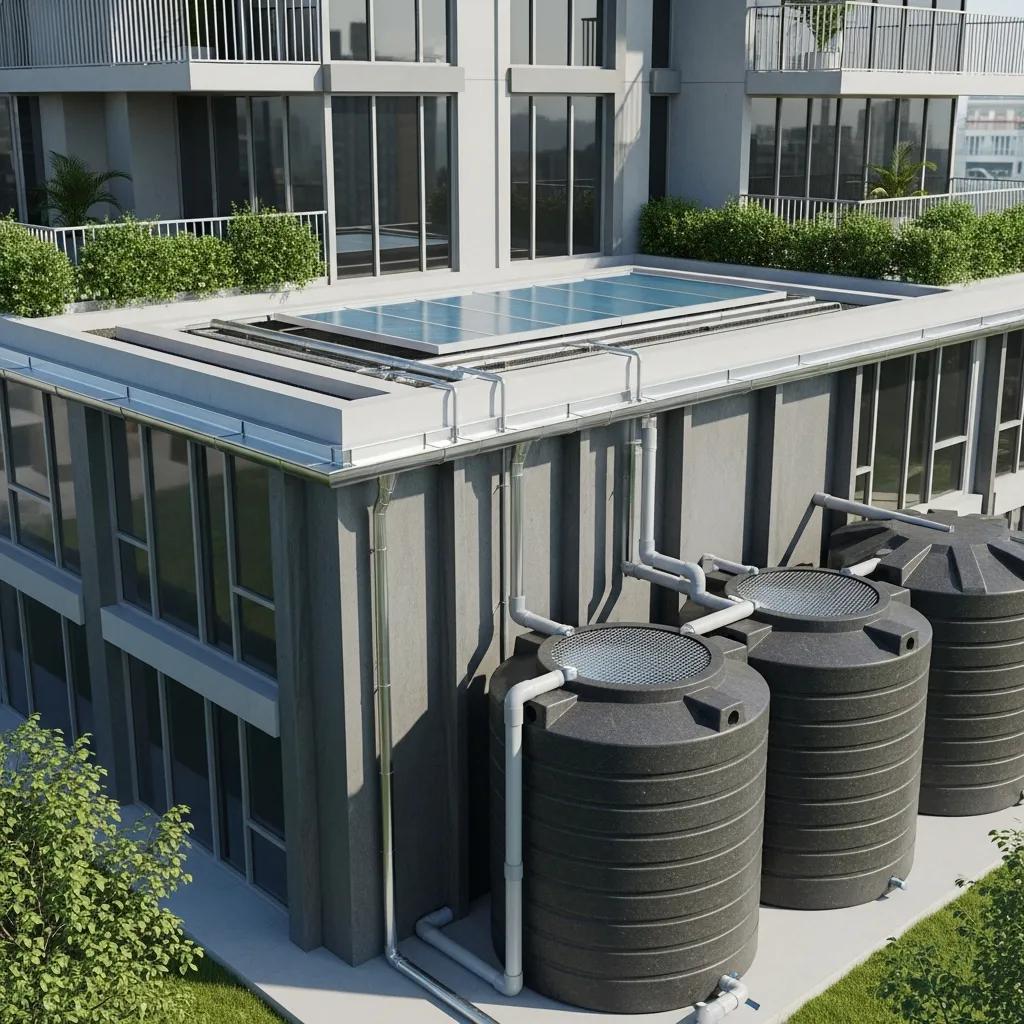
Rainwater harvesting captures runoff for non-potable uses, cutting municipal demand and reducing stormwater volumes. Core components are roof catchment, gutters/downspouts, first-flush diverters, filtration, storage tanks, and distribution loops to irrigation, toilets, or process uses. Correct tank sizing depends on roof area, local rainfall, intended uses, and site footprint; designs must include overflow, service access, and code compliance. On dense commercial sites, integration affects structural loads, underground utilities, and construction sequencing—areas that benefit from early, model-based coordination and layout planning.
Placement and filtration choices influence maintenance and long-term performance, so model tank footprints early and reserve maintenance access in structural plans. Proper plumbing and storm integration reduces cross-connection risk and simplifies commissioning. These planning steps naturally pair with greywater strategies to broaden available non-potable supply.
Benefits of Greywater Recycling Systems
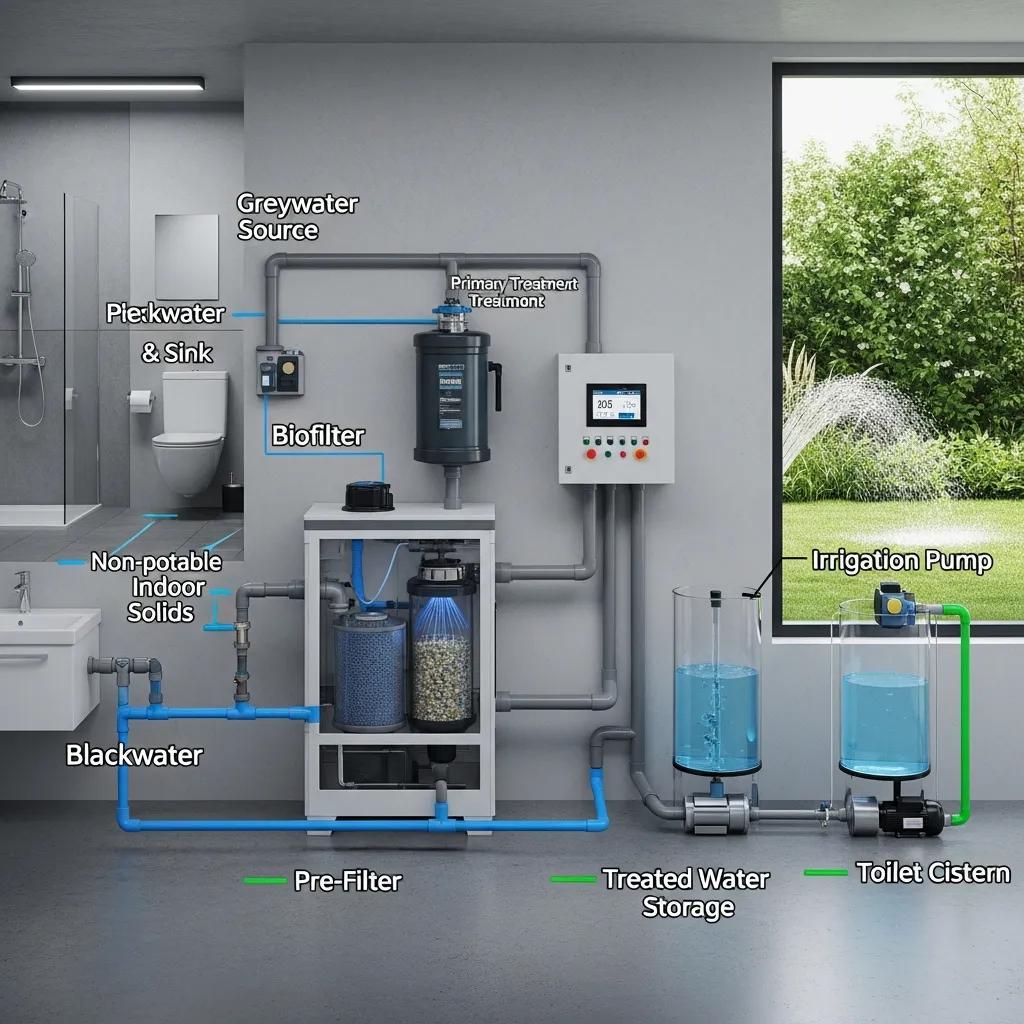
Greywater recycling captures lightly used water from lavatories, showers, and some sinks, treating it for toilet flushing and irrigation to reduce potable demand. Typical systems include source-separated plumbing, a treatment train (screening, biological or membrane processes depending on reuse), storage, and a non-potable distribution loop. Treatment is matched to intended reuse and local regulations. Benefits include lower utility bills, reduced sewer flows, and improved on-site resilience—especially where water restrictions or high utility rates apply. Greywater systems require careful plumbing segregation and coordination with mechanical and plumbing trades to avoid cross-connections and ensure maintainability.
Because greywater ties directly into building plumbing and controls, detailed modeling and clash-checking reduce field changes. These coordination needs illustrate the value of BIM and VDC workflows for routing, prefabrication, and sequencing.
How VDC and BIM Improve Water Efficiency on Projects
BIM for water infrastructure and VDC for water efficiency create a single, authoritative digital model that all trades use to design, coordinate, and execute water-conserving systems. BIM captures components and spatial relationships for clash detection, accurate quantity takeoffs, and prefabrication of pipe racks, tanks, and manifolds. VDC adds sequencing, logistics, and stakeholder coordination so model intent is realized in the field. The result: less rework, fewer water-related delays, and clearer documentation for LEED water credits and permitting.
The following table maps BIM/VDC capabilities to practical outcomes that improve water-conservation delivery.
| BIM/VDC Feature | Function in Water Systems | Benefit / Outcome |
|---|---|---|
| 3D coordination & clash detection | Identify interferences between tanks, piping, and structure | Prevents field rework and schedule delays |
| Model-based quantity takeoff | Generate accurate material lists for plumbing and storage | Reduces waste and supports prefabrication |
| Sequencing & logistics (VDC) | Plan installation order and temporary services | Minimizes on-site freshwater use and staging conflicts |
| Point-cloud integration | Validate as-built against the model after installation | Ensures system performance and handover accuracy |
These capabilities show how model-driven workflows raise installation accuracy and operational performance, which leads into BIM-specific practices that support precise infrastructure design and prefabrication.
How BIM Modeling Enables Precise Water Infrastructure Design
BIM encodes geometry, metadata, and performance criteria into a coordinated digital twin that all stakeholders reference through design and construction. Models capture routing for potable and non-potable loops, tank footprints, pump and valve schedules, and access clearances—details that enable interference checks and prefabrication to reduce on-site welding and joint work. Level-of-detail (LOD) expectations for water systems typically require component geometry, connectivity, and manufacturer data to support prefabrication and installation; meeting these LOD standards reduces surprises in the field. The model-to-layout workflow converts BIM coordinates into field control points, guiding precision layout teams to place tanks and piping accurately.
When BIM informs fabrication and layout, projects see shorter installation times and smoother commissioning. Those model deliverables also create a defensible record for compliance and performance verification, which naturally leads into the VDC consulting role that coordinates these deliverables.
VDC Consulting’s Role in Optimizing Water Conservation
VDC consulting coordinates model deliverables, stakeholder meetings, and construction sequencing so water-conservation systems are installed and commissioned as designed. VDC manages clash reports, organizes trade coordination, sequences tank deliveries and piping installs, and plans logistics to minimize temporary potable use during construction—reducing waste and schedule risk. The process enforces model-update and field-verification protocols so design changes are captured and communicated before trades start work. By aligning teams around model-based deliverables and installation windows, VDC reduces the chance of late changes that cause water-system rework.
Effective VDC engagement also tracks installation quality and commissioning readiness, lowering long-term maintenance risk and supporting regulatory documentation. With clear sequencing and coordination, projects can achieve the cost and sustainability outcomes described next.
Environmental and Economic Benefits of Water Conservation
Water conservation in construction reduces freshwater extraction, decreases wastewater volumes, and lowers stormwater impacts while delivering economic returns through smaller utility bills, avoided treatment fees, and less rework. Conservation measures cut both operational demand and construction-phase consumption via reuse and temporary closed-loop systems. The table below lists common metrics decision-makers can use to estimate lifecycle and construction-phase benefits for water-efficiency measures.
| Metric | Baseline | Expected Reduction / Benefit |
|---|---|---|
| Indoor potable water use | 100% baseline | Rainwater + greywater can reduce potable indoor use by 20–60% |
| Construction potable use | Project-dependent | Temporary reuse systems can lower site potable use by 30–70% |
| Operational cost (water/sewer) | Annual utility bill | 10–40% lower depending on systems installed |
| LEED water credit potential | 0 credits baseline | Measures can secure multiple water credits, improving certification score |
Use these metrics to set targets and prioritize measures during design and procurement. The next sections cover cost reduction specifics and environmental mitigation.
How Water Efficiency Lowers Construction Costs
Water efficiency lowers construction costs by reducing rework, avoiding or shrinking temporary potable services, and enabling prefabrication that shortens on-site labor. Prefabricated plumbing assemblies based on coordinated BIM models cut field labor and inspections, trimming schedule risk and overhead. Reduced operational demand can also downsize mains and site drainage, lowering capital cost. Teams should model both capital and lifecycle costs: upfront investments in tanks, treatment units, or higher LOD BIM often pay back through operating savings and fewer contractor change orders.
Estimating savings needs project-specific data, but the cost-reduction mechanisms consistently favor early coordination and investment in digital workflows—supporting environmental goals and smoother delivery.
How Water Conservation Reduces Environmental Impact
Conservation eases pressure on municipal supplies, lowers the energy tied to water treatment and conveyance, and reduces stormwater runoff that harms receiving waters. Smaller wastewater volumes cut treatment plant loads and the associated carbon footprint. In water-scarce regions, onsite reuse and rain capture boost resilience during restrictions or droughts. These environmental risk reductions align with corporate sustainability goals and can increase stakeholder support for large projects.
Quantifying reductions and documenting them through coordinated models and post-install verification lets teams demonstrate compliance and environmental performance to regulators and owners, which leads into practical compliance steps below.
Complying with Water Conservation Regulations on Projects
Regulatory compliance means aligning design and construction with codes, standards, and certification requirements—most commonly LEED water credits and local plumbing codes. Projects should run a regulatory gap analysis early, document design intent in model deliverables, and set verification protocols for commissioning and as-built submission. Digital coordination supports evidence-based compliance with clash-free models, accurate takeoffs for compliance metrics, and documented commissioning results. Below is a practical compliance checklist teams can apply during planning and execution.
- Perform a regulatory and credits gap analysis during schematic design.
- Specify LOD and documentation required for LEED water credits and local permits.
- Implement model-based clash detection and coordination for plumbing and tanks.
- Establish commissioning and as-built verification protocols using point clouds or verification surveys.
Follow this sequence to move from requirements to verifiable compliance. The next subsection summarizes LEED credits and how common measures map to those requirements.
LEED Water Credits and Green Building Standards
LEED and similar programs award credits for reducing potable water use, managing stormwater, and using alternative water sources. Projects can pursue credits for indoor water reduction, outdoor irrigation savings, and innovative wastewater technologies. Eligibility usually requires documented calculations, fixture specs, and performance verification. Rainwater harvesting and greywater recycling commonly support credits when systems meet program-specific savings and documentation standards. Model-driven records of system components, control strategies, and meter data simplify credit submittal and provide a defensible review package.
Map measures to target credits early to guide design choices and ensure installation and commissioning produce the evidence needed for certification. This reinforces why early coordination and accurate layout matter.
How Regulations Shape Sustainable Water Management
Regulations set minimum performance, documentation, and safety standards that determine how systems are designed and installed. Local plumbing codes govern backflow prevention and cross-connection safeguards, environmental rules may set discharge and treatment limits, and building codes can mandate fixture efficiencies. Early engagement with permitting authorities and integrating code checks into BIM reviews reduce late changes. Coordination teams must address both prescriptive code items and performance-based pathways to secure approvals without delaying construction.
Proactive regulatory alignment reduces retrofit corrections and speeds commissioning. That prepares teams for the best practices and case studies that follow.
Best Practices and Case Studies for Water-Efficient Construction
Best practices combine early planning, model-based coordination, prefabrication, commissioning, and data-driven performance tracking to deliver reliable water savings. Set water-efficiency targets in programming, require LOD-based models for non-potable systems, favor prefabrication where practical, and plan commissioning tests for leaks and flow verification. Track metrics—water saved, change orders avoided, commissioning issues resolved—to drive continuous improvement and build case studies. The short list below summarizes recurring themes teams can adopt.
- Set targets early and require appropriate LOD for water systems.
- Use BIM-driven clash detection and prefabrication.
- Implement commissioning protocols and meter-based verification.
- Employ temporary reuse strategies during construction to reduce potable use.
How CCLS Supports Successful Water Conservation Projects
Conway Coordination and Layout Services (CCLS) delivers VDC consulting, BIM modeling and coordination, robotic total station layout, and 3D scanning to help teams achieve water-conservation goals on complex projects. Our coordinated models, clash-report workflows, and precision layout services reduce field rework, ensure accurate tank and piping placement, and produce verifiable as-built documentation. As a family-owned firm, CCLS pairs hands-on execution with evidence-first deliverables for designers and contractors pursuing measurable water savings. Project teams interested in a tailored assessment can request CCLS-led coordination to evaluate install accuracy and sequencing impacts for their site.
We position consulting after the technical explanation to keep the focus on solutions-first while offering a clear route to implement model-based coordination for water-efficiency measures.
Effective Water Management Strategies on Construction Sites
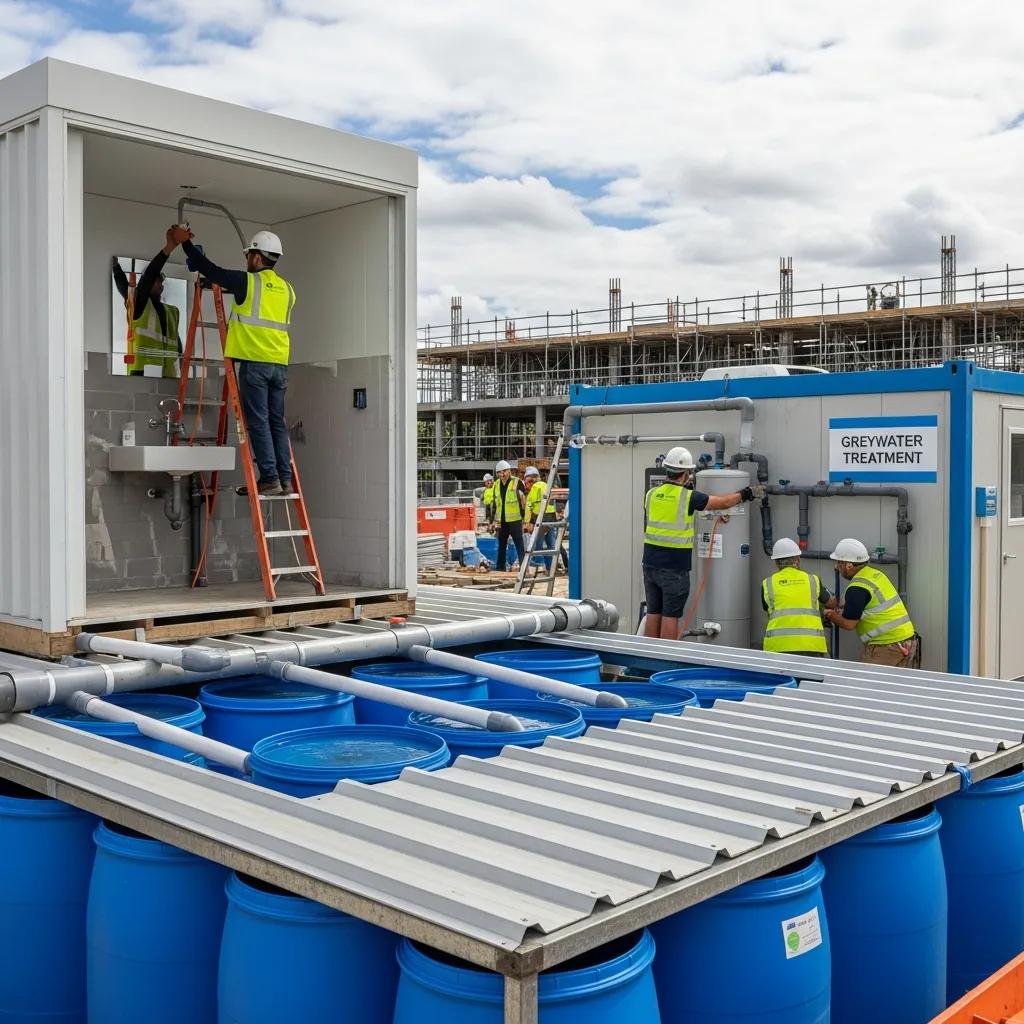
On-site water management includes temporary closed-loop systems for dust control and washdown, staged tank deliveries to avoid double handling, slope and drainage controls to limit runoff, and temporary storage with basic filtration to reuse site water. Commission permanent non-potable systems early when feasible to reduce reliance on temporary potable services and simplify final commissioning. Integrate these tactics with BIM-based logistics planning to minimize water waste and protect the schedule. Routine monitoring and simple metering during construction provide data that refines practices and supports claims of reduced potable use.
These strategies close the loop between design intent and field execution, setting the stage for precision layout technologies that ensure systems meet model tolerances.
How Precision Layout Technology Improves Water-System Installation
Precision layout tools—robotic total stations, 3D scanning, and point-cloud model integration—translate BIM coordinates into accurate field control and verification so components sit within the design tolerances required for correct slopes, connections, and alignments. Accurate layout reduces corrective excavation, re-piping, and tank repositioning that waste time and water. These technologies also validate prefabricated assemblies against in-situ control points, improving first-time fit. By linking the model to field measurements, precision layout helps systems perform as designed and eases commissioning and as-built documentation.
Next we explain how robotic total stations deliver those outcomes and how clash detection prevents conflicts before installation.
Robotic Total Station’s Role in Accurate Water-System Layout
Robotic total stations convert BIM coordinates into precise field control points for pipe runs, tank anchors, and valve locations—typically achieving tolerances from millimeters to centimeters depending on project requirements. The instruments automate sighting and stakeout workflows so a single operator can place control points quickly and accurately, cutting labor time and layout errors. Accurate slope and elevation control are critical for gravity-fed greywater and rainwater systems; robotic layout ensures proper gradients to prevent pooling and maintain pump efficiency. Verification surveys using total stations also create documentation used for handover and commissioning validation.
Because these instruments translate digital intent into field reality, they complement clash detection and coordination workflows that prevent installation conflicts.
How Clash Detection Prevents Water-Infrastructure Conflicts
Clash detection scans the model for spatial conflicts—piping intersecting ductwork or tank footprints colliding with structure—before work reaches the field, so designers can resolve issues virtually instead of through costly on-site rework. Typical clashes include slope conflicts, insufficient maintenance clearance for valves, and underground tank conflicts with foundations. Resolving these in the model preserves schedule and reduces water-related change orders. The remediation process generates clash reports, assigns responsibility to trades, and updates models to reflect agreed solutions—work VDC facilitates through coordinated meetings. Proactive conflict resolution protects system performance and streamlines commissioning by ensuring installations match the coordinated model.
Preventing clashes and using precision layout to execute the resolved design completes the model-to-field feedback loop essential for dependable water-conservation implementation and for documenting performance for owners and certifiers.
Frequently Asked Questions
What are the most common challenges in implementing water conservation techniques in construction?
Common challenges include navigating varied local codes, managing upfront costs, and finding skilled installers familiar with reuse systems. Projects often face inconsistent local requirements and higher initial capital for tanks or treatment units. Improper installation or poor coordination can also reduce system effectiveness. Address these challenges with early regulatory review, clear model-based coordination, and trade education to ensure systems perform as intended.
How can construction teams ensure the long-term maintenance of water conservation systems?
Ensure long-term maintenance by building maintenance plans into project closeout. Train operations staff, supply clear as-built documentation and O&M manuals, and install simple monitoring so teams can track performance. Specify durable components and design for service access. Involve maintenance professionals during design to improve access and reduce lifecycle issues.
What role does community engagement play in successful water conservation projects?
Community engagement builds support and practical buy-in. Involving local stakeholders helps tailor systems to community needs and increases acceptance. Educational outreach clarifies benefits, and transparent progress reporting builds trust. In some public projects, community buy-in can ease permitting and long-term upkeep.
How do water conservation measures impact project timelines?
Impact on timelines varies. Low-flow fixtures install quickly, while rainwater or greywater systems need more planning, review, and sequencing. Early BIM coordination and VDC sequencing reduce delays by resolving clashes and coordinating deliveries. Without that front-end work, complex systems can produce schedule risk during installation or commissioning.
What are the financial incentives for adopting water conservation technologies in construction?
Financial incentives include lower utility bills, rebates or grants from local authorities, tax incentives in some jurisdictions, and improved value from green certifications like LEED. Reduced operational costs and avoided treatment fees improve lifecycle ROI. These incentives often make the business case for investing in conservation measures early.
How can technology improve the efficiency of water conservation systems in construction?
Technology enhances efficiency through smart monitoring, automation, and model-based coordination. Sensors and controls optimize usage and detect leaks; analytics identify inefficiencies for targeted fixes. BIM and VDC reduce clashes and enable prefabrication. Together, these tools improve reliability, reduce waste, and simplify commissioning and verification.
Conclusion
Putting water-conservation measures into practice reduces environmental impact, lowers costs, and helps projects meet regulatory and certification goals. Leveraging tools like BIM and VDC tightens coordination and improves installation outcomes. For teams needing hands-on support, Conway Coordination and Layout Services provides VDC consulting, BIM coordination, precision layout, and 3D scanning to streamline implementation and verify performance. Ready to move from design intent to measurable water savings? Contact us to discuss a tailored coordination plan.