
Exploring Construction Management Career Paths — Roles, Skills, and Future Opportunities
Construction management covers a broad set of roles that combine people leadership, practical construction know‑how, and modern digital tools to deliver projects on time and on budget. This guide breaks down what those roles look like, how technologies like VDC, BIM, 3D scanning, and Trimble Robotic Total Stations change the job landscape, and the specific steps you can take to move up. If you’re unsure which path suits your strengths, which skills to prioritize, or how technology affects pay and promotion, this article gives clear, actionable answers. You’ll find role descriptions, daily responsibilities for project and field leads, the technical and leadership skills employers prize, and realistic career ladders backed by current job outlook and salary data. We also show practical ways to gain hands‑on experience with digital construction tools and how consulting or service engagements speed skill development. Keywords such as construction management careers, BIM coordinator, VDC careers, and robotic total station operator are used to match search intent and help you plan next steps.
What Are the Key Roles in Construction Management Careers?
At its core, construction management coordinates people, processes, and technology to deliver safe, efficient built work. Roles stretch from hands‑on field layout and supervision to project and program leadership, each demanding a mix of planning, communication, and technical execution. Knowing the differences between these roles helps you choose a path that fits your strengths and the market’s growing need for digital construction skills. Below are the primary roles with concise definitions to show where responsibility and progression typically begin.
Construction management typically includes these key roles:
- Construction Project Manager: Directs project planning, budget control, and multi‑discipline coordination to deliver scope on schedule.
- Site Superintendent: Runs daily site operations, enforces safety, and manages subcontractor performance.
- Field Engineer: Provides technical oversight for layouts, geometry checks, and constructability guidance.
- BIM Coordinator: Owns model coordination, clash detection workflows, and interdisciplinary model deliverables.
- Robotic Total Station (RTS) Operator / Layout Technician: Performs precision staking, verifies as‑built locations, and supports installation accuracy.
This snapshot highlights the spectrum from field execution to digital coordination and helps you compare responsibilities, tools, and career trajectories across tracks.
To help hiring managers and career planners, the table below compares responsibilities, common skills, and the tools typical for each role.
| Role | Key Responsibilities | Typical Skills/Tools |
|---|---|---|
| Construction Project Manager | Budgeting, scheduling, stakeholder coordination, contract management | Scheduling software, cost control, communication, leadership |
| Site Superintendent | Daily site supervision, quality control, safety enforcement | Field supervision, subcontractor management, field reporting |
| BIM Coordinator | Model coordination, clash detection, deliverable management | Revit, Navisworks, clash workflows, coordination meetings |
| Robotic Total Station Operator | Precision layout, staking, verification of as-built locations | Trimble Robotic Total Station, field surveying, 3D scan alignment |
The comparison shows how BIM and RTS tools are now central to coordination and layout work and helps you identify which skills to develop for each career path.
What Does a Construction Project Manager Do?
A construction project manager sets project scope, builds schedules and budgets, coordinates design and trade teams, and makes sure deliverables meet quality and regulatory expectations.
Project managers pull together inputs from BIM coordinators and field engineers to manage risk and reduce rework through thoughtful sequence planning and preventive coordination. They often use model‑based planning to find clashes and optimize schedule logic, which boosts productivity and reduces contingency spend.
Project managers typically focus on these responsibilities:
- Project Planning and Scheduling: Establish baseline schedules, track critical‑path activities, and manage float.
- Budget and Cost Control: Monitor costs, authorize change orders, and keep spending aligned with forecasts.
- Quality and Safety Oversight: Define inspection criteria, enforce safety programs, and resolve field issues.
- Stakeholder Communication: Align owners, designers, and subcontractors through clear reporting and expectations.
- Risk Management and Problem Solving: Spot risks early and deploy mitigations to avoid delays.
These duties map a path from junior PM tasks to senior leadership, and fluency with VDC/BIM accelerates advancement by cutting uncertainty and demonstrating measurable schedule and budget improvements.
Which Leadership Positions Define Construction Management?
Senior leadership roles — construction manager, program manager, director of construction — oversee multiple projects, set delivery standards, and allocate resources across portfolios. These positions shift focus from single‑project execution to strategic planning, portfolio risk management, and long‑term client relationships. Leaders need broader skills, including contract strategy, organizational design, and translating project performance into enterprise metrics. Those who champion digital construction practices like BIM and VDC can materially improve efficiency and position their organizations to win and deliver more complex work.
Typical leadership progression and competencies include:
- Construction Manager: Manages several project teams, enforces consistent delivery practices, and handles senior client relationships.
- Program Manager: Coordinates inter‑project dependencies, levels resources, and manages enterprise risk across a program.
- Director of Construction: Sets strategic priorities, develops scalable processes, and aligns construction tactics with company goals.
Moving from project manager into leadership typically requires demonstrating repeatable delivery gains, mentoring emerging talent, and rolling out digital standards that scale across projects. Those distinctions help you target roles that match your interest in strategy versus hands‑on delivery.
How Can Technology Shape Your Construction Management Career?
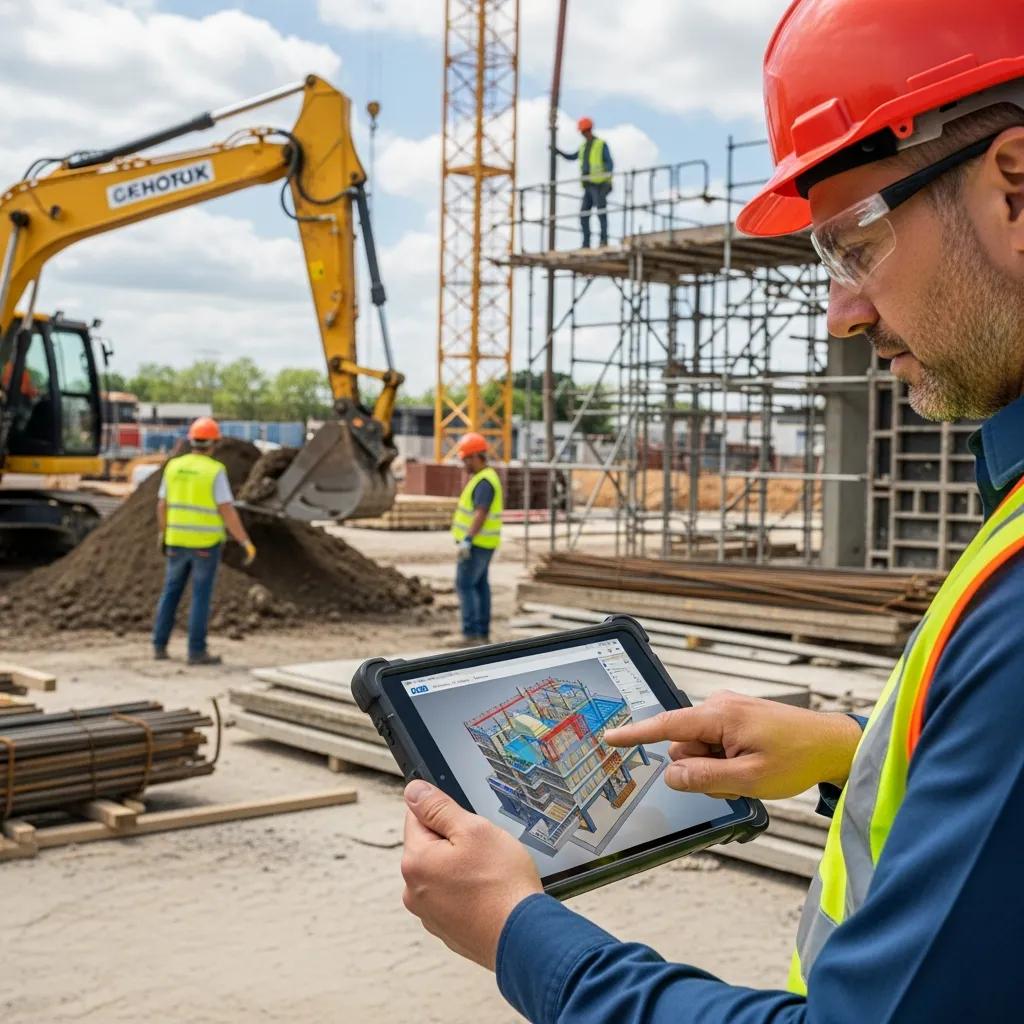
Digital construction tools expand career opportunities by boosting productivity, cutting rework, and creating specialized roles that typically command higher pay. Technologies like VDC, BIM, 3D scanning, and Robotic Total Stations enable model‑driven planning, precise layout, and coordinated installation — all of which shorten schedules and reduce costly field errors. Mastering these tools sets candidates apart for roles such as BIM coordinator, digital construction manager, and specialist layout technicians, and it helps traditional project managers move up faster when they adopt digital practices.
Technology adoption typically influences careers in three key ways: greater efficiency, closer cross‑discipline collaboration, and new niche roles that mix field experience with digital literacy.
- Higher Productivity: Model‑based planning cuts clashes and rework, improving schedule reliability.
- Risk Reduction: Digital verification and automated layout reduce field errors that cause delays.
- Career Differentiation: Technical mastery opens paths to specialized roles with more responsibility and higher pay.
For practical experience, working with consulting firms or service providers gives real project exposure to these tools and workflows, speeding skill development and career mobility.
Conway Coordination and Layout Services (CCLS) provides focused VDC consulting and BIM modeling and coordination that show how organizations use digital workflows to improve outcomes. Partnering with a specialist provider exposes emerging leaders to model‑driven coordination, clash workflows, and field verification practices — a fast way to gain on‑the‑job experience without waiting for internal training cycles. If you’re weighing next steps, collaborating with consulting teams delivers accelerated learning and tangible deliverables that strengthen your resume.
What Is Virtual Design and Construction and Its Career Impact?
Virtual Design and Construction (VDC) is a process‑driven approach that ties models, scheduling, and analysis together to plan construction activities before they’re built, improving coordination and predictability. VDC blends model‑based planning, 4D simulation, and cross‑discipline integration to optimize sequences and reduce conflicts — making it a high‑value skill for project managers and coordinators. Practitioners who use VDC reduce field rework, clarify installation sequencing, and improve productivity forecasting; employers increasingly reward that capability with promotions or specialist roles. Gaining VDC expertise positions you for jobs like VDC coordinator, digital construction manager, or consultant, where translating models into reliable field plans is core to the role.
VDC competence usually requires model coordination, schedule simulation, and data‑driven communication standards — a combination that yields tangible career mobility for people who can show reduced cost and time impacts on projects.
How Does Building Information Modeling Influence Career Growth?
Building Information Modeling (BIM) is the hub for coordination, clash detection, and deliverable management on modern projects, and BIM skill directly supports career progression from modeler to coordinator and manager. BIM work includes authoring Revit models, running clash detection in Navisworks or similar tools, and producing coordinated deliverables that bring architectural, structural, and MEP disciplines together. Employers look for BIM coordinators who shorten coordination cycles, maintain federated models, and translate model constraints to field teams — which raises both profile and pay. The typical BIM ladder runs from BIM modeler to BIM coordinator to BIM manager, with leadership and standards responsibility growing at each step.
Certifications, active participation in coordination meetings, and measurable reductions in coordination cycles are practical ways to convert BIM skills into higher roles and compensation.
What Skills and Education Are Essential for Construction Management Success?

Success in construction management comes from balancing technical capabilities — scheduling, cost control, BIM/VDC fluency — with leadership skills like communication, decision‑making, and stakeholder management. Employers increasingly expect familiarity with digital tools alongside traditional construction knowledge; candidates who pair scheduling and estimating skills with model‑based coordination stand out. A bachelor’s degree in construction management or civil engineering provides a solid foundation, while certifications such as CCM and PMP signal formal project and contract management expertise. Hands‑on experience through internships, apprenticeships, or vendor training complements academic credentials and is essential to prove applied competence to employers.
Below is a prioritized list of top skills employers value and how those skills show up in daily duties — a roadmap to focus your learning where it matters.
Top skills employers value include:
- BIM/VDC Proficiency: Managing federated models, running clash detection, and producing fabrication‑level deliverables.
- Scheduling and CPM Tools: Building and maintaining critical‑path schedules with Primavera or MS Project.
- Cost Estimation and Control: Preparing budgets, tracking costs, and managing change orders.
- Leadership and Communication: Directing teams, resolving conflicts, and reporting clearly to stakeholders.
- Field Layout and Verification: Performing precision layout with Robotic Total Stations and interpreting as‑built data.
Together, these skills bridge office and field workflows; digital tools amplify their positive impact on schedule and budget outcomes.
When planning education and certification, consider pathways that mix theory with applied learning:
- Bachelor’s Degree (Construction Management/Civil Engineering): Core knowledge in structures, estimating, contracts, and project controls.
- Professional Certifications (CCM, PMP): Validated expertise in construction and project governance.
- Vendor/Tool Training (BIM tools, Trimble training): Hands‑on skill with model authoring, clash detection, and Robotic Total Station operation.
Practical experience via internships or project‑based consulting is often the fastest route to competence. Professionals who combine formal credentials with real project work are most competitive for mid‑ and senior‑level roles.
CCLS is a resource for professionals seeking applied experience with VDC, BIM, and Robotic Total Station workflows through consulting or project‑based learning. Working with experienced practitioners provides project deliverables and mentorship that complement formal education and certification.
Which Technical and Leadership Skills Are Most Valued?
Employers favor a core mix of technical and leadership skills that drive project performance and team effectiveness. Technical strengths include scheduling, BIM/VDC coordination, estimating, and field layout; leadership skills include clear communication, rapid problem solving, and the ability to manage multidisciplinary teams. Together, these skills help teams anticipate constructability issues, recover schedules, and control costs under pressure.
Most valued skills and practical examples:
- BIM/VDC Coordination: Running model coordination, communicating clashes, and producing clash‑free shop drawings.
- Scheduling (CPM): Identifying critical‑path activities, updating progress, and leading recovery plans.
- Cost Control: Managing budgets, forecasting, and defending change order requests.
- Leadership/Communication: Directing teams, running coordination meetings, and aligning stakeholders.
- Field Verification/Layout: Using RTS tools to verify locations and support precise installation.
These skills are interdependent; strong communication ensures that model‑based decisions translate reliably to the field.
What Educational Paths and Certifications Advance Your Career?
Academic degrees and industry certifications offer credibility and structured knowledge, while short courses and vendor training deliver targeted, tool‑specific skills employers need now. A bachelor’s in construction management or civil engineering covers project controls, structural basics, and contract law — a common starting point. Certifications like Certified Construction Manager (CCM) and Project Management Professional (PMP) demonstrate the ability to lead complex projects and are often expected for senior roles. Vendor training in Revit, Navisworks, or Trimble systems complements those credentials by proving hands‑on capability with the tools that drive digital construction.
Recommended certification and training pathways include:
- Academic Foundation: Bachelor’s degree in construction management or engineering for baseline technical credibility.
- Professional Certification: CCM or PMP to validate project and contract management expertise.
- Tool‑Specific Training: Revit, Navisworks, and Trimble Robotic Total Station training to build applied digital skills.
Entry‑level professionals should pair internships with targeted tool training to accelerate readiness; mid‑career professionals can add certifications to formalize leadership and management capability.
What Is the Job Outlook and Salary Range for Construction Management Careers?
Construction management offers steady demand with projected employment growth and competitive pay for skilled professionals — especially those who bring digital construction capabilities to their teams.
Current projections show healthy growth for construction management roles through the mid‑2030s, driven by infrastructure investment, healthcare and industrial projects, and renovation work. Median pay illustrates the field’s earning potential, and specialization in BIM, VDC, or precision layout can place professionals in the top earning tiers. The table below summarizes typical median and top salary ranges and projected job growth to aid career planning.
| Role | Median Salary (2025) | Top Salary Range | Job Growth Outlook (2024-2034) |
|---|---|---|---|
| Construction Project Manager | $98,000 | $138,000–$151,000 | 9% (BLS projection) |
| BIM Coordinator | $78,000 | $110,000–$130,000 | Strong demand in digital construction sectors |
| Robotic Total Station Operator | $60,000 | $85,000–$100,000 | Growing demand for precision layout services |
The data show that median wages are solid and that digital specialization can move you into higher earning brackets, while the overall market is expected to expand through the decade.
How Is Employment Expected to Grow Through 2034?
Employment for construction management roles is projected to grow about 9% through 2034, reflecting steady demand across infrastructure, healthcare, and industrial sectors that require complex coordination and digital workflows. Growth drivers include public and private facility investment, a focus on resilient and sustainable builds, and broader adoption of model‑driven construction that creates demand for coordination specialists. For newcomers, this growth means more entry and mid‑level opportunities, especially for those who combine field experience with digital tool proficiency. Seasoned professionals who adopt VDC and BIM will be better positioned for leadership roles as projects increase in scale and complexity.
Projected growth underscores the need to develop timely, relevant skills and to specialize where demand is rising.
What Are the Current Salary Expectations and Top Earnings?
Median salaries for construction project managers in 2025 are around $98,000, with top earners reaching $138,000–$151,000 depending on region, sector, and specialization. Pay varies by sector — healthcare, industrial, and specialized infrastructure often pay a premium — and proficiency in BIM, VDC, or precision layout can further increase market value. Strong negotiation points include documented productivity gains from digital workflows, leadership of interdisciplinary coordination, and evidence of successful risk mitigation that saved time or money. Emphasizing transferable digital competencies and leadership experience is a practical route from median pay to top‑tier compensation.
Salary growth most often ties back to demonstrated impact: show how BIM coordination cut rework or how precise layout saved installation hours, and you gain leverage in pay discussions.
Conway Coordination and Layout Services (CCLS) can share case examples and consultations that illustrate how digital construction practices translate into measurable project savings and career-building experience; professionals can request project‑based engagements to build portfolio evidence.
How Can You Advance Your Career with Specialized Construction Technologies?
Adopting VDC, BIM, and Robotic Total Station technologies opens clear paths from technician and modeler roles into coordination and leadership positions with greater responsibility and compensation.
Specialized roles — RTS operator, BIM coordinator, or digital construction manager — are reachable through vendor training, hands‑on project work, and mentorship from experienced practitioners. Steps to advance include structured training, applying tools on site, taking part in coordination cycles, and documenting measurable outcomes like fewer clashes, improved schedule reliability, or reduced installation errors.
The table below shows how specific technologies influence roles and how to gain experience that supports career growth.
| Technology/Service | Role Impact | How to Gain Experience |
|---|---|---|
| VDC Consulting Services | Enables planning and 4D sequencing roles | Join coordination sessions and run 4D simulations |
| BIM Modeling & Coordination | Leads to BIM coordinator/manager roles | Complete model authoring and lead clash resolution cycles |
| Trimble Robotic Total Station layout | Creates precision layout technician to layout lead pathways | Get vendor training, perform site layouts, and document as‑built verification |
What Career Opportunities Exist for Robotic Total Station Operators?
Robotic Total Station (RTS) operators handle high‑precision layout and verification tasks that directly affect installation accuracy and project quality, making them essential on jobs with tight tolerances. Typical duties include establishing control points, running staking sequences, verifying as‑built coordinates against models, and working with trades to resolve geometric conflicts.
RTS experience often leads to roles such as senior layout technician, layout lead, or field engineering supervisor—especially when combined with BIM coordination skills that align models to field data. Gaining RTS skills normally involves vendor certification, supervised on‑site hours, and records of layout accuracy that prove proficiency to employers.
For technicians, compiling a portfolio of verified layout deliverables and showing you can translate model coordinates into reliable field installations is a direct path to more responsibility and higher pay.
CCLS’s Robotic Total Station layout services demonstrate how precision layout supports complex projects, and partnering with experienced layout providers is a reliable way to get mentorship and real project experience while contributing to live deliverables.
How Do VDC and BIM Consulting Services Enhance Career Development?
VDC and BIM consulting work exposes professionals to varied project types, coordination challenges, and model‑driven solutions in compressed timeframes, accelerating learning and widening technical competence. Consultants run multiple coordination cycles, lead clash detection and resolution, and produce documentation linking model changes to field outcomes — all of which build a transferable skill set employers value. Hands‑on consulting develops constructability thinking, sequence optimization, and cross‑discipline communication, opening paths to in‑house leadership or senior coordination roles. Mentorship inside consulting teams and repeated exposure to diverse constraints speed readiness for managerial positions that need both technical depth and client‑facing ability.
Practitioners who can show measurable improvements — fewer coordination cycles or reduced RFI‑driven delays — can use consulting experience to land leadership roles. For rapid skill building, consulting engagements are an efficient way to broaden responsibility and strengthen your resume.
Frequently Asked Questions
What are the benefits of pursuing a career in construction management?
Construction management offers strong job stability, competitive pay, and clear advancement paths. The industry’s steady investment in infrastructure and growing use of digital tools mean diverse roles—from project leadership to specialized technical positions—that support both personal and professional growth. Digital practices like BIM and VDC make work more predictable and efficient, adding to the career’s appeal.
How can I gain practical experience in construction management?
Practical experience comes from internships, apprenticeships, and entry‑level site or office roles that give real exposure to projects. Project‑based learning with consulting firms, vendor training, and on‑the‑job mentoring accelerate skill development. Networking and mentorship also help you find hands‑on opportunities; volunteering on construction projects can provide practical insights early in your career.
What certifications are most beneficial for construction management professionals?
Certifications like Certified Construction Manager (CCM) and Project Management Professional (PMP) are highly regarded and validate project and contract management capability. Vendor or tool certifications in Revit, Navisworks, or Trimble systems show hands‑on technical competence. A mix of professional credentials and tool training makes candidates more attractive to employers and supports career progression.
What role does networking play in advancing a construction management career?
Networking is vital: it opens doors to job leads, mentorship, and industry knowledge. Relationships often lead to referrals and opportunities not advertised publicly. Attend industry events, join professional organizations, and connect with peers and mentors to build visibility and access to career openings.
How important is technology proficiency in construction management?
Technology proficiency is increasingly important. Tools like BIM, VDC, and project management software streamline coordination, cut errors, and improve outcomes. Employers value people who can use these tools to optimize workflows and drive productivity. Staying current with digital advances is essential for long‑term career success.
What are the emerging trends in construction management careers?
Key trends include a stronger focus on sustainability, the growing use of AI and data analytics in planning and controls, and broader adoption of remote collaboration tools. Professionals who learn green‑building practices, data analysis, and advanced digital workflows will be well positioned. Flexibility and a willingness to learn new technologies are increasingly important traits.
Conclusion
A career in construction management offers varied, rewarding paths—from hands‑on technical roles to senior leadership—and those paths are increasingly enhanced by digital tools like BIM and VDC. Understanding the roles, skills, and training that matter helps you plan a realistic route to higher responsibility and pay. Pursue practical experience, targeted certifications, and collaborative opportunities to accelerate your progress. When you’re ready to take the next step, explore our resources or reach out to industry experts to build the experience and portfolio that advance your career.