LEED Certification: A Practical Guide to Process, Benefits, and Green Building Standards
LEED (Leadership in Energy and Environmental Design) is a performance-driven rating system that sets measurable standards for sustainable design, construction, operation, and maintenance. This guide lays out what LEED requires, who oversees the program, and how project teams turn credits into verifiable outcomes through coordinated models, accurate site layout, and tight field verification. Many certification shortfalls come from gaps between design intent and field execution; disciplined VDC, BIM coordination, and precision layout narrow those gaps and raise the chance of achieving target credits. Ahead you’ll find a plain-language definition of LEED and its rating systems, an overview of core categories and construction actions, a step-by-step certification workflow, the environmental and financial benefits of certification, and practical ways specialized services—like precision layout and model-driven coordination—support compliance with LEED v4.1 and current rating-system requirements.
Conway Coordination and Layout Services (CCLS) provides VDC consulting, BIM modeling and coordination, robotic total-station layout, and 3D scanning workflows that link construction execution with LEED documentation and verification needs. Firms that pair model-based documentation with millimeter-accurate layout and as-built verification reduce rework, protect site features, and produce submission-ready evidence for reviewers. This guide prioritizes technical best practices and shows where targeted CCLS services help teams capture credits more reliably and lower certification risk.
What Is LEED Certification and How Does It Define Sustainable Building Standards?
LEED is a third-party verified framework that evaluates a project’s sustainability across multiple categories using prerequisites and credits. It sets measurable requirements—energy performance, water efficiency, material sourcing, indoor environmental quality—and requires documented evidence to substantiate points. LEED blends design intent, modeled performance, and on-site verification so a project’s projected efficiencies are validated in practice; the result is a performance-oriented certification that signals reduced operational impacts. Knowing who sets the standards and who administers certification matters for registration and submittals, because those organizations define credit language and evidence expectations reviewers apply during assessment.
The main LEED rating systems for buildings include BD+C (Building Design + Construction), O+M (Operations + Maintenance), and specialty paths for healthcare and interiors. LEED v4.1 is the current structure many new projects reference. Choose a rating system early: it determines applicable prerequisites, available credits, modeling scope, and site verification plans. Early alignment on the rating system and performance targets lets designers, builders, and coordinators prioritize resources and digital deliverables for reviewer-ready submissions. The next section clarifies which organizations write the standards and which issue certificates—a distinction that affects how teams manage submittals.
What Organizations Govern LEED Certification and Its Rating Systems?
Two organizations share governance: the U.S. Green Building Council (USGBC) develops and updates LEED standards and credit language, while Green Business Certification Inc. (GBCI) manages project registration, performs technical reviews, and issues certifications. USGBC publishes rating-system versions and guidance—such as LEED v4.1—and GBCI evaluates submitted evidence against credit requirements. This separation means teams use USGBC resources for design intent and GBCI for certification outcomes; effective documentation anticipates reviewer questions to reduce clarification rounds. Understanding these roles helps teams package model outputs, verification reports, and as-built scans in reviewer-friendly formats that speed certification.
Because USGBC and GBCI have distinct responsibilities, treat documentation as a compliance deliverable rather than optional marketing. Model-based evidence, clear narratives, and traceable deliverables reduce reviewer clarifications and accelerate certification decisions. Next, we cover how certification levels are determined and how to plan for point targets early in a project.
What Are the Different LEED Certification Levels and Their Requirements?
LEED issues four levels—Certified, Silver, Gold, and Platinum—based on total points earned from applicable credits and prerequisites. Each tier has a point threshold that reflects progressively higher sustainability performance and usually requires greater investment in energy and water efficiency, materials choices, and innovation. Picking a target level early influences design decisions—mechanical efficiency, renewable investments, and documentation scope—and higher tiers generally need more rigorous modeling and verification to support credited outcomes. Teams should align tier choice with budget, performance goals, and long-term operations to avoid redesign and extra documentation later.
During planning, map likely credits to design and construction deliverables and run gap analyses to estimate the effort to reach each tier. That ensures modeling, material tracking, and site verification are scoped to produce the evidence reviewers expect. With certification levels and governance clear, the next section explains core LEED categories and how they translate into construction actions.
What Are the Core LEED Categories and How Do They Impact Green Building?
LEED groups sustainability into core categories—Sustainable Sites, Water Efficiency, Energy and Atmosphere, Materials and Resources, Indoor Environmental Quality, plus Innovation and Regional Priority—each translating into measurable construction actions and documentation. For builders and engineers, mapping each category to concrete tasks (for example, erosion-control sequencing under Sustainable Sites or commissioning under Energy and Atmosphere) turns abstract credits into executable work packages that can be tracked and evidenced. Tight digital coordination and field verification reduce the gap between modeled performance and in-use results, improving the reliability of claimed credit outcomes.
Below is a concise summary of core categories and how they typically show up in construction and documentation.
- Sustainable Sites: Protect ecology, manage stormwater, and minimize disturbance with accurate layout and erosion control.
- Water Efficiency: Specify efficient fixtures, optimize irrigation, and verify routing to cut potable water use and wastewater.
- Energy and Atmosphere: Specify high-efficiency systems, establish commissioning and monitoring, and provide modeled savings.
- Materials and Resources: Track sourcing, diversion, and reuse with bills of material and as-built records.
- Indoor Environmental Quality: Use ventilation, filtration, and low-emitting materials to document occupant health and comfort.
These category mappings point to coordination tasks and documentation workflows VDC and precision layout support; the sections that follow give examples and an EAV-style mapping for Sustainable Sites.
- Model accuracy: Improves energy and water credit predictions by reflecting real routing and equipment locations.
- Field verification: Confirms site features and LID elements are placed to design tolerances and protect stormwater controls.
- Material tracking: Provides transparent chain-of-custody evidence for recycled or responsibly sourced materials.
- Commissioning and monitoring: Verifies systems operate as modeled to maintain post-occupancy performance.
These links make clear why cross-discipline coordination is essential for measurable LEED outcomes. Next, we show how precision layout supports Sustainable Sites credits specifically.
How Does Precision Layout Support Sustainable Sites Credits?
Precision layout places site features within design tolerances, which reduces grading impacts, preserves planned drainage patterns, and protects low-impact development elements required for Sustainable Sites credits. Using robotic total-station workflows and verified stakeout procedures lets contractors install permeable pavements, bioswales, and tree protection zones exactly as modeled, cutting soil disturbance and erosion. Precise placement lowers rework and material waste, which also supports Materials & Resources credits by reducing waste volumes and truck movements. Precision layout is a field-level risk mitigation strategy that preserves hydrology and landscape intent while creating verifiable evidence for reviewers.
To clarify service-to-credit mapping, the table below shows how common services align with Sustainable Sites outcomes.
| Service | LEED Attribute | Result |
|---|---|---|
| Robotic total station layout | Placement accuracy | Reduced grading and preserved drainage patterns |
| Stakeout & tolerance control | LID feature verification | Correct installation of permeable surfaces and bioswales |
| As-built site scans (point cloud) | Verification evidence | Time-stamped records for reviewer submittals |
| Tree protection layout | Preservation metric | Minimized root-zone disturbance for credit compliance |
These mappings show how millimeter-level accuracy supports measurable site outcomes and reviewer confidence. When layout workflows produce traceable deliverables and pair with BIM-driven coordination, water and energy performance benefits follow — the next subsection explains how.
How Do VDC and BIM Optimize Water Efficiency and Energy Performance?
VDC and BIM improve performance by enabling integrated energy modeling, MEP clash detection, and digital coordination that refines equipment sizing and routing before installation. Energy models use inputs from coordinated models—accurate geometry, equipment schedules, and control strategies—and produce simulations for Energy and Atmosphere credits; tightly coordinated models make predicted performance more likely to match field results. For water efficiency, BIM routes plumbing and irrigation systems with precision that reduces leaks, avoids rework, and ensures efficient fixture installation. Clash detection and downstream quantity takeoffs also limit change orders and waste, supporting materials and operational credits.
Typical model-driven deliverables that support LEED include equipment schedules for high-efficiency systems, simulated savings reports, and coordinated MEP layouts that minimize unexpected offsets. Those outputs create a traceable chain from design simulations to installed systems, improving reviewer confidence and post-occupancy performance. The next section outlines the LEED certification process and how digital artifacts support each milestone.
What Is the LEED Certification Process for Construction Projects?
The LEED certification path follows a standard sequence—registration, documentation and submittal, third-party review, and certification decision—each stage needing specific deliverables and traceability. Registration signals intent and locks in the rating-system version; documentation gathers prerequisites and credit evidence; review surfaces clarifications; certification records achieved points. The process relies on narratives, model outputs, and verifiable on-site evidence; well-structured digital artifacts, version control, and consistent naming conventions reduce review cycles and improve first-pass acceptance.
Below is a checklist of major process steps and the primary documentation artifacts tied to each phase.
- Registration and goal-setting: Select the rating system and initial point targets; define credits that require modeling or third-party testing.
- Documentation and submittal preparation: Compile narratives, model reports, calculations, and as-built verification evidence.
- Third-party review and responses: Address GBCI reviewer comments, prepare clarifications, and provide requested evidence.
- Certification issuance: When reviewer requirements are met, the certification level is awarded and published.
What Are the Key Steps: Registration, Documentation, and Review?
Registration starts the formal process and locks the applicable rating-system version, which sets prerequisites and credit language—register early to reduce scope drift. Documentation includes prerequisite forms, credit narratives, calculations (for example, energy-model outputs), and tangible evidence like commissioning reports and as-built scans; organizing these items in a traceable folder structure prevents missing items during review. During third-party review, GBCI will request clarifications or more documentation; prompt, well-documented responses reduce back-and-forth and speed certification. Common pitfalls include incomplete model exports, scans without timestamps, and poor traceability between claimed credits and supporting artifacts.
Keep a living submittal register that maps each claimed credit to specific deliverables and owners—this simplifies reviewer responses and cuts delays. With that discipline in place, teams can use VDC and BIM to produce model-based artifacts that streamline documentation, as described next.
This EAV table links common digital artifacts to their documentation role during LEED submittals.
| Digital Artifact | Documentation Use | Typical Benefit |
|---|---|---|
| BIM model exports | Credit evidence & geometry verification | Reduces reviewer questions about installed components |
| Clash reports | Coordination proof | Shows conflicts were resolved before installation |
| Energy model reports | EA credit substantiation | Quantifies predicted savings for reviewer acceptance |
| Point-cloud as-built scans | Verification and O&M baseline | Time-stamped proof of installed conditions |
Organizing these artifacts and linking them to credit narratives shortens review cycles and boosts first-pass acceptance. The next subsection explains how VDC and BIM reduce documentation burden in practice.
How Can VDC and BIM Streamline LEED Compliance and Documentation?
VDC and BIM produce exportable, reviewer-ready files—coordinated geometry for verification, equipment schedules for materials credits, and automated reports for quantities and embodied carbon. Model-based workflows provide version control, traceability, and standardized outputs that match reviewer expectations and reduce ambiguity. Automated clash logs and sequence-of-installation simulations serve as coordination evidence and limit field rework that would otherwise undermine intended performance. The result is a stronger linkage between claimed credits and verifiable evidence, which reduces clarification rounds and improves reviewer confidence.
Teams that run regular model audits and maintain a clear submittal registry deliver consistent outputs aligned to credit language and often accelerate certification timelines. With process and digital support covered, the next major topic reviews measurable benefits of pursuing LEED certification.
What Are the Environmental, Economic, and Social Benefits of LEED Certified Buildings?
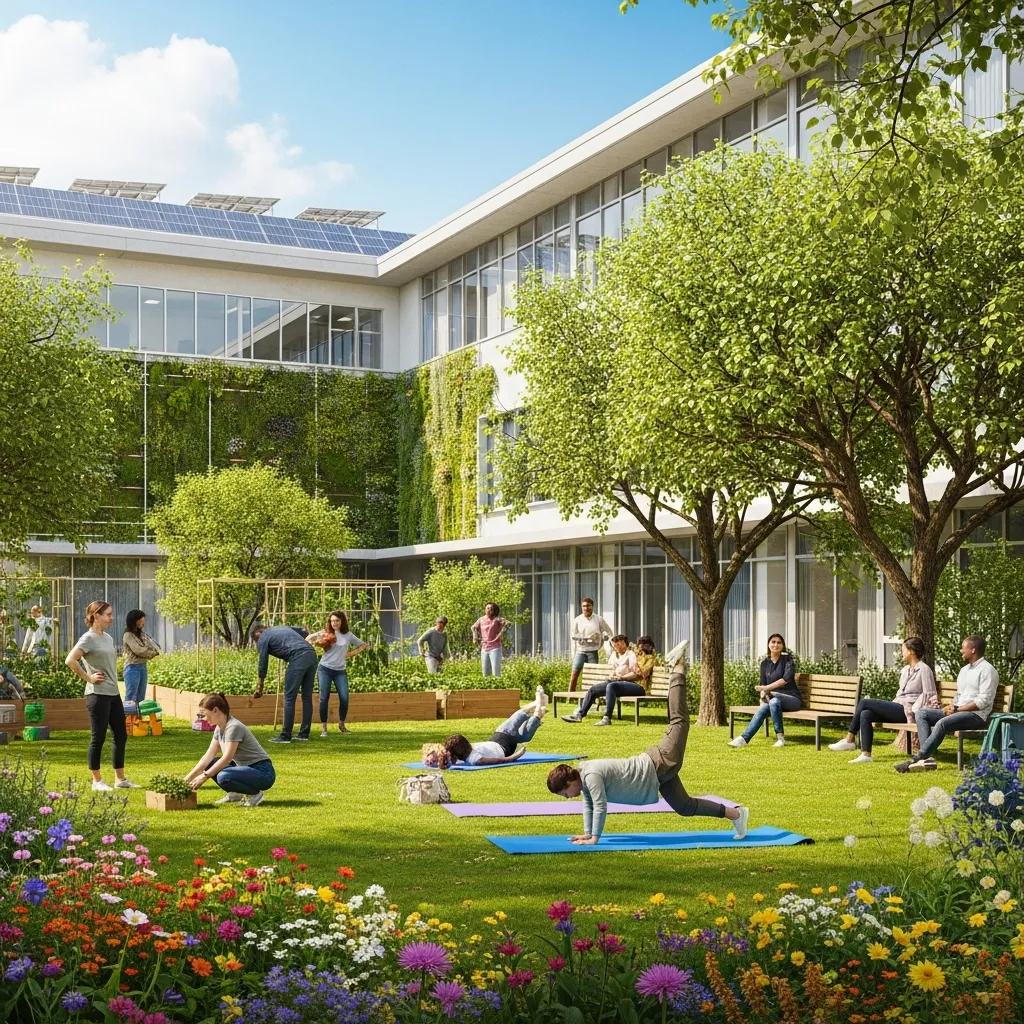
LEED-certified buildings deliver measurable environmental gains—lower energy and water use—along with economic advantages like reduced operating costs and stronger asset value, and social benefits such as improved indoor environmental quality and occupant wellness. These outcomes come from efficient systems, demand reduction measures, and tighter envelope and system integration validated through commissioning and monitoring. The combined result is lower operational carbon and resource use and demonstrable improvements in occupant satisfaction and productivity. Those multi-faceted benefits justify the upfront coordination and documentation investment certification requires.
- Environmental: Lower energy use from efficient systems and commissioning; reduced water use via demand management and efficient fixtures.
- Economic: Reduced operating expenses, eligibility for incentives, and improved asset value through market differentiation.
- Social: Better indoor air quality and occupant comfort, which can increase productivity and reduce absenteeism.
- Operational Resilience: Ongoing monitoring and maintenance reduce performance drift over time.
Research and market trends show optimized buildings often outperform conventional peers; the next section explains how energy, water, and carbon reductions are realized in practice and highlights CCLS-supported practices that close performance gaps.
How Does LEED Certification Reduce Energy, Water Use, and Carbon Emissions?
LEED reduces operational impacts by requiring strategies and verification aimed at energy efficiency, water conservation, and commissioning. Energy savings come from high-efficiency HVAC, optimized controls, and improved envelopes verified by modeling and commissioning. Water use drops through efficient fixtures, irrigation optimization, and verified plumbing routing that prevents unintended losses. Precise field execution—supported by precision layout and as-built scanning—narrows the gap between modeled and actual performance, so predicted savings better match real-world outcomes.
By embedding monitoring and verification into certification, LEED encourages ongoing operational attention and continuous improvement, turning modeled savings into long-term carbon reductions. That alignment between design intent and operations also drives economic benefits, summarized next.
What Economic Advantages and Incentives Do LEED Buildings Offer?
LEED buildings frequently realize lower lifecycle operating costs from energy and water savings, improving net operating income and marketability. Additional benefits may include local incentives, expedited permitting, or utility rebates depending on jurisdiction—these vary, so evaluate them early. Upfront coordination and documentation costs are often offset over time by reduced OPEX and better tenant retention from higher indoor environmental quality. For owners assessing ROI, combine model-predicted savings with verified post-occupancy data for the most reliable financial projections.
Because incentives and market premiums differ by market, integrate financial analysis into early credit-selection to weigh certification costs against expected returns. With benefits and incentives in mind, the next section shows how Conway Coordination and Layout Services supports LEED outcomes with specific deliverables and technology.
How Does Conway Coordination and Layout Services Facilitate LEED Certification Success?
Conway Coordination and Layout Services (CCLS) combines precision layout with VDC consulting, BIM coordination, and 3D scanning to support LEED credit outcomes by reducing rework, improving model fidelity, and providing verifiable evidence for reviewers. Our workflows produce submission-ready artifacts: stakeout reports with tolerances, clash logs tied to corrected models, and point-cloud as-built scans that time-stamp installation conditions. By aligning digital deliverables to credit narratives, CCLS helps teams close the loop between design, field execution, and certification evidence—reducing reviewer clarifications and shortening certification timelines.
| Service | LEED-Relevant Attribute | Primary Outcome |
|---|---|---|
| Robotic Total Station Layout | Precision | Millimeter placement that reduces rework and material waste |
| BIM Modeling & Coordination | Documentation & Modeling | Submission-ready models, clash resolution, and equipment schedules |
| VDC Consulting | Process & Sequencing | Clear coordination, sequencing evidence, and fewer conflicts |
| 3D Scanning / Point Cloud | Verification | As-built records for compliance and future O&M |
This mapping shows how focused service selection creates concrete reviewer evidence and preserves design intent through construction.
What Role Does Precision Layout Play in Achieving LEED Sustainable Sites Credits?
Precision layout helps secure Sustainable Sites credits by ensuring erosion controls, LID features, and permeable pavements are installed where designed, reducing unintended grading or drainage changes. Trimble robotic total-station workflows limit over-excavation and cut truck traffic and material movement, lowering disturbance and waste volumes that affect Materials credits. Detailed stakeout logs and tolerance reports are verifiable submittal evidence and provide time-stamped proof of correct installation—improving reviewer confidence and reducing disputes.
A short EAV-style comparison below shows how layout tasks map to measurable credit outcomes.
| Task | LEED Credit Connection | Measurable Metric |
|---|---|---|
| Stakeout of permeable pavements | Stormwater / SS credits | Reduced impervious-area deviations (m²) |
| LID feature placement | Habitat / SS credits | Minimal soil displacement (%) |
| Stakeout tolerance reporting | Verification | Time-stamped compliance records |
These deliverables create a clear trail from design intent to installed condition, boosting reviewer confidence. The next section explains how VDC and BIM join with these practices to improve energy and water outcomes.
How Do VDC Consulting and BIM Modeling Enhance LEED Project Coordination and Energy Efficiency?
VDC consulting and BIM modeling consolidate design information across disciplines to produce accurate energy-model inputs, coordinated MEP routing, and quantifiable material schedules that substantiate LEED credits. Energy models built from coordinated BIM geometry yield more reliable savings projections, while clash-detection workflows reduce field changes that could erode modeled performance. For water efficiency, coordinated plumbing and irrigation sequencing in the model reduce leak points and misrouting that compromise credits. As-built models and point-cloud verification also provide baselines for operations and maintenance, supporting O+M credits and long-term performance tracking.
Common deliverables include energy-model input packages, clash-resolution logs, and automated schedules that feed documentation packages—these outputs reduce reviewer questions and operational mismatches. CCLS’s combined approach—precision layout plus model-led coordination—is tailored to align construction execution with LEED documentation expectations.
| Capability | LEED Benefit | Typical Deliverable |
|---|---|---|
| Coordinated BIM | Accurate modeling inputs for EA credits | Energy-model geometry and schedule exports |
| Clash detection | Reduced installation errors | Resolved clash logs with owner sign-off |
| Point-cloud as-built | Verification for WE/SS/Materials credits | Time-stamped scan reports and deviation maps |
These integrated deliverables shorten review cycles and lower project risk, making certification targets more attainable. With CCLS’s role clear, the final section answers common questions teams ask when planning certification timelines and level targets.
What Are Common Questions About LEED Certification?
Project teams often ask about certification levels, timelines, and documentation scope. Clear, direct answers reduce uncertainty and help prioritize resources. The FAQs below address common pain points and provide actionable guidance for planning and execution, including two high-value questions presented for quick decision-making: level thresholds and typical timeline ranges.
Key planning considerations teams should evaluate early include:
- Which rating system applies: Choose BD+C, O+M, or a specialty path once program goals are set.
- What documentation is needed: Plan for modeled outputs, commissioning reports, and as-built verification evidence.
- Who manages submissions: Assign a documentation lead to run the submittal register and coordinate reviewer responses.
- When to engage verification services: Schedule scans and layout verification at milestones to capture time-stamped evidence.
These practical items set the stage for the focused Q&A below.
What Are the Four Levels of LEED Certification and Their Point Thresholds?
LEED uses four tiers—Certified, Silver, Gold, and Platinum—based on total points earned. Each tier requires incrementally more performance, documentation, and verification. Teams should map likely credit contributions to a target level early so mechanical efficiency, materials decisions, and documentation scope align with the desired outcome. Choosing a target tier informs budget and priorities because higher levels typically need additional modeling, commissioning, and verification effort.
Quick summary of tiers and implications:
- Certified: Baseline recognition for required prerequisites and fundamental sustainable measures.
- Silver: Demonstrates moderate additional performance and optimization.
- Gold: Requires substantial efficiency measures, extensive documentation, or innovation strategies.
- Platinum: The highest level—typically needs significant investment in efficiency, renewables, and rigorous verification.
Targeting a tier early reduces scope creep and helps teams focus coordination on credits that deliver the greatest impact. The next question covers timing and timeline drivers.
How Long Does the LEED Certification Process Typically Take?
Timelines vary by project complexity, documentation completeness, and reviewer cycles. Early design work and registration can take weeks, but preparing documentation, finishing construction, and compiling as-built verification usually extends the schedule—typical projects move from registration to certification over several months to more than a year. Factors that lengthen timelines include incomplete model exports, missing verification evidence, multiple reviewer clarification rounds, and dependencies on third-party testing or commissioning. Early coordination, disciplined submittal tracking, and integrated model-based deliverables shorten review cycles and reduce overall time to certification.
Bringing in specialized services early—VDC consulting, BIM coordination, and precision layout—reduces schedule risk by producing reviewer-ready artifacts and minimizing field changes that trigger clarifications. If you want help mapping your project’s credits to concrete deliverables and verification workflows, CCLS can scope VDC, BIM modeling, and precision layout services to meet your certification goals and schedule.
Frequently Asked Questions
What are the costs associated with obtaining LEED certification?
Costs vary by project size, complexity, and rating system. Typical expenses include registration fees, documentation preparation, third-party review fees, and consulting for VDC/BIM services. There may also be costs for energy-efficient systems and sustainable materials. While initial costs can be meaningful, long-term operational savings and potential incentives often offset them, making LEED a financially sound investment for many projects.
How can project teams ensure they meet LEED documentation requirements?
Start with a clear organization system for all documentation and a living submittal register that maps each credit to specific deliverables and owners. Regular audits of model outputs, commissioning reports, and as-built verification evidence help ensure completeness. Working with LEED consultants or using VDC and BIM services can streamline the process and produce reviewer-ready artifacts aligned with LEED expectations.
What role does ongoing maintenance play in LEED-certified buildings?
Ongoing maintenance is essential to sustain LEED performance. Regular monitoring of energy and water systems and adherence to HVAC and equipment maintenance schedules keep systems efficient and occupants comfortable. LEED encourages plans for continuous improvement, including periodic performance reviews and operational updates to maintain or enhance sustainability outcomes.
Can existing buildings pursue LEED certification?
Yes. Existing buildings can pursue LEED under the Operations and Maintenance (O+M) rating system, which focuses on improving performance through energy efficiency, water conservation, and indoor environmental quality. Owners achieve certification by adopting sustainable practices, conducting assessments, and submitting documentation that demonstrates compliance. O+M lets older buildings realize sustainability gains and lower operating costs.
What are the common challenges faced during the LEED certification process?
Common challenges include incomplete documentation, misalignment between design intent and field execution, and difficulty meeting specific credits. Coordination gaps among stakeholders can delay review, and rating-system complexity can create confusion about which credits to pursue. Early planning, clear communication, and specialist services like VDC and BIM reduce these risks and increase the chance of successful certification.
How does LEED certification impact property value?
LEED certification can improve property value by making buildings more marketable to sustainability-focused tenants and buyers. Certified buildings often see higher occupancy and rental rates due to lower operating costs and improved indoor environmental quality. Investors and lenders increasingly value sustainable assets, which can support better financing and increased asset value over time. As sustainability becomes a market expectation, LEED can be a competitive advantage.
Conclusion
LEED certification delivers tangible environmental, economic, and social benefits—from lower energy use and operating costs to healthier indoor environments. Understanding the certification process and using specialized services makes documentation and verification more efficient and reduces certification risk. Conway Coordination and Layout Services offers targeted support—precision layout, BIM coordination, VDC consulting, and 3D scanning—to align construction practices with LEED requirements and help teams reach their certification goals. Start the conversation today to map credits to deliverables and shape a practical path to certification.