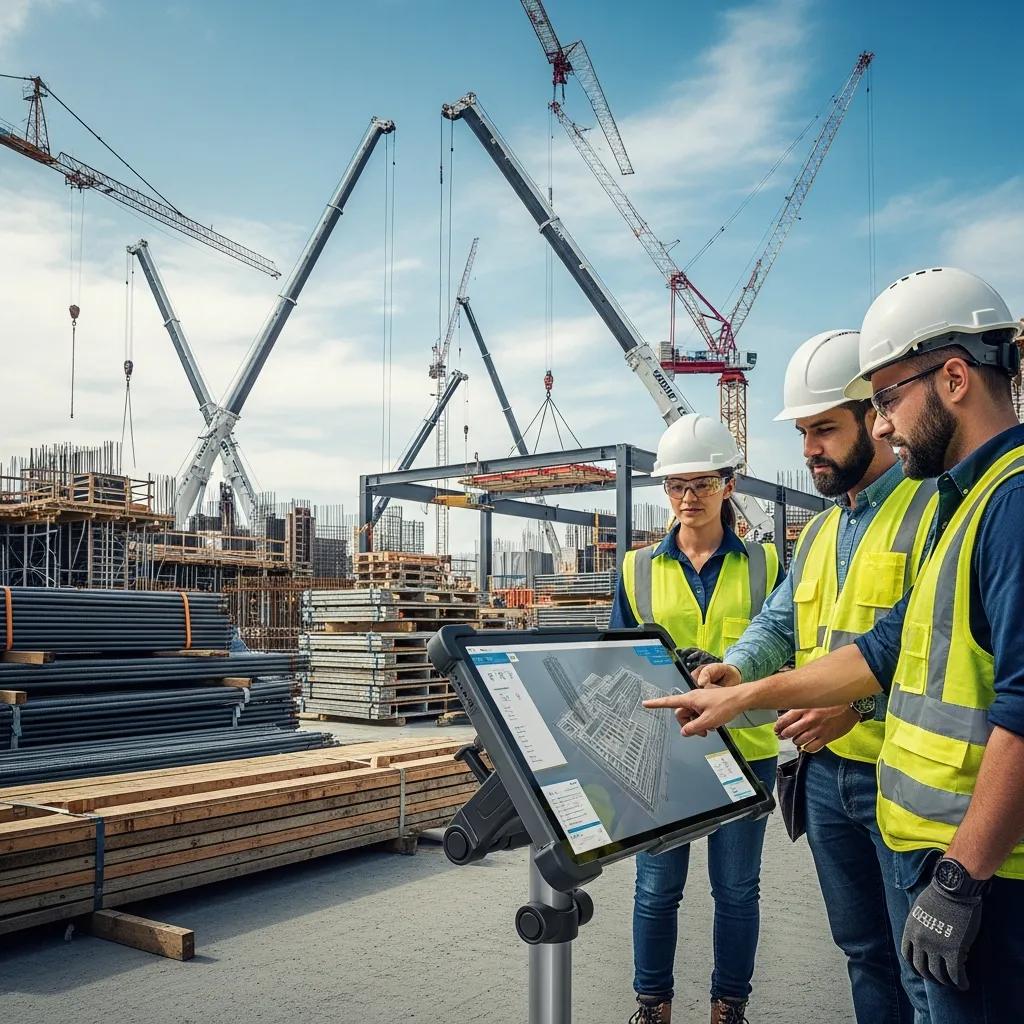
Building Resilient Construction Supply Chains: Practical, Model‑Driven Digital Strategies
Supply chain resilience on a construction project is the ability of material, information, and labor flows to absorb shocks, adapt to change, and recover quickly — all while protecting the schedule and budget. Recent swings in logistics, material availability, and labor markets make resilience a top priority for owners and contractors who need predictable outcomes. This guide shows how digital construction workflows — VDC, BIM, 3D scanning, and precision layout — act as early-warning systems, tighten coordination, and cut rework and waste. You’ll get concrete visibility techniques, practical risk-reduction steps, model-driven logistics tactics, supplier collaboration methods, and a look at how AI/IoT and cloud analytics support these efforts. Each section mixes clear technical explanation, short checklists, side-by-side comparisons, and short examples so project teams can map these strategies into procurement, field operations, and coordination with measurable results.
How does clearer supply chain visibility make projects more resilient?
Supply chain visibility is the near-real-time ability to see where materials are, their condition, and their status across procurement, staging, and installation. Visibility is created by linking data sources — 3D point clouds, BIM objects with tags, and sensor feeds — into a shared model so discrepancies show up early and can be fixed before delays multiply. The main payoff is lower uncertainty: fewer duplicate orders, quicker resolution of mismatches, and smoother handoffs between procurement, logistics, and trades. Better visibility shortens decision cycles, reduces the need for large buffers, and supports just‑in‑time delivery that lowers holding costs.
Visibility tools differ in update frequency, accuracy, and integration effort; the table below compares common options and the resilience they deliver.
| Technology | Typical Accuracy | Integration Complexity | Resilience Benefit |
|---|---|---|---|
| 3D Scanning (point cloud) | Sub‑centimeter spatial accuracy | Medium — requires scan‑to‑BIM workflows | Verifies as‑built conditions to prevent mis‑deliveries and staging mistakes |
| IoT Material Tracking (RFID/sensors) | Meter‑level to sub‑meter | High — requires hardware and network setup | Real‑time location and condition alerts reduce loss and damage |
| BIM Integration (procurement linkage) | Model‑level component accuracy | Low to Medium — depends on data hygiene | Traceability from model object to purchase order reduces ambiguity |
Combining precise as‑built capture with continuous tracking and BIM linkage yields the strongest resilience gains — balancing accuracy and operational practicality. The next section shows how 3D scanning turns visibility into on‑site material verification and staging control.
What role does 3D scanning play in live material tracking?
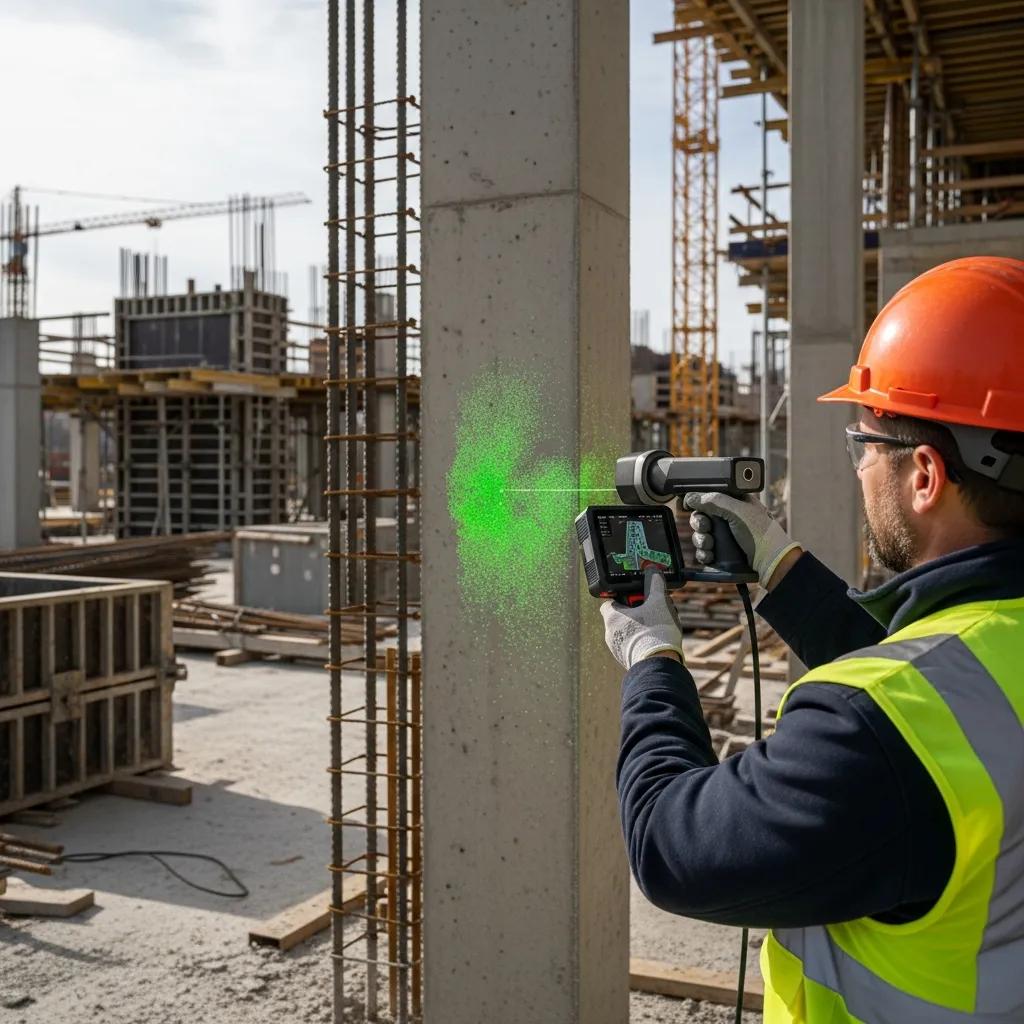
3D scans produce dense point clouds that serve as an objective as‑built record, allowing teams to check quantities, fabricated assemblies, and staged components against the BIM model. The workflow is direct: capture the physical state, align registered point clouds to BIM objects, and run automated comparisons that flag missing or mis‑placed items for procurement or staging teams. This replaces subjective visual checks with measurable verification, cutting disputes over deliveries and preventing install of incorrect parts. For example, scanning a prefabricated MEP rack before mobilization confirms dimensions and connections so parts arrive ready for installation and avoid costly field rework.
Those scan outputs then feed into BIM to close the visibility loop and keep procurement and scheduling transparent.
How does BIM integration increase supply chain transparency?
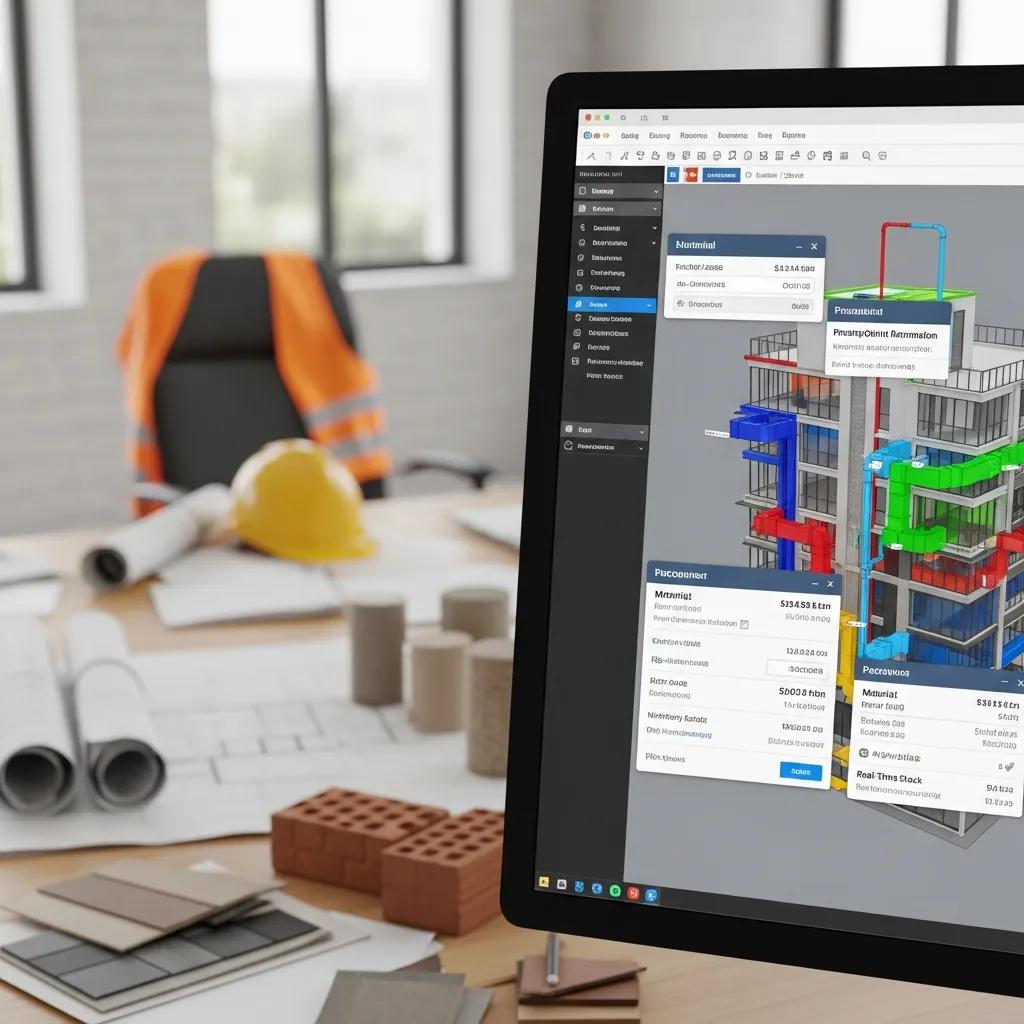
When BIM objects carry specification and procurement metadata, the model becomes a single source of truth for parts, deliveries, and staging. Linking BIM to purchase orders, ETA fields, and staging locations lets planners trace items from order to installation and makes lead times and sequencing clearer. Operational benefits include fewer last‑minute substitutions, cleaner staging plans for trades, and earlier detection of long‑lead items that threaten the critical path. That linkage also enables automated alerts when a delivered component deviates from modeled parameters so inspection and correction can happen promptly.
These visibility capabilities underpin the tactical risk‑management measures that follow — addressing errors, clashes, and supplier interruptions.
What practical risk‑management strategies work on construction projects?
Effective risk management combines early detection, process controls, supplier tactics, and contingency planning to limit schedule and cost impacts. Core techniques include precision layout to prevent field errors, VDC clash detection to remove design conflicts before procurement, supplier diversification to avoid single‑source failure, and just‑in‑time sequencing to reduce on‑site inventory exposure. Together these tactics lower rework risk, create predictable procurement windows, and preserve schedule buffers for true surprises.
Below is a concise mapping of common disruption types and pragmatic mitigations teams can put into practice.
| Disruption Type | Typical Impact | Mitigation Approach |
|---|---|---|
| Material shortages | Schedule slips, substitution risk | Supplier diversification and early procurement of long‑lead items |
| Design clashes | Rework and fabrication changes | VDC clash detection cycles and coordinated model sign‑offs |
| Logistical delays | Staging congestion and idle labor | JIT sequencing and alternative routing plans |
| Field layout errors | Rework, wasted materials | Precision layout with robotic total station and QA checks |
Pairing model‑led detection with procurement and supply‑side tactics reduces both the frequency and impact of disruptions. Use this practical checklist as a starting point on every project.
- Run early VDC coordination cycles to catch and resolve clashes before fabrication.
- Set precision layout checkpoints to verify critical control points before installation.
- Identify secondary suppliers for long‑lead items and include contingency terms in contracts.
- Define JIT delivery windows tied to model‑driven sequences to minimize onsite inventory.
The checklist is an operational starting point; the next subsections explain how precision layout and VDC reduce errors and accelerate mitigation.
How does precision layout with a Robotic Total Station prevent errors?
Robotic Total Stations establish highly accurate control points and automate stake‑out workflows, translating model coordinates to the field with sub‑centimeter repeatability. This reduces human measurement variability through automated staking and verification so installed elements meet design tolerances and connection geometry. The result is less rework from misalignment, preserved procured materials, and protected schedule milestones. For example, precision staking for foundation anchors or MEP penetrations prevents fit issues that would trigger costly fabrication changes and delivery churn.
How does VDC enable early clash detection and faster mitigation?
Virtual Design and Construction (VDC) centralizes multi‑discipline models and runs scheduled coordination cycles with severity triage so clashes are found and assigned early. The process produces automated clash reports, assigns responsibility, and tracks resolution workflows to close issues before materials are ordered or fabricated. Early fixes prevent incorrect procurement, avoid expedited reorders, and protect lead times for long‑lead components. Typical examples include resolving conduit paths that conflict with structure and adjusting prefabricated panel geometry before shop drawings are released.
Those model‑driven corrections reduce downstream ripple effects in logistics and material flow, which we explore next.
How can VDC and BIM improve logistics and material flow?
VDC and BIM turn sequence simulations and coordinated models into actionable delivery schedules, staging plans, and prefabrication instructions that align trades and suppliers. Model‑driven sequencing provides the “what” and “when” for each component while VDC simulates assembly order and space constraints so deliveries arrive as needed. The outcomes are measurable: fewer idle crews, less onsite inventory, and lower material damage from extended exposure. By simulating scenarios, teams choose sequences that reduce crane moves and handoffs, boosting productivity and predictability.
| Process | Attribute | Outcome |
|---|---|---|
| Sequencing simulation | Trade‑level step mapping | Reduced trade idle time and clearer daily logistics |
| BIM coordination for prefab | Detailed shop‑level geometry | Faster prefabrication cycles and fewer on‑site adjustments |
| Model‑driven delivery windows | Time‑boxed delivery slots | Lower onsite inventory and reduced material damage |
Sequencing, coordination, and prefabrication supported by VDC/BIM reduce lead‑time variability and waste. The short list below summarizes the benefits teams should expect.
- Improved sequencing that synchronizes trades and cuts bottlenecks.
- Stronger prefabrication support via accurate shop geometry and tolerances.
- Less waste and handling damage through precise delivery windows and staging locations.
Delivering these benefits requires structured BIM coordination and disciplined JIT practice; the following sections explain how to put that into action.
What are the advantages of BIM coordination for sequencing?
BIM coordination produces a visual, reliable sequence for overlapping trades and complex assemblies so planners can allocate resources and crane cycles confidently. Consolidated models expose spatial constraints and trade interfaces, enabling planners to assign installation windows that minimize conflicts. Benefits include more accurate labor forecasts, fewer change orders from sequencing mistakes, and simpler prefabrication requirements that match the planned assembly order. For example, coordinating MEP and finishes in congested ceiling spaces prevents late‑stage removals and rework.
Clear sequencing then supports just‑in‑time delivery and waste reduction through disciplined delivery windows.
How does VDC support JIT delivery and reduce waste?
VDC links simulated sequences to delivery windows and staging plans so suppliers ship components only when sites are ready for installation. That reduces over‑ordering and holding time, shrinking the onsite footprint of materials and limiting exposure to theft or weather. Financial and sustainability wins follow: less capital tied up in inventory, fewer damaged goods, and less waste from offcuts and rework. Making JIT work requires trust between procurement, logistics, and suppliers, reinforced by clear model‑based delivery triggers.
Model‑driven logistics depends on resilient supplier networks and diversification strategies, which we cover next.
What supplier collaboration and diversification approaches build resilience?
Supplier collaboration and diversification add redundancy and transparency, cutting single points of failure and enabling faster recovery when disruptions happen. Effective practices include performance scorecards, dual‑sourcing critical long‑lead items, and regular forecast sharing and early‑warning cadences. These steps let procurement pivot between suppliers, secure substitutes, and keep schedules moving during transport or manufacturing interruptions. Strong supplier relationships also encourage priority treatment during constrained production windows, improving recovery speed.
- Maintain supplier scorecards and KPIs to track delivery reliability and quality.
- Establish secondary suppliers for long‑lead items to reduce single‑source exposure.
- Share forecasted schedules and model data with key suppliers to synchronize production and delivery.
Together these practices shorten recovery time after disruptions and create the transparency needed for contingency plans.
How do strong supplier relationships reduce supply risk?
Close supplier relationships reduce risk through shared forecasting, contractual priority terms, and rapid escalation paths that resolve shortages before schedules slip. The mechanism is reciprocal transparency: suppliers with accurate demand data and BIM‑linked specs can better prioritize manufacturing and logistics, while owners gain earlier visibility into delays. Useful KPIs include on‑time delivery, defect rate, and responsiveness to change orders — objective measures for performance discussions. Practical collaboration includes weekly coordination calls and joint risk assessments to pre‑position alternatives for critical materials.
These relational and procedural steps pair well with local sourcing and contingency measures that further shorten lead times.
What are the benefits of local sourcing and contingency planning?
Local sourcing cuts transportation risk and lead‑time exposure by shortening supply chains and enabling faster contingency shipments when global routes are disrupted. The trade‑off is often cost versus resiliency: local suppliers can be pricier but typically deliver greater schedule reliability and lower transport variability. Contingency steps include identifying regional backups, keeping minimal buffer stock for critical‑path items, and pre‑negotiating expedited manufacturing terms. These measures reduce downtime from logistics interruptions and give procurement clear decision trees during disruptions.
Supplier strategies and local options become even more powerful when combined with digital tools that provide predictive foresight and real‑time status, described next.
How does digital transformation enable agile, resilient supply chains?
Digital transformation turns disparate project data into foresight so teams can make proactive procurement decisions and run scenario planning that keeps projects moving through external shocks. Key examples: AI forecasting that anticipates demand and lead‑time shifts, IoT sensors reporting material condition and location, and cloud platforms that centralize model, schedule, and procurement data for cross‑team decisions. The immediate effect is faster reaction time and better allocation of limited resources because teams can evaluate options and trigger contingencies before issues escalate. Over time, post‑event data refines predictive models and improves performance on future projects.
- AI forecasting that flags likely supplier delays and suggests reorder thresholds.
- IoT tracking that reports temperature, humidity, or shock events affecting materials.
- Cloud collaboration that unifies BIM, procurement, and schedule data for one source of truth.
These tools work best when implemented by experienced digital‑construction partners who align technology with field processes — the next section explains practical impacts.
What do AI and IoT deliver for construction supply chains?
AI and IoT together offer predictive and condition‑based insights: AI mines historical deliveries and weather patterns to forecast risk, while IoT sensors stream real‑time status to confirm or refine those predictions. Telemetry — location, temperature, vibration — is tied back to model objects so the system can raise automated alerts when a shipment departs expected conditions. Operational benefits include fewer stockouts, automated exception workflows, and stronger supplier accountability supported by data. Typical ROI shows lower expedited shipping costs and fewer schedule disruptions when alerts trigger early mitigation.
Scaling these capabilities across projects requires robust cloud platforms and analytics pipelines, covered next.
How do cloud platforms and predictive analytics future‑proof supply chains?
Cloud platforms bring BIM, procurement, scheduling, and sensor data together so teams can run “what‑if” scenarios and accelerate recovery planning after a disruption. Simulating supplier failures, route closures, or weather impacts lets teams preselect recovery paths that protect critical tasks. Benefits include faster recovery, cross‑project vendor insights, and scalable deployment across portfolios. By centralizing data, organizations can institutionalize lessons learned and improve predictive models to lower future risk exposure.
Moving to these digital approaches is most effective with a partner who combines scanning, modeling, and coordination into a coherent transformation program, described next.
Which sustainable practices strengthen supply chain resilience?
Sustainable practices boost resilience by reducing reliance on virgin resources, cutting waste that strains procurement, and aligning material choices with long‑term regulatory and market trends. Examples include specifying low‑embodied‑carbon materials from stable suppliers, using circular‑material strategies, and applying precision layout to reduce scrap. Tying sustainability KPIs into procurement and VDC workflows nudges providers toward resilient material options and reinforces continuity planning. Linking sustainability and resilience delivers cost, regulatory, and reputational benefits while improving long‑term supply predictability.
How does eco‑friendly sourcing lower environmental impact and risk?
Eco‑friendly sourcing uses embodied carbon data, certified sustainability labels, and supplier traceability to select materials with lower lifecycle impact and more stable supply chains. Favoring traceable, compliant suppliers reduces the risk of sudden procurement constraints from regulatory changes. A practical benefit is access to specialized suppliers with diversified feeds and stronger local networks, improving availability during disruptions. A sourcing checklist — certification, traceability, lifecycle data — helps teams meet sustainability targets while strengthening supply reliability.
How does precision layout reduce waste and support sustainability?
Precision layout reduces offcuts, reorders, and patchwork repairs by ensuring elements are placed right the first time to model tolerances. Combined with prefabrication and model‑verified shop drawings, accurate layout minimizes scrap and redundant shipments. Typical outcomes include lower material use, reduced transport and disposal carbon, and direct cost savings from fewer replacements. Teams that pair robotic total‑station layout with prefabrication planning consistently report less onsite waste and higher material efficiency — improving both sustainability metrics and supply‑chain reliability.
Teams ready to put these strategies into practice often accelerate results by engaging a specialist partner.
Conway Coordination and Layout Services (CCLS) is a family‑owned firm with deep experience in digital construction workflows. We provide Robotic Total Station Layout, VDC Construction Services, VDC Consulting, 3D Scanning, and BIM Modeling and Coordination — integrating scans into coordinated models to improve visibility and cut rework. Our approach emphasizes precision and accuracy, leveraging Trimble Robotic Total Station technology and detailed 3D capture to support risk mitigation and efficiency through VDC/BIM. Project teams considering visibility improvements can request a visibility assessment or demo to see how model‑driven workflows will align procurement, staging, and installation on their job.
CCLS also offers consultative support for risk mitigation by aligning precision layout and VDC consulting with supplier and logistics planning. Our Robotic Total Station Layout and VDC Consulting services aim to reduce rework and protect schedules by ensuring field layout matches model intent and that coordination cycles close clashes before fabrication. Teams planning targeted risk‑reduction steps can request a risk‑mitigation consultation to prioritize interventions for long‑lead and critical‑path items.
For organizations pursuing digital transformation across portfolios, CCLS can help integrate 3D scanning, BIM modeling, and VDC into a program that includes AI/IoT readiness and cloud collaboration. Partnering with a firm that delivers end‑to‑end integration — from as‑built capture to coordinated models — helps future‑proof supply chains, speed adoption, and turn predictive analytics into operational decisions. Project leaders ready to evaluate transformation options may request a consultative planning session to map technology to specific procurement and logistics outcomes.
Frequently Asked Questions
What are the key benefits of using AI in construction supply chain management?
AI gives construction teams foresight. By analyzing historical deliveries, weather, and supplier performance, AI predicts likely disruptions and recommends reorder thresholds. That helps avoid stockouts and over‑ordering, automates exception handling, and speeds decision making. The result: lower expedited shipping costs, fewer surprises, and clearer supplier accountability grounded in data.
How can IoT technology improve material tracking in construction?
IoT brings live visibility to materials. Sensors and RFID tags report location and condition throughout the supply chain, letting teams track shipments, detect damage, and prevent theft. Integrating IoT data with BIM creates a single view of material flow so teams make proactive decisions and reduce delays from misplaced or compromised materials.
What are the advantages of using cloud‑based platforms in construction supply chains?
Cloud platforms centralize BIM, procurement, and schedule data so everyone works from the same information. They enable real‑time updates, scenario modeling, and coordinated responses to disruptions. That leads to faster recoveries, fewer coordination errors, and better cross‑team decisions — all of which strengthen supply‑chain resilience.
How does sustainable sourcing impact supply chain resilience?
Sustainable sourcing reduces dependency on scarce virgin materials and lowers regulatory risk by favoring traceable, certified suppliers. It can also expand local supplier networks, shortening lead times during disruptions. In short, sustainable choices often deliver more stable supply options and align procurement with long‑term market and compliance trends.
What role does precision layout play in reducing construction errors?
Precision layout translates model coordinates to the field with sub‑centimeter accuracy, minimizing human measurement error. Using Robotic Total Stations and automated staking reduces misalignment and the rework that follows, protecting materials and schedules while improving first‑time quality.
How can construction teams effectively implement risk management strategies?
Start proactively: detect issues early with VDC and scans, put process controls in place like precision layout checkpoints, diversify suppliers for long‑lead items, and adopt model‑driven JIT delivery windows. Combine those tactics with regular coordination meetings and clear escalation paths to keep schedules and budgets on track.
Conclusion
Digital solutions — BIM, 3D scanning, precision layout, and analytics — materially improve construction supply‑chain resilience by increasing visibility, reducing risk, and tightening logistics. Applying these tools with disciplined workflows and strong supplier relationships helps teams keep projects on schedule and on budget. To explore how these strategies apply to your work, contact us for a consultative session or demo. Move from reactive firefighting to predictable delivery with model‑driven practices.