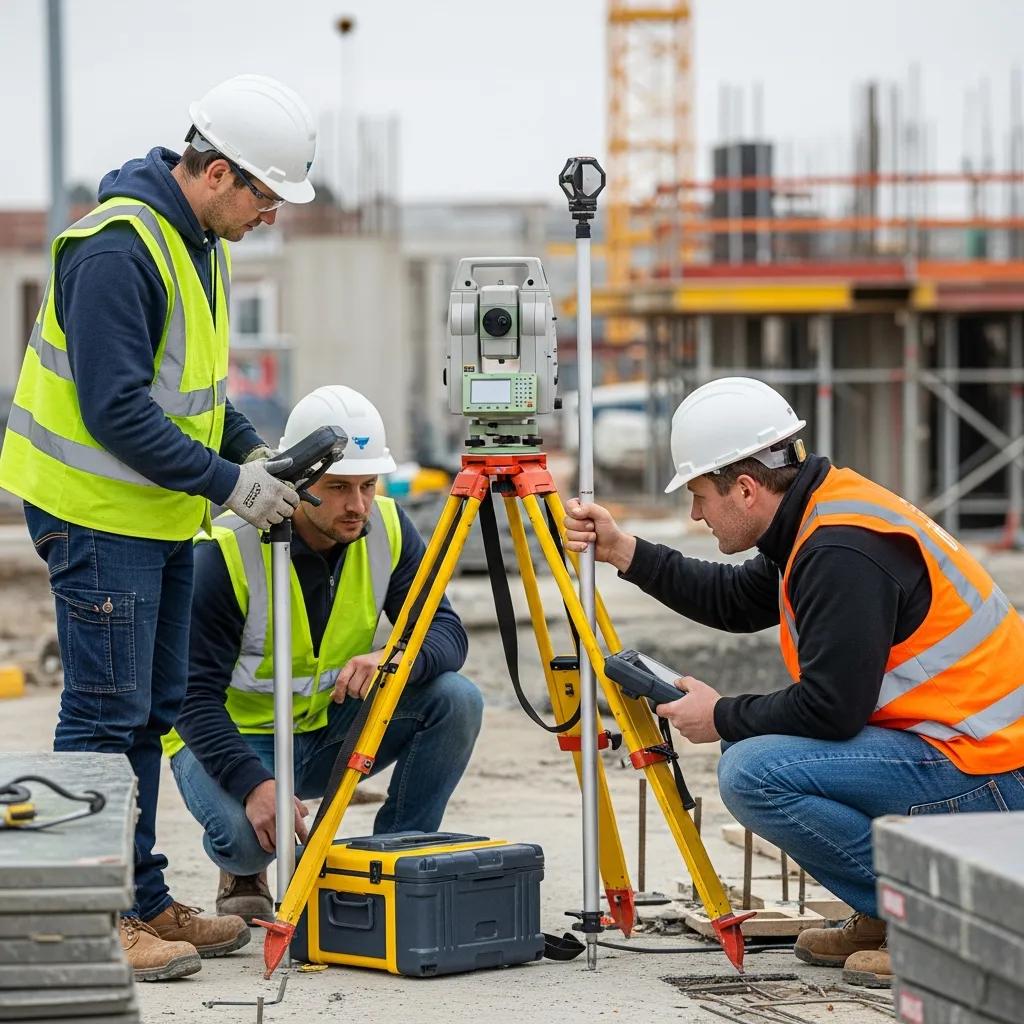
MEP Layout with Robotic Total Station in Raleigh, NC: Precision Construction Services for Optimal Project Outcomes
MEP layout using a Robotic Total Station (RTS) is the field process of locating mechanical, electrical, and plumbing systems by driving stakeout points from the model with near–millimeter accuracy. This piece explains how RTS stakeouts translate BIM coordinates into reliable field locations, why that accuracy matters for schedule and budget control, and how VDC practices close the loop between model and site on Raleigh projects. You’ll find a clear RTS field workflow, the practical advantages of Trimble systems, steps for VDC/BIM integration, and measurable on-site benefits like productivity gains and improved safety. We reference Conway Coordination and Layout Services (CCLS) as a local example of a team applying Trimble RTS and VDC methods in the Triangle—illustrating how precise coordination produces verifiable project outcomes. The article is arranged in focused sections: a technical primer on RTS-driven MEP layout, reasons to hire Raleigh-based layout specialists, practical VDC/BIM integration steps, side-by-side benefits, and how to request a local consultation. Keywords such as Raleigh MEP coordination, Robotic total station Raleigh, and Trimble total station Raleigh appear throughout to help teams searching for local precision layout services.
What is MEP Layout with Robotic Total Station and How Does It Enhance Construction Precision?
MEP layout with a Robotic Total Station is a model-driven method for placing design-intent coordinates on the structure using an automated surveying instrument. In practice, teams export BIM or CAD stakeout points into RTS controller software, set a reliable station, then use a prism or reflectorless measurement to position hangers, anchor bolts, sleeves, and other components to design tolerances. That consistent spatial reference between model and site reduces clashes and costly field adjustments. When RTS data is tied into project workflows, layout cycles shorten, a single operator can handle many stakeouts, and verified as-built records are captured to update the model. This operational foundation makes the field steps and Trimble-specific benefits that follow straightforward to implement on Raleigh jobs.
How Does Robotic Total Station Technology Work in MEP Layout?
Robotic Total Station systems operate by loading model coordinates into the instrument controller, establishing a precise station point, and guiding the operator to each stakeout location using a prism or reflectorless laser with millimeter accuracy. The usual workflow starts with exporting stakeout files from the model, setting up and orienting the RTS on known control points, and then using the RTS to navigate to and confirm each coordinate. Field measurements and stakeout confirmations flow back into the VDC environment as CSV exports or point-cloud updates, enabling iterative QA/QC between designers and crews. Single-operator features and automated tracking reduce crew size and human error, while consistent data formats preserve traceability and speed verification. That model→station→stakeout→model loop ensures the digital design governs field placement and supports BIM reconciliation.
What Are the Key Advantages of Using Trimble Total Station for Construction Layout in Raleigh?
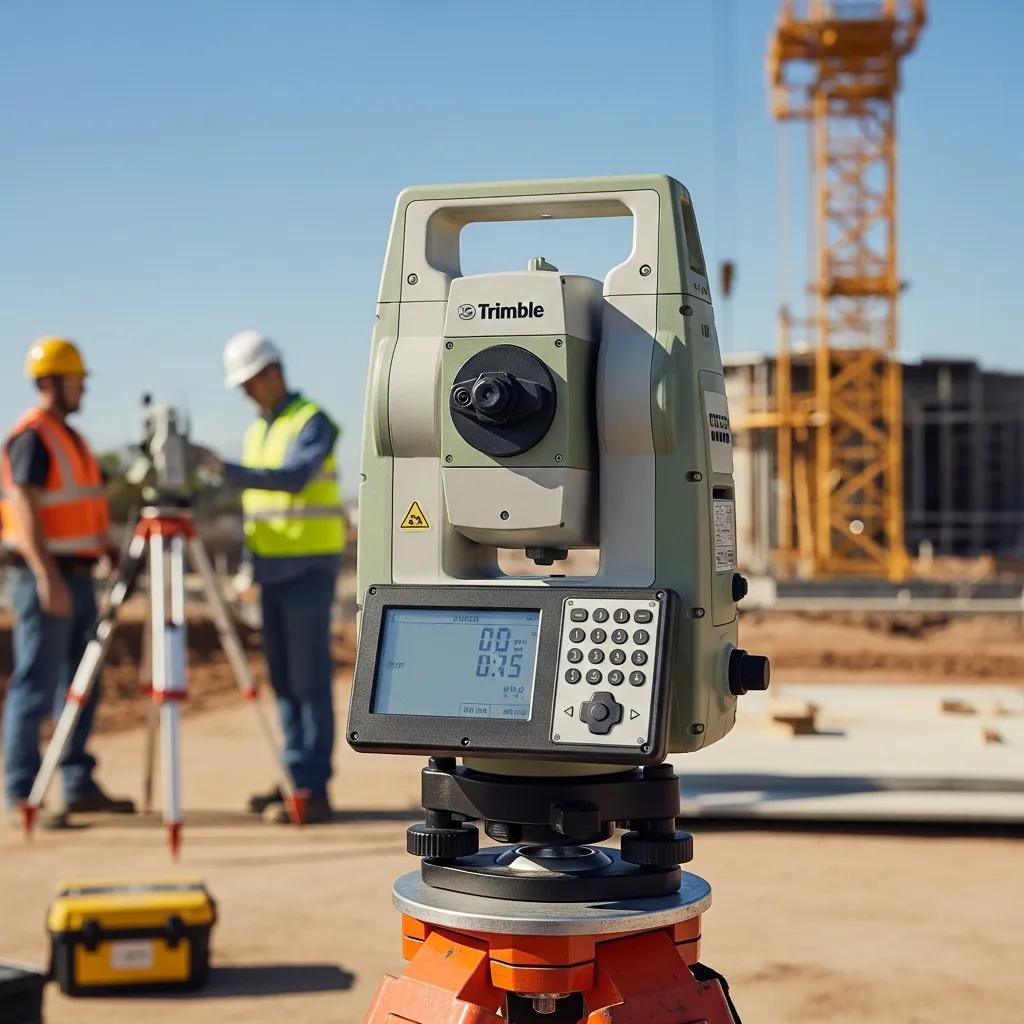
Trimble Total Station systems deliver millimeter-level accuracy, dependable software interoperability, and a mature data ecosystem—qualities well suited to Raleigh projects that require tight MEP tolerances. Trimble hardware and controllers support direct import/export with standard BIM/CAD formats and keep stakeouts repeatable across multiple setups, which matters for anchor bolt verification and complex interior hanger layouts. Using established Trimble workflows speeds stakeout, reduces measurement variability, and produces auditable verification that contractors and owners can trust. On Raleigh projects where schedules are tight and prefabrication plays a role, these capabilities translate into fewer field corrections, predictable shop interfaces, and clearer as-built documentation for commissioning. Local teams who standardize on Trimble RTS gain repeatable processes that minimize surprises and meet tighter tolerances on critical MEP elements.
Why Choose Professional Raleigh MEP Layout Services for Your Construction Project?
Hiring professional Raleigh MEP layout specialists aligns design intent with field execution by combining surveying technology, coordination expertise, and local project know-how to lower risk and cut rework. Experienced providers offer repeatable workflows—model validation, stakeout planning, field verification, and QA/QC reporting—that convert BIM coordinates into verified installations and help general contractors keep projects on schedule.
Below is a table mapping common services to the problems they fix and the outcomes project teams typically see when they hire professional layout support.
| Service | What It Solves | Typical Outcome/Metric |
|---|---|---|
| MEP layout (RTS stakeout) | Misplaced hangers, conduit, anchor bolts | Installation tolerance in millimeters; fewer rework hours |
| VDC consulting | Poor sequencing and coordination | Fewer install clashes; higher prefabrication yield |
| 3D scanning / as-built capture | Unknown existing conditions | Accurate point cloud for retrofit and verification |
How Does Expert MEP Coordination Reduce Errors and Rework in Raleigh Projects?
Expert MEP coordination reduces errors and rework by addressing clashes, sequencing, and stakeout planning before crews install systems. Coordination work includes model review sessions, prioritized clash resolution, and staged stakeout lists that match installation windows—steps that cut last-minute field compromises. Field verification loops—where stakeout feedback updates the model—create a continuous QA/QC cycle that catches deviations early and limits schedule ripple effects. That front-loaded approach turns design-time detection into fewer change orders and faster commissioning, and it supports prefabrication with verified coordinates that reduce shop-fit issues. Less rework not only saves labor and materials but also improves confidence in milestone handovers.
What Industries Benefit Most from Precision MEP Layout in Raleigh, NC?
Many Raleigh industries gain from precision MEP layout because of tight tolerances, regulatory requirements, or equipment alignment needs. Healthcare facilities need exact placement of medical gas lines and ceiling supports to meet compliance and sterile-environment standards. Manufacturing and industrial sites depend on precise utility routing and anchor bolt locations for machine alignment. Commercial offices and high-rises rely on coordinated MEP hangers and penetrations to protect finishes and ceiling heights. Historic renovations use careful as-built capture and constrained RTS workflows to avoid invasive corrections and preserve existing fabric. Across these sectors, model-driven layout reduces risk and speeds reliable handover.
How Does VDC and BIM Integration Improve MEP Layout Accuracy with Robotic Total Stations?
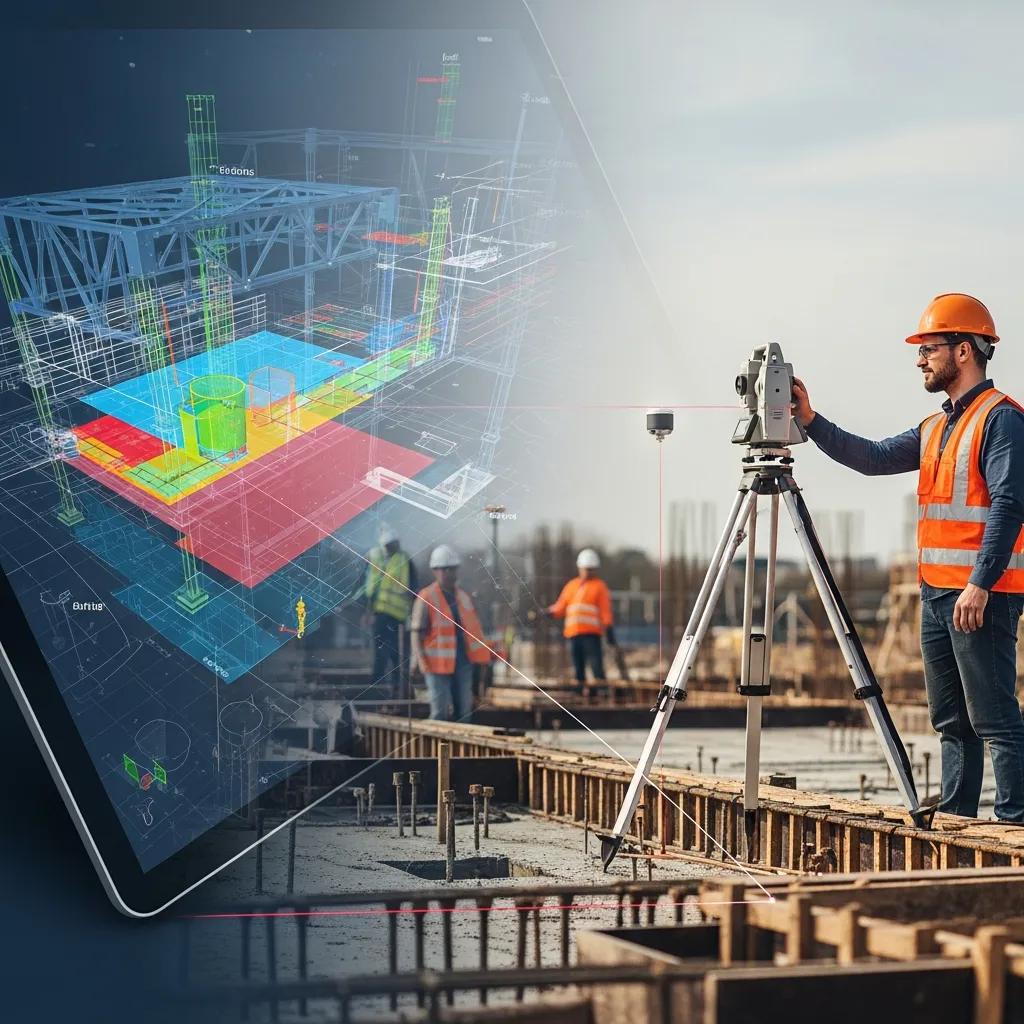
VDC and BIM integration raise layout accuracy by using the model as the single source of truth, running clash checks ahead of field work, and exporting verified stakeout coordinates that the RTS can consume directly. The integration sequence moves from model cleanup to coordination and clash resolution, then to stakeout data export—creating a closed loop between design and construction. This model-driven approach closes common gaps—misaligned coordinate systems or outdated drawings—and supports prefabrication with precise points for shop fabrication.
Below is a concise integration table showing how RTS data ties into BIM and VDC workflows and the practical value at each step.
| Entity | Attribute | Integrated Value |
|---|---|---|
| RTS | Data exchange (CSV/stakeout lists, point exports) | Fewer field errors; faster stakeout turnaround |
| BIM | Clash detection / coordinated model | Early conflict resolution; reduced RFI-driven changes |
| VDC | Model update cadence / scheduling | Improved sequencing; time savings during installation |
What Role Does Virtual Design and Construction Play in Streamlining MEP Workflows?
Virtual Design and Construction streamlines MEP work by coordinating multi-discipline models, planning installation sequences, and delivering stakeout-ready packages for the Robotic Total Station. VDC teams merge architectural, structural, and MEP models to find clashes, suggest routing alternatives, and assemble installation work packages by level or trade. By producing prioritized stakeout lists and 2D/3D guidance, VDC reduces on-site decision-making and supports prefabrication with exact shop coordinates. The result is fewer interruptions during installation, clearer scopes for subcontractors, and a more predictable schedule tied to verified layout milestones. Including VDC in the layout loop keeps model revisions flowing to the field quickly, maintaining alignment between design intent and construction reality.
How Does Building Information Modeling Facilitate Clash Detection and Coordination?
Building Information Modeling enables automated collision checks between MEP systems and structural or architectural components, then exports resolved geometry and stakeout points for RTS verification. Typical BIM workflows run clash detection, prioritize issues, and coordinate resolutions with the responsible trades; approved geometry is then exported into stakeout-friendly formats (IFC-derived point lists, CSV stakeout files) that RTS controllers accept. This approach reduces in-field problem solving, ensures stakeout points reflect the latest coordinated design, and leaves an auditable trail showing installations match the approved model. Verification—using as-built capture or stakeout confirmations—closes the loop by updating the BIM with field-verified positions.
What Are the Practical Benefits of Robotic Total Station Construction in Raleigh?
On-site, Robotic Total Station workflows deliver faster stakeouts, smaller measurement crews, improved safety by limiting time in hazardous areas, and measurable cost avoidance from reduced rework. RTS stakeouts provide accurate as-built verification for commissioning and turnover, while single-operator modes lower labor costs and simplify scheduling.
Below is a comparative table contrasting RTS-driven layout with traditional methods across common project metrics to clarify those practical differences.
| Approach | Accuracy | Speed | Labor | Safety |
|---|---|---|---|---|
| Robotic Total Station (RTS) | Millimeter-level repeatability | Faster stakeout cycles | Single-operator possible | Less time spent in hazardous zones |
| Traditional manual layout | Centimeter-level variability | Slower with iterative checks | Larger crews required | Greater personnel exposure |
| Laser measure / tape methods | Variable accuracy | Slower for complex tasks | Multiple operators | Increased exposure during layout |
How Does Robotic Total Station Layout Increase On-Site Productivity and Safety?
Robotic Total Station layout boosts productivity by shortening stakeout sequences and shrinking crew size with single-operator workflows; it improves safety by reducing the number of people who must enter confined or active construction zones. Productivity gains come from automated instrument tracking, rapid coordinate acquisition, and direct data logging that remove repetitive manual measures and reduce downtime between trades. Safety improves because fewer workers are exposed to hazards for extended periods—one trained operator can perform stakeouts while installation crews continue their work. The net result is a leaner field operation, predictable layout timelines, and lower incident exposure that supports smoother sequencing and faster progress.
In What Ways Does Precision Layout Reduce Construction Costs and Delays?
Precision layout cuts costs and schedule risk by lowering rework, reducing change orders caused by misaligned installations, and shortening commissioning through accurate as-built records. When hangers, conduits, and anchor bolts hit design tolerances, trades avoid corrective demolition, material waste drops, and schedule float is preserved. Metrics such as reduced rework hours, fewer RFIs tied to misplacement, and quicker commissioning quantify the savings. Precision also improves handover predictability, reduces punch-list items, and enables earlier facility turnover—reducing indirect costs from extended schedules.
Where Can You Find Reliable MEP Layout and Robotic Total Station Services in Raleigh, NC?
To hire dependable MEP layout and Robotic Total Station services in Raleigh, look for local teams that combine RTS expertise with VDC consulting and strong documentation practices. A practical consultation usually starts with a short project intake—share drawings, scope, and constraints—followed by a technical review, a proposed stakeout and verification scope, and a quoted deliverable and timeline plan.
Follow these steps to start a Raleigh MEP layout consultation:
- Gather and submit project drawings plus a brief scope summary so the provider can assess scale and coordination needs.
- Request a technical review to identify potential coordination issues and determine the RTS stakeout scope required for accurate installation.
- Receive a scoped proposal and timeline outlining field verification, VDC coordination, and deliverables such as stakeout reports and as-built records.
What Makes Conway Coordination and Layout Services the Trusted Choice in Raleigh?
Conway Coordination and Layout Services (CCLS) is a family-owned Raleigh firm that blends Robotic Total Station layout using Trimble systems with hands-on VDC consulting. The team emphasizes precision, reliability, and efficient execution—pairing RTS stakeout workflows with model-based coordination to reduce surprises and support commissioning. CCLS positions itself as a practical partner by delivering verifiable stakeout data, coordinated model integration, and focused consulting that aligns layout with project timelines. Those qualities—family ownership, decades of field experience, and Trimble RTS proficiency—tie directly to the outcomes clients want: fewer rework cycles, clear verification, and dependable execution.
How Can You Request a Consultation for Your Raleigh MEP Layout Project?
Requesting a Raleigh MEP layout consultation is a short, focused exchange to establish scope, deliverables, and timing so an accurate proposal can be produced. Start by preparing project drawings and a summary of MEP scope and constraints, then contact the provider to schedule an initial technical call for needs assessment and site-constraints review. On that call, expect the provider to outline the proposed RTS stakeout workflow, required deliverables (stakeout reports, as-built documentation), and an estimated timeline for field work and VDC coordination. After the call the provider will deliver a scoped proposal with milestones, verification steps, and acceptance criteria; accepting it leads to mobilization and coordination planning.
- Next steps: Collect drawings, highlight critical areas (anchor bolts, hanger zones), and request the initial technical review to get a scoped proposal and timeline.
- What you will receive: A clear stakeout scope, sample deliverables, and a proposed schedule for field verification and model reconciliation.
- Why this matters: Defined expectations and verified stakeout deliverables reduce risk, speed installation, and support predictable turnover.
Frequently Asked Questions
What is the difference between Robotic Total Station and traditional surveying methods?
Robotic Total Station (RTS) technology outperforms traditional surveying in accuracy and efficiency. RTS delivers millimeter-level precision versus the centimeter-level variability common with manual methods. RTS also supports single-operator workflows that reduce crew size and labor costs. Automated tracking and data logging mean fewer human errors and faster layout cycles. Traditional approaches typically need larger teams and more time-consuming manual measurements, making RTS the more modern, productive choice for construction layout.
How does the integration of VDC and BIM enhance project collaboration?
Integrating Virtual Design and Construction (VDC) with Building Information Modeling (BIM) gives teams a shared, up-to-date model to work from, which improves collaboration across trades. VDC enables early clash detection and resolution before field work begins, reducing costly on-site conflicts. With model-driven coordination, stakeholders align design intent with field execution, streamline workflows, and shorten decision cycles—resulting in better outcomes and fewer schedule surprises.
What are the safety benefits of using Robotic Total Station in construction?
Robotic Total Station use improves safety by minimizing the time workers spend in hazardous zones. RTS enables a single trained operator to handle stakeouts, which lowers the number of personnel required on site and reduces exposure to risk. The precision of RTS also cuts rework that can create unsafe conditions. Overall, RTS supports a safer jobsite by streamlining layout tasks and limiting people’s time in potentially dangerous areas.
How can precision layout impact project timelines?
Precision layout shortens project timelines by reducing rework and change orders. When MEP systems are installed correctly the first time, trades move through scopes more smoothly and commissioning happens faster. Accurate layouts enable better scheduling and coordination because teams can rely on dependable data for planning. The time saved through precision layout translates to quicker project completion and improved productivity for owners and contractors.
What types of projects benefit most from MEP layout services?
MEP layout services are most beneficial for complex projects such as healthcare facilities, manufacturing plants, and high-rise buildings—environments with tight tolerance, regulatory, or equipment-alignment demands. Healthcare facilities require exact medical gas and ceiling support placement; manufacturing needs accurate anchor bolt locations for machinery; and high-rises need coordinated penetrations and hanger systems to protect finishes. Precision layout reduces errors, streamlines installation, and supports successful handovers for these project types.
What should clients consider when choosing an MEP layout service provider?
When selecting an MEP layout provider, evaluate experience, technology capabilities, and documentation practices. Choose a team with a proven track record using Robotic Total Station technology and integrating VDC/BIM processes. Confirm they provide clear communication, timely updates, and thorough reports throughout the project. Understanding their QA approach and commitment to minimizing rework will help ensure a reliable partnership and successful execution.
Conclusion
Using Robotic Total Station technology for MEP layout in Raleigh delivers the precision teams need to reduce installation errors and improve efficiency. Paired with VDC and BIM workflows, RTS-driven layout streamlines coordination, cuts rework, and saves time and cost during commissioning. Working with professional layout services aligns design intent with field execution and creates a collaborative path to on-time handover. Ready to bring that precision to your next project? Contact a trusted Raleigh provider to get started.