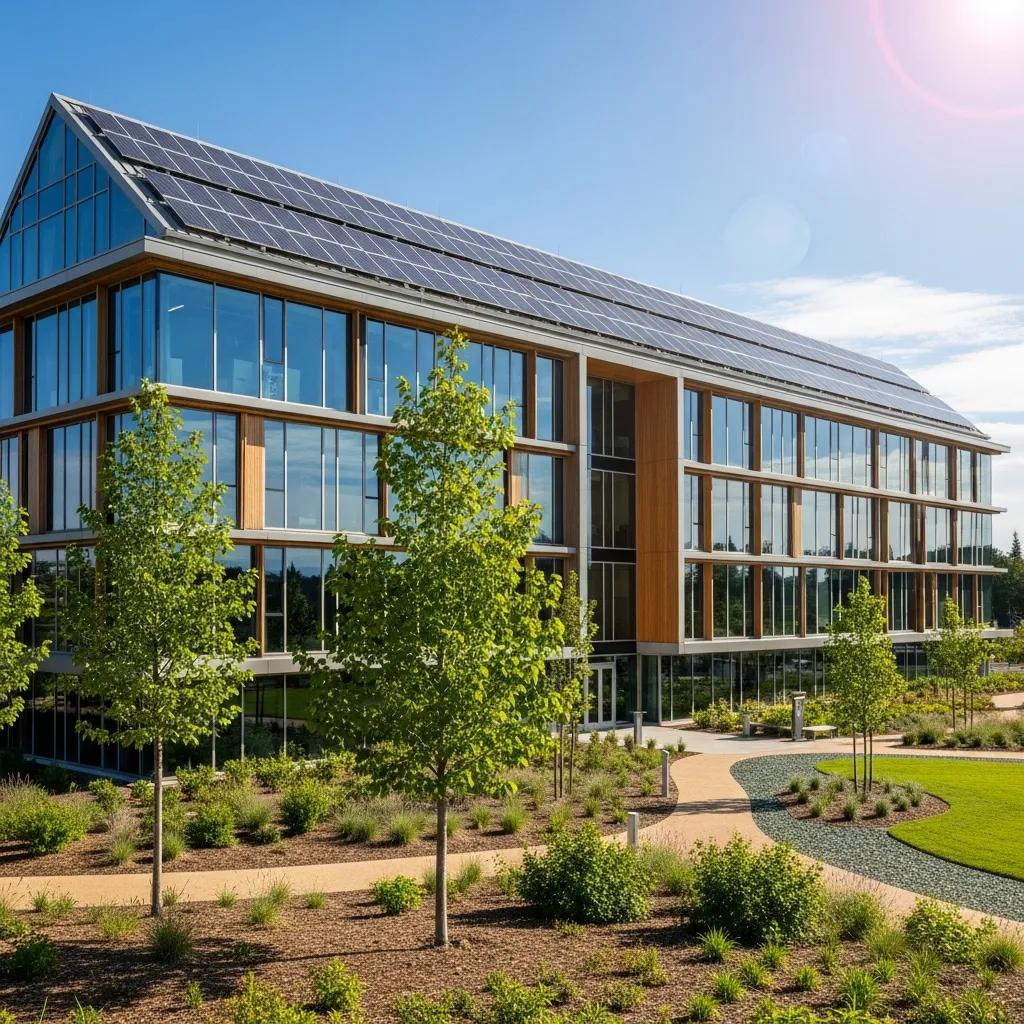
Proven Strategies for Energy-Efficient Buildings: Optimization, Construction Precision, and Sustainable Practice
Buildings consume energy for heating, cooling, lighting, and daily operations. Improving energy efficiency means cutting that consumption while keeping occupants comfortable and systems reliable. This article lays out practical, construction-ready approaches — from passive envelope strategies to VDC-enabled energy modeling and survey-grade layout for HVAC — that reduce schedule risk, lower lifecycle costs, and protect modeled performance through construction and turnover. We organize the content into five focused sections: core strategies, how Virtual Design and Construction (VDC) preserves performance, precise renewable integration, retrofit workflows for existing stock, and how smart building systems tie back to layout decisions. Along the way we highlight the technical tools (energy modeling, clash detection, as-built capture, sensor siting) and operational impacts (reduced thermal bridging, fewer field changes, cleaner commissioning) with field-tested coordination practices and example services that deliver those outcomes.
Too often modeled targets don’t survive construction because design intent is lost in the field. This guide emphasizes continuity — from model to site and from turnover to operations. You’ll find actionable checklists, comparison tables, and coordination workflows that link sustainable construction practices to measurable energy savings. Industry keywords such as energy efficient buildings, BIM energy modeling, VDC for energy efficiency, precision layout for HVAC, and 3D scanning energy audit are woven into the text to support clarity and discoverability for practitioners.
What Are the Key Strategies for Enhancing Building Energy Efficiency?
Improving building energy performance centers on three goals: reduce loads, increase system efficiency, and ensure measured operation through design-to-field continuity. That means prioritizing passive measures to lower demand, optimizing MEP systems and routing to cut distribution losses, integrating on-site generation where it makes sense, and enabling operations with smart controls and continuous commissioning. The payoff is lower site energy, better occupant comfort, and closer alignment between as-modeled and in-use performance. Below are the primary strategies, presented to help teams make early, high-impact decisions.
Top strategies for energy-efficient buildings include:
- Passive envelope and passive design: Lower heating and cooling demand with continuous insulation, airtight detailing, high-performance glazing, and orientation choices that limit thermal bridging.
- High-efficiency HVAC and optimized distribution: Right-size equipment and design duct and piping runs to reduce friction losses and simplify precise commissioning.
- Renewable energy integration: Coordinate solar, geothermal, or wind systems with structure and electrical design to maximize on-site generation and minimize losses.
- Digital workflows and modeling: Use BIM energy modeling and VDC to simulate performance, detect clashes, and sequence construction so efficiency gains survive installation.
- Operational controls and smart systems: Deploy sensors, BMS integration, and automated controls for demand response, daylight harvesting, and ongoing commissioning.
These priorities set the framework for the technical enablers that follow — including how precision layout and digital twins help keep modeled performance intact through construction and into operations.
At Conway Coordination and Layout Services (CCLS) we support many of these strategies by delivering precision layout and digital coordination that bridge model intent to field execution. Our VDC consulting and BIM coordination translate energy models into buildable sequences, and we use Robotic Total Station layout, 3D scanning, and point-cloud integration to verify as-built conditions against design. Combining VDC with survey-grade layout reduces rework and helps ensure HVAC routing, insulation continuity, and renewable interfaces are installed within the tolerances needed to achieve predicted performance. The brief vendor perspective above illustrates a practical workflow; the remainder of this guide focuses on neutral, broadly applicable techniques.
How Does Precision Layout Improve Energy Performance in Buildings?
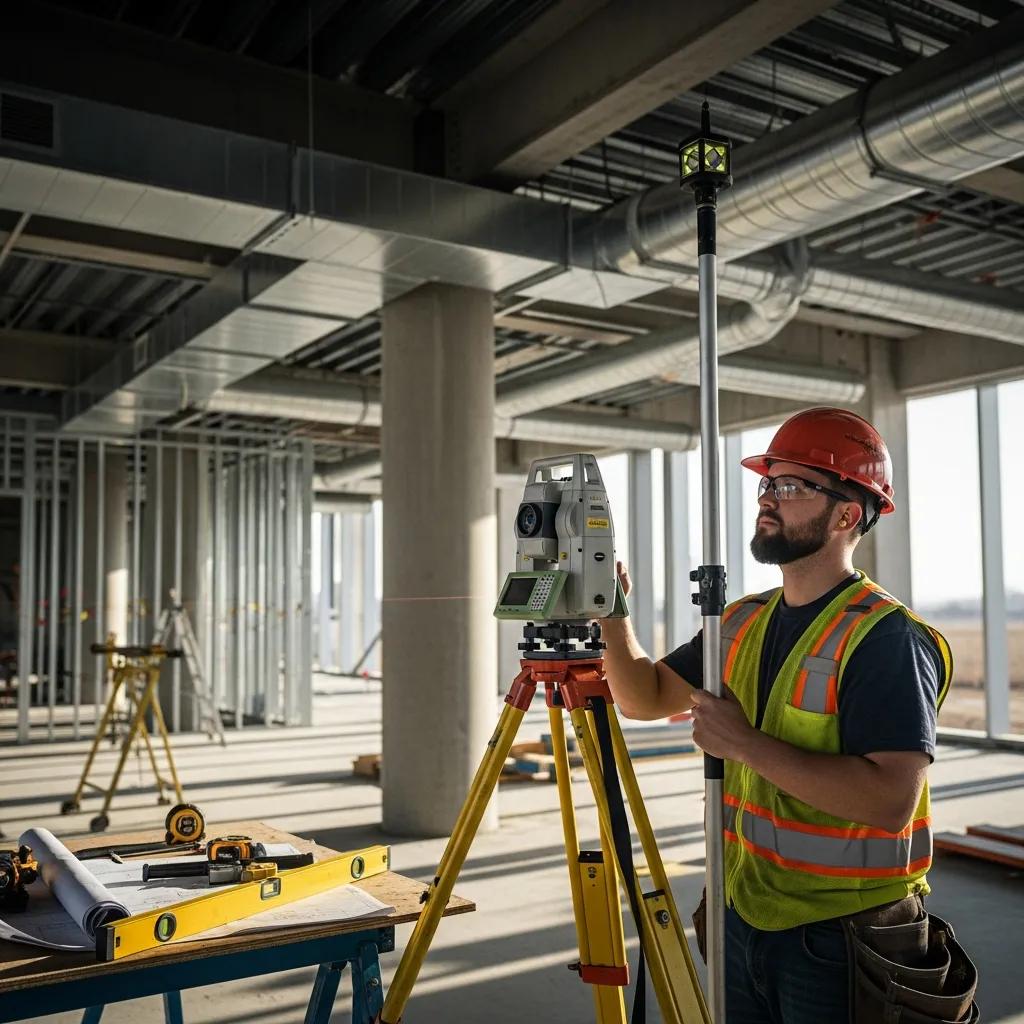
Precision layout places envelope components, penetrations, and MEP runs within the tolerances required to preserve thermal continuity and system efficiency. Properly aligned insulation, continuous air barriers, and correctly located sleeves prevent thermal bridging and air leakage that would otherwise raise loads. For distribution systems, carefully laid-out ductwork and piping avoid offsets and kinks that increase pressure drop and raise fan and pump energy. In the field, survey-grade methods — like robotic total station layout and coordinate verification — reduce adjustments and rework, leading to fewer performance-compromising fixes and a more predictable commissioning process.
Practical examples make this clear: sleeve alignment within design tolerance maintains insulation continuity at penetrations, and accurately placed duct risers prevent offset-induced pressure losses that can measurably raise fan energy. These precision wins are directly tied to earlier design choices and prepare projects for digital model verification and as-built validation.
What Role Do Sustainable Construction Practices Play in Energy Optimization?
Sustainable construction practices turn modeled savings into real-world performance by enforcing correct materials, installation quality, and sequencing that protect design intent. Staged air-sealing inspections, correct insulation orientation, detailed window flashing, and pre-commissioning checks are simple but powerful examples. Energy models cannot fully anticipate sloppy workmanship or sequencing conflicts; rigorous quality controls, inspection checklists, and coordinated trade sequencing reduce those risks and preserve modeled savings.
Coordination that includes regular design-to-field reviews, model-driven checklists, and targeted third-party verification creates a safety net where complexity is high. Those practices naturally lead to digital verification and scanning workflows that capture as-built conditions and feed commissioning rounds before turnover.
How Does Virtual Design and Construction Optimize Energy Performance?
Virtual Design and Construction (VDC) preserves design efficiencies during construction by combining coordinated models, simulation, clash detection, and sequencing. VDC ties energy modeling to constructability reviews so energy-saving details remain achievable in the field, and it enables prefabrication and sequencing that reduce site variability. Interoperable models, automated clash workflows, and simulation-driven decisions minimize thermal bridging, reduce MEP conflicts, and shorten schedules — all positive contributors to a building’s energy goals. Below are the specific VDC mechanisms that consistently deliver value.
VDC drives energy outcomes through several mechanisms:
- Energy modeling integration: Linking BIM to analysis tools supports iterative trade-offs that lower loads and refine equipment sizing.
- Clash detection and coordination: Finding MEP conflicts early prevents on-site fixes that can compromise thermal or airflow performance.
- Sequencing and prefabrication: Model-driven off-site fabrication and clear install sequences reduce tolerances lost to field adaptations.
To compare common VDC/BIM features and expected outcomes, the table below summarizes how specific capabilities translate into measurable benefits.
Different VDC/BIM features support distinct energy outcomes through coordinated workflows.
| Capability | Coordination Attribute | Expected Outcome |
|---|---|---|
| Energy Modeling | Early integration with BIM | Lower peak loads and better-sized equipment |
| Clash Detection | Automated MEP conflict checks | Less field rework and fewer thermal breaches |
| Sequencing & Prefab | Model-driven schedules and shop drawings | Shorter on-site durations and more consistent installs |
Linking analysis, coordination, and sequencing in a VDC workflow narrows the gap between modeled performance and built reality. The sections that follow describe how BIM supports specific analyses and how digital twins extend those benefits into operations.
How Does BIM Facilitate Energy Modeling and Clash Detection?
BIM serves as the single source of truth for geometry and systems data that energy analysis tools consume. Interoperable model exchange (IFC, COBie, or native exports) preserves element attributes for accurate simulation, enabling iterative thermal and daylight studies, HVAC zoning tests, and precise distribution sizing based on real geometry and envelope properties. The same coordinated model supports clash detection to identify spatial conflicts among ducts, piping, structure, and equipment; resolving those conflicts in the model avoids field compromises that can degrade performance. The net result is fewer site changes, improved maintenance access, smoother commissioning, and closer alignment between as-modeled and as-built systems.
A tight BIM workflow therefore lowers the risk of performance loss from constructability issues and provides the documentation needed for commissioning and handover. That model-to-field traceability also speeds retrofit planning and digital twin creation, as discussed below.
What Are Digital Twins and Their Impact on Real-Time Energy Management?
A digital twin combines the as-built BIM with live operational data to create a dynamic model for real-time energy management, fault detection, and continuous commissioning. By ingesting sensor and BMS feeds, the twin flags deviations from expected performance — for example, stuck economizer dampers or declining coil efficiency — so operations teams can prioritize fixes that deliver the largest energy returns while preserving comfort. Over time the twin reduces drift from modeled expectations and supports predictive maintenance that helps systems operate near their designed efficiency.
Digital twins depend on accurate as-built capture and well-coordinated BIM; without those prerequisites, real-time optimization and long-term savings are limited.
How Can Renewable Energy Systems Be Integrated with Precision in Building Projects?
Successful renewable integration requires coordination across structural, electrical, and MEP disciplines so collectors, inverters, trenches, and foundations are installed to tolerances that protect yield. Precise layout and model-based coordination align array placement, conduit routes, foundation locations, and access paths with structural capacity and shading analysis. When tolerances are respected, performance predictions hold, interconnection schedules stay on track, and warranty/O&M access requirements are preserved. Below are best practices and a comparison that show how precision affects typical renewable options.
Best practices include early structural interface reviews, shading analysis tied to verified survey points, and electrical routing that minimizes line losses. The checklist below captures key layout items to confirm before procurement and install.
Key layout checklist for renewable integration:
- Verify shading and tilt/orientation against as-built survey points.
- Coordinate racking anchor locations with structural framing and roof penetrations.
- Confirm conduit entries and inverter placement align with electrical distribution plans.
Those verifications reduce yield risk and rework, and they establish the coordinate control necessary for smooth commissioning and turnover.
In practice, Robotic Total Station surveys and point-cloud integration improve installation accuracy; the short comparison below links layout accuracy to installation outcomes for common systems.
This table compares renewable systems by layout needs and installation benefits.
| Renewable System | Layout Accuracy Requirement | Installation Outcome |
|---|---|---|
| Solar (roof-mounted) | Anchor and module placement within structural anchor tolerances (cm-level) | Higher yield, fewer shading losses, and reduced anchor rework |
| Geothermal | Bore/trench alignment and consistent depth | Predictable loop performance and reliable thermal exchange |
| Wind (small/ground) | Foundation and tower centerline precision | Correct structural fit, safe maintenance access, and stable performance |
Linking layout accuracy to these outcomes makes the value of precise coordination clear. The following H3s dig into solar and subsurface system details where precision often yields the biggest returns.
What Are Best Practices for Solar Panel Layout and Coordination?
Solar yield depends on orientation, tilt, shading, structural interfaces, and conduit routing. Best practice is to verify these factors against model coordinates and survey control before procurement. A robust workflow includes a pre-installation shading study tied to as-built roof geometry, structural anchor load checks, and confirmed conduit pathways to minimize voltage loss and simplify inverter siting. Precise anchor and racking layout reduce mechanical stress and alignment issues that can lead to array-level mismatch. Field verification with survey points or a robotic total station ensures racking and conduit locations match design coordinates and that roof obstructions are addressed before procurement.
Coordination among structural, roofing, electrical, and installer teams during layout reduces change orders and preserves modeled yield, enabling faster commissioning and fewer warranty claims.
How Does Geothermal and Wind Energy Installation Benefit from Accurate Layout?
Geothermal and wind systems need tight tolerances for trenches, bores, and foundations so thermal loops and towers perform as designed. Accurate layout keeps borehole spacing and depth consistent for geothermal loops, avoiding thermal interference and ensuring expected performance. For wind, precise foundation centerlines and elevations guarantee tower fit and preserve maintenance access. Clear civil coordination cuts heavy-equipment rework, saves schedule time, and prevents damage that could compromise system performance.
These precision practices reduce lifecycle maintenance and support predictable energy output, reinforcing the importance of early coordination and survey-verified installation workflows for renewables.
What Are Effective Strategies for Retrofitting Existing Buildings to Improve Energy Efficiency?
Effective retrofits begin with a thorough assessment, prioritize measures by cost-effectiveness and impact, and verify outcomes with measurement and verification (M&V). The workflow is assessment → prioritized upgrades → verification. Diagnostic data shows which measures deliver the best payback with the least disruption. Accurate as-built data from 3D scanning and energy audits reduces scope uncertainty and enables targeted interventions such as insulation upgrades, window replacements, or HVAC right-sizing. The table below compares common measures, diagnostic methods, and expected benefits to help prioritize work.
Retrofit planning principles: fix envelope integrity first, address major distribution inefficiencies next, and sequence work to minimize occupant disruption. Those principles guide phased, practical upgrades for occupied buildings.
| Retrofit Measure | Diagnostic Method | Expected Energy/Payback |
|---|---|---|
| Insulation upgrade | Blower door testing + 3D as-built scan | Significant heating/cooling savings; moderate payback period |
| Window replacement | Thermal imaging + glazing records | Improved comfort and lower peak loads; longer payback in mild climates |
| HVAC replacement/right-sizing | System testing + model recalculation | High operational savings and immediate efficiency gains |
This comparison helps owners focus on measures with clear verification paths and the highest impact. The next subsections explain how 3D scanning strengthens audits and how to phase upgrades with minimal disruption.
How Does 3D Scanning Support As-Built Energy Audits?
3D scanning captures accurate geometry and MEP locations to produce point clouds that feed directly into audit models, cutting assumptions and improving scope definition. Scan-to-model workflows replace multiple manual measurements with high-accuracy spatial data that can be layered with thermal images and BIM for thorough diagnostics. This reduces design errors, reveals hidden penetrations or gap paths, and supports prefabrication of retrofit components where appropriate. The outcome is a tighter connection between audit findings and intervention scope, better cost estimates, and fewer surprises during installation.
Scan-driven workflows therefore improve the reliability of predicted savings and support robust measurement and verification after retrofit work.
What Are Phased Energy Upgrade Approaches for Historic and Commercial Buildings?
Phased upgrades protect historic fabric and minimize business interruption by sequencing work from least to most invasive. Typical phasing starts with envelope measures (air sealing, insulation), proceeds to system upgrades (HVAC, controls), and finishes with renewables or major structural work — verifying performance at each stage. This balances preservation and operational continuity while allowing early savings to help fund later phases. Documentation, mock-ups for preservation review, and tightly coordinated sequencing prevent unintended damage to heritage elements.
Phased schedules also create learning opportunities: commissioning results from earlier phases inform adjustments in later work, producing an iterative path to deeper savings over time.
How Do Smart Building Technologies Enhance Energy Efficiency Through Layout Integration?

Smart building systems improve efficiency by delivering actionable data and automated control that responds to occupancy, daylight, and environmental conditions — but those benefits depend on correct sensor placement and reliable routing enabled by careful layout coordination. Sensors, BMS integration, and automated sequences support demand-controlled ventilation, daylight harvesting, and scheduled setbacks, cutting wasted energy during unoccupied periods. The mechanism is high-quality data from well-sited sensors and dependable connectivity; poor placement or cabling undermines controls and complicates fault detection. The guidance below ties sensor and control planning back to construction coordination.
Smart systems perform best when sensor siting, power, and communications routing are coordinated with finishes and MEP distribution to ensure signal quality and serviceability. The short list below summarizes sensor placement principles by space type for installation and commissioning teams.
Sensor placement guidance by space type:
- Offices and open-plan areas: occupancy and CO2 sensors at breathing height to reliably govern ventilation and desk-level lighting.
- Corridors and circulation: passive infrared sensors for lighting and presence detection to limit standby energy.
- Mechanical rooms: temperature, pressure, and vibration sensors positioned near critical equipment for predictive maintenance and performance monitoring.
These placement rules ensure automated HVAC and lighting strategies receive high-quality inputs. Proper layout also secures access for calibration and reduces the risk of sensor damage during construction or later renovations.
Where Should Sensors Be Placed for Optimal Energy Monitoring?
Sensor placement depends on the monitoring goal: occupancy, air quality, temperature, or light. CO2 and occupancy sensors belong in representative breathing zones away from windows and supply diffusers to avoid biased readings; temperature sensors should be placed out of direct solar gain and near typical occupant zones to reflect comfort conditions. Lighting control sensors work best at desk or zone level to capture usable illuminance for daylight-harvesting algorithms. Power, conduit, and network access must be coordinated with electrical and IT trades during layout to avoid signal loss and ease maintenance.
Well-planned sensor networks produce the baseline data for automated controls and M&V programs, closing the loop between installation precision and verified energy savings.
How Do Automated HVAC and Lighting Systems Contribute to Energy Savings?
Automated HVAC and lighting reduce energy through scheduling, demand-controlled ventilation, set-back strategies, and daylight harvesting, with savings varying by measure and building type. The mechanism is real-time response to occupancy and environmental inputs, which trims run-hours and peak demand while preserving comfort. Properly tuned daylight harvesting can cut lighting energy substantially in perimeter zones; demand-control ventilation and optimized setpoints reduce fan, pump, and conditioning loads. Accurate layout and commissioning are essential — misrouted control wiring or poorly placed sensors can erase expected savings and complicate troubleshooting.
When controls, layout, and commissioning are coordinated, buildings achieve reliable savings and create a foundation for continuous improvement via digital twins and periodic M&V reviews.
For teams needing professional coordination that links modeling and field verification, Conway Coordination and Layout Services offers VDC consulting, BIM modeling and coordination, 3D scanning, and Robotic Total Station layout to help translate energy goals into delivered work. Our services address the coordination points described here — from clash-free MEP routing to sensor-routing verification — helping projects preserve modeled efficiency through construction and turnover while minimizing rework.
This guide has covered structural, operational, and digital practices that combine to improve building energy efficiency. The workflows and verification methods described above form a practical roadmap for delivering buildings that perform as modeled.
Frequently Asked Questions
What are the benefits of using smart building technologies for energy efficiency?
Smart building technologies automate controls that adapt to real-time occupancy and environmental conditions, reducing wasted energy and maintaining comfort. Properly implemented, sensors and a BMS optimize HVAC and lighting, enable predictive maintenance, and support ongoing commissioning — all of which cut operating costs and keep systems running more efficiently over time.
How can building owners ensure the success of energy efficiency retrofits?
Start with a comprehensive energy audit to identify high-impact measures, then prioritize upgrades by cost-effectiveness and disruption. A phased approach minimizes tenant disturbance while allowing verification after each stage. Use precise as-built data — for example, 3D scanning — to tighten scopes and reduce surprises. Finally, implement measurement and verification (M&V) to confirm savings and guide adjustments.
What role does continuous commissioning play in energy efficiency?
Continuous commissioning keeps systems tuned and efficient after turnover. By monitoring performance with real-time data and addressing drift or faults quickly, facility teams sustain efficiency gains, improve occupant comfort, and extend equipment life. It’s a proactive, data-driven way to protect energy investments.
How do energy modeling and simulation contribute to building design?
Energy modeling and simulation quantify expected consumption and let teams evaluate design choices — from insulation and fenestration to HVAC strategies and renewables. Simulations support informed trade-offs, help size systems correctly, and increase the likelihood that as-built performance will meet targets.
What are the challenges of integrating renewable energy systems in buildings?
Renewable integration requires tight coordination among structural, electrical, and mechanical disciplines, plus careful attention to shading, structural loads, and local codes. Early interface reviews, accurate layout verification, and clear routing plans help mitigate those challenges and protect expected yield.
How can building occupants contribute to energy efficiency efforts?
Occupants make a measurable difference: turning off lighting when not needed, using daylight, and following thermostat guidance all reduce energy use. Education, clear feedback (for example, energy dashboards), and simple behavioral nudges help foster a culture of conservation that supports the building’s technical measures.
Conclusion
Delivering energy-efficient buildings requires coordinated choices across design, construction, and operations. Combining passive strategies, precise layout, VDC/BIM coordination, and smart controls gives owners the best chance of meeting modeled performance while lowering lifecycle costs and improving comfort. Precision in layout and coordination is especially important for renewable integration and retrofit success. If you’d like help translating energy goals into executed work, our team can support VDC, BIM coordination, 3D scanning, and survey-grade layout services to protect performance through construction and handover.