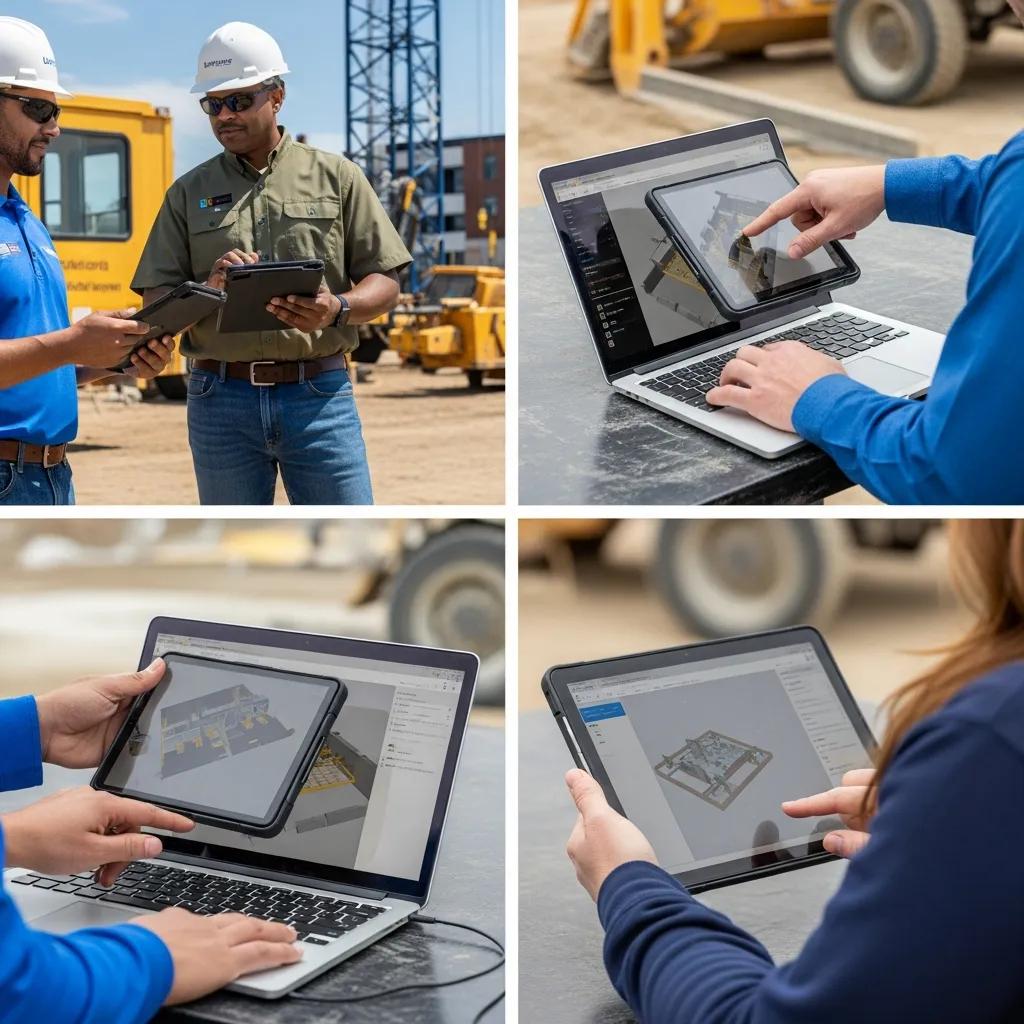
VDC Construction Consulting in Greenville, SC — Optimize Your Projects with Practical Digital Workflows
Virtual Design and Construction (VDC) brings coordinated digital workflows, model-driven planning, and model-to-field execution together to cut errors, speed schedules, and raise installation quality on Greenville projects. This piece explains how VDC ties BIM, 3D laser scanning, clash detection, 4D sequencing, and accurate field layout into measurable time and cost savings for owners, contractors, and design teams. You’ll see why VDC matters locally in Greenville, how tailored VDC scopes are defined and delivered, which technologies deliver near–millimeter accuracy, and which sectors gain the most. Along the way we include practical process steps, sample deliverables, and concise answers to common questions so decision-makers can evaluate a VDC plan with confidence. References to local capability and execution patterns highlight how South Carolina teams can optimize construction digital workflows while keeping technical guidance front and center. Read on for actionable checklists, service comparisons, and step‑by‑step guidance that tie VDC outcomes to metrics like reduced RFIs, fewer change orders, and verified on‑site results.
Why Choose VDC Consulting Services in Greenville, SC?
VDC in Greenville takes a systems view of construction by combining coordinated models, defined workflows, and field‑grade layout to prevent downstream errors and improve predictability. The idea is straightforward: federated models reveal clashes and sequencing conflicts early, and model‑driven layout plus reality capture confirm conditions before installation — which directly reduces change orders and stabilizes schedules. For local owners and contractors that means greater confidence on MEP‑dense projects and smoother alignment between designers, fabricators, and field crews. Below we outline the specific VDC mechanisms and why they matter for Greenville work.
VDC reduces costly rework by finding spatial conflicts in the model and enabling prefabrication planning before components arrive on site. Regular clash detection and as‑built validation with point clouds help teams avoid installation surprises and tighten fabrication tolerances. That proactive effort converts modeling time into tangible schedule and cost savings — especially valuable on urban infill and renovation projects where access and tolerances are tight. Next, we explain how these error‑reduction practices also improve collaboration across the project team.
VDC improves collaboration by creating a single source of truth through federated models and shared coordination platforms, which minimizes misinterpretation between architects, engineers, and trades. Regular coordination cadences, cloud model reviews, and visual clash walkthroughs speed decisions and keep changes traceable. That shared context shortens resolution cycles, streamlines procurement for prefabrication, and aligns schedules across disciplines — supporting leaner execution on site. We’ll also note the local provider credibility that backs these claims.
Conway Coordination and Layout Services (CCLS) is a family‑owned firm led by Nathan Conway that delivers VDC consulting and precision field layout across the Southeast, including South Carolina. CCLS focuses on measurable precision using tools like Trimble Robotic Total Stations and 3D laser scanning, and applies proven VDC workflows to connect BIM coordination with reliable field execution. That local experience is why Greenville teams can trust VDC to turn model accuracy into on‑site certainty.
The core VDC advantages for Greenville projects are clear:
- Less rework and fewer RFIs through systematic clash detection and model validation.
- Faster decision cycles and cleaner handoffs via a federated model and steady coordination cadence.
- Millimeter‑level layout and verification using robotic total station integrations.
These benefits set up a closer look at the specific services that produce VDC outcomes and how a custom strategy is developed.
How Does VDC Eliminate Costly Construction Errors?
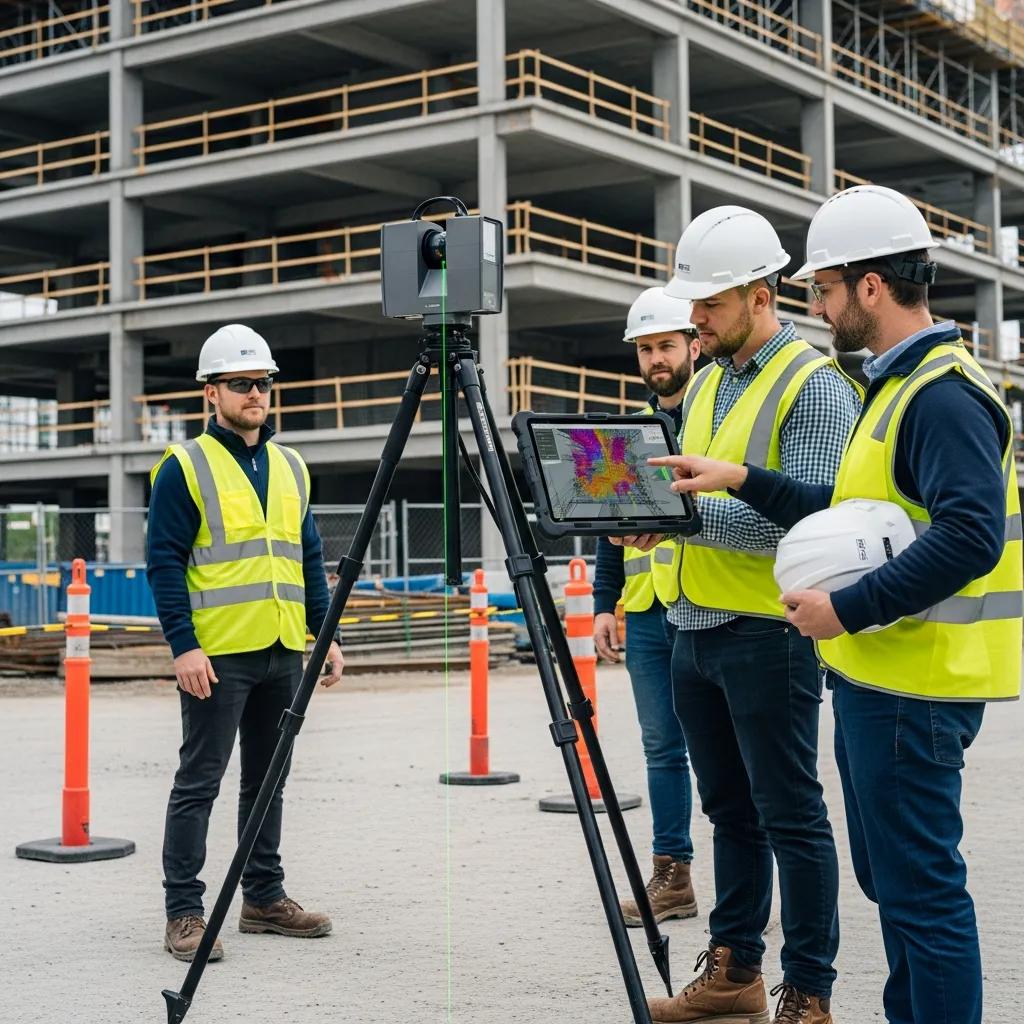
VDC prevents costly errors by detecting spatial and schedule conflicts in coordinated digital models before fabrication or field installation. Automated clash detection finds interferences across MEP, structural, and architectural systems; manual validation and prioritization then sort true constructability risks from false positives. Paired with scan‑to‑BIM verification, teams confirm existing site conditions and reduce surprises on renovations or retrofits. That workflow lowers RFIs and change orders and supports model‑based prefabrication that reduces onsite labor and corrective work.
With coordination focused on prevention, teams spend less time firefighting and more time resolving issues before they affect the schedule. The next section shows how these prevention steps make stakeholder collaboration faster and more predictable in practice.
In What Ways Does VDC Enhance Collaboration Among Project Stakeholders?
VDC improves collaboration by using a federated model as the single, shared source of truth for architects, engineers, contractors, and owners. Centralized coordination platforms and scheduled review cycles — typically weekly — let teams walk through clashes visually, assign responsibility, and track progress to closure. Visual model review reduces reliance on 2D interpretation and speeds agreement on sequencing and prefabrication needs. Clear model deliverables, like clash reports and updated shop drawings, keep stakeholders aligned and speed procurement and installation timelines.
Those collaborative routines increase transparency and accountability, which supports better schedule predictability and fewer surprises in the field. The next major section lists the services that deliver these collaborative and technical advantages.
What Comprehensive VDC Consulting Services Does CCLS Offer?
Our VDC services combine strategy, BIM modeling and coordination, reality capture, clash management, and precision field layout to create an auditable path from model to installation. Below we describe the core service areas, their deliverables, and the client outcomes they produce so decision‑makers can choose the right mix for Greenville projects. The following table maps services to key deliverables and outcomes.
CCLS tailors services to project scale and complexity, emphasizing measurable deliverables and reliable toolchains:
- Custom VDC Strategy Development: Needs assessment, workflow design, and an implementation roadmap that aligns BIM deliverables with project KPIs and field requirements.
- BIM Modeling and Coordination: Discipline authoring, model federation, and regular coordination cycles for MEP, structural, and architectural systems.
- 3D Laser Scanning and Reality Capture (Scan-to-BIM): Point cloud capture and processing to validate as‑built conditions and support renovation, prefab, and tolerance checks.
- Clash Detection and Risk Assessment: Automated clash runs, prioritization, and mitigation plans that feed procurement and prefabrication decisions.
- Trimble‑Powered Field Layout and Verification: Robotic total station layout, QA passes, and model‑to‑field checks for millimeter‑level installation accuracy.
These service areas form a cohesive VDC program that ties digital planning to on‑site execution and quality control. The table below offers a compact comparison to guide selection.
| Service | Primary Deliverable / Tool | Client Outcome |
|---|---|---|
| VDC Strategy Development | Implementation plan, training, KPIs | Aligns team workflows to project goals and enables scalable deployment |
| BIM Modeling & Coordination | Federated model, clash reports (Revit/Navisworks workflows) | Reduces design conflicts and speeds shop drawing production |
| 3D Laser Scanning (Scan-to-BIM) | Point cloud, as‑built model | Validates site conditions and lowers retrofit risk |
| Clash Detection & Risk Assessment | Prioritized clash list, mitigation plan | Decreases RFIs and supports prefabrication |
| Field Layout with Robotic Total Station | Layout control files, verification reports | Ensures installation accuracy and reduces rework |
This comparison clarifies how deliverables map to tangible outcomes and helps leaders decide which services to engage. The sections below explain how a custom VDC strategy is developed, how BIM fits into the workflow, and the role of scanning.
How Is Custom VDC Strategy Developed and Implemented?
A custom VDC strategy starts with a needs assessment to identify stakeholder goals, risk areas, and current workflows. From there we document required BIM deliverables, select tools for model management and clash detection, and define a phased implementation with pilot coordination runs and training. Typical deliverables include an execution plan, coordination schedule, KPIs, and a rollout timeline tied to procurement and fabrication milestones. A pilot validates the approach before full deployment to ensure adoption and measurable improvement.
That structured rollout reduces deployment friction and creates predictable coordination outcomes, which leads into how BIM modeling supports these strategies.
How Do BIM Modeling and Coordination Integrate with VDC?
BIM is the data backbone for VDC: discipline models are authored, federated for coordination, and analyzed for clashes. Common workflows use Revit for authoring and Navisworks or similar tools for clash analysis, with cloud platforms providing shared access and version control. Regular coordination cycles — often weekly — generate clash reports, assign actions, and drive model updates and shop drawing production. Model deliverables such as installation coordinates and prefab files then feed directly into field layout and fabrication.
This data‑driven integration creates consistent handoffs and sets up the scan‑to‑BIM validation described next.
What Role Does 3D Laser Scanning Play in VDC Consulting?
3D laser scanning produces accurate point clouds to validate existing conditions, drive scan‑to‑BIM conversions, and support digital twin creation for complex projects. A scan‑to‑BIM workflow registers point cloud data, extracts geometry, and embeds as‑built context into the federated model so clashes and prefab tolerances are based on reality rather than assumptions. That reduces surprises on renovation projects and improves prefab accuracy for modular components. Integrating point clouds with BIM also supports ongoing verification during installation, closing the loop between planned and actual conditions.
With services mapped out, the next section walks through the process steps that move models into precise field layout.
| Process Step | Tool / Output | Field Result / Quality Control |
|---|---|---|
| Model Authoring & Federation | Revit models, federated models | Coordinated design baseline for layout |
| Clash Detection Runs | Navisworks clash reports | Prioritized conflict list for mitigation |
| Scan-to-BIM Validation | Point cloud, as‑built model | Confirmed site geometry for fabrication |
| Layout File Preparation | Control files for Trimble | Direct model coordinates for field layout |
| Field Layout & Verification | Robotic total station, verification reports | Millimeter‑accurate installation and QA records |
How Does the CCLS VDC Process Streamline Construction from Model to Field?
CCLS’ VDC process streamlines construction through a coordinated model lifecycle: authoring, federation, clash detection, resolution, fabrication readiness, and model‑driven field layout. We emphasize traceability and quality control at every step so model decisions directly inform prefab and site installation. Project teams see fewer field adjustments, faster installation sequences, and documented verification that supports closeout and handover. Below are the step‑by‑step activities and how clash detection and field layout operate in practice.
A typical digital model cycle starts with discipline model delivery, moves to federation for clash testing, and iterates through resolution and sign‑off before layout preparation. Each cycle produces deliverables — clash reports, coordination meeting notes, model updates, and final shop drawings — that reduce constructability risk. Linking model coordinates to layout control files and integrating point‑cloud validation minimizes tolerance surprises and enables a smooth handoff to field layout crews. That connection leads into how clash detection and risk assessment are carried out.
Clash detection runs generate a prioritized list of conflicts that are then validated and assigned for remediation. Runs occur at a regular cadence and clashes are classified by severity and schedule impact. A mitigation plan identifies design changes, sequence adjustments, or prefabrication options, with progress tracked to closure so high‑priority issues don’t reach the field. That disciplined tracking supports confident layout operations and finishes with robotic total station deployment.
Field layout using a Trimble Robotic Total Station turns validated model coordinates into precise physical points for installation and verification. Setup includes establishing control, loading coordinates, performing layout passes, and recording verification data to confirm tolerances. Robotic guidance provides automated prism tracking and high coordinate accuracy, cutting human positioning error and speeding layout cycles. When combined with preloaded shop drawings and fabrication tolerances, this model‑to‑field loop ensures installations match planned geometry and prevents costly on‑site rework.
- Receive discipline models and establish version control for federation.
- Run automated clash detection and prioritize findings by impact.
- Perform manual validation and develop a mitigation plan with stakeholders.
- Capture as‑built conditions with 3D scanning where needed and update models.
- Prepare layout control files and execute field layout with robotic total station verification.
This repeatable approach provides an auditable path from design to installation and supports consistent QA across projects. The table above maps each step to tools and field results for quick reference.
What Are the Steps in Digital Model Development and Coordination?
Digital model development begins when discipline models are delivered, followed by federation and iterative coordination cycles that end in installation‑ready deliverables. Initial tasks include importing authoring models, building the federated coordination model, and running baseline clash detection to find high‑risk conflicts. Coordination meetings assign actions and produce updated models and clash reports until acceptance criteria are met for fabrication and layout. Final deliverables typically include a coordinated model, a clash resolution log, and production‑ready shop drawings.
Those coordination milestones ensure the model used for layout matches agreed design intent and that unresolved issues are tracked before they reach the field. Next we describe how clash detection and risk assessment are handled.
How Is Clash Detection and Risk Assessment Conducted?
Clash detection pairs automated runs with manual validation to filter false positives and prioritize constructability risks. Automated tools flag geometric interferences, coordinators then validate context, assign responsibility, and score clashes by severity and schedule impact. Mitigation plans may call for design revisions, sequence changes, or prefabrication strategies, with progress monitored until closure. Regular reporting and focused review of high‑impact clashes keep critical conflicts from becoming field problems and support timely procurement decisions.
That disciplined clash management reduces downstream surprises and prepares models for precise field layout via robotic total station workflows.
How Does Field Layout Utilize Trimble Robotic Total Station Technology?
Field layout with a Trimble Robotic Total Station turns validated model coordinates into on‑site control points so installations meet tight tolerances. The workflow sets control, loads model coordinates, runs layout and verification passes, and documents results for QA. Robotic total stations automate prism tracking and provide high coordinate accuracy, reducing human positioning error and shortening layout cycles. The outcome is fewer field adjustments, quicker inspections, and greater confidence that installed systems match the coordinated model.
Accurate layout completes the model‑to‑field loop and supports the measurable benefits listed next.
What Are the Proven Benefits of VDC Consulting for Greenville Construction Projects?

VDC consulting delivers quantifiable benefits: reduced rework, faster schedules via 4D sequencing, safer projects through early hazard identification, and higher installation quality by enforcing model‑based tolerances. The mechanisms behind these gains are systematic coordination, validated reality capture, model‑driven prefabrication, and precise layout tools. For Greenville projects, these advantages lower installation risk on MEP‑intensive builds and improve predictability on renovation or constrained sites. The list below summarizes the primary benefits and how they’re achieved.
VDC produces measurable improvements across several dimensions:
- Schedule acceleration using 4D sequencing and prefab planning to shorten on‑site durations.
- Cost savings from less rework and fewer change orders driven by early clash resolution.
- Improved safety by identifying access and interference issues before crews mobilize.
- Higher quality installations through millimeter‑accurate model‑based layout and verification.
To make those benefits easy to compare, the table below links benefits to metrics and example impacts.
| Benefit | Metric / Mechanism | Example Impact |
|---|---|---|
| Reduced Rework | Clash detection, prefabrication | Fewer change orders and lower corrective labor costs |
| Schedule Improvement | 4D sequencing, coordinated procurement | Shorter critical‑path durations and fewer delays |
| Safety Enhancement | Model‑based hazard identification | Reduced on‑site exposures and safer sequencing |
| Quality Assurance | Robotic layout, verification reports | Higher first‑pass installation accuracy |
This benefits matrix shows how VDC mechanisms map to measurable project improvements and supports procurement decisions. The subsections that follow look closer at schedule/cost optimization and safety improvements.
How Does VDC Optimize Project Schedules and Budgets?
VDC optimizes schedules and budgets by linking 4D sequencing with clash‑aware coordination and enabling prefabrication from validated models. Time‑based models reveal critical‑path interdependencies and let teams test sequences virtually to avoid on‑site blockages. Cost savings come when prefab and accurate layout reduce on‑site labor and limit urgent change orders. Together these effects produce more reliable cash‑flow forecasts and fewer unplanned expenses.
That clarity in schedule and cost planning also supports safer execution, as described below.
In What Ways Does VDC Improve Safety and Risk Management?
VDC enhances safety by surfacing spatial conflicts, access constraints, and sequencing hazards in the model so teams can plan safer installation sequences and avoid last‑minute workarounds. Anticipating interferences and temporary‑works needs reduces risky adjustments in the field. Fewer onsite corrections also cut worker exposure to hazardous conditions and support compliance with site safety protocols. Clear pre‑planning of access and installation steps reduces surprises and creates safer execution paths.
With benefits established, the next section explains which industries gain the most from VDC in Greenville.
Which Industries in Greenville, SC Benefit Most from VDC Construction Consulting?
Certain sectors see outsized returns from VDC — especially where MEP density, tight tolerances, or complex equipment set‑outs are present. Healthcare, manufacturing, industrial facilities, commercial fit‑outs, and historic renovations commonly use VDC to manage coordination risk and ensure installation precision. The bullets below summarize key industry uses and why they benefit.
- Healthcare and pharmaceuticals: Projects need precise MEP routing, compliance records, and validated as‑built documentation that VDC and scan‑to‑BIM provide.
- Manufacturing and industrial: Equipment‑heavy facilities benefit from accurate equipment setouts and prefab coordination that minimize downtime.
- Commercial and tenant fit‑outs: Prefab and sequencing reduce business disruption and compress occupancy timelines.
These industry examples show how VDC adapts to regulatory and operational constraints and set up the following sections that detail healthcare, manufacturing, and commercial applications.
How Does VDC Support Healthcare and Manufacturing Construction?
On healthcare and manufacturing projects, VDC emphasizes precise MEP coordination, validated installation tolerances, and thorough documentation for compliance and operational readiness. In hospitals and labs, model‑based coordination avoids clashes in service distribution and protects sensitive equipment zones. In manufacturing, VDC ensures exact equipment placement and supports prefab of skids and conduit runs to cut installation time and facility downtime. That precision also simplifies validation and commissioning in regulated environments.
These accuracy and documentation benefits carry over to the commercial and industrial examples below.
What Are Examples of VDC Applications in Commercial and Industrial Projects?
Common VDC applications include coordination for prefabricated MEP racks, model‑driven anchor and equipment setout, tenant fit‑out sequencing, and digital twin creation for facility management. Prefab strategies reduce on‑site labor and accelerate turnover for retail and office fit‑outs, while precise equipment layout minimizes commissioning delays in industrial builds. Typical outcomes include fewer installation hours, lower rework rates, and faster handovers that protect revenue and operations.
With industries and applications covered, the final section answers common questions and offers a clear next step.
What Are Common Questions About VDC Consulting in Greenville, SC?
This FAQ‑style section answers typical decision‑maker questions with short, actionable responses to help teams assess VDC readiness and next steps.
What Is the Difference Between VDC and BIM?
BIM is the creation and management of digital building models and their data; VDC uses those models as part of a broader process that applies the data to planning, sequencing (4D), cost alignment (5D), and field integration. Put simply: BIM is the data and model layer; VDC is the multidisciplinary process that turns that data into construction strategy, risk mitigation, and field execution. That distinction clarifies roles between model authors and VDC coordinators.
The next answer outlines the cost‑reduction mechanisms that follow from this distinction.
How Can VDC Reduce Construction Costs and Errors?
VDC cuts costs and errors by using automated clash detection to prevent rework, enabling prefabrication to reduce on‑site labor, applying 4D sequencing to avoid schedule bottlenecks, and providing precise field layout to minimize adjustments. Those mechanisms produce fewer RFIs, reduced change orders, lower labor hours, and faster turnover — measurable savings on complex projects. For teams ready to explore VDC, a consultant assessment typically identifies the combination of services that will deliver the most value.
If you need an initial VDC assessment, Conway Coordination and Layout Services (CCLS) provides tailored VDC consulting, BIM coordination, 3D scanning, and Trimble‑driven field layout across the Southeastern U.S. We focus on precision and dependable execution to translate model accuracy into on‑site certainty for Greenville projects. Request a brief consultation to identify the most impactful VDC interventions for your project.
Frequently Asked Questions
What types of projects benefit most from VDC consulting?
VDC is especially valuable on projects with complex systems — hospitals, labs, manufacturing plants, and commercial fit‑outs — where dense MEP, tight tolerances, and equipment setouts increase coordination risk. Renovations that demand high accuracy and regulatory documentation also gain significant advantages. Digital workflows improve predictability and reduce the likelihood of costly surprises.
How does VDC consulting impact project timelines?
VDC shortens timelines by improving coordination and finding clashes early, which reduces on‑site rework and miscommunication. 4D sequencing lets teams visualize the schedule and test alternative sequences before crews mobilize, helping optimize resources and avoid interruptions. The result: faster delivery with fewer delays.
What technologies are essential for effective VDC implementation?
Key technologies include Building Information Modeling (BIM), 3D laser scanning, and robotic total stations. BIM is the foundational data model; 3D scanning captures accurate site conditions so the digital model reflects reality; and robotic total stations translate model coordinates into precise field points. Together these tools improve collaboration, reduce errors, and increase installation accuracy.
How does VDC improve safety on construction sites?
VDC improves safety by surfacing potential hazards and spatial conflicts during planning. Visualizing sequences and access in the model lets teams plan safer installation steps and reduce last‑minute fixes that introduce risk. Thorough planning and documentation also help maintain compliance with site safety protocols.
What is the role of clash detection in VDC consulting?
Clash detection is central to VDC because it finds conflicts between systems before construction begins. Automated runs identify geometric interferences among MEP, structural, and architectural elements; teams then prioritize and resolve clashes early to reduce rework and streamline schedules. This proactive approach raises overall project quality and efficiency.
How can stakeholders ensure successful VDC implementation?
Successful VDC implementation starts with planning and collaboration: conduct a needs assessment, define goals and deliverables, and set up clear communication channels. Regular coordination meetings, role clarity, training, and the right technology stack all help teams adopt VDC practices smoothly and realize measurable benefits.
Conclusion
Adopting VDC consulting in Greenville, SC delivers clear advantages: fewer errors, better collaboration, and higher precision on installation. By combining proven technologies with disciplined processes, project teams can realize measurable time and cost savings while improving quality and safety. If you’re ready to optimize construction outcomes, explore a tailored VDC strategy with us — connect today to discuss how our experience can improve your next project.