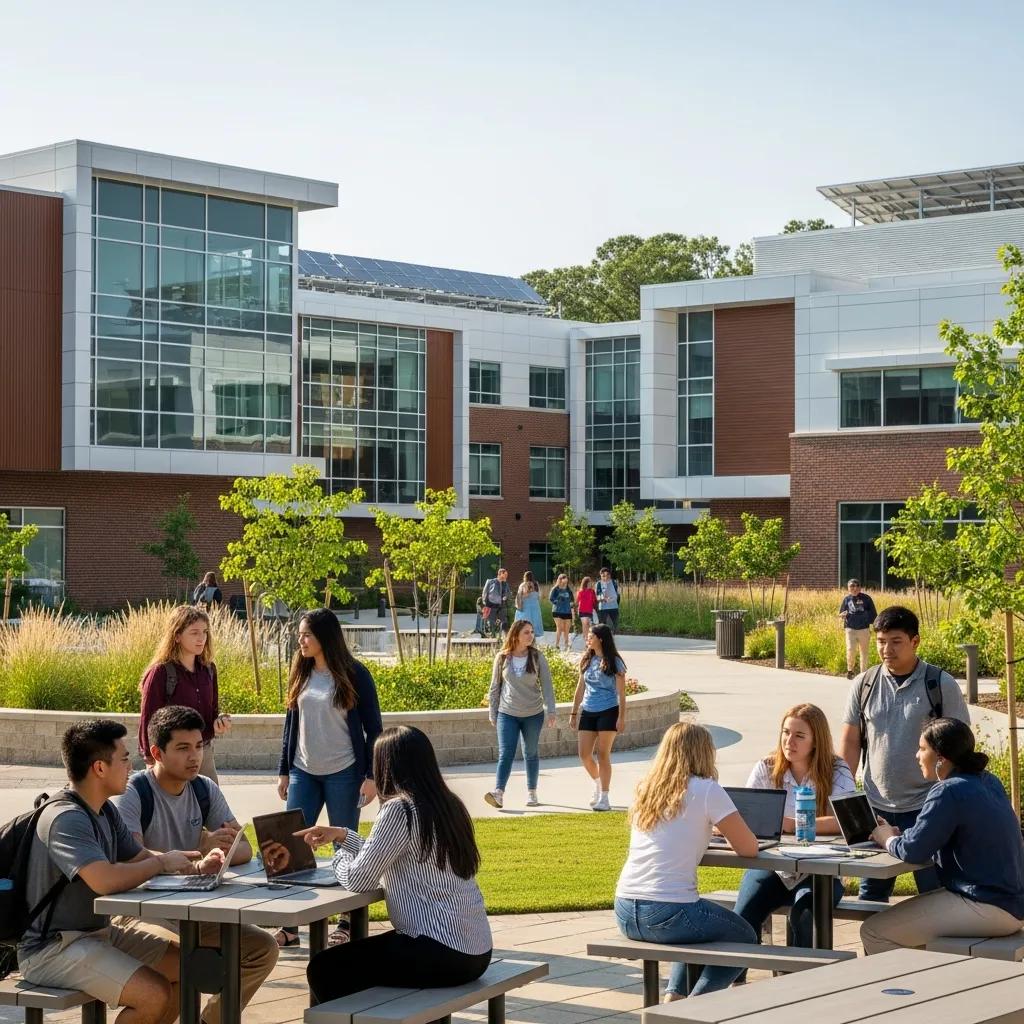
Campus Layout & Coordination in Virginia Beach, VA: Precision VDC, BIM, and Field Layout for School Construction
Construction work on Virginia Beach education campuses needs tightly coordinated design, accurate field layout, and disciplined schedule control so classes and campus operations aren’t disrupted. This article shows how Virtual Design and Construction (VDC), Building Information Modeling (BIM), and precision layout tools combine to reduce mistakes, shorten schedules, and produce reliable as-built records for K–12 and higher education projects. You’ll get clear VDC and BIM workflows, an explanation of how robotic total stations and 3D scanning move model data into the field, and guidance on which project types see the biggest gains. We also map common campus challenges — phased occupancy, dense MEP in labs, acoustics in auditoria, and athletic-facility sequencing — to practical technical responses and decision checkpoints. Finally, we explain how a specialist coordination provider can support assessments, field verification, and handover deliverables that feed facilities management and long‑term campus planning.
How does Virtual Design and Construction enhance education campus projects in Virginia Beach?
Virtual Design and Construction (VDC) is a structured workflow that links federated models, 4D schedule simulations, and field layout so teams can spot constructability issues before crews arrive. By pairing model-based coordination with sequencing and prefabrication planning, VDC reduces onsite rework and aligns trade activities around phased-occupancy constraints — delivering measurable schedule and budget improvements. VDC is especially helpful on active campuses where classes continue during construction and where MEP, AV, and structural interfaces must come together with minimal downtime.
The summary below highlights VDC’s core operational benefits for campus projects and how those gains are realized through integrated workflows.
Primary operational benefits VDC delivers on campus construction:
- Fewer clashes before installation: Coordinated models and clash reports stop conflicting MEP and structural work from reaching the field.
- Controlled phasing and sequencing: 4D simulations synchronize trades for phased occupancy and weekend or after‑hours work.
- Better cost and schedule predictability: Model-driven quantities and prefabrication lower change orders and mitigate supply delays.
These advantages support complex campus systems and lead directly to how specific use cases — labs, auditoria, and dormitories — achieve measurable improvements in safety, uptime, and constructability.
What are the benefits of VDC for K-12 and higher education facilities?
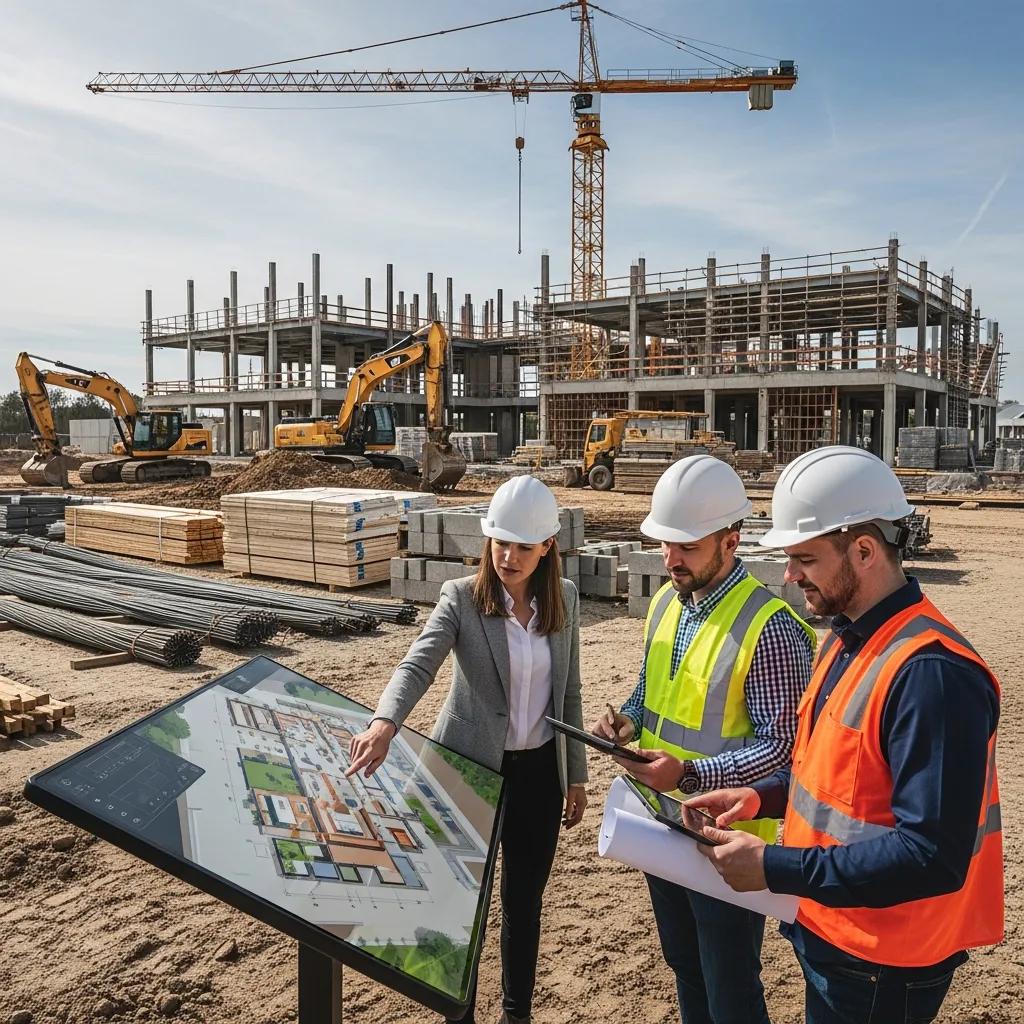
On educational projects, VDC improves safety during renovations, creates predictable timelines for semester-driven turnovers, and tightens coordination for specialty systems like lab utilities and auditorium AV. Federated models let architects, engineers, and contractors see how HVAC, ceiling‑mounted AV, and lab casework interact, which reduces RFIs and shortens on-site coordination time. Prefabrication planning for classroom finishes and IT routing shrinks disruptive work windows and protects occupied spaces. The net result is fewer unexpected shutdowns, clearer procurement timing, and a stronger operational baseline for facilities teams after turnover.
Those campus-specific benefits naturally lead to the next VDC advantage: compressing schedules and improving budget adherence through model-led sequencing.
How does VDC improve project scheduling and budget adherence?
VDC tightens schedules and budgets by combining 4D sequencing with model-driven quantity takeoffs and coordinated procurement for prefabrication. A 4D model links model elements to construction activities so teams can visualize trade interfaces, planned outages, and shifts to the critical path — reducing on‑site conflict windows and often shortening the critical path itself. Model-based quantities support earlier, more accurate cost estimates, cutting contingency volatility and enabling just‑in‑time deliveries for prefabricated assemblies. On campuses, this translates to fewer late RFIs, less overtime during semester turnovers, and better alignment of crews in high-density MEP areas.
Those outcomes rely on precise field layout and verification, which makes accurate transfer of model coordinates to site control essential.
What role does Building Information Modeling play in Virginia Beach school construction coordination?
Building Information Modeling (BIM) is the coordination hub that holds federated discipline models, clash records, and asset metadata for facilities management. BIM supports structured clash-detection workflows, visual issue assignment, and consolidated deliverables like coordinated drawings, clash reports, and O&M-ready model exports. When BIM is tied to schedule and procurement data, it becomes a practical decision-support tool for phased campus projects and long-term capital planning.
The table below compares common BIM deliverables, their purpose, and the direct value they provide during school construction and FM handover.
| Deliverable | Purpose | Value |
|---|---|---|
| Clash detection reports | Identify spatial conflicts across trades | Reduce rework and cut RFIs during installation |
| Federated coordination model | Merge architecture, structure, and MEP models | Simplify coordination meetings and speed decisions |
| As-built BIM / asset tagging | Record final equipment locations and attributes | Enable CMMS integration and lifecycle planning |
This comparison shows how BIM outputs lower constructability risk and create a usable dataset for campus facilities teams, leading into typical clash-detection workflows used on education projects.
How does BIM facilitate clash detection and design coordination for educational buildings?
BIM-driven clash detection follows a detect→assign→resolve→verify lifecycle that shortens coordination cycles and clarifies accountability. Federated models are exported to clash engines where conflicts are categorized by severity, assigned to responsible parties, and tracked through resolution with versioned verification steps. Visual coordination meetings use the federated model to surface high‑risk clashes — for example, lab MEP routing through ceiling plenums — and to decide on reroutes, sleeves, or prefabrication workarounds. This structured process cuts field changes, speeds approvals from facilities groups, and ensures complex integrations are tested virtually before installation.
In what ways does BIM support campus master planning and facility management?
BIM supports campus master planning and facilities management by delivering accurate as-built models, tagged assets, and datasets that feed maintenance and capital-planning systems. Model attributes — serial numbers, maintenance intervals, warranty dates — can be mapped to CMMS fields so facilities staff have searchable, actionable information at turnover. BIM also enables scenario planning for phased expansions, letting planners test circulation, service corridors, and future utility demands against existing geometry. Integrating point-cloud-verified as-builts with BIM ensures master plans and FM records reflect real conditions, reducing uncertainty for future work.
How does precision layout technology support education campus construction in Virginia Beach?
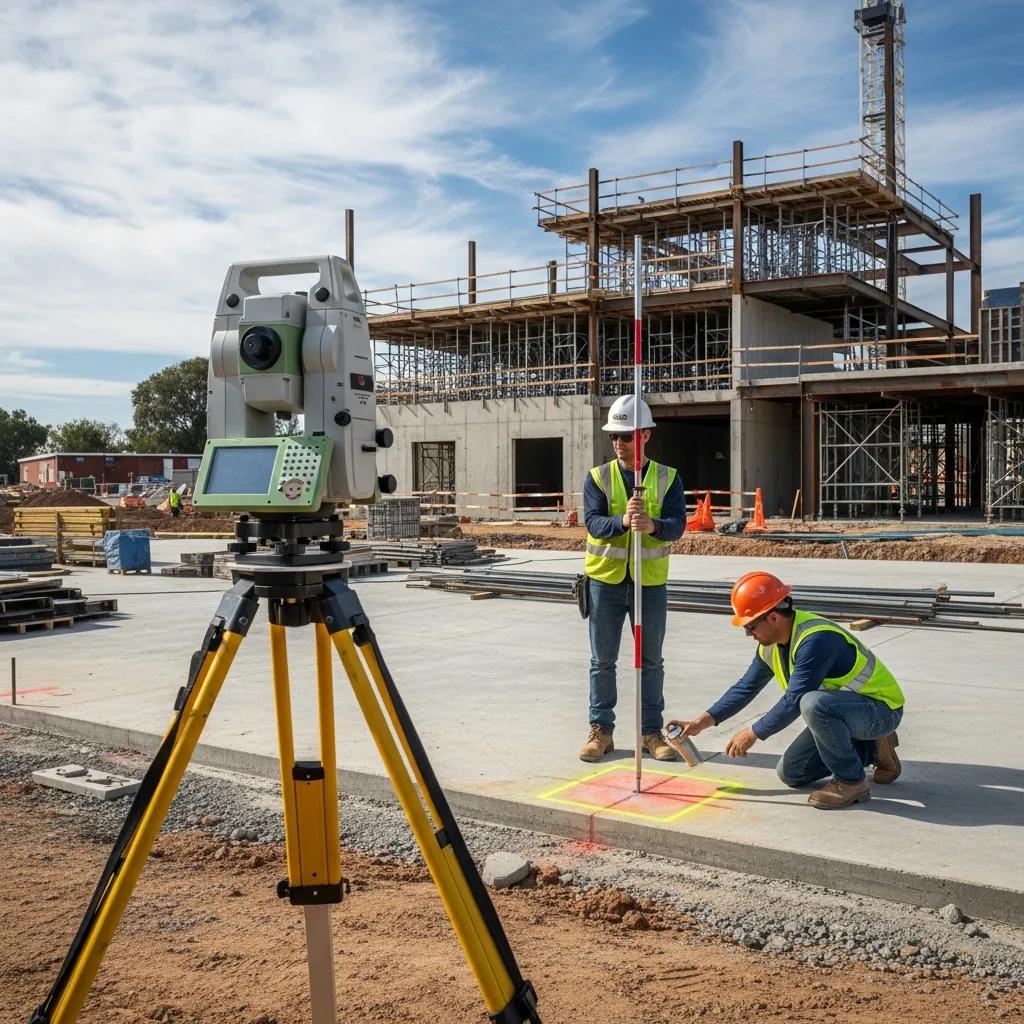
Precision layout tech — Robotic Total Stations, GNSS control, layout tablets, and 3D scanning — guarantees model coordinates transfer to site control with traceable accuracy for anchors, MEP penetrations, and finish interfaces. These tools reduce cumulative error between the model and the built environment, which is critical for labs, AV rigging, and penetration coordination where tolerances are tight.
The table below compares common layout technologies, their accuracy, and typical education-focused use cases to guide project decisions by phase.
| Technology | Typical Accuracy & Use-case | Application in Education Projects |
|---|---|---|
| Robotic Total Station | Millimeter to sub‑centimeter; ideal for anchors and finish interfaces | Essential for lab penetrations, equipment pads, and AV rigging |
| 3D Scanning / Point Clouds | Centimeter-level capture for as-built validation | Renovations and retrofit coordination in existing buildings |
| GNSS / RTK | Centimeter-level for site control and civil layout | Site grading, utilities, and building footprints |
This comparison clarifies trade-offs between capture speed and precision and sets up the following sections on how each method is used in practice on campus projects.
What is Robotic Total Station Layout and how does it ensure millimeter accuracy?
A Robotic Total Station (RTS) combines precise angle and distance measurements with a project control network to place model coordinates on the ground with millimeter-level accuracy. The workflow starts with establishing stable control tied to project benchmarks, importing model coordinates, then laying out points such as anchor bolts, benchmarks, and critical finish interfaces. Verification includes redundant measurements, independent check points, and field-to-model validation where laid-out points are re-scanned or re-measured and compared to the model. On education projects, RTS accuracy is vital for lab utilities, precast placements, and any installation that must meet tight alignment tolerances to protect specialized equipment.
How does 3D scanning and point cloud rendering improve construction coordination?
3D scanning captures dense spatial data that can be registered to BIM to create an accurate baseline for renovation, retrofit, or verification tasks. The capture-to-model workflow — scan, register, align with BIM, extract sections — gives visual context that exposes hidden conflicts and informs prefabrication decisions. For school facilities, point clouds reduce surprises in older buildings where undocumented utilities or obstructions can derail schedules. Integrating point clouds with federated BIM accelerates verification and lets teams rehearse penetrations and routed systems virtually before field crews mobilize.
Which specialized services does Conway Coordination and Layout Services offer for Virginia Beach educational projects?
Conway Coordination and Layout Services (CCLS) provides services tailored to education campuses that bridge model coordination and field execution without sacrificing precision. Our offerings include Robotic Total Station layout for millimeter‑critical elements, VDC construction services with 4D sequencing and prefabrication planning, VDC consulting to establish BIM Execution Plans and coordination cadences, 3D scanning and point-cloud rendering for as‑built capture, and BIM modeling and coordination to produce federated models and clash reports. The table below summarizes services, typical deliverables, and when each is most useful for school and university clients to aid procurement decisions.
| Service | Typical Deliverables | When to use |
|---|---|---|
| Robotic Total Station Layout | Layout certificates, control network, field verification reports | When millimeter accuracy is required for labs or equipment pads |
| VDC Construction Services | 4D schedule models, prefabrication plans, coordination outputs | For phased construction on active campuses |
| 3D Scanning & Point Cloud Rendering | Registered point clouds, as-built models, clash-verified overlays | During renovations or when existing conditions are uncertain |
This service map clarifies how CCLS aligns technical deliverables to campus needs and leads into more detail about our VDC consulting and project-assurance practices.
What VDC consulting and construction services are tailored for schools and universities?
Our VDC consulting typically starts with a BIM Execution Plan, stakeholder alignment sessions, and a coordination cadence that respects semester schedules and occupancy cutovers. Services include 4D sequencing for temporary works and turnovers, constructability reviews that prioritize critical classrooms and labs, and prefabrication coordination for modular MEP or casework to reduce on‑campus labor. Deliverables usually include federated coordination models, clash logs with responsibility assignments, and sequencing visualizations facilities teams can review with campus stakeholders. These outputs help teams avoid last‑minute schedule disruptions and keep semester handovers on time.
How does CCLS ensure project success through precision and client collaboration?
CCLS uses structured QA/QC workflows that combine field verification, open communication with contract stakeholders, and iterative model validation to lower schedule and cost risk. Typical touchpoints include project kickoff and control‑network setup, regular coordination sessions with tracked action items, field‑to‑model validation sweeps, and final deliverable sign‑offs that hand over asset metadata for FM use. Our collaborative approach treats the model as a living dataset validated against the built condition — reducing rework and aligning expectations across contractors, architects, and facilities teams.
What are the key considerations in planning and coordinating K-12 and higher education facilities in Virginia Beach?
Planning and coordination for education facilities must balance stakeholder approvals, code requirements, phasing needs, and campus operations to minimize disruption to students and staff. Early engagement with district or university facilities teams ensures asset data requirements, acceptance criteria, and handover formats are captured in the BIM Execution Plan. Regulatory and procurement pathways differ between K‑12 districts and higher education, so coordination workflows must adapt to varying review cadences and vendor qualifications. The list below highlights immediate preconstruction considerations that reduce downstream risk and keep construction aligned with operational constraints.
- Stakeholder alignment: Define approval workflows and a single point of contact for facilities and district authorities.
- Phasing and occupancy: Schedule critical turnovers around academic calendars to minimize impacts.
- Specialized program coordination: Lock in MEP design for labs and AV scope for auditoria early in design.
Addressing these items early moves teams from planning to execution with clear expectations and fewer surprises, which leads to the distinct roles facilities departments play in defining project requirements.
How do school district and university facilities departments influence project requirements?
Facilities departments determine data formats, asset-tagging conventions, and O&M information required at turnover — all of which must be captured during BIM coordination to ensure a smooth handover. Districts commonly specify standardized asset templates and warranty-tracking formats, while universities often require richer metadata for research equipment and campus GIS integration. Approval workflows also vary: districts may route through board or capital project reviews, while university processes often involve planning committees. Understanding these differences early helps coordination teams prioritize deliverables and schedule verification activities to meet facilities expectations.
What challenges arise in coordinating academic buildings, student housing, and athletic facilities?
Each campus building type brings its own coordination risks: academic labs have high MEP density and tight tolerances; student housing needs rapid turnover and phased occupancy planning; athletic facilities demand long spans, specialized acoustics, and AV systems. Mitigation includes early integration of AV and acoustical consultants for auditoria, prefabrication of MEP racks and risers for housing bathrooms, and staged erection sequences for large-span roofing that protect indoor activities. VDC and precision layout work together to reduce these risks: models reveal MEP congestion, 4D sequencing plans protective measures, and robotic layout verifies critical endpoints before finishes proceed. These targeted strategies limit schedule risk and protect campus operations during construction.
How can educational institutions in Virginia Beach benefit from CCLS’s expertise in campus layout and coordination?
Institutions gain a coordination partner that reduces rework, compresses turnover windows, and delivers accurate as‑built records that feed facilities management systems. Conway Coordination and Layout Services provides focused VDC and BIM workflows, millimeter‑accurate Robotic Total Station layout, and point‑cloud‑verified as‑built deliverables that prepare campuses for reliable operation after turnover. Engaging a specialist early clarifies procurement timing, reduces unforeseen site changes, and verifies model‑to‑field alignment for critical installations. The short list below captures the most immediate value institutions typically see when they combine model-led coordination with precision field services.
- Reduced rework and RFIs: Early clash resolution lowers field change orders and protects budgets.
- Reliable schedules: 4D sequencing and prefabrication shorten campus downtime.
- Accurate as-built records: Point clouds and asset-tagged BIM support facilities management and future capital planning.
These benefits appear in project case examples and a predictable consultation pathway for new engagements, which the following sections describe to help teams prepare for their first coordination assessment.
What case studies demonstrate successful VDC and BIM implementation in education projects?
Representative case studies show measurable drops in clashes, schedule improvements, and clearer FM handovers when VDC and BIM are applied to education projects. Typical outcomes include fewer field clashes during high-density MEP installs, compressed turnover windows for phased renovations, and as-built models that sped maintenance onboarding for facilities teams. Comparable work in adjacent sectors proves these coordination principles transfer to school settings — especially where labs, auditoria, or student housing require tight sequencing and installation tolerances. Those results scale to Virginia Beach campus projects and deliver quantifiable operational benefits.
How to request a consultation for education campus construction coordination services?
To prepare for an initial consultation, gather the project scope, preliminary drawings or models, schedule constraints, and any facilities data requirements so we can run an efficient needs assessment. A first meeting typically covers project objectives, key stakeholders and approval workflows, phasing constraints tied to academic calendars, and immediate priorities like lab utilities or AV rigging. Consultation deliverables usually include a tailored service recommendation, a proposed coordination cadence, and a checklist of information needed for model integration and field verification. Preparing these documents helps ensure a productive first engagement and a clear path to next steps.
This practical guidance completes the overview and gives educational institutions a clear roadmap for integrating VDC, BIM, and precision layout into Virginia Beach campus projects.
Frequently Asked Questions
What types of educational projects benefit most from VDC and BIM services?
VDC and BIM are most valuable on complex education projects — laboratories, auditoria, and student housing — where intricate MEP systems and tight tolerances require precise coordination. Projects that must remain operational during construction (K–12 schools and universities) also benefit from VDC’s predictive sequencing and BIM’s visual clarity, which help keep construction aligned with academic schedules and minimize disruption.
How can educational institutions ensure effective stakeholder engagement during construction projects?
Start stakeholder engagement early and make roles and approval workflows explicit. Identify points of contact for the district or university, schedule regular coordination meetings, and use BIM to share visual progress and discuss trade impacts. Clear communication, documented decisions, and a consistent coordination cadence keep stakeholders aligned and speed approvals.
What are the common challenges faced during the construction of educational facilities?
Common challenges include tight schedules, maintaining safety during renovations, and coordinating dense MEP systems while buildings remain occupied. Projects also face regulatory reviews, budget constraints, and specialty requirements for labs and auditoria. Addressing these challenges requires early planning, focused communication, and technologies like VDC and BIM to anticipate and resolve conflicts before they reach the field.
How does precision layout technology impact the quality of educational construction projects?
Precision layout technology improves quality by ensuring model coordinates are accurately transferred to the site. Robotic Total Stations and 3D scanning reduce cumulative errors and protect tight‑tolerance installations — laboratory utilities, AV systems, and anchored equipment — which decreases rework and keeps schedules on track.
What role does facilities management play in the success of educational construction projects?
Facilities management defines the asset data, tagging conventions, and turnover requirements that must be built into the BIM coordination process. Early FM involvement helps shape the BIM Execution Plan so final deliverables are usable for maintenance and capital planning. Strong collaboration between construction teams and FM leads to smoother turnover and better long‑term building performance.
How can educational institutions prepare for a successful construction project consultation?
Prepare project scopes, preliminary drawings or models, schedule constraints, and facilities data requirements before the consultation. Outline objectives, key stakeholders, and phasing tied to academic calendars. Having these items ready allows for a faster, more focused needs assessment and a practical recommendation for coordination services.
Conclusion
Bringing VDC, BIM, and precision layout into Virginia Beach campus projects improves coordination, reduces rework, and produces accurate as‑built records that support operations after turnover. These tools streamline complex workflows so institutions can keep campuses running while achieving precise construction outcomes. Partnering with a specialist like Conway Coordination and Layout Services gives teams the technical depth and field accuracy needed to deliver predictable handovers. Reach out to discuss how our tailored services can strengthen your next campus project.