Advanced Clash Detection & Resolution in VDC: Expert BIM Coordination to Prevent Construction Conflicts
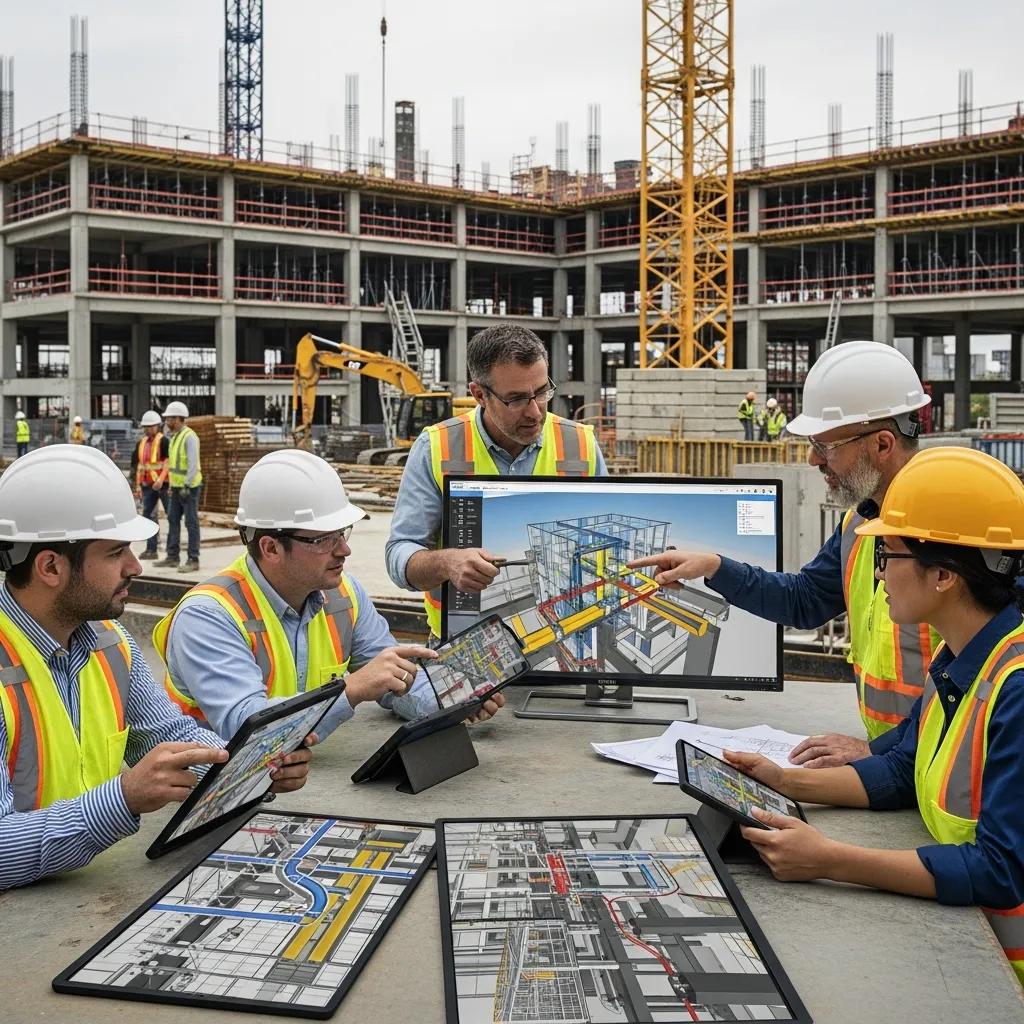
Advanced clash detection in Virtual Design and Construction (VDC) is a disciplined process that finds and manages model interferences before they become field problems. By federating discipline models, running automated rulesets, and triaging issues by impact, teams turn geometric conflicts into clear, assigned actions. This guide walks through federated workflows, automated reporting, and field-verified layout so design intent translates into predictable installation. You’ll get practical Navisworks workflows, discipline-specific strategies for MEP and structural coordination, and a step-by-step clash resolution method used in professional VDC practice. We also cover complementary verification tools—3D scanning, point clouds, and robotic total stations—and show how Conway Coordination and Layout Services (CCLS) bundles these methods into VDC Consulting and Construction Services that deliver precision, schedule certainty, and measurable outcomes.
What is Advanced Clash Detection in Virtual Design and Construction?
Advanced clash detection in VDC identifies, categorizes, and prioritizes geometric and operational conflicts across federated discipline models so teams can resolve issues early and protect the construction schedule. The workflow ingests Revit and other discipline models into a single federated model, applies rules and tolerance checks, and runs scheduled clash executions that produce exportable reports for assignment. The predictable outcome: fewer surprises on site, clearer coordination responsibilities, and better sequencing for procurement and install. Knowing how and when you check models — and how you aggregate results — is key to efficient resolution and accurate field layout.
Unlike simple clearance checks, advanced detection adds time (4D), cost (5D), and workflow context to address not only physical collisions but also sequencing and access conflicts. This multi-dimensional approach uses spatial checks, operational clearance rules, and schedule-aware collision logic to reduce false positives and focus stakeholders on the issues that matter most. The next section explains how early clash identification converts directly into avoided rework and lowered project costs.
How does clash detection prevent costly construction rework?
Clash detection prevents rework by converting model conflicts into assigned, prioritized actions before crews arrive on site. The process typically follows a reliable path: federation and clash execution → automated reporting and grouping → assignment in a coordination log → design or routing corrections → verification in the federated model and, where needed, field validation. That sequence interrupts the usual reactive loop of discovering conflicts in the field, issuing an RFI, and processing a change order — preserving critical-path activities in the process.
By enforcing a verification loop — update the model, re-run clashes, and obtain final sign-off — teams lock down constructible geometry and cut downstream RFIs and change orders. A regular coordination cadence builds accountability among discipline leads and creates a documented trail for cost and schedule reviews. Smart aggregation and prioritization ensure the highest-risk clashes are resolved first, which reduces site crew workload and minimizes unexpected delays.
What are the key types of clashes in BIM models?
Clashes in BIM models typically fall into three groups: hard clashes, soft clashes, and workflow (sequence) clashes — each demands a different response. Hard clashes are direct physical interferences where two elements occupy the same space, for example a duct intersecting a beam flange. Soft clashes are clearance or operational issues where minimum access or code clearances aren’t met, like limited space around an access panel. Workflow clashes happen when installation sequencing or temporary site conditions conflict with the planned work, such as scheduling equipment before its supporting structure is in place.
Classifying clashes up front reduces false positives and points teams to the right fixes: hard clashes usually need geometric reroutes; soft clashes require clearance checks or spec changes; and workflow clashes call for schedule reshuffling or temporary access plans. Clear classification in the clash report speeds resolution and improves field readiness.
How Does CCLS Implement VDC Clash Detection Best Practices?
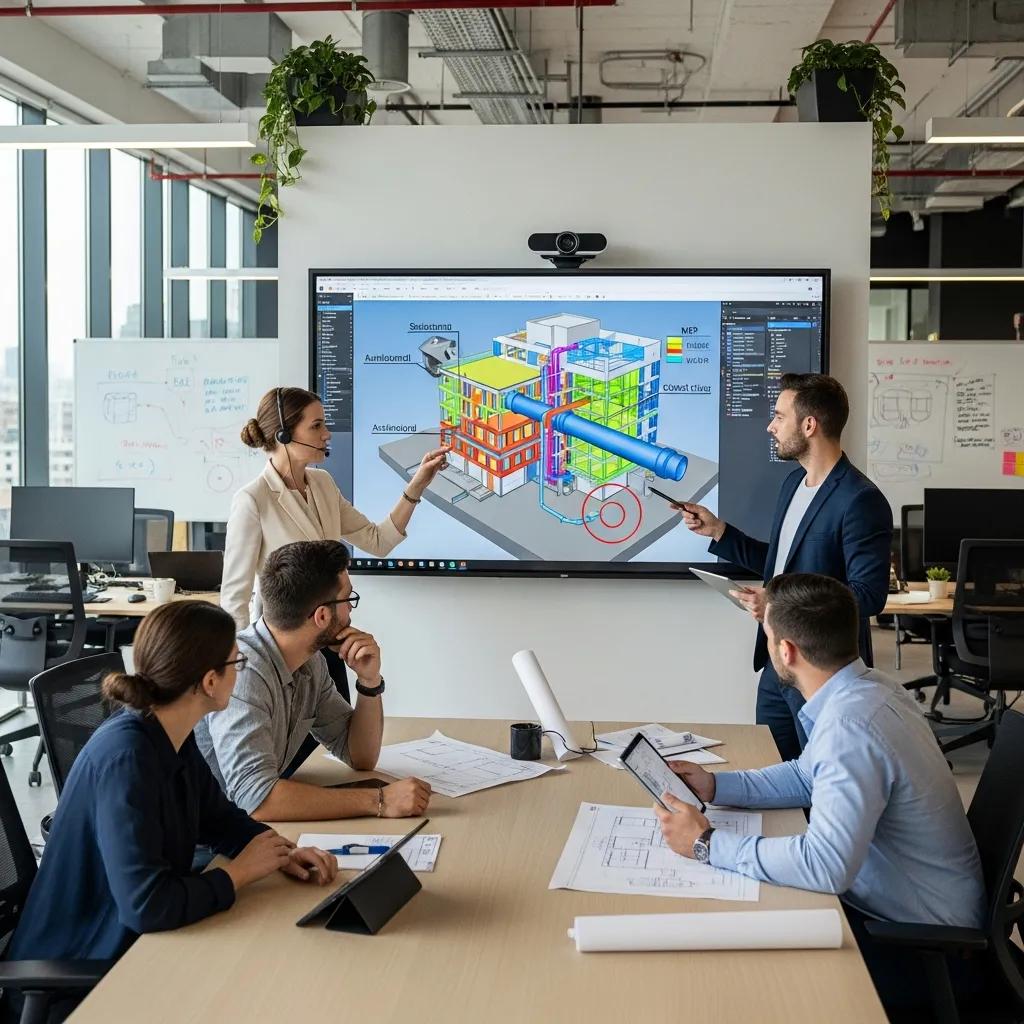
At CCLS we combine disciplined model federation, tuned rulesets, prioritized aggregation, and verified field layout to produce constructible models ready for execution. Our approach begins with structured model intake and QA to ensure consistent naming, Level of Development targets, and clean geometry before federation. Automated clash runs are scheduled and grouped to reduce noise, and the resulting issue lists are exported into a coordination log for assignment and tracking. We finish with field verification — 3D scanning and precision layout — to confirm model-to-site alignment and close the loop between BIM coordination and installation.
The process depends on defined roles — model managers, clash coordinators, and discipline leads — and recurring coordination sessions to keep progress visible and accountable. CCLS delivers clear outputs such as aggregated clash reports, viewpoint exports, and verified layout points to support field teams. The table below breaks the workflow into phases with the expected outputs and tools used.
| Phase | Tool / Output | Expected Deliverable |
|---|---|---|
| Model Intake & QA | Revit / model checklist | Clean discipline models with consistent naming and LOD |
| Federation & Ruleset Setup | Navisworks / clash detective rules | Federated model and configured clash rulesets |
| Clash Execution & Aggregation | Navisworks / automated reports | Grouped clash list with priorities and viewpoints |
| Coordination & Assignment | Issue tracker / meeting minutes | Assigned actions with owners and due dates |
| Verification & Layout | 3D scanning, Trimble Robotic Total Station | Field-verified coordinates and updated models |
What is the step-by-step clash detection and resolution process at CCLS?
- Model Receipt and QA: We receive discipline models, run naming and LOD checks, and correct geometry issues. Output: validated discipline models ready for federation.
- Federation & Ruleset Definition: Models are combined in Navisworks and clash tolerances and rules are set to match project requirements. Output: a configured clash detection environment.
- Clash Execution & Aggregation: Automated clash checks are run, results are grouped and prioritized to highlight high-impact issues. Output: an aggregated clash list with viewpoints.
- Coordination Meeting & Assignment: We facilitate technical sessions to assign remediation tasks and record decisions. Output: assigned action items and revised models.
- Verification & Sign-off: After model updates we re-run clashes and verify key coordinates on site using 3D scanning or a Robotic Total Station before final acceptance. Output: a verified, signed-off constructible model.
How does CCLS leverage Navisworks for precise clash resolution?
Navisworks is central to our clash workflow because its Clash Detective, viewpoint exports, and grouping features turn raw interferences into actionable coordination tickets. Typical steps: import and align discipline models, run rule-based clashes, and aggregate results to reduce thousands of raw issues into manageable groups. We export viewpoints and clash screenshots from Navisworks to give discipline leads unambiguous visual context, and we produce reports in formats that plug into issue trackers.
Best-practice settings include tight tolerances for mechanical-to-structural checks, clearance rule layers for soft clashes, and scheduled automated runs to capture ongoing model updates. These standards improve repeatability and cut manual review time. The exported issue lists and viewpoint packages then drive focused coordination and field verification.
What Are the Benefits of Early BIM Clash Detection and Resolution?
Shifting clash discovery left in the project lifecycle delivers operational, schedule, and cost benefits that compound through design and construction. Finding clashes during schematic and detailed design reduces on-site rework, lowers RFI volumes, and clarifies procurement sequencing earlier. Early detection also supports prefabrication by producing more constructible models for off-site fabrication and reduces schedule risk by keeping the critical path clearer of unforeseen interruptions.
| Benefit Type | Measurement Method | Value |
|---|---|---|
| Cost Avoidance | Compare change orders before and after coordination | Reduced contingency use and fewer corrective change orders |
| Schedule Predictability | Track RFIs and rework against the baseline | Better adherence to planned milestones |
| Productivity Gains | Field labor hours saved via prefabrication | Fewer site hours required for installations |
| Quality & Safety | Count field collisions or rework events | Lower defect rates and safer site conditions |
The table links each benefit to a measurable method and the practical value teams gain when coordination is prioritized early. Key takeaways include:
- Lower Construction Rework: Early detection prevents costly corrective actions during installation.
- Improved Schedule Control: Resolving conflicts before critical-path activities reduces delay risk.
- Better Procurement and Prefab: Clear models enable off-site fabrication and fewer field adjustments.
These outcomes show why investing in preconstruction coordination yields outsized returns during execution. The section below explains the mechanisms that produce these efficiencies.
How does early clash detection improve project efficiency and reduce costs?
Early clash detection improves efficiency by cutting the cascade of administrative and field tasks that follow on-site conflict discovery. Practically, it reduces RFIs and change orders by clarifying spatial and sequencing requirements during design, lowering project management overhead and unplanned labor. It also converts clashes into prefabrication opportunities rather than in-field fixes, which saves site labor hours and improves install quality. Early coordination gives stakeholders reliable inputs for procurement timelines and contingency planning.
Embedding coordination reviews into design milestones tightens the alignment between virtual models and physical installation needs, which supports better contractor planning and more predictable resource allocation. The next subsection summarizes how teams typically report quantifiable outcomes to clients and apply them to planning, without promising fixed percentage savings.
What quantifiable savings and productivity gains result from VDC clash management?
Industry experience links proactive clash management to reduced rework, fewer RFIs, and improved labor productivity; teams translate those improvements into fewer change orders and more reliable schedules. For clients, benefits are usually presented as measurable reductions in rework-driven downtime, better on-site productivity via prefabrication, and clearer milestone adherence. CCLS documents these outcomes with before-and-after coordination logs that show reductions in active clashes at key milestones and corresponding decreases in on-site mitigation activities on specific projects.
| Metric | Measurement | Typical Impact |
|---|---|---|
| Rework Incidents | Coordination log vs. field reports | Fewer unplanned corrective tasks |
| RFI Volume | RFI counts across phases | Lower administrative processing for changes |
| Field Labor Hours | Time tracking on installation tasks | Improved productivity through prefab and planning |
The table connects common metrics to observable impacts used in client reporting. The next section focuses on discipline-specific detection and mitigation strategies for MEP and structural clashes.
How Are MEP and Structural Clashes Detected and Resolved in Construction Coordination?
Resolving MEP and structural clashes requires discipline-specific rulesets, tolerances, and coordination protocols that balance engineering intent with constructability. MEP clashes often involve tight routing, clearances, and serviceability; structural clashes center on penetrations, bearing points, and load paths. Effective coordination starts with tailored clash rules for each discipline and a prioritization strategy that accounts for installation sequencing and access. This discipline-aware approach reduces false positives and points teams toward practical corrective actions.
Integrated workflows bring discipline leads together to evaluate options — offsets, reroutes, or minor structural adjustments — and to decide when prefab or phased installations are appropriate. Final verification uses as-built capture and precision layout to confirm that chosen resolutions meet both design intent and field tolerances. The next subsection outlines common technical challenges and mitigation tactics in MEP-structural coordination.
What challenges arise in MEP structural clash detection?
MEP-structural coordination commonly encounters constrained ceiling plenums, tightly routed services, limited maintenance clearances, and sequencing issues where structural elements must be staged before MEP installs. Tolerance mismatches can stem from differing LOD expectations or coordinate origins, and prefab strategies sometimes conflict with on-site fit conditions. Mitigation tactics include setting realistic clearance buffers, applying targeted offsets for service runs, and using alternate routing that preserves structural integrity while maintaining serviceability.
To reduce review noise, harmonize coordinate systems, set minimum maintainability clearances, and use grouping rules to batch repetitive clashes. These steps lower reviewer burden and speed decisions by discipline leads. The following subsection explains how CCLS coordinates multidisciplinary models and verifies solutions on site.
How does CCLS coordinate multidisciplinary models to resolve clashes?
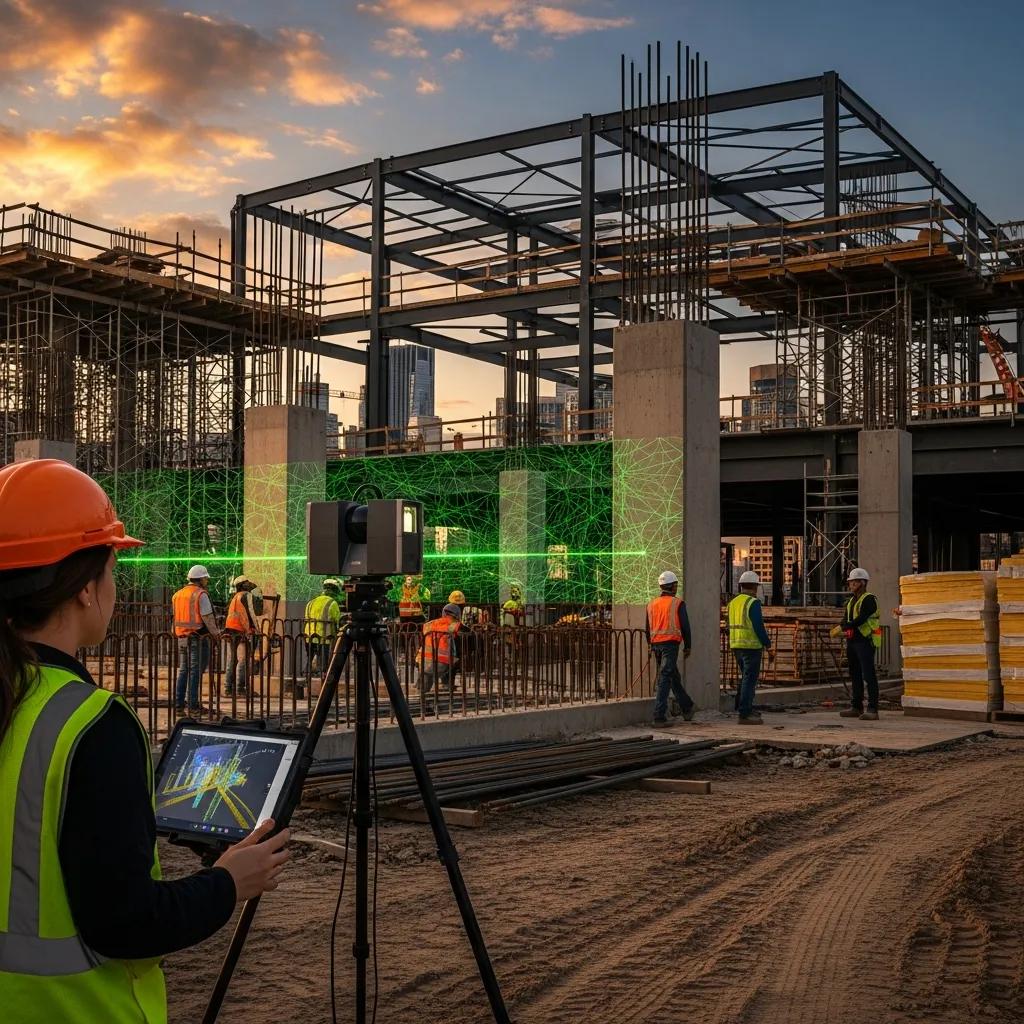
CCLS coordinates multidisciplinary models by federating discipline data, running focused review sessions, and assigning remediation tasks with verification checkpoints tied to field layout. Federation aligns coordinates and LOD expectations, then clash runs are grouped by system and location to streamline review. We facilitate technical coordination meetings where discipline leads evaluate options — reroute, offset, or change component selection — and assign tasks with named owners and due dates. Verification uses 3D scanning to capture as-built geometry and Trimble Robotic Total Station layout for precision placement.
This verification loop ensures model revisions reflect field reality and that layout points are cross-checked against the updated federated model before installation. The next section reviews complementary technologies that strengthen these VDC outcomes.
Which Construction Coordination Solutions Enhance VDC Clash Detection Outcomes?
Complementary coordination solutions — consistent BIM practices, continuous cloud-based clash checking, 3D scanning, and precision layout — amplify clash detection and resolution results. Best practices include standardized naming, agreed LOD standards, and regular automated cloud checks to catch regressions as models change. Point clouds and 3D scans add real-world context that reduces guesswork in coordination, while Robotic Total Stations turn coordinated geometry into field control for accurate installation. Together, these tools form a verification chain from virtual model to physical reality.
| Tool / Solution | Strength / Use-case | Application in Clash Workflow |
|---|---|---|
| Navisworks | Aggregation, Clash Detective, viewpoints | Primary clash runs and exportable reports |
| Solibri | Rule-based validation and model QA | Quality checks and clearance/code validations |
| 3D Scanning / Point Clouds | High-fidelity as-built capture | Validate installed conditions and update models |
| Trimble Robotic Total Station | High-accuracy field layout | Translate model coordinates to precise field points |
The table shows how tools complement each other across detection to verification. The sections below provide a checklist for model readiness and a concise comparison of supportive technologies.
How does integrated BIM modeling support clash detection workflows?
Integrated BIM modeling supports clash detection by enforcing federation best practices, consistent LOD expectations, and model hygiene to reduce false positives and speed reviews. Key checklist items: unified coordinate systems, standardized object naming, agreed tolerance rules, and cleanup to remove duplicate or unnecessary geometry. Meeting these readiness criteria helps automated clash engines deliver higher signal-to-noise ratios and faster resolution cycles.
A model readiness checklist keeps coordination efficient and ensures deliverables are prepared before clash runs. The next subsection lists technologies that pair well with clash detection workflows to complete the verification loop.
What technologies and tools complement clash detection in VDC?
A compact suite of technologies strengthens clash detection by linking virtual coordination to field reality: 3D scanning captures high-fidelity as-built context, point clouds enable direct comparison with federated models, cloud clash services detect regressions as models evolve, and Robotic Total Stations transfer model coordinates to the field with precision. Each tool addresses a different step — validation, verification, or execution — and using them together reduces uncertainty and supports prefabrication strategies.
- 3D Scanning: Capture as-built conditions for model reconciliation.
- Cloud Clash Checking: Run continuous checks as models update to reduce regressions.
- Robotic Total Stations: Convert model coordinates to precise field points for installation.
Why Choose Conway Coordination and Layout Services for VDC Clash Detection?
Conway Coordination and Layout Services (CCLS) pairs VDC consulting with on-site construction layout to bridge coordination and installation. As a family-owned firm with over 20 years of industry experience, we prioritize precision, efficiency, and client service to keep projects on schedule and on budget. Our integrated offerings — BIM modeling and coordination, Robotic Total Station layout, 3D scanning, and point cloud integration — create a single accountability chain from virtual collision resolution to verified field layout.
- BIM Modeling and Coordination: Produce constructible models and disciplined clash management.
- Robotic Total Station Layout: Deliver millimeter-level placement of coordinated geometry on site.
- 3D Scanning & Point Cloud Integration: Verify as-built conditions and inform model updates.
These services fit into a client-focused workflow that emphasizes clear communication, repeatable deliverables, and measurable verification. The table below links CCLS technologies to practical client outcomes.
| Service / Technology | Strength | Typical Client Outcome |
|---|---|---|
| BIM Coordination | Model federation & clash management | Fewer on-site conflicts and clearer execution plans |
| Trimble Robotic Total Station | Precise field layout | Accurate installation and reduced layout rework |
| 3D Scanning / Point Clouds | As-built verification | Confident model updates and less guesswork |
What unique expertise and technologies does CCLS offer?
CCLS brings a focused toolset and field-proven workflows that improve clash detection accuracy and field verification: Navisworks-driven clash management, Trimble Robotic Total Station layout, and 3D scanning for as-built reconciliation. Our team runs multidisciplinary coordination sessions, produces exportable viewpoints and clash reports, and performs field layout that aligns to the federated model. Each technology maps to a clear outcome: Navisworks for assignment clarity, 3D scanning for model fidelity, and Robotic Total Station for installation precision.
These capabilities close the gap between coordinated design and installed systems, enabling better prefab outcomes and fewer field adjustments. The final section explains how this combination protects project schedule and budget integrity.
How do CCLS’s services ensure schedule adherence and budget control?
CCLS protects schedules and budgets by embedding verification and precise layout into the coordination lifecycle, reducing unplanned corrective work that drives change orders and delays. Deliverables — aggregated clash reports, viewpoint packages, and field-verified coordinate sets — give teams the documentation needed to proceed with confident procurement and installation. A steady coordination cadence and clear task assignment keep issues from derailing critical-path activities.
If you’re seeking expert support, CCLS offers VDC Consulting and Construction Services that combine model coordination with precise field layout to maintain project momentum and control cost exposure. Contact Conway Coordination and Layout Services to request a VDC consultation and discuss how federated workflows, Navisworks-driven clash management, 3D scanning, and Robotic Total Station layout can be applied to your project.
Frequently Asked Questions
What are the main advantages of using 3D scanning in clash detection?
3D scanning brings accurate as-built data into the coordination process so teams can compare real conditions against federated BIM models. Scans reduce guesswork, reveal hidden conflicts, and let stakeholders make better decisions during coordination. Integrating scan data early reduces rework risk and clarifies options in technical meetings.
How can cloud-based clash checking improve project outcomes?
Cloud-based clash checking offers continuous monitoring as models change, catching regressions in near real time. This proactive approach reduces manual overhead, keeps teams aligned, and prevents new conflicts from slipping into construction. The result is smoother collaboration and fewer on-site disruptions.
What role does Robotic Total Station play in construction layout?
Robotic Total Stations translate digital model coordinates into precise physical locations on site, delivering millimeter-level accuracy for installations. Used with verified models, they reduce layout errors and rework, speed field installation, and improve overall build quality.
How does effective clash resolution impact project timelines?
Effective clash resolution short-circuits delays caused by on-site conflicts. Identifying and addressing clashes early reduces RFIs and change orders during construction, supports clearer procurement sequencing, and keeps activities aligned with the schedule — improving the likelihood of on-time delivery.
What are the best practices for preparing models for clash detection?
Prepare models by enforcing consistent naming conventions, agreeing on Level of Development (LOD) targets, harmonizing coordinate systems, and performing model hygiene to remove duplicates and unnecessary geometry. Set realistic tolerance rules to limit false positives. A clean, consistent model produces more actionable clash reports and faster resolution cycles.
How can teams ensure accountability during the clash resolution process?
Accountability comes from clear roles, regular coordination meetings, and a maintained coordination log listing actions, owners, and due dates. Document decisions, track progress, and require verification checkpoints so responsibility is visible and resolution is timely.
Conclusion
Advanced clash detection in VDC improves project outcomes by reducing rework, tightening schedules, and increasing predictability. Using tools like Navisworks and 3D scanning — combined with disciplined coordination and precision layout — turns coordinated models into reliable installation plans. This proactive approach streamlines workflows, strengthens accountability, and protects schedule and budget. Learn how Conway Coordination and Layout Services can apply these practices to your next project by exploring our VDC solutions.