
BIM-Based Layout Planning in Raleigh, NC: Exact, Model-Driven Layouts to Keep Your Project on Time
BIM-based layout planning turns coordinated digital models into reliable field coordinates so crews place structural and MEP elements to millimeter tolerances. This guide explains how model-to-field workflows—combining BIM, VDC, 3D scanning, and robotic total stations—bring design accuracy to Raleigh job sites, cut rework, and speed installations. You’ll get straightforward explanations of model LOD and metadata transfer, practical pre-construction sequencing with clash detection, and real-world use cases for healthcare, commercial, industrial, and historic preservation projects in Raleigh. We also outline a point-cloud → BIM → verified-layout workflow, the measurable ROI drivers to watch, and how Conway Coordination and Layout Services (CCLS) partners with project teams across the Southeast to deliver coordination, layout, and verification. Practical checklists, comparison notes, and concise action steps are included so contractors and owners can apply BIM layout planning and reduce schedule risk.
What is BIM-Based Layout Planning and How Does It Benefit Raleigh Construction Projects?
BIM-based layout planning is the process of pulling coordinated geometry and element metadata from a model, checking it for constructability, and exporting field-ready coordinates that guide onsite placement. The workflow depends on accurate 3D geometry, an agreed LOD for layout (commonly LOD 300–350), and clean data exchange so robotic total stations can place model-driven points in the field. For Raleigh teams, the biggest payoff is repeatable placement accuracy that reduces fit issues, lowers rework, and shortens installation cycles for critical trades. That’s why integrating BIM coordination, clash detection, and model-to-field delivery is central to reliable pre-construction planning and efficient sequencing on local projects.
The list below sums up the most tangible benefits Raleigh teams see when they adopt BIM layout planning and points to where to start.
BIM-based layout planning produces measurable gains on Raleigh projects through better coordination, fewer field errors, and more predictable schedules. Expect these primary advantages:
- Improved Accuracy: Model-driven layout delivers millimeter-level placement for anchors, embeds, and MEP points.
- Reduced Rework: Early clash detection prevents many in-field corrections and costly change orders.
- Faster Schedule: Precise layout accelerates installation and shortens trade handoffs.
- Better Fabrication Readiness: Coordinated models make prefabrication and off-site assembly more reliable.
- Safer Worksites: Fewer layout iterations reduce exposure to corrective work and hazards.
Combined, these outcomes lower total project cost and increase schedule certainty. Teams using BIM layout planning typically see fewer RFIs and steadier construction sequencing—setting the stage for the tools and standards that make model-driven workflows repeatable on site.
Defining BIM-Based Layout Planning: Concepts and Technologies
At its core, BIM-based layout planning relies on three elements: a coordinated 3D model, a clear LOD and metadata standard, and a dependable data path to the field instrument. Models from Revit or similar platforms contain the geometry and attributes that become layout points; export formats and model-checking tools align coordinate systems and tolerances. Naming conventions and data-exchange standards make sure items like anchor bolts or MEP sleeves map to field deliverables without guesswork. The model-to-field loop looks like this: model validation → clash detection → coordinate export → field verification. That sequence is the technical foundation for reliable BIM layout planning in Raleigh.
With those basics in place, the next section shows how these practices translate into real cost and schedule improvements for developers and contractors.
Key Advantages for Raleigh Developers and Contractors: Cost Savings and Accuracy
Accurate, model-driven layout reduces onsite uncertainty by catching clashes earlier and translating model precision to the field—delivering direct savings in time and cost. Early coordination cuts the number of rework events and the associated labor and material waste. For example, resolving a single structural–MEP interference in the model can prevent days of installation delays and tens of thousands in corrective costs on a medium-sized project. Quantifying these impacts helps owners and contractors prioritize BIM coordination in pre-construction and plan sequencing to capture those savings.
These scenarios show why layout accuracy matters for tolerance-critical tasks like anchor bolt placement and MEP routing, and they lead naturally into the implementation steps that realize these gains on active jobs.
If you want hands-on support applying these practices on Raleigh projects, Conway Coordination and Layout Services (CCLS) provides integrated BIM modeling and coordination, VDC consulting, 3D scanning, and robotic total station layout. Based in Loris, SC, we serve the Southeastern U.S. including North Carolina and bring family-owned responsiveness to model-to-field execution. Contact CCLS to discuss scope, verification needs, and how we can support your next Raleigh build.
How Does CCLS Integrate BIM, VDC, and Robotic Total Stations for Superior Layout Accuracy in Raleigh?
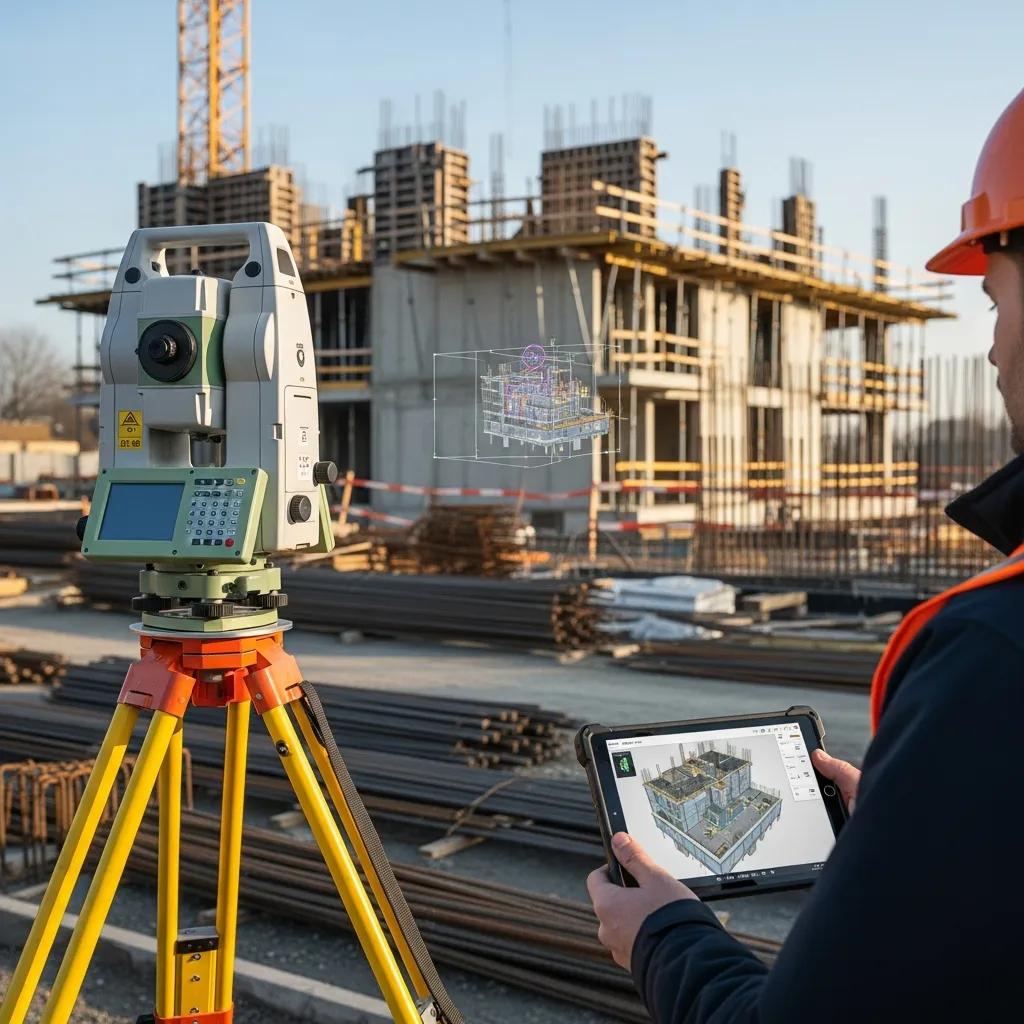
Model-to-field accuracy depends on disciplined VDC coordination, validated models, and precise field execution. Our applied workflow stitches those pieces together into repeatable steps for Raleigh sequencing: ingest the models and run clash detection to resolve multi-discipline conflicts, extract coordinates tied to project control, format data for robotic total station import, verify control points in the field, then execute layout. The final—and critical—step is closing the loop: capture as-built points with scanning or total-station checks and reconcile them with the BIM so the model stays current during construction. That stepwise approach reduces surprises and makes layout deliverables both constructible and verifiable.
Below is a concise workflow summary the majority of teams follow when adopting a model-driven layout strategy.
- Model Validation: Combine discipline models and run clash cycles to set a coordinated baseline.
- Coordinate Export: Pull layout points with required tolerances and attribute data for field use.
- Field Setup and Layout: Establish project control, import coordinates into a Trimble robotic total station, and execute model-based points.
- Verification and Update: Capture as-built points via 3D scanning or total-station checks and reconcile with the BIM for ongoing coordination.
This sequence reduces back-and-forth between office and field, tightens construction sequencing, and supports prefabrication and efficient installation cycles.
The table below clarifies each tool’s role in the integrated model-to-field workflow and why it matters for accuracy and coordination.
| Tool / Technology | Primary Attribute | Typical Application |
|---|---|---|
| BIM Model (Revit) | Coordinated geometry & metadata | Source of layout coordinates and fabrication data |
| Clash Detection (Navisworks or similar) | Conflict identification | Resolve interferences before field work |
| Trimble Robotic Total Station | High-precision field placement | Execute model coordinates with millimeter accuracy |
| 3D Scanning / Point Cloud | As-built capture | Verify installed conditions and update the model |
| VDC Coordination | Process & meeting cadence | Drive multidisciplinary alignment and sequencing |
Precision Layout with Trimble Robotic Total Stations in Raleigh Construction
Robotic total stations bridge the model and the site by using project control and instrument-assisted targeting to place points precisely. In the field, crews set control tied to the model coordinate system, import coordinate lists, and use the robotic station to stake anchors, embeds, and MEP locations. QC involves verifying a subset of critical points and recording as-built coordinates to confirm tolerances. This instrument-level precision supports tolerance-sensitive work—structural anchors, prefabricated MEP assemblies—and helps ensure layout matches the coordinated BIM for predictable installation.
Those field procedures are grounded in VDC coordination practices that clear conflicts before the instrument leaves the truck.
Streamlining Construction Workflows through VDC Consulting and Coordination
VDC consulting organizes multidisciplinary model reviews, clash-detection cycles, and sequencing that prepare projects for model-driven layout and faster construction. Regular coordination sprints—timed to fabrication and installation milestones—reduce RFIs and align procurement, shop drawings, and prefabrication. Typical results include fewer site stoppages, earlier detection of buildability issues, and tighter 4D scheduling integration with layout deliverables. We recommend topic-driven coordination with weekly model updates during peak pre-construction, then daily verification during critical installation phases.
A well-run VDC process shortens the path from model validation to field execution and makes it easier for a specialized provider to implement model-to-field workflows on Raleigh projects.
Why Choose Conway Coordination and Layout Services for BIM Layout Planning in Raleigh?
Conway Coordination and Layout Services (CCLS) is a regional partner combining coordination, layout, and verification to support Raleigh construction teams. We deliver BIM modeling and coordination, 3D scanning and as-built documentation, VDC consulting, and robotic total station layout across the Southeastern U.S., including North Carolina. CCLS emphasizes practical workflows, proven equipment, and a client-first approach to partnering with general contractors and trade partners on constructable deliverables. If you need integrated model-to-field support during pre-construction or layout phases, CCLS provides targeted, responsive services.
Decades of Local Experience and Proven Success in North Carolina Projects
As a family-owned business, CCLS brings regional knowledge that shortens onboarding and helps teams navigate local logistics and permitting. That local experience lets us advise on staging and control strategies tailored to Raleigh site conditions, which often speeds mobilization and smooths coordination with subcontractors familiar with the area. Working with a provider who understands regional project dynamics reduces ramp-up time and helps projects begin layout and verification with confidence.
Advanced Technologies Ensuring Millimeter-Level Precision and Reduced Rework
CCLS uses a technology stack that includes Trimble robotic total stations, professional 3D scanning for as-built capture, and coordinated BIM workflows to achieve millimeter-level precision. Those tools allow accurate transfer of model coordinates to site and continuous verification through point-cloud comparisons and as-built updates. The result is fewer corrective site activities and improved schedule adherence during critical installation phases. For teams that prioritize accuracy and reduced rework, this technology alignment delivers predictable sequencing and fewer costly field adjustments.
If your project needs model-to-field support in Raleigh, contact Conway Coordination and Layout Services to discuss how a consultation can align with your construction sequencing and layout goals.
What Industries in Raleigh Benefit Most from BIM-Based Layout Planning?

BIM layout planning applies broadly but delivers greatest value where tolerances, compliance, and complex MEP systems matter most. Healthcare projects need tight MEP coordination and infection-control sequencing; industrial facilities demand precise equipment and foundation interfaces; commercial work benefits from prefabrication readiness; and historic preservation relies on non-invasive scanning and detailed as-built records to protect existing fabric. Across these sectors, BIM layout planning reduces errors, supports regulatory compliance, and improves predictability for facility operations.
- Healthcare: Accurate MEP routing and room coordination minimize disruption and support clinical workflows.
- Industrial: Precise equipment placement and foundation layout prevent costly distortions during commissioning.
- Commercial: Coordinated models enable prefabrication and speed tenant fit-outs through efficient sequencing.
- Historic Preservation: Non-invasive 3D scanning documents existing conditions for sensitive restorations.
Healthcare, Industrial, Commercial, and Historic Preservation Construction in Raleigh
In healthcare, BIM layout planning keeps MEP systems within strict tolerance bands to support sterile corridors and reduce fit-out downtime. Industrial projects use coordinated models to confirm foundation and equipment interfaces before installation, avoiding costly commissioning delays. Commercial builds leverage layout accuracy for faster storefront and tenant turnover through prefabrication, while historic preservation depends on precise as-built data to safeguard original features during upgrades. Each sector’s priorities shape sequencing and clash-detection cadence, so tailored BIM coordination is essential for successful Raleigh execution.
Below are short case-style highlights that demonstrate measurable BIM impact on real projects.
Case Studies Demonstrating BIM Impact Across Raleigh’s Construction Landscape
These brief examples show how model-driven layout solves real problems: a medical renovation averted weeks of delay after an MEP clash was found in pre-construction; an industrial tenant fit-out avoided costly equipment moves through precise anchor placement; and a commercial office fit-out sped tenant turnover by using coordinated shop drawings and prefabrication. Each case follows a problem → BIM/VDC intervention → outcome pattern, highlighting time saved, RFIs reduced, and lower rework where model verification was applied. These results illustrate how targeted BIM services improve sequencing and create predictable outcomes for Raleigh owners and contractors.
Seeing measurable results on comparable projects helps teams decide when to invest in pre-construction coordination and model-based layout strategies.
How Does Pre-Construction Planning with BIM Optimize Raleigh Construction Projects?
Pre-construction BIM optimizes projects by detecting clashes early, guiding procurement and fabrication decisions, and enabling 4D sequencing that aligns installation windows with site logistics. Coordinated models expose conflicts and access constraints before they reach the field, which cuts change orders and speeds shop drawing approval. Using BIM to simulate installation steps reveals crane and access conflicts in advance so teams can adjust sequencing. These pre-construction actions reduce downstream cost, compress schedules, and make field layout activities more predictable and measurable.
Below we summarize ROI-focused outcomes and practical steps teams can follow during pre-construction.
BIM-driven pre-construction yields quantifiable benefits: less rework, fewer schedule delays, and more accurate procurement. Typical metrics include lower change-order rates, fewer RFIs during installation, and shorter installation times for prefabricated assemblies. Teams that integrate clash detection and sequencing early can push work offline through prefabrication and reduce onsite labor hours. Those financial and schedule improvements make early BIM adoption a high-impact investment on Raleigh projects.
The table below compares common pre-construction BIM activities and their typical impacts on cost, rework, and schedule.
| Activity | Metric Impact | Typical Outcome |
|---|---|---|
| Early Clash Detection | Rework reduction | Fewer in-field corrections and lower change orders |
| 4D Sequencing | Schedule certainty | Optimized crane and access windows; shorter critical path |
| Prefabrication Readiness | Labor hours saved | Faster installations and fewer onsite labor hours |
| As-built Capture | Facility handover accuracy | Fewer commissioning issues and better FM data |
Reducing Costs and Accelerating Timelines through Early BIM Integration
Bringing BIM into pre-construction compresses timelines by enabling coordinated procurement, earlier fabrication signoff, and fewer on-site rework cycles. Resolving clashes in the model and sequencing deliveries around site constraints reduces idle time and installation conflicts that slow progress. Benchmark data shows projects with disciplined pre-construction coordination experience measurable drops in change orders and schedule overruns—making coordination cadence and model maturity critical levers for savings. Best practices include setting LOD expectations early, running iterative clash cycles, and aligning 4D simulations with procurement milestones.
These actions tie directly to sequencing checklists that minimize errors before crews mobilize.
Construction Sequencing and Clash Detection: Preventing Errors Before They Occur
Sequencing maps installation steps, access routes, and critical trade interfaces so teams avoid onsite conflicts and deploy crews efficiently. A practical sequencing checklist includes defining milestone installs, locking model elements for shop drawing release, scheduling coordination sprints, and aligning deliveries with laydown and crane windows. Clash detection follows a detect → review → resolve → re-run loop that fixes issues in the model instead of the field. Applying this disciplined cycle produces fewer RFIs and a more predictable path to completion.
- Lock structural geometry before MEP routing begins.
- Run weekly coordination sprints during design freezes.
- Prioritize prefabrication items in the 4D schedule.
- Verify control points and layout tolerances before installation.
When teams are ready to turn pre-construction gains into field results, Conway Coordination and Layout Services provides targeted pre-construction support and model-to-field verification. To discuss a Raleigh project, call Conway Coordination and Layout Services at +1 (843) 283-4618 to set up an initial consultation.
What Are Common Questions About BIM Layout Planning in Raleigh?
The FAQ below answers common questions about robotic total stations, BIM accuracy improvements, and how model-driven layout fits into construction sequencing. Each answer is practical and focused on when to apply specific technologies and how to measure their benefits on Raleigh projects.
What is the Role of Robotic Total Stations in Modern Construction Layout?
Robotic total stations turn model coordinates into precise field points by importing coordinate lists from coordinated BIM models and guiding crews to stake or mark installation locations. Their tasks include establishing control, executing layout for anchors and embeds, and recording as-built coordinates for verification. Typical tolerances vary by project but often sit in the millimeter-to-centimeter range suitable for structural and MEP precision work. Advantages include less manual measurement error, repeatable placement workflows, and faster verification compared with tape-and-transit methods.
See below for how BIM and these instruments work together to raise overall accuracy.
How Does BIM Improve Construction Accuracy and Efficiency?
BIM centralizes design geometry and metadata, enabling clash detection and supporting prefabrication that reduces field touch-ups. Tools automate conflict identification, provide model-based layout coordinates, and integrate with 4D scheduling to optimize sequencing. The result is fewer RFIs, lower rework rates, and shorter installation durations—improving cost performance and predictability. For Raleigh projects facing tight tolerances and schedule pressures, BIM-supported layout and coordination materially improve execution quality and readiness for operations.
Frequently Asked Questions
What types of projects in Raleigh benefit the most from BIM-based layout planning?
BIM layout planning is especially valuable for healthcare, industrial, commercial, and historic preservation projects. Healthcare needs precise MEP coordination for compliance and workflows; industrial sites require exact equipment placement to avoid startup issues; commercial builds benefit from prefabrication readiness for faster tenant fit-outs; and historic preservation relies on accurate as-built documentation to protect existing conditions. Each sector requires tailored BIM coordination to deliver predictable results in Raleigh.
How does early clash detection impact project timelines in Raleigh construction?
Early clash detection shortens timelines by identifying and resolving conflicts before they reach the jobsite. This reduces rework, lowers change-order costs, and smooths procurement and fabrication. Integrating clash detection in pre-construction compresses schedules and improves predictability—critical in Raleigh where timely delivery is often a priority.
What are the key technologies used in BIM layout planning?
Key technologies include BIM platforms like Revit, clash-detection tools such as Navisworks, robotic total stations for precise field execution, and 3D scanning for as-built capture. Together these tools create a coordinated workflow: BIM provides the model, clash detection finds issues, robotic total stations place points in the field, and scanning verifies installed conditions.
How can contractors in Raleigh measure the ROI of BIM layout planning?
Measure ROI by tracking metrics like rework rates, RFI counts, installation durations, and change-order dollars before and after BIM adoption. Comparing those metrics to project benchmarks highlights time and cost savings. Contractors can also measure improved fabrication lead times and reduced onsite labor hours to quantify the financial benefits of BIM layout planning.
What role does VDC consulting play in BIM layout planning?
VDC consulting coordinates interdisciplinary model reviews, clash cycles, and sequencing so all stakeholders align around constructability and schedule. VDC consultants set the cadence for model updates, drive coordination sprints, and help integrate 4D sequencing with layout deliverables—reducing errors and improving communication across teams in Raleigh projects.
How does Conway Coordination and Layout Services support BIM implementation?
Conway Coordination and Layout Services (CCLS) supports BIM implementation with services including BIM modeling, VDC consulting, 3D scanning, and robotic total station layout. We integrate these capabilities into a seamless model-to-field workflow and bring regional experience that helps projects move quickly from coordination to layout with confidence.
Conclusion
BIM-based layout planning gives Raleigh teams clear advantages: higher accuracy, less rework, and faster schedules. By using proven technologies and a disciplined model-to-field workflow, stakeholders realize measurable cost savings and more predictable project outcomes. If you want to optimize your next project’s construction sequencing and layout, contact Conway Coordination and Layout Services to explore how our experience and services can improve your results.