Digital Twin Construction Project Management: Real‑Time Control for Smarter Building Delivery
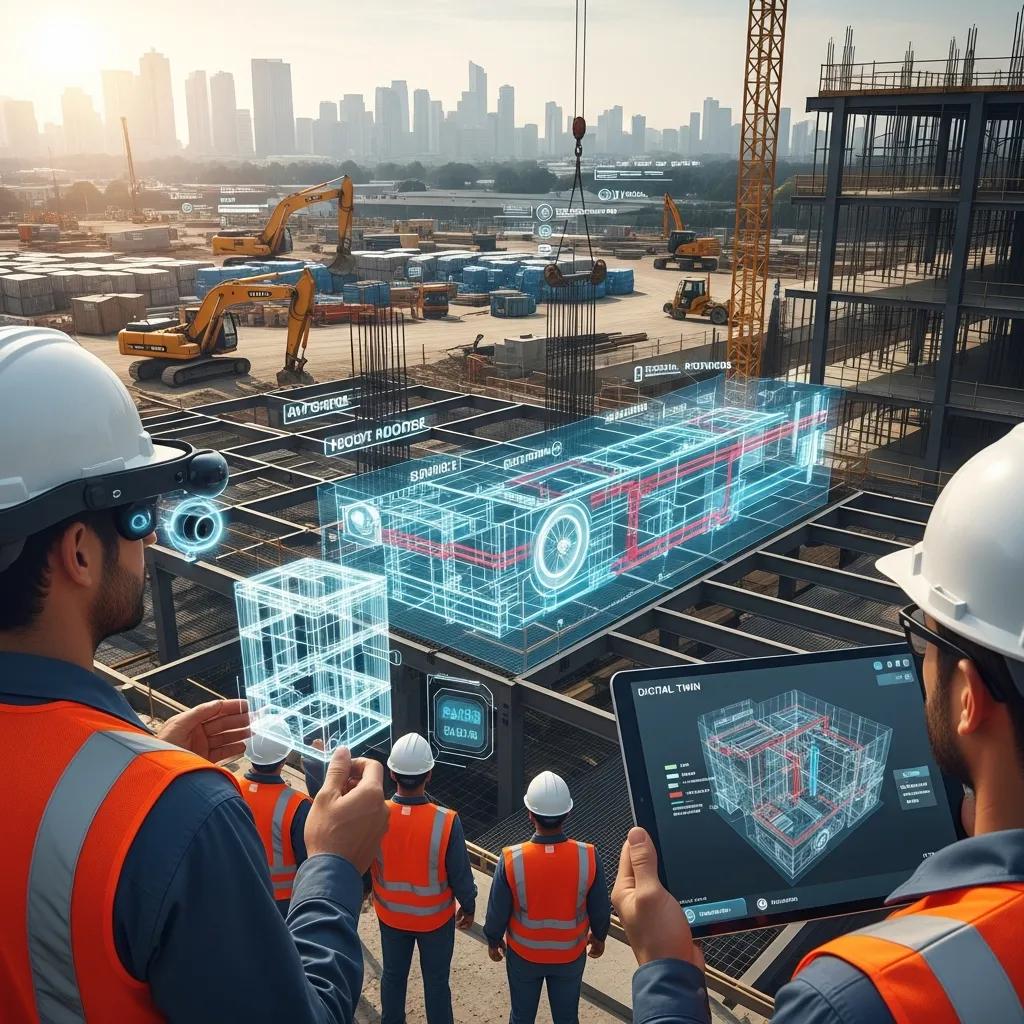
Digital twins in construction are live, synchronized digital replicas of a building or infrastructure project. By merging BIM models, 3D point clouds and real‑time field feeds, a twin lets teams see as‑built conditions, verify design intent, and base decisions on the latest site information — improving coordination and cutting costly rework.
In this article you’ll get a clear definition of a construction digital twin, learn how it differs from BIM and VDC, and follow the practical workflows that make twins usable — from 3D scanning and point‑cloud processing to BIM integration and continuous monitoring. We cover benefits across design, construction, commissioning and operations, and explain how VDC consulting and verification methods preserve twin fidelity on the jobsite. Finally, we show how Conway Coordination and Layout Services (CCLS) combines scanning, BIM, VDC and robotic layout to deliver validated digital twins. By the end, you’ll understand the technology, workflows and measurable value a digital twin brings to modern project management.
What is a Digital Twin in Construction and How Does It Transform Project Management?
A construction digital twin is a dynamic, data‑driven model that mirrors the physical building by linking BIM geometry, 3D point‑cloud captures and live sensor or field inputs into a continuously updated representation. Its power comes from joining static design information with live feeds — sensors, verification scans and progress capture — so stakeholders are viewing current conditions instead of outdated plans. Continuous synchronization lowers uncertainty in execution, shortens feedback loops and improves decision‑making for everyone from owners to trade contractors. Teams move from reacting to problems to proactively preventing them, which reduces delays and cost overruns. The next section contrasts digital twins with BIM and VDC to clarify how each contributes value.
How Does Digital Twin Technology Differ from BIM and VDC?
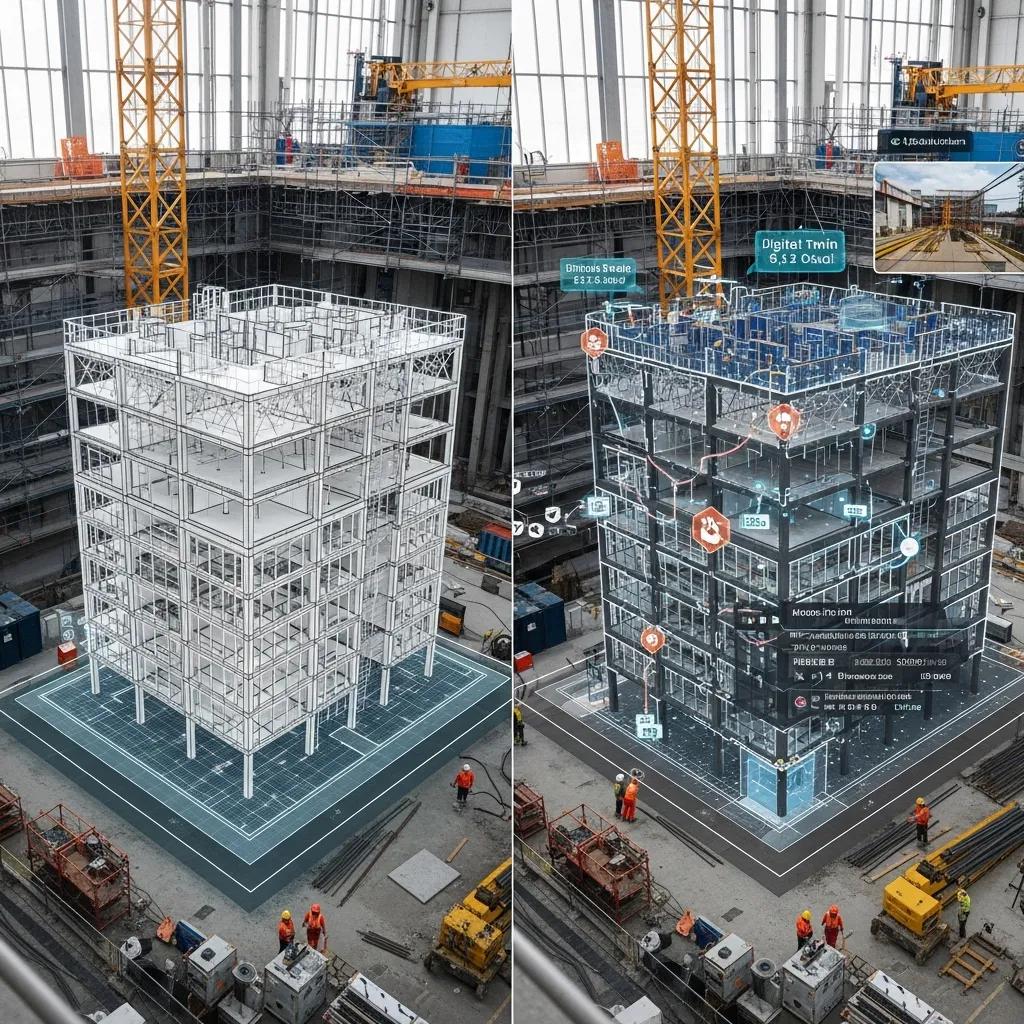
BIM, VDC and digital twins are tightly related but serve distinct functions: BIM is the structured model of design data; VDC is the delivery approach that applies models to planning and construction workflows; and the digital twin adds a live‑data layer that keeps the model in sync with reality. BIM is the authoritative source for geometry and attributes, VDC organizes coordination, sequencing and simulation, and the digital twin ingests point clouds, IoT telemetry, schedule updates and field verification to create a living model for analytics and operations. Practically, a design clash is identified in BIM coordination, resolved through VDC workflows, and then validated against the digital twin during construction — illustrating how model, process and live data work together to produce predictable outcomes.
What Are the Key Benefits of Digital Twins for Construction Projects?
Digital twins produce measurable gains across cost, schedule, quality and risk by delivering a single source of truth that’s continuously validated against the site. Live reconciliation of model and field reduces uncertainty and speeds coordination and change management. For owners and delivery teams, the primary gains are fewer clashes and rework, improved schedule predictability and stronger operational readiness at turnover.
Digital twins provide distinct project benefits:
- Reduced Rework and Clashes: Real‑time model‑to‑site comparisons cut avoidable scope changes and RFI cycles.
- Improved Schedule Confidence: Up‑to‑date progress data enables better sequencing and reduces float loss.
- Enhanced Quality and Commissioning: High as‑built fidelity supports faster, more accurate commissioning and fewer punch‑list items.
To quantify these advantages, the table below summarizes typical impacts and representative values teams can expect when digital twins are used effectively.
Different digital twin benefits map to measurable project impacts.
| Benefit Area | Metric | Representative Impact |
|---|---|---|
| Cost Impact | Change‑order and rework reduction | 5–15% potential cost avoidance |
| Schedule Impact | Reduction in schedule delays | 10–20% fewer critical‑path delays |
| Risk Reduction | Fewer RFIs and coordination issues | 20–40% decrease in coordination cycles |
How Does CCLS Create and Integrate Digital Twins Using BIM and 3D Scanning?
Building a reliable digital twin starts with precise reality capture, disciplined processing and careful BIM integration — each step ensuring the twin accurately represents the built environment with usable metadata. Typical workflow flows from 3D laser scanning to point‑cloud registration, model reconciliation and metadata enrichment, with QA checkpoints to confirm alignment. That process produces registered point clouds, as‑built BIM models and integrated datasets ready for analytics and handover. The sections below explain scanning’s role, how BIM becomes the twin’s backbone, and how services map to lifecycle deliverables.
What Role Does 3D Scanning and Point Cloud Data Play in Digital Twin Creation?
3D laser scanning captures dense point clouds that reflect the exact geometry of existing conditions and newly constructed elements — essential for accurate as‑built records and validation. Scans are registered and geo‑referenced to create a single coordinated dataset that underpins model reconciliation and clash analysis, cutting dependence on manual measurements. Processing point clouds yields meshes or surfaces modelers reference when building or updating BIM elements, so the twin starts with high spatial fidelity. This reality‑capture foundation reduces downstream surprises, speeds coordination and supports precise verification during layout and commissioning.
How Is BIM Integrated to Form the Foundation of a Dynamic Digital Twin?
BIM integration turns point‑cloud geometry into intelligent model elements and enriches those elements with metadata — asset attributes, maintenance schedules and performance baselines — that enable operations use cases. Modelers reconcile geometry to standards, tag assets for facility systems and prepare data schemas so the model can ingest live feeds from sensors and project systems. Once asset‑rich and referenced to the point cloud, BIM becomes the structural layer of the digital twin and the platform for analytics, simulations and handover to operations. This preparation ensures the twin supports lifecycle activities from construction verification through long‑term facility management.
Different services map to digital twin lifecycle stages and deliverables below.
| Service | Role in Digital Twin Lifecycle | Deliverable / Outcome |
|---|---|---|
| 3D Scanning | Reality capture for as‑built fidelity | Registered point cloud datasets |
| 3D Point Cloud Rendering & Model Integration | Point‑cloud processing and alignment | Surface models and model reconciliation |
| BIM Modeling and Coordination | Semantic modeling and asset tagging | Asset‑ready BIM with metadata |
| VDC Consulting & Construction Services | Workflow integration and validation | Coordinated schedules, clash reports |
| Robotic Total Station Layout | Field verification and precision layout | Layout control points and QA reports |
How Does Real-Time Monitoring and VDC Consulting Optimize Construction Projects with Digital Twins?
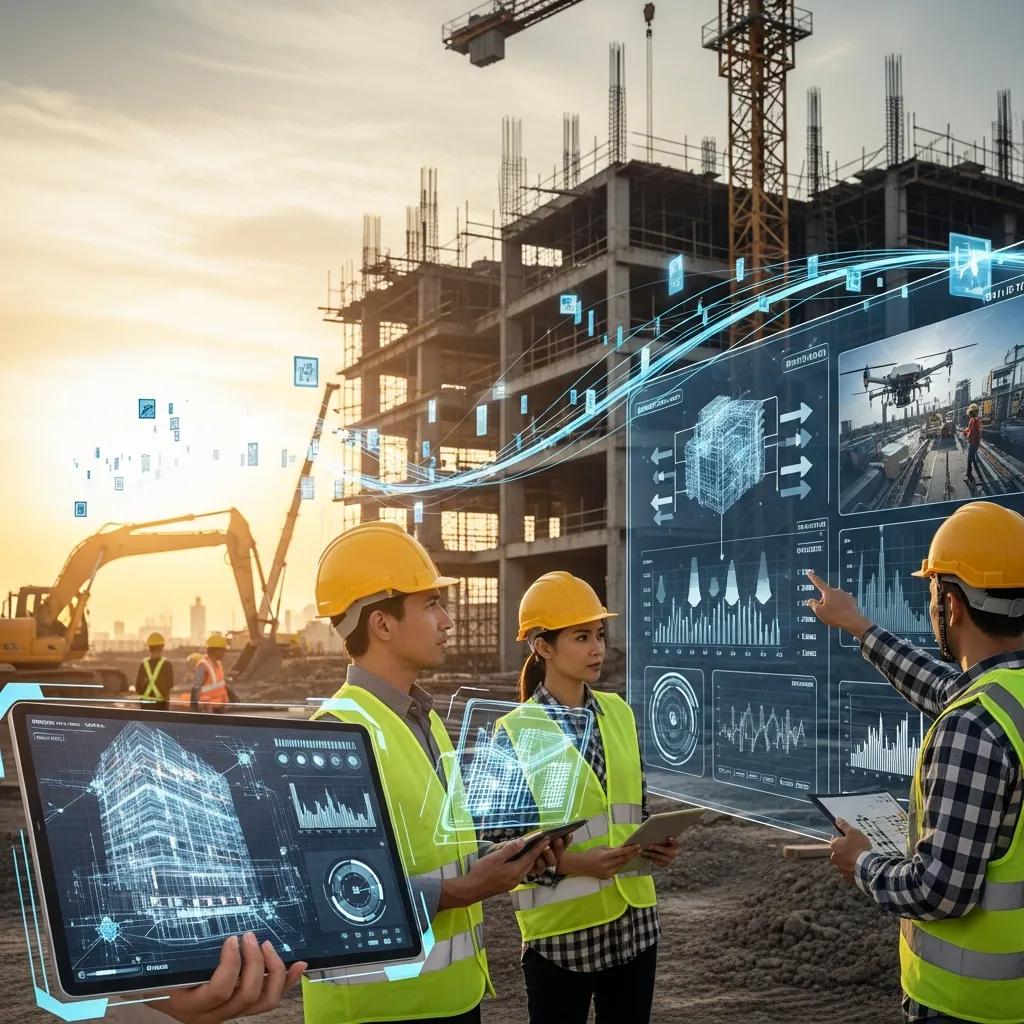
Real‑time monitoring pairs live feeds — IoT sensors, progress updates and verification surveys — with VDC consulting to turn data into decisions that keep projects on track. The mechanism is continuous feedback: live inputs are checked against the twin, VDC workflows prioritize interventions, and teams act before minor issues escalate. This tight loop improves coordination, reduces schedule volatility and enables predictive alerts for emerging problems. The following sections explore the advantages of live data and how precision layout tools verify the twin’s accuracy so model and field remain in sync.
What Are the Advantages of Real-Time Data Integration in Construction Management?
Bringing live data into workflows speeds issue detection, provides objective progress validation and enables data‑driven scheduling that shortens response times and preserves contingency. Real‑time telemetry powers predictive alerts — for example, potential clashes or equipment conflicts — so teams can sequence trades and allocate resources more efficiently. Continuous alignment between model and site boosts confidence in forecasts and reduces the frequency and impact of change orders. With decisions anchored in current conditions, teams move from defensive rework to strategic optimization of resources and schedule.
How Does Robotic Total Station Technology Verify Digital Twin Accuracy?
Robotic Total Stations deliver sub‑centimeter measurement accuracy that ties physical layout to the digital model through precise control points and routine verification checks. Teams use robotic layout to set critical elements to the twin and to validate installed conditions against the model at key milestones, reducing tolerance‑related issues during MEP installation and finishes. When verification surfaces deviations, VDC processes coordinate corrective actions in the model and on the schedule, preventing accumulated errors that cause costly rework. This verification loop — measure, compare, adjust — preserves twin accuracy and increases confidence during commissioning.
For teams adopting real‑time workflows, VDC consulting and precision verification provide faster handovers, fewer RFIs and smoother commissioning. Conway Coordination and Layout Services (CCLS) operationalizes these capabilities by offering VDC Construction Services and Robotic Total Station layout as part of integrated digital twin engagements. Their approach pairs monitoring and verification to reduce rework and keep model‑to‑site fidelity intact. Project teams can request a consultation with Nathan Conway to review how these services fit specific project needs.
What Are the Applications of Digital Twins in Facility and Asset Management Post-Construction?
Digital twins deliver sustained value in facility operations through predictive maintenance, continuous performance monitoring and data‑driven lifecycle planning that optimize asset availability and operating costs. The twin links as‑built BIM, asset metadata and live sensor feeds so facility teams can run analytics, simulate scenarios and trigger maintenance workflows before failures occur. This improves uptime, informs capital planning and supports sustainability targets by continuously tuning systems for efficiency. The sections below illustrate predictive maintenance in practice and how twins contribute to energy optimization.
How Do Digital Twins Support Predictive Maintenance and Lifecycle Management?
Digital twins enable predictive maintenance by combining asset models with condition data from sensors and historical performance to detect anomalies and prescribe scheduled interventions. The workflow moves from data ingestion to analytics — anomaly detection triggers work orders in connected maintenance systems, which extends asset life and reduces unplanned downtime. Organizations using this model can prioritize replacements based on condition rather than age, improving lifecycle economics and cutting emergency repair costs. Integration with CMMS and asset registries keeps maintenance records linked to the twin for long‑term performance tracking.
Different facility applications map to measurable benefits for operations teams.
| Application | Metric / Benefit | Example Result |
|---|---|---|
| Predictive Maintenance | Reduced downtime and reactive repairs | Fewer emergency repairs and lower O&M costs |
| Energy Optimization | Lower energy consumption and utility cost | Continuous tuning of HVAC and lighting |
| Space & Utilization Analytics | Improved space allocation efficiency | Better utilization and reduced operating footprint |
How Can Digital Twins Enhance Building Operations and Energy Efficiency?
Digital twins support continuous commissioning and scenario simulations that optimize energy use by modeling HVAC controls, lighting schedules and occupancy‑driven adjustments. By comparing real‑time consumption to modeled baselines, facilities teams can spot inefficiencies, test fixes in the twin, then implement validated changes with confidence. This simulation‑led approach reduces energy waste and helps meet sustainability goals while maintaining occupant comfort. Over time, iterative tuning cycles translate into cumulative energy savings and better lifecycle performance for building systems.
What Are the Proven Outcomes and Case Studies Demonstrating Digital Twin Success in Construction?
Project evidence shows digital twin workflows yield measurable reductions in rework, improved schedule adherence and more predictable handovers to operations. Common outcomes include fewer coordination cycles during construction, faster commissioning and smaller punch‑lists at turnover. The sections below summarize representative projects and how CCLS has used twin‑based workflows to minimize delays and verification issues during delivery.
Which Projects Showcase Cost Savings and Efficiency Gains Using Digital Twins?
Case summaries often report that digital‑twin projects see shortened commissioning windows and reduced RFI counts, which correlate to lower overall project costs. Examples include as‑built scans that resolved complex retrofit interferences, twin simulations that optimized phasing, and live verification that prevented costly on‑site clashes. These outcomes show how accurate capture combined with continuous validation moves projects from reactive fixes to planned execution, delivering measurable schedule and cost benefits. Early capture, disciplined model governance and ongoing verification are recurring success factors.
How Has CCLS Leveraged Digital Twins to Reduce Rework and Project Delays?
CCLS applies a coordinated workflow — 3D scanning, point‑cloud integration, BIM coordination, VDC consulting and Robotic Total Station verification — to eliminate misalignment between model and site that drives rework. By combining these services, CCLS delivers verified as‑built models and documented layout control that reduce RFIs and speed commissioning. Portfolio highlights include projects where verified layout and clash mitigation cut on‑site adjustments and accelerated handover. Teams seeking a detailed case review can request a consultation with Nathan Conway to discuss project metrics and implementation approaches.
Why Choose CCLS for Implementing Digital Twin Solutions in Your Building Projects?
Picking the right partner for digital twin delivery requires precision capture, deep BIM coordination, VDC know‑how and field verification capability so the twin reflects reality and supports decisions. CCLS bundles 3D scanning, point‑cloud rendering and model integration, BIM modeling and coordination, VDC consulting and construction services, plus Robotic Total Station layout to provide end‑to‑end twin creation and validation. Their advantage is practical experience with precision equipment and workflows, seamless integration from capture through operations, and proactive problem solving during construction.
Key reasons project teams select CCLS:
- Precision and Accuracy: Precision capture and robotic layout deliver as‑built fidelity.
- Expertise and Experience: Specialized teams translate point clouds into asset‑ready BIM.
- Efficiency and Cost Savings: Integrated services reduce rework and shorten commissioning cycles.
Below is a short table tying CCLS capabilities to the client outcomes they drive.
| Capability | What It Ensures | Client Outcome |
|---|---|---|
| Robotic Total Station Layout | High‑precision field verification | Reduced tolerance issues and layout rework |
| 3D Scanning & Point Cloud Integration | Accurate as‑built capture | Faster model reconciliation and coordination |
| VDC Consulting & Construction Services | Workflow optimization and monitoring | Fewer RFIs and improved schedule predictability |
CCLS invites project teams to engage for a tailored consultation; interested parties may request a project review with Nathan Conway to explore fit, deliverables and expected outcomes for their specific building project.
- Select a partner early: Engaging capture and VDC services during early design reduces downstream surprises.
- Prioritize verification: Regular robotic layout checks maintain alignment between model and field.
- Plan for operations: Tag assets and align metadata to facility systems for a seamless handover.
These practical steps help teams adopt digital twins pragmatically and realize faster return on investment.
This article outlined the mechanisms, workflows and measurable benefits of digital twins across delivery and operations, and explained how CCLS maps its services to support each phase.
The guidance above equips teams to assess digital twin readiness, plan reality‑capture and BIM workflows, and implement verification practices that keep models true to the jobsite while enabling predictive operations and better project outcomes.
Frequently Asked Questions
What industries can benefit from digital twin technology beyond construction?
Although digital twins are often associated with construction, they apply across many sectors — manufacturing, healthcare, transportation and urban planning. In manufacturing, twins optimize production and equipment maintenance. In healthcare they can support simulations and operational planning. Transportation systems use twins for traffic and infrastructure management. Urban planners model city dynamics to improve sustainability and resource use. Any industry that relies on real‑time data and predictive analytics can benefit from digital twins.
How do digital twins enhance collaboration among project stakeholders?
Digital twins create a shared, real‑time view of project data that all stakeholders can access. That transparency reduces misunderstandings: architects, engineers, contractors and owners work from the same information, can visualize changes, track progress and address issues proactively. Scenario simulations also encourage collaborative problem solving, letting teams test options together before implementing solutions — which improves efficiency and decision quality.
What challenges might organizations face when implementing digital twin technology?
Common challenges include data integration, initial investment and the need for specialized skills. Bringing together IoT feeds, existing BIM models and project systems can be complex. Upfront costs for tools and training can be significant, and organizations must develop or hire the expertise to manage and analyze twin data. Success requires careful planning, stakeholder alignment and a clear operating strategy for implementation and ongoing management.
How can digital twins contribute to sustainability in construction projects?
Digital twins improve sustainability by enabling smarter resource use and waste reduction. They let teams simulate design and operational scenarios to choose lower‑impact materials, optimize energy use and minimize waste. Real‑time monitoring supports adjustments that reduce emissions during construction and operation. Predictive maintenance keeps systems running efficiently for longer, reducing lifecycle resource consumption and supporting sustainability targets.
What role does data security play in the use of digital twins?
Data security is essential because digital twins depend on sensitive information from IoT devices and project systems. Organizations should implement encryption, secure storage and regular security audits, and enforce clear protocols for data sharing among stakeholders. Protecting data integrity and access is critical to maintaining trust and unlocking the full benefits of digital twins.
Can digital twins be used for training and simulation purposes?
Yes. Digital twins provide realistic, interactive environments for training and simulations without real‑world risk. Construction teams can rehearse processes and identify issues before reaching the site. Facility managers can practice maintenance tasks on a twin that reflects actual building systems. That hands‑on practice improves learning outcomes and readiness, ultimately supporting safer, more efficient operations.
Conclusion
Digital twins transform construction project management by delivering real‑time insights that improve decisions and reduce costly rework. By tying live data to BIM models, teams gain better coordination, more predictable schedules and stronger operational readiness at turnover. Adopting this approach streamlines workflows and supports sustainability goals in facility management. Contact CCLS to learn how we can tailor digital twin solutions to your project needs.