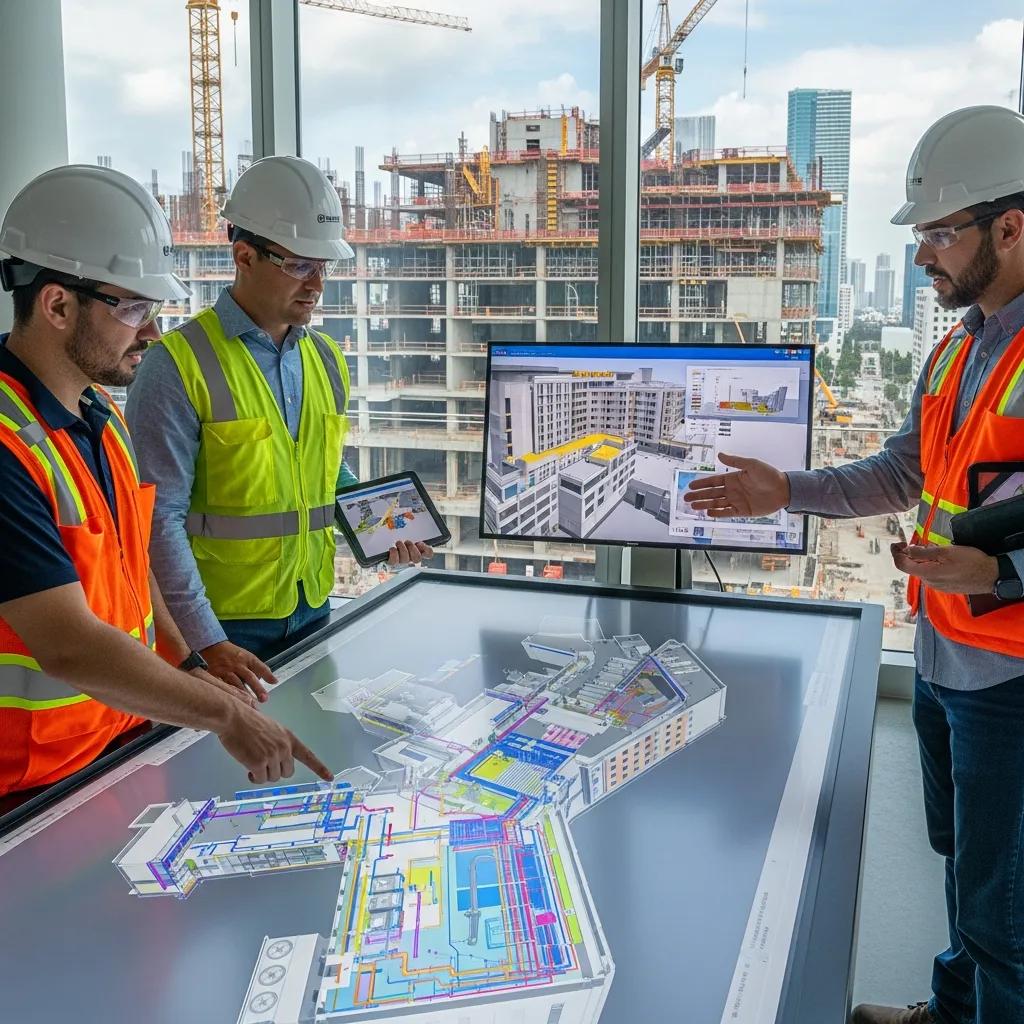
Healthcare Facility Layout & Coordination in Miami, FL: Precision BIM & VDC for Reliable, On‑Schedule Delivery
Healthcare projects in Miami require tight coordination across complex MEP systems, specialized medical equipment, and strict regulatory controls. Modern digital construction tools—BIM and VDC—give teams a practical way to manage that complexity. This article shows how model-based coordination, clash detection, and precision field layout cut rework, improve schedule certainty, and protect patient‑safety systems during hospital builds and renovations. You’ll find clear, actionable benefits of hospital BIM coordination, how VDC consulting improves sequencing and logistics, the role of Robotic Total Station and 3D scanning in as‑built verification, and project-management practices that deliver resilient, maintainable facilities. We also address Miami‑specific concerns—climate resilience, infection‑control during construction, and sustaining operations—and how technology-driven workflows respond to those challenges. Our aim is straightforward guidance owners, architects, contractors, and facility managers can use to reduce cost, tighten schedules, and simplify handover.
What Are the Benefits of BIM Coordination for Miami Healthcare Facilities?

BIM coordination brings discipline models together so teams can find and resolve spatial conflicts before work reaches the field. Regular clash detection runs and shared, coordinated models produce clearer installation sequencing and verified routing for critical MEP systems. That model-first approach reduces field rework, shortens install times, and creates audit-ready documentation for regulators. The direct outcomes are fewer RFIs, lower change‑order risk, and more predictable procurement and prefabrication—critical on complex hospital jobs. Those measurable improvements explain why BIM coordination is central to delivering healthcare projects in Miami.
BIM coordination provides several high‑impact benefits for hospital work:
- Stronger MEP coordination: Federated models expose routing conflicts before crews arrive, avoiding costly field fixes.
- Less rework and fewer change orders: Early detection of clashes reduces corrective work and downstream cost creep.
- Schedule gains and prefabrication readiness: Sequencing models enable off‑site fabrication and faster on‑site assembly.
- Regulatory traceability and documentation: Model-based deliverables support inspections and infection‑control verification.
Those gains flow into smarter procurement and faster operational readiness. The table below maps coordination capabilities to measurable project impacts.
Different BIM coordination capabilities map to specific project benefits and measurable impacts.
| Coordination Feature | Mechanism | Project Benefit |
|---|---|---|
| Clash detection cycles | Automated spatial analysis of federated models | Fewer RFIs and reduced on‑site clashes |
| Sequencing and 4D simulation | Time‑linked model simulations | Shorter critical‑path durations and improved prefabrication |
| MEP coordination workflows | Discipline‑specific routing and clearance checks | Reduced rework and on‑time equipment installation |
This comparison shows how specific BIM features produce reliable outcomes on healthcare projects. For Miami teams needing practical support, Conway Coordination and Layout Services (CCLS) offers BIM coordination focused on clash reduction, prefabrication sequencing, and deliverables designed for regulatory review; contacting our team clarifies how these capabilities apply to your project.
How Does BIM Improve Hospital Layout and MEP Coordination in Miami?
BIM improves hospital layout by creating a federated environment where architecture, structure, and MEP systems are validated together against program and equipment needs. We run scheduled model federations, clash detection passes, and coordinated markups so discipline leads can resolve conflicts before crews mobilize. The outcome is spatial certainty: medical gas, HVAC risers, and imaging equipment pathways are checked for clearance and serviceability, reducing interruptions during construction. Effective BIM workflows depend on standard naming conventions, aligned levels, and a model‑of‑record practice that feeds coordination meetings and produces traceable clash reports and RFIs. That model-driven certainty supports better scheduling and prepares the project for prefabrication and modular assembly—reducing labor exposure and site congestion.
What Are the Cost and Schedule Advantages of BIM for Miami Medical Facility Projects?
BIM shifts discovery from the field into the model, cutting unplanned labor and change orders that cause overruns. In practice, iterative coordination and prefabrication planning lower rework costs and compress installation timelines through staged sequencing and lean delivery. The approach ties 4D schedules to procurement-ready model deliverables, enabling earlier long‑lead ordering and off‑site fabrication. Owners typically see higher labor productivity, fewer retrofit hours, and clearer acceptance criteria at turnover. Those benefits shorten commissioning windows and smooth the transition to operations—important where downtime and disruption affect patient safety and finances.
How Does VDC Consulting Enhance Medical Facility Construction in Miami?

VDC consulting applies a digital‑first construction strategy that combines modeling, simulation, and logistics to optimize how healthcare facilities are built. VDC turns design intent into executable work packages by aligning sequencing, site logistics, stakeholder coordination, and constructability analysis. Practically, that means fewer surprises during installation, better staging of equipment and materials, and stronger collaboration between clinical teams and contractors. VDC also validates infection‑control phasing and temporary works so critical hospital operations remain protected during construction or renovation.
VDC consulting typically delivers these outputs and outcomes:
- Clash detection and coordination reports: Prioritized lists and tracked resolutions for discipline conflicts.
- Construction sequencing and 4D simulations: Visualized work phases and logistics to reduce site congestion.
- Stakeholder coordination packages: Aligned clinical access plans, shutdown windows, and turnover checklists.
Those deliverables translate into measurable reductions in site stoppages and RFI volume and form the basis for bids that reflect constructible designs ready for prefabrication. For Miami projects needing tailored VDC support, Conway Coordination and Layout Services provides consulting that focuses on clash mitigation, prefabrication sequencing, and stakeholder‑driven documentation—prioritizing actionable outputs that align digital deliverables with field execution.
What Role Does Clash Detection Play in Miami Healthcare VDC Services?
Clash detection identifies and manages spatial conflicts inside federated discipline models. In healthcare VDC services it protects patient‑safety systems by preventing improper routing of medical gases, HVAC, and electrical services. We run rule‑based checks to find hard and soft clashes—such as structural penetrations interfering with ductwork or equipment clearances conflicting with ceiling systems—and rank issues by severity for resolution. The result is fewer site stoppages, clearer installation sequences, and documented approvals that feed commissioning and regulatory review. Regular clash runs tied to coordination meetings lower RFI volume and create audit trails that demonstrate due diligence in protecting clinical infrastructure—especially important when construction happens alongside ongoing operations.
How Does VDC Optimize Pharmaceutical Facility Layouts in Miami?
VDC optimizes pharmaceutical layouts by modeling process flows, cleanroom separations, and utility segregation so compliance and operational efficiency are validated before construction begins. The approach integrates process‑flow models with utility and HVAC systems, verifies segregation and redundancy requirements, and plans sequencing that preserves sterile area containment during build activities.
Deliverables typically include:
- Process‑flow diagrams linked to 3D models
- Sequencing plans for validation activities
- Pre‑construction verification checklists aligned with regulatory requirements
The net effect is lower cross‑contamination risk, clear validation pathways, and documentation that speeds qualification and handover—making VDC essential for Miami pharmaceutical and high‑control healthcare facilities.
What Precision Layout Services Does CCLS Offer for Miami Healthcare Construction?
Precision layout services provide the field control and placement accuracy required for critical healthcare infrastructure, translating coordinated models into measurable layout points and verification reports. CCLS delivers a suite of layout capabilities—Robotic Total Station control, 3D scanning for as‑built capture, and anchor bolt verification—to ensure equipment, structural anchors, and MEP hangers are installed to tolerance. Typical deliverables include layout point files, anchor bolt charts, and as‑built point‑cloud overlays referenced to the coordinated model for QA/QC. These services reduce retrofit risk for sensitive equipment and support regulatory documentation at turnover.
CCLS precision layout services include:
- Robotic Total Station layout for structural anchors and MEP points: Precise placement within specified tolerances for equipment and anchor systems.
- 3D scanning and point‑cloud integration for as‑built validation: Capture field conditions and compare them to design models for clash‑free tie‑ins.
- Anchor bolt verification and tolerance reporting: Confirm anchor positions against manufacturer and equipment templates to avoid misalignment.
The list above summarizes typical services and their immediate benefits for precise installations and smoother commissioning. The table below compares these services, their accuracy metrics, and common use cases.
| Service | Precision Metric | Typical Deliverable |
|---|---|---|
| Robotic Total Station layout | ±2–10 mm control (project dependent) | Layout point files and control network report |
| 3D Scanning (point-cloud) | Sub‑centimeter capture accuracy | Registered point‑cloud and as‑built comparison reports |
| Anchor bolt verification | Manufacturer tolerance confirmation | Anchor position charts and tolerance certification |
How Is Robotic Total Station Technology Used for Hospital Layouts in Miami?
Robotic Total Stations establish survey control, translate model coordinates to the field, and accurately set anchor points, hanger locations, and equipment pads in hospital projects. Setup includes building a control network, calibrating instrument stations, and exporting layout point lists from coordinated models for precise staking. Deliverables typically include layout point spreadsheets, control network diagrams, and verification reports that show deviations against tolerance thresholds. The result: dependable placement of anchors and supports that align with prefabricated assemblies and equipment templates—minimizing installation delays and costly rework.
Why Are 3D Scanning and Anchor Bolt Verification Critical for Miami Medical Facilities?
3D scanning quickly captures as‑built conditions and creates point clouds that integrate with BIM to validate existing conditions and tie‑ins—vital for renovation work and equipment installs in active hospitals. Point‑cloud registration lets teams compare field reality to design intent and find misalignments before fabrication or delivery. Anchor bolt verification then confirms anchors meet manufacturer tolerances to prevent misalignment of heavy medical equipment. Together, scanning and verification provide QA/QC evidence that reduces installation delays and supplies traceable records required for regulatory review and commissioning.
How Can Healthcare Construction Project Management Improve Miami Hospital Builds?
Project management that integrates BIM, VDC, and precision layout services creates a coordinated delivery system where risks are identified early and schedules are optimized with model‑informed decisions. This approach couples integrated schedule modeling, prefabrication planning, and model‑linked risk registers to protect the critical path. Project managers use sequencing simulations and layout verification to align subcontractors, cut onsite conflicts, and shorten commissioning windows. When executed correctly, these practices reduce change orders, improve safety, and produce a documented handover that helps operations staff assume facility responsibility.
Effective project management strategies include the following checklist:
- Prefabrication and off‑site assembly planning tied to model deliverables.
- Integrated schedule modeling with 4D simulations and short‑term look‑ahead plans.
- Risk registers and coordination logs linked to clash reports and verification tasks.
These steps create measurable improvements in schedule certainty and cost control and feed directly into project strategies that optimize sequencing and reduce risk on Miami healthcare projects.
| Strategy | Risk Attribute | Expected Outcome |
|---|---|---|
| Prefabrication planning | On‑site labor variability | Faster installations and reduced exposure |
| Integrated schedule modeling | Sequence conflicts | Improved critical‑path adherence |
| Digital handover and documentation | Handover delays | Faster FM onboarding and fewer post‑occupancy issues |
What Strategies Optimize Scheduling and Risk Mitigation in Miami Healthcare Projects?
Optimizing schedule and mitigating risk means aligning procurement, prefabrication, and sequencing with model‑verified installation plans to reduce site uncertainty and labor conflicts. Key tactics include defining off‑site scope packages, running 4D simulations to validate sequencing, and keeping a short coordination cadence that resolves issues before they impact critical tasks. Risk registers should be model‑linked so each identified risk has a mitigation action, a responsible party, and a verification deliverable. These practices shorten installation windows, reduce rework, and help maintain clinical access and infection‑control protections during construction.
How Are Digital Twins Applied to Enhance Miami Healthcare Facility Operations?
Digital twins take coordinated BIM and as‑built scan data into an operational model that supports maintenance planning, space utilization analysis, and emergency simulations. The lifecycle begins with a verified as‑built model and metadata tied to equipment and systems. Operational dashboards then use that structured data to prioritize preventive maintenance, track asset histories, and simulate response scenarios for clinical continuity. Facility teams gain measurable efficiencies—better energy management, faster mean time to repair, and data‑driven planning that improves patient‑care reliability and long‑term lifecycle decisions.
What Are the Key Challenges in Healthcare Facility Layout and Coordination in Miami?
Miami healthcare projects face a distinct set of challenges: stringent regulatory and infection‑control requirements, complex MEP systems and specialized equipment coordination, climate resilience and flood‑proofing needs, and the necessity of keeping clinical operations running during renovations or expansions. Those constraints raise the stakes for accurate layout, sequencing, and documentation—errors can affect patient safety, trigger regulatory delays, or cause costly downtime. Addressing these challenges requires model‑driven coordination, precise field verification, and phased construction plans that protect operations and strengthen resiliency. The list below pairs common challenges with practical mitigations.
Key challenges and practical mitigations include:
- Regulatory compliance and infection control: Use staged containment and model‑based documentation to demonstrate compliance.
- Complex MEP systems and equipment coordination: Apply federated BIM and clash management to prevent service conflicts.
- Climate and resiliency concerns: Incorporate flood‑proofing and corrosion‑resistant detailing into model deliverables.
- Maintaining operations during renovation: Plan phased work, temporary systems, and tight sequencing to avoid clinical disruption.
These points introduce how regulatory and infection‑control specifics are addressed through targeted services for Miami healthcare work.
How Do Regulatory Compliance and Infection Control Impact Miami Hospital Construction?
Regulatory compliance and infection control shape sequencing, phasing, and on‑site methods for hospital construction by requiring documented containment strategies, air‑handling verification, and minimized exposure of clinical areas. Teams must plan negative/positive pressure transitions, containment barriers, and validated turnovers that satisfy inspectors and infection‑prevention staff. Documentation from model federations, 3D scans, and verification reports supports regulatory submissions and provides traceable evidence of compliance. Integrating these controls into coordination workflows reduces infection risk and regulatory delays while preserving necessary patient care access.
What Solutions Does CCLS Provide to Address Miami Healthcare Construction Complexities?
CCLS delivers targeted services—precision layout, VDC consulting, and 3D scanning—that directly address Miami healthcare construction challenges, helping teams minimize operational impact and verify installations against design intent. For renovation tie‑ins, point‑cloud capture and model overlay clarify interfaces and reduce unforeseen field conditions, while anchor bolt verification prevents misalignment of critical equipment. Our approach combines field‑proven layout technology with model‑integrated deliverables that support phased construction and infection‑control needs. We invite project stakeholders to request a consultation so we can define scope, tolerances, and coordination milestones tailored to each project.
Why Choose Conway Coordination and Layout Services for Miami Healthcare Projects?
Conway Coordination and Layout Services (CCLS) is a family‑owned firm focused on Robotic Total Station layout, VDC and BIM services, and 3D scanning workflows tailored to healthcare projects across Miami and the Southeast. Our technology‑forward approach delivers measurable outcomes—reduced rework, verified anchor and equipment placement, and coordination artifacts that support commissioning and operations. By aligning field layout with model‑based coordination and producing clear verification records, we help teams move from design intent to construction reality with minimized risk. We emphasize close collaboration and offer consultations to map our services to your project objectives.
Core value propositions include:
- Precision backed by Robotic Total Station and scanner integration for verified installations.
- Model‑centered coordination that reduces clashes and supports prefabrication.
- Client‑focused deliverables designed for regulatory review and operational handover.
These strengths help owners and contractors achieve predictable outcomes on Miami medical projects and lead into an overview of our lead coordinator and QA/QC practices.
What Unique Expertise Does Nathan Conway Bring to Miami Healthcare Layout Coordination?
Nathan Conway is the lead coordinator at Conway Coordination and Layout Services, offering hands‑on leadership for field layout and coordination on healthcare projects. He aligns survey control, layout deliverables, and modeling workflows so coordinated models translate to verifiable field placements. Nathan combines practical instrument experience—Robotic Total Stations and point‑cloud integration—with a client‑focused approach that supports tight clinical schedules. His involvement creates continuity between model coordination and field verification and increases the likelihood that installations meet tolerance and sequencing expectations.
How Does CCLS Ensure Precision and Client Success in Miami Medical Facility Builds?
CCLS maintains precision and client success through a disciplined QA/QC process: establishing survey control, performing model‑to‑field verification scans, and producing tolerance and verification reports for stakeholder approval. Our coordination cycles tie clash reports, layout deliverables, and anchor verification into a traceable record that supports commissioning and turnover. Typical deliverables include control network diagrams, as‑built point‑cloud comparisons, and anchor bolt certification that feed facility management systems. To engage CCLS on a Miami healthcare project, request a consultation with Nathan Conway to define scope, tolerances, and deliverables aligned to your milestones and regulatory requirements.
Frequently Asked Questions
What is the role of digital twins in healthcare facility management?
Digital twins are virtual, data‑rich representations of physical healthcare facilities that combine model geometry with live sensor and systems data. They give facility teams a single source of truth for maintenance planning, energy management, and emergency simulations. By modeling scenarios and tracking asset histories, digital twins enable proactive maintenance, faster repairs, and better resource allocation—improving reliability and operational costs for Miami healthcare facilities.
How can healthcare facilities in Miami address climate resiliency during construction?
Addressing climate resiliency starts with design and continues through construction: specify flood‑resistant details, use durable and corrosion‑resistant materials, and plan for elevated utilities or redundant systems. Practical tactics include elevating critical equipment, specifying resilient finishes, and integrating drainage and landscape design to manage stormwater. Planning these measures early—then documenting them in the model and coordination workflows—keeps facilities functional and protected against Miami’s climate risks.
What are the best practices for infection control during hospital renovations?
Best practices include staged containment, negative/positive pressure management, physical barriers, and continuous air‑quality monitoring. Maintain clear patient and staff routes, schedule disruptive work for low‑occupancy windows, and train crews on infection‑control protocols. Document containment and turnover steps with model deliverables and verification scans so infection‑prevention teams and inspectors can confidently sign off.
How does VDC consulting improve stakeholder collaboration in healthcare projects?
VDC creates a shared, visual framework that lets clinical staff, designers, and contractors see sequencing, conflicts, and logistics early. With coordinated models and simulations, stakeholders can prioritize clinical needs, align schedules, and make decisions with fewer surprises. That transparency reduces misunderstandings and speeds approvals—leading to smoother execution on site.
What are the implications of regulatory compliance on healthcare construction timelines?
Regulatory compliance affects schedules through permitting, inspections, and documentation requirements. Delays often arise when documentation is incomplete or containment and verification steps aren’t clearly demonstrated. Engaging regulators early, producing model‑based documentation, and scheduling inspection milestones into the project timeline help avoid setbacks and keep projects on track.
How can precision layout services reduce rework in healthcare construction?
Precision layout minimizes rework by translating coordinated models into accurate field control and stakeout points. Using Robotic Total Stations and 3D scanning, teams verify placements before installation and catch misalignments early. That proactive verification reduces costly corrections, shortens install time, and protects critical equipment schedules.
What are the benefits of using 3D scanning in healthcare facility renovations?
3D scanning delivers fast, accurate documentation of existing conditions and integrates seamlessly with BIM. Point‑clouds expose discrepancies between as‑built conditions and design intent so teams can resolve issues before fabrication or delivery. Scanning also creates verifiable records for regulators and commissioning teams, supporting smoother renovations and safer patient environments.
Conclusion
Bringing BIM, VDC, and precision layout together makes Miami healthcare construction more predictable, more efficient, and easier to hand over. These digital and field‑verified workflows reduce rework, shorten schedules, and preserve patient‑safety systems while supporting regulatory compliance. If you’re planning a hospital or medical renovation, our team can map the right mix of coordination, sequencing, and layout services to your project goals—contact us to request a consultation and start aligning design intent with construction reality.