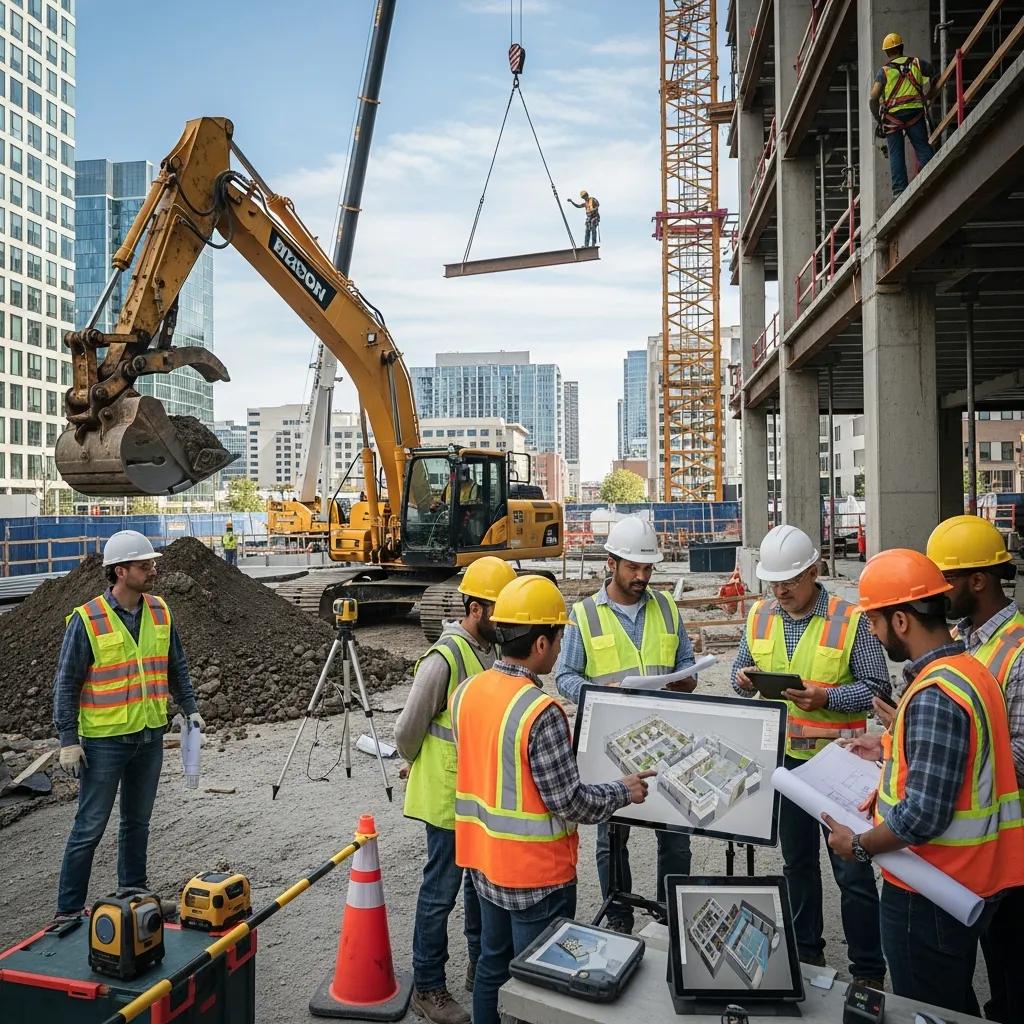
Practical Ways to Close the Skilled Labor Gap in Construction
The skilled labor shortage is reshaping how projects get built: fewer experienced tradespeople, faster-evolving digital workflows, and ongoing recruitment challenges are creating multi-year gaps that hurt schedules and budgets. This guide offers pragmatic, evidence-backed strategies construction leaders can use now — from tackling root causes to deploying technology and workforce programs — so teams can protect delivery and reduce labor dependency. You’ll see where Virtual Design and Construction (VDC) and Building Information Modeling (BIM) create measurable labor efficiencies, how robotic total stations and 3D scanning supplement or replace specialized layout crews, and which people-focused practices improve recruitment and retention. The article blends clear explanation, actionable checklists, and comparative tables to help owners, GCs, and specialty subs prioritize interventions. Where relevant, we reference real-world approaches used by Conway Coordination and Layout Services (CCLS) to illustrate practical results.
Root Causes and Real Project Impacts of the Skilled Labor Shortage
The shortage traces to an aging workforce, low new-entry rates into the trades, a growing gap between traditional craft skills and modern digital requirements, and lingering negative impressions of construction careers. Together, these factors limit available capacity and concentrate risk on tasks requiring precise layout and coordination. The impacts are tangible: cascading schedule delays across trades, higher labor premiums and overtime, more rework and claims, and increased reliance on costly specialty subcontractors. Recognizing these drivers lets firms apply short-term mitigations while building long-term pipelines to stabilize staffing and output.
How an Aging Workforce and Skills Mismatch Slow Projects
As experienced technicians retire, projects lose tacit, on-site know-how that isn’t easily replaced without structured transfer programs. New entrants often lack experience with digital workflows — VDC, BIM, and precision layout tools — widening competency gaps needed for modern delivery. The result is slower field execution, more RFIs, and reduced ability to adopt prefab or modular methods that could cut labor demand. Prioritizing knowledge transfer and targeted upskilling is therefore essential to keep productivity steady as veteran workers leave.
How Labor Shortages Affect Timelines and Budgets
Fewer available trades compress schedule flexibility and increase direct labor costs through overtime, premium subcontractor pricing, and longer mobilizations. Delays to critical trades — for example MEP or layout crews — force resequencing, idle equipment, and prolonged administrative claims, all of which drive up total project cost. A single delayed MEP scope can push finishes and commissioning out by weeks, raising overhead and liquidated-damage exposure. Firms should quantify these impacts in planning to decide when to invest in technology or training that eases labor-sensitive bottlenecks.
Where Technology Delivers Labor Efficiency on Site
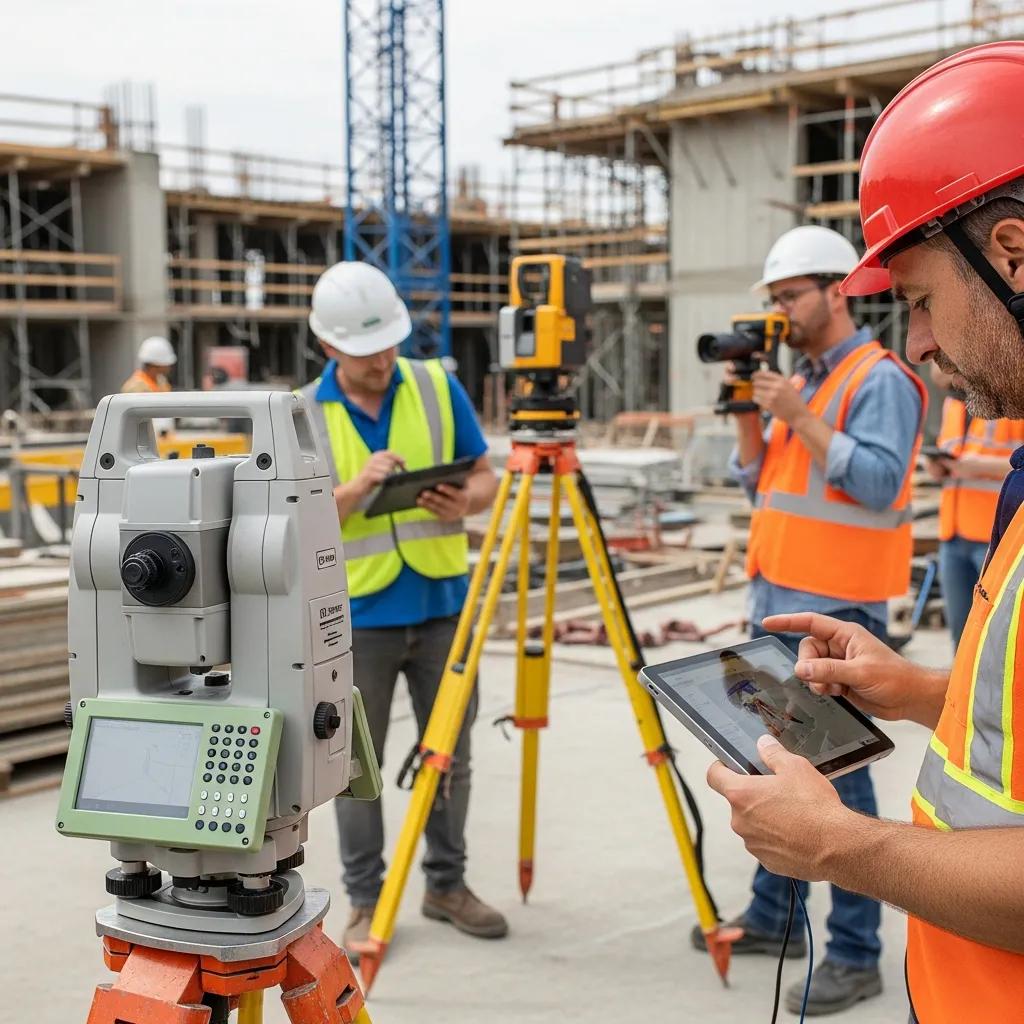
Digital tools boost productivity by automating repetitive tasks, tightening design-to-field fidelity, and enabling smaller teams to deliver more through coordinated workflows and off-site prefabrication. When applied where they matter most, VDC, BIM, layout automation, and cloud collaboration reduce rework, cut RFIs, raise craft-hours-per-output, and speed sequencing — all of which shrink labor demand without sacrificing quality.
Different digital approaches generate distinct labor savings depending on project scope and complexity.
| Digital Approach | Primary Function | Typical Labor Impact |
|---|---|---|
| Virtual Design & Construction (VDC) | Model-driven coordination and sequencing | Rework reduction 20–40%; fewer field RFIs |
| Building Information Modeling (BIM) | Precise design and fabrication outputs | Prefab enablement; reduced on-site labor touchpoints |
| Cloud Collaboration Tools | Document and issue management across teams | Faster decisions; less specialist travel and supervision |
This comparison highlights that integrated VDC and BIM workflows typically deliver the largest reductions in labor dependence by preventing downstream errors and enabling off-site work.
How VDC Reduces Rework and Speeds Delivery
VDC consolidates discipline models and sequences so clashes and constructability issues are identified before fieldwork begins. The result is fewer on-site reworks, clearer trade responsibilities, and more predictable labor allocation. Teams that commit to VDC report measurable drops in RFIs and can shift work toward prefabrication or staged deliveries that require fewer skilled installers, lowering total craft-hours.
How BIM Increases Field Productivity
BIM produces precise shop drawings, fabrication models, and layout extractions that remove ambiguity for field crews and cut manual re-measurement. Model-derived coordinates and fabrication instructions enable off-site production in controlled environments — where productivity is higher — and reduce time spent on layout and rework. Tying BIM outputs to field layout and scanning tools completes the workflow so teams can accomplish more with fewer people and fewer errors.
How Precision Layout Tools Fill Skilled Labor Gaps
Precision layout tools replace time-consuming, manual measurements with model-driven automation that improves accuracy and reduces the number of experienced layout technicians needed per project. Robotic total stations and mobile 3D scanners capture precise coordinates and speed verification against the model, lowering error rates and rework. High‑value use cases include anchor-bolt setting, equipment pad placement, column lines, and MEP riser coordination — places where small errors become costly fixes.
Layout methods produce different practical outcomes depending on task complexity and site conditions.
| Layout Method | Typical Accuracy | Time-to-Complete (typical task) |
|---|---|---|
| Robotic Total Station | ± 1–3 mm repeatability | Rapid multi-point layouts; hours vs. days |
| 3D Scanning | Sub-centimeter to millimeter with registration | Fast as-built capture; reduces site visits |
| manual Layout | Centimeter-level variability | Slower, higher error rework rates |
Why Robotic Total Stations Matter for Accurate Layout
Robotic total stations automate measurement and staking by combining remote-controlled precision with digital model inputs, letting a single operator perform multi-point layouts once done by crews. This reduces headcount and measurement errors, speeds anchor-bolt and equipment positioning, and simplifies verification during rough-in. When tied to coordinated BIM outputs, RTS creates a tight feedback loop that keeps installations within design tolerances and minimizes corrective work downstream.
How 3D Scanning Improves Verification and Prefab Decisions
3D scanning captures dense point-clouds that document current conditions with high fidelity, enabling off-site clash checks and prefab decisions that cut field labor time. Scans reduce the need for repeated site visits by providing a single, shareable dataset for model registration and review. Scan deliverables — registered point clouds and meshes — support retrofit planning, faster shop drawing production, and fewer measurement-driven delays. With scan-derived as-builts, teams can shift work into controlled fabrication settings with confidence.
Attracting and Keeping Skilled Construction Talent
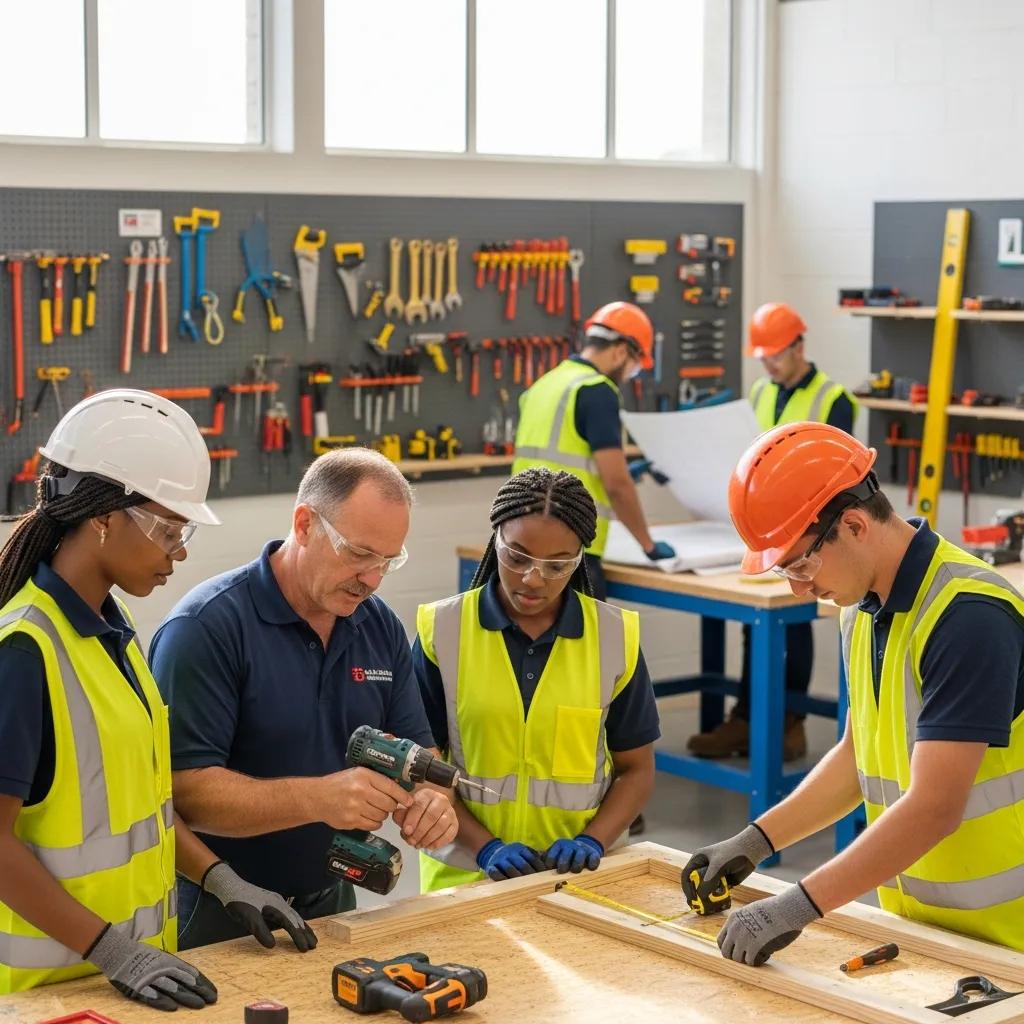
Successful talent strategies combine modern recruiting, structured apprenticeships, targeted upskilling, and workplace practices that emphasize career growth and safety. Firms that use digital recruiting, invest in training aligned to in-demand skills, and offer clear promotion paths see better applicant quality and lower turnover.
| Initiative | Reach | Retention Impact |
|---|---|---|
| Apprenticeships | Local schools and unions | High; structured loyalty and skill transfer |
| Modern digital recruiting | Social platforms and targeted ads | Medium; broad reach to younger candidates |
| Upskilling programs | Internal training and certifications | High; reduces external hiring needs |
Recruiting Young Workers: What Works Today
Younger candidates respond to messaging that shows clear career pathways, modern tools, and meaningful benefits. Highlighting technology use, apprenticeship progression, and transferable skills — through social media, video, and hands-on site visits — increases interest and applications. Partnering with trade schools and CTE programs builds early pipelines by aligning curricula with employer needs and offering paid, work-integrated learning. Track metrics like application-to-hire and time-to-fill to refine outreach for better results.
How Upskilling Programs Improve Retention
Upskilling raises retention by improving competency, enabling internal moves, and signaling long-term investment in people. Structured programs that mix on-the-job coaching, certification paths, and short bootcamps cut time-to-competency and lower reliance on outside specialists. Measurable wins include higher internal-hire rates, shorter vacancy times for critical roles, and fewer quality incidents. Align training to VDC and BIM to build technicians who support modern delivery and stabilize staffing.
Industry Partnerships and Education: Building Reliable Pipelines
Partnering with trade schools, apprenticeship programs, and workforce agencies produces predictable pipelines and lowers recruiting overhead by aligning training with employer needs. Collaborations can include co‑developed curricula, sponsored cohorts, and paid internships that feed entry-level roles. Government grants and industry programs often offset training costs and credentialing, making workforce investment more affordable. Practical next steps: map critical skills, engage local providers, and set KPIs such as apprentice retention and certification completion.
Benefits of Working with Trade Schools and Apprenticeships
Joint programs create job-ready workers and reduce cost-per-hire by converting trainees into staff familiar with company standards. These partnerships define career ladders that increase loyalty, particularly when employers provide mentorship and progressive wages tied to milestones. A basic model: shared curriculum design, paid on-site training, and employer interviews or hiring commitments for graduates. Track apprentice graduation and one- and three-year retention to measure ROI.
How Government and Industry Programs Support Workforce Development
Workforce grants, tax incentives, and funded programs offset employer training costs and broaden access to credentials that make construction careers more appealing. Trade associations provide standardized curricula and portable certifications recognized across firms. Participating in association-led training or grant programs helps firms scale upskilling without shouldering full cost and aligns credentials with industry standards — accelerating readiness while sharing financial responsibility.
People-First Practices That Complement Technology
Holistic solutions widen the candidate pool and improve retention by promoting diversity and inclusion, better work culture, and defined career ladders. These human-centered measures amplify the value of technology investments by ensuring efficient workflows are supported by a stable, motivated workforce. Examples include mentoring, transparent promotion criteria, flexible arrangements where possible, pay tied to skill tiers, and recognition and safety programs that lower turnover. Combining people policies with digital workflows builds lasting resilience to labor shortages.
Why Diversity and Inclusion Strengthen Project Teams
Broadening outreach to underrepresented groups increases the candidate pool and brings new perspectives that improve problem-solving and innovation. Targeted recruitment, mentoring, and inclusive materials reduce barriers to entry and improve retention. Measure progress with diversity metrics, mentor-match rates, and retention by demographic to refine programs. Over time, a more diverse workforce is better positioned to adopt new technologies and workflows.
How Positive Culture and Clear Career Paths Boost Retention
A positive culture and transparent career ladders reduce voluntary turnover by setting clear expectations, rewarding mastery, and offering advancement. Concrete policies — mentorship, progressive pay tied to certifications, safety-first practices, and regular feedback — demonstrate commitment to employees and increase job satisfaction. Track promotion rates, time-to-competency, and voluntary turnover to evaluate success. Embedding career development into company culture ensures technology and training investments produce durable workforce gains.
Conway Coordination and Layout Services (CCLS) provides practical implementations of these approaches across the Southeastern U.S. Our VDC consulting and BIM modeling and coordination reduce rework and improve labor productivity by aligning model data with field execution and producing prefabrication-ready outputs. CCLS also delivers robotic total station layout and 3D scanning services to speed on-site precision, shrink layout crews, and verify as-built conditions rapidly — supporting the labor-shifting strategies described above.
CCLS client examples show the returns possible when technology and workforce strategies align. In one case, coordinated BIM plus robotic layout cut rework and reduced layout hours enough for the GC to reallocate labor to parallel scopes. In another, fast 3D scanning and model registration accelerated prefab cycles and avoided repeated site re-measurements, lowering schedule risk and premium subcontractor costs. For teams evaluating options, a consultation with CCLS can clarify which mix of VDC, BIM, and field layout services fits your project and workforce constraints; Nathan Conway is available to discuss specific approaches.
Three tactical steps firms can take today:
- Map critical skill bottlenecks: Identify the trades and tasks that most often cause delays.
- Prioritize digital coordination: Apply VDC/BIM where it will cut the most rework.
- Adopt precision layout selectively: Use robotic total stations and scanning for high-risk, high-value tasks.
Key KPIs to monitor after implementation:
- Hours saved per layout task: Measure before-and-after for targeted activities.
- Rework reduction percentage: Track changes in rework-related change orders.
- Time-to-competency for new hires: Monitor the effectiveness of upskilling programs.
Common implementation questions — short answers
- Q: How quickly can VDC and BIM generate labor efficiencies?When teams commit to the workflow and an issue-resolution cadence, measurable reductions in rework and coordination time often appear within the first coordination cycle — typically weeks after model integration.
- Q: Can robotic total stations replace experienced layout crews?RTS won’t remove the need for skilled oversight, but they do substantially reduce technician headcount for repetitive, high-precision tasks and lower cumulative layout hours.
- Q: How can a firm build a training pipeline without large upfront costs?Combine apprenticeship partnerships with targeted upskilling and tap available industry grants. That spreads cost while producing entry-level talent trained to your on-the-job standards.
These concise answers are intended to guide decision-making and invite teams to request a consultation with Conway Coordination and Layout Services to tailor solutions to their projects and workforce needs; Nathan Conway can provide an initial discussion of fit and expected outcomes.
Frequently Asked Questions
What are the long-term effects of the skilled labor shortage on the construction industry?
Long-term effects include sustained cost increases, longer schedules, and potential declines in overall quality as experienced workers retire faster than they are replaced. Firms may rely more on less-experienced labor, raising error and rework rates. Over time, unmet project demand can slow industry growth and reduce competitiveness unless organizations invest in training, recruitment, and productivity-enhancing technologies.
How can construction firms effectively measure the success of their workforce strategies?
Measure success with KPIs such as retention rates, time-to-competency for new hires, and reductions in rework incidents. Track apprentice-to-hire conversion, certification completion, and training effectiveness to evaluate workforce programs. Regular review of these metrics lets firms adjust investments and demonstrate ROI.
What role does mentorship play in addressing the skilled labor shortage?
Mentorship accelerates knowledge transfer from seasoned tradespeople to new hires, improving skill development, confidence, and job satisfaction. Structured mentor programs support faster competency gains and higher retention, helping firms preserve institutional knowledge and build a sustainable talent pipeline.
How can construction companies leverage technology to enhance employee training?
Use VR, AR, and online learning platforms to create immersive, repeatable training that simulates real-world tasks safely. Digital learning offers flexible, on-demand training that reinforces hands-on coaching. These tools increase engagement, improve knowledge retention, and make it easier to scale upskilling across crews.
What are some effective ways to promote a positive work culture in construction?
Promote open communication, recognize achievements, and prioritize safety and wellbeing. Offer competitive pay, clear advancement paths, and opportunities for feedback. Programs that support work-life balance and mental health improve morale and retention, making construction roles more attractive long term.
How can construction firms attract a more diverse workforce?
Actively reach out to underrepresented groups through community partnerships, schools, and vocational programs. Use inclusive job postings and showcase diverse role models. Provide diversity training for hiring managers and mentorship programs to support recruitment and retention of a broader talent pool.
What are the benefits of implementing flexible work arrangements in construction?
Flexible arrangements increase employee satisfaction and retention by helping workers balance personal and professional demands. Options such as flexible hours or remote work for certain roles can attract a broader set of candidates and reduce burnout, which in turn supports productivity and morale.
Closing the Skilled Labor Gap with Technology & Workforce Programs
Closing the skilled labor gap requires both smarter technology use and stronger people programs. VDC and BIM reduce rework and optimize labor, while apprenticeships, upskilling, and inclusive culture keep talent on the job. For teams ready to combine digital coordination with precision field services, Conway Coordination and Layout Services offers practical, regional experience to translate these strategies into measurable project outcomes. Contact CCLS to discuss how VDC, BIM, and field layout services can help your next project.