

Precision BIM Modeling & Coordination in Orlando, FL — Optimize Your Construction Projects
Precision BIM modeling and coordination bridge design intent and field reality to cut rework, tighten installation sequencing, and simplify long‑term asset management for Orlando projects. This guide explains BIM and coordination in the Central Florida context, how model-driven workflows lower clashes and schedule risk, and which technical deliverables teams expect during planning, fabrication, and turnover. You’ll get a clear overview of core processes—clash detection, federated models, scan‑to‑BIM, and VDC consulting—plus practical steps to onboard a local BIM partner. The examples map to common Orlando work types like renovations, commercial construction, and MEP‑heavy projects, and highlight technologies that enable millimeter‑level field accuracy. If you manage design, trade coordination, or facilities in Central Florida, this article gives the decision criteria, workflows, and outcomes to evaluate BIM modeling and coordination services. Finally, we outline how to request a consultation with Conway Coordination and Layout Services (CCLS), a family‑owned team serving Florida and the Southeastern U.S. For project-wide digital coordination and model-to-field planning, explore CCLS VDC consulting services.
What is BIM Modeling and Coordination in Orlando Construction?
BIM modeling and coordination create a single, data‑rich model that represents architectural, structural, and MEP systems so teams can find and resolve conflicts before installation. By federating Revit discipline models and referencing point‑cloud as‑builts, coordination establishes one source of truth for clash detection, 4D sequencing, and fabrication‑ready outputs. That centralized model integration plus regular coordination cycles reduces site surprises and speeds procurement and prefabrication. Below are three core benefits that explain why Orlando teams rely on BIM coordination.
- Clearer constructability decisions: Coordination reveals clashes and routing conflicts early, preventing costly onsite rework.
- Faster sequencing and prefabrication: 4D planning and fabrication models compress install windows and reduce trade dependencies.
- Accurate as‑built baselines: Scan‑to‑BIM point clouds deliver millimeter‑level documentation for renovations and retrofits.
Together, these elements help teams overcome Orlando’s fast schedules and retrofit complexities. Local practitioners commonly pair model coordination with field layout verification to confirm installed systems match the digital model. Conway Coordination and Layout Services (CCLS) brings field‑proven layout and VDC coordination practices to Orlando projects with regional experience and exacting standards.
How does BIM enhance construction planning and execution?
BIM turns design geometry and metadata into actionable construction intelligence used for clash resolution, sequencing, and procurement. Clash detection—via Navisworks, federated Revit workflows, or similar tools—finds spatial conflicts across MEP, structural, and architectural models so issues are resolved virtually instead of on site. 4D planning ties model elements to schedule logic so sequencing issues surface before crews mobilize, reducing critical‑path delays. Better visualization through coordinated views and model walkthroughs aligns owners, designers, and contractors, cutting RFIs and misunderstandings that lead to change orders. These capabilities improve constructability and handover quality, which brings us to the specific coordination components Orlando projects need.
What are the key components of BIM coordination for Orlando projects?
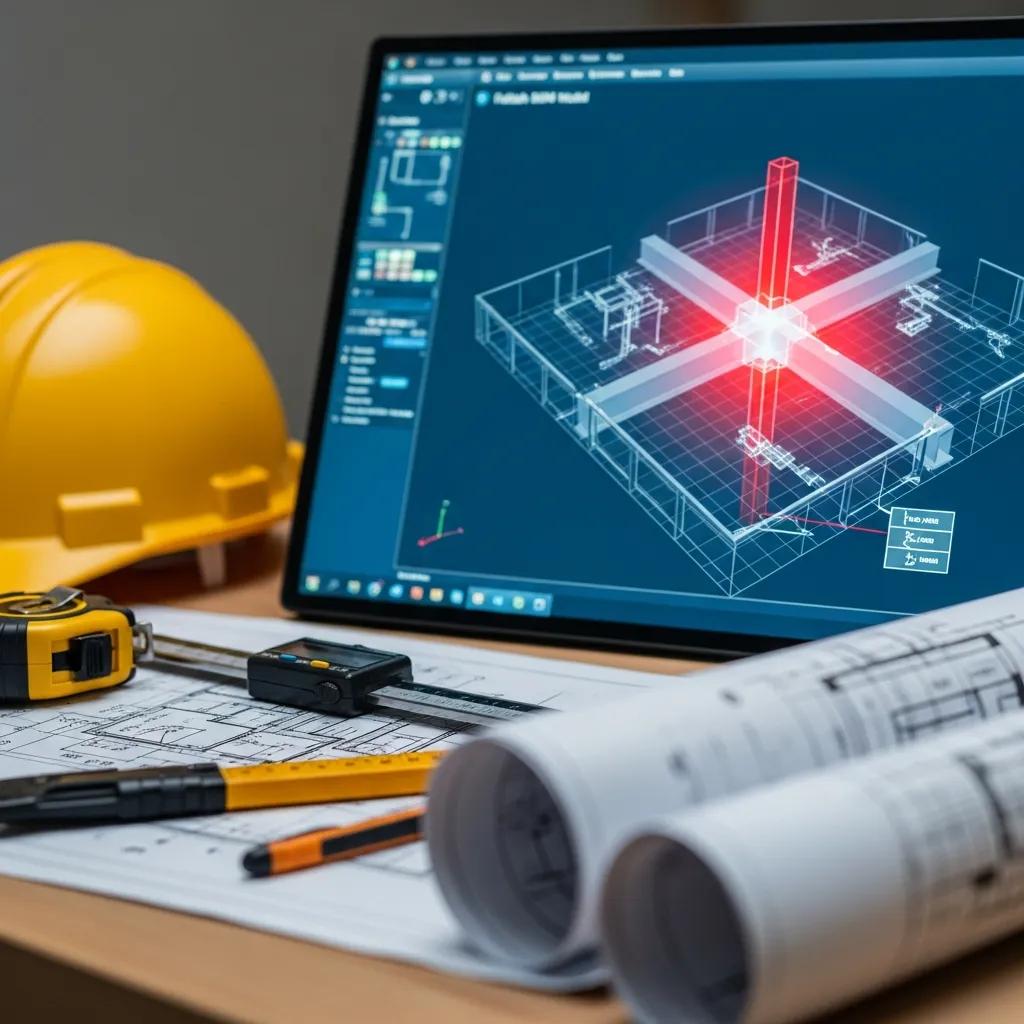
Core components include disciplined model authoring, federated model management, scheduled coordination cycles, clash reporting, and field verification using point clouds and layout equipment. Consistent families and shared parameter conventions are essential so discipline models merge cleanly without losing metadata. Regular coordination meetings—run against defined clash thresholds and tracked with action logs—produce resolved model iterations and clash reports that feed shop drawings and fabrication. Typical deliverables are federated Revit/Navisworks models, clash matrices, annotated markups, and as‑built updates after installation. Adding precise field layout tools and point‑cloud validation ensures the model reflects actual site conditions and prepares teams for fabrication‑ready modeling, described in our service offerings below.
Why Choose Expert BIM Coordination Services in Orlando, FL?
Engaging an experienced BIM coordinator reduces risk, shortens schedules, and improves constructability through standardized workflows tuned to Orlando projects. Specialists deliver repeatable coordination cadences, disciplined clash management, and model‑to‑fabrication practices that cut onsite rework and change orders. Local knowledge matters: retrofits, hospitality builds, and institutional projects have recurring coordination patterns and compliance needs that experienced providers anticipate. Here are the primary reasons to hire an expert BIM coordinator for Orlando construction.
- Lower project risk by resolving issues virtually and reducing RFI‑driven delays on site.
- Cost and schedule savings from prefabrication‑ready models and streamlined procurement.
- Field accuracy through integrated 3D scanning and layout verification technologies.
Those advantages translate into measurable project improvements. The next section explains how BIM specifically reduces rework and schedule risk for trade coordination and fabrication workflows.
How does BIM reduce costly rework and project delays?
BIM reduces rework by catching spatial conflicts and system mismatches before fabrication or installation, avoiding expensive shop reruns and corrective labor. By focusing clash detection on high‑impact issues—like penetrations or structural obstructions—teams can redesign routing or adjust coordination zones while still in the model. Fabrication‑ready models provide accurate coordinates and annotations for shop drawing production, cutting markups and reruns. Field verification with 3D scanning and layout instruments confirms tolerances before install, closing the loop between the digital model and the finished installation. These practices shorten punch lists and keep projects on schedule, addressing the time pressures common in Orlando work.
What local Orlando construction challenges does BIM address?
Orlando projects commonly face compressed schedules, complex MEP systems in hospitality and healthcare, and frequent renovations that demand precise as‑built knowledge—challenges BIM workflows are built to solve. For fast builds, 4D sequencing and prefabrication reduce labor coordination and enable parallel workstreams. Renovations benefit from scan‑to‑BIM deliveries that provide verified existing‑condition models and prevent surprises caused by undocumented conditions. Projects with many subcontractors gain clarity from disciplined coordination deliverables—federated models and clash reports—so trades clearly understand scope and spatial interfaces. These targeted solutions show how BIM delivers practical, local value and lead into our catalog of services.
What Comprehensive BIM Services Does CCLS Offer in Orlando?
CCLS offers a full suite of BIM and VDC services tailored to Orlando and Central Florida projects, including MEP BIM coordination, structural and architectural modeling, scan‑to‑BIM capture, clash detection cycles, fabrication‑ready modeling, and precision field layout. We combine office coordination with field verification—such as Trimble Robotic Total Station layout—to ensure model accuracy translates to installed systems. Typical deliverables include federated Revit models, clash reports, fabrication coordinates, and point‑cloud‑referenced as‑built models that support construction and facilities management. The table below maps core services to common deliverables and use cases for Orlando projects.
| Service | Deliverables | File Formats | Use Cases |
|---|---|---|---|
| MEP BIM Coordination | Federated models, clash reports, coordination logs | Revit, Navisworks clash matrices | New MEP installs, complex mechanical routing |
| Scan-to-BIM | Point cloud registration, as‑built Revit models | E57/PTS, Revit | Renovations, retrofit verification |
| Fabrication-ready Modeling | Shop coordinates, spool drawings, BOMs | Revit, IFC, fabrication exports | Off‑site prefabrication, shop fabrication |
| Field Layout & VDC Integration | Layout points, verification reports | CSV, Trimble formats | Precise installation, layout validation |
How does MEP BIM coordination improve trade collaboration?
MEP BIM coordination creates a federated model that functions as the single source of truth, letting HVAC, electrical, plumbing, and structural teams resolve spatial conflicts before fabrication. Typical coordination follows an iterative cadence: model submission, clash detection run, coordination meeting, action assignment, and issuance of a resolved model—ensuring transparency and accountability. The outcome is fewer RFIs and change orders because trades follow pre‑agreed routing and clearance decisions instead of improvising onsite. Coordination also generates fabrication‑ready outputs—spools and shop drawings—that shorten lead times and reduce lifecycle costs by improving procurement accuracy. These trade‑level gains make prefabrication and off‑site assembly more predictable and efficient for Orlando contractors.
Note: the table below summarizes how scan‑to‑BIM supports accurate as‑built documentation and why Orlando renovations rely on this workflow.
| Scan-to-BIM Feature | Purpose | Benefit |
|---|---|---|
| Point-cloud capture | Record existing geometry at high resolution | Millimeter‑level accuracy for renovation work |
| Registration & cleanup | Align scans to project coordinates | Usable base for Revit model creation |
| As-built Revit deliverable | Model with verified existing elements | Reduces site surprises and rework |
Point clouds become as‑built models through a disciplined process of registration, segmentation, and model authoring so designers and trades work from a verified baseline. This approach reduces the risk of unknown conditions that commonly trigger schedule slips and cost overruns.
What is the role of 3D laser scanning in accurate as-built documentation?
3D laser scanning captures site geometry quickly and precisely, producing point clouds that form the factual basis for as‑built Revit models used in renovations and retrofits. Scanning records real‑world coordinates that cut guesswork when reconciling drawings with site conditions; typical accuracies support millimeter‑level verification critical for tight‑clearance MEP systems. Converting point clouds to BIM involves segmentation, feature extraction, and model authoring so the as‑built model supports clash detection and fabrication workflows. Field verification then cross‑checks installed elements against model coordinates using layout instruments to confirm tolerances. These practices make sure digital models represent reality, minimizing surprises during installation and turnover.
How Does Virtual Design and Construction Consulting Benefit Orlando Projects?
Virtual Design and Construction (VDC) consulting aligns teams around integrated digital workflows that connect design, schedule, cost, and site execution to improve predictability and delivery quality. VDC takes BIM further by embedding model‑driven decisions into project controls—linking model elements to schedule (4D), cost (5D), and procurement logic to reduce uncertainty. Consulting services often include workflow design, coordination protocol development, prefabrication planning, and digital handover strategies that prepare owners for lifecycle management. VDC techniques support better prefabrication planning, fewer onsite labor conflicts, and cleaner data transfer to facility teams. The table below summarizes common VDC techniques, their purpose, and when to apply them on Orlando projects.
| VDC Technique | Purpose | Benefit |
|---|---|---|
| Clash Detection | Find spatial conflicts across models | Reduces onsite rework and RFIs |
| 4D Scheduling | Link model objects to schedule logic | Optimizes sequencing and reduces delays |
| Digital Twin Prep | Prepare deliverables for operations | Improves lifecycle asset management |
What are the advantages of integrating VDC with BIM workflows?
Combining VDC with BIM improves prefabrication planning, sequencing accuracy, and stakeholder alignment by connecting model geometry to construction logic. Prefabrication becomes feasible when coordinated models include fabrication‑ready tolerances and precise coordinates so off‑site assemblies fit on first install. 4D simulations expose conflicts in the build order and let managers test alternatives virtually before committing crews. Shared visualizations and data‑driven decision points reduce disputes and speed approvals. These integrated benefits lead to more predictable schedules, lower labor costs, and smoother site logistics for Orlando projects.
How does digital twin technology optimize project lifecycle management?
Digital twin technology creates a synchronized digital replica of built assets by combining as‑built BIM data, IoT inputs, and operational metadata to support maintenance and performance tracking. As a lifecycle tool, digital twins help facility teams plan preventive maintenance, monitor system performance, and prioritize capital improvements with data‑driven insight. Preparing models for handover requires structured metadata, asset tagging, and standardized naming so operational systems can consume BIM deliverables. The result is lower lifecycle costs, improved uptime, and faster resolution of operational issues—reasons to plan for VDC early so models serve construction and long‑term operations.
What Are the Proven Outcomes of BIM Modeling and Coordination in Orlando?
BIM modeling and coordination produce measurable results such as fewer RFIs, schedule compression from prefabrication, and less fabrication rework when models are issued with shop‑ready detail. Teams that combine field layout verification with model coordination report fewer field discrepancies and faster acceptance at turnover. The table below summarizes anonymized outcomes typical for Southeastern U.S. projects supported by disciplined BIM coordination.
| Project Type | Metric Saved | Typical Result |
|---|---|---|
| Commercial build | Schedule improvement | 12–18% schedule compression |
| Renovation/retrofit | Rework prevented | 30–50% fewer onsite rework tasks |
| MEP-heavy project | Fabrication error reduction | 20–35% fewer shop reworks |
These anonymized metrics reflect the improvements teams commonly see after disciplined coordination and verification. The following sections summarize representative case outcomes and the role of fabrication‑ready models.
Which case studies demonstrate cost and time savings with CCLS?
Anonymized summaries show consistent gains when coordination and field layout are combined: a Southeastern commercial retrofit accelerated turnover after scan‑to‑BIM and coordination reduced unplanned rework, and an MEP‑intensive institutional project reported fewer shop reworks once fabrication‑ready models guided prefabrication. CCLS’s regional focus on Florida means the team anticipates recurring conflicts in local assemblies and implements coordination cadences that remove blockers before mobilization. Family‑owned reliability and hands‑on layout practices contribute to measurable savings through fewer change orders and shorter punch‑list cycles. These examples explain why owners choose model‑driven coordination to protect budgets and schedules.
How do fabrication-ready models enhance constructability?
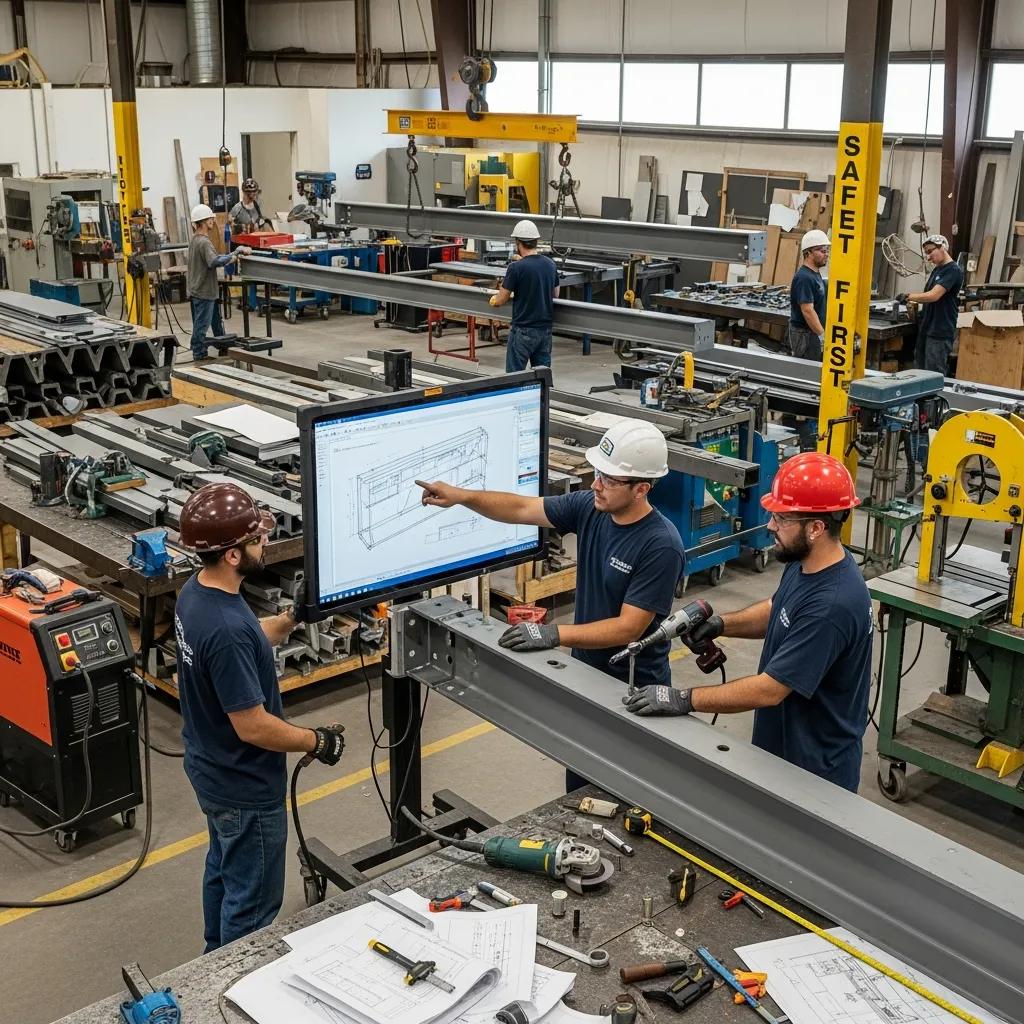
Fabrication‑ready models convert coordinated design intent into precise coordinates and shop documentation fabricators and installers can use without heavy reinterpretation. That reduces drawing revisions, minimizes shop rework, and shortens lead times by supplying accurate BOMs and spool drawings tied to the federated model. The model‑to‑fabrication process includes tolerance checks, connection details, and annotated interfaces that mitigate installation conflicts. For trades, this clarity reduces labor hours and increases first‑pass installation success, boosting overall project velocity and constructability. The next section explains how teams can get started in Orlando.
How Can You Get Started with BIM Modeling and Coordination Services in Orlando?
Getting started begins with a consultation, a scoped plan for model deliverables, and an agreed coordination cadence aligned with milestones and procurement timelines. Typical first steps are a project intake and scope review to determine whether scan‑to‑BIM or design coordination is needed, followed by a proposal that outlines deliverables, formats, and timelines. Below is a practical onboarding checklist teams can use to move from kickoff to fabrication‑ready models.
- Project intake and scope review: Share drawings, trade lists, and schedule constraints so we can define deliverables and priorities.
- Proposal and kickoff planning: Confirm file formats, clash thresholds, and meeting cadence before initial model submission.
- Coordination cycles and verification: Run iterative clash detection, issue resolved models, and perform field verification before fabrication.
These steps create predictable outcomes by clarifying responsibilities, timelines, and acceptance criteria. For Orlando projects, Conway Coordination and Layout Services (CCLS) offers localized support and can begin with an initial consultation to outline inputs and timelines. We are family‑owned, emphasize precision—including Trimble Robotic Total Station layout—and serve Florida and the Southeastern U.S.
What should you expect during a BIM consultation with CCLS?
During a consultation with CCLS, expect a focused agenda that reviews project scope, required deliverables (scan‑to‑BIM vs. model coordination), critical fabrication tolerances, and a proposed coordination cadence. Prepare existing drawings, a list of trades, site access notes for scanning, and the preliminary schedule to help scope work accurately. The consultation typically yields a proposal that lists deliverables—federated models, clash reports, fabrication coordinates—and an estimated timeline for initial model runs and coordination cycles. Follow‑up includes agreed kickoff dates for scanning or model submission and a coordination calendar tied to procurement milestones and key site activities.
Where to find expert BIM consulting and coordination in Orlando?
Look for providers who combine model coordination, scan‑to‑BIM capture, and precise field layout so digital models translate to accurate onsite installations. Prioritize regional experience in Florida, integrated VDC workflows that support fabrication, and reliable field layout methods such as robotic total station verification. Conway Coordination and Layout Services (CCLS) is a family‑owned provider offering precision layout, VDC coordination, BIM modeling, and 3D scanning across the Southeastern U.S., including Orlando and Central Florida. Prepare project documentation and request a consultation to receive a scoped proposal and coordination plan.
- Contact details for consultation: Company: Conway Coordination and Layout Services (CCLS)Phone: +1 (843) 283-4618Address: 972 Prospect Rd, Loris, SC 29569
Frequently Asked Questions
What types of projects benefit most from BIM modeling and coordination?
BIM and coordination are most valuable on complex projects—renovations, commercial buildings, and MEP‑heavy installations—where multiple trades and tight systems must fit together. Early clash detection and coordinated models streamline workflows, cut rework, and help ensure components integrate smoothly during construction.
How does BIM improve communication among project stakeholders?
BIM provides a shared visual model everyone can reference, so architects, engineers, contractors, and owners see the same information. That shared view improves discussions and decision‑making, reduces misunderstandings, and lowers the number of RFIs and change orders—helping teams stay aligned and move faster.
What is the significance of clash detection in BIM coordination?
Clash detection identifies conflicts between systems—structural, mechanical, electrical—before construction begins. By visualizing and resolving clashes in the model, teams prevent costly rework and delays, improve quality, and ensure systems integrate correctly on site.
How does scan-to-BIM technology enhance renovation projects?
Scan‑to‑BIM captures existing conditions with high precision and converts them into an accurate BIM model. For renovations, that verified baseline reduces surprises in the field and gives designers and trades a reliable starting point—minimizing rework and schedule risk.
What role does VDC play in improving project outcomes?
VDC integrates BIM with schedule and cost controls to visualize the project lifecycle. Techniques like 4D scheduling and digital twin preparation identify issues early, optimize workflows, and improve team coordination—resulting in lower costs, fewer delays, and better outcomes.
How can teams ensure successful onboarding with a BIM provider?
Successful onboarding requires clear communication and a structured process. Prepare project documents, define needs, and set a timeline for deliverables. During the initial consultation, agree on scope, coordination cadence, and fabrication tolerances so responsibilities and expectations are clear from the start.
Conclusion
Precision BIM modeling and coordination in Orlando improve project efficiency by reducing rework, tightening schedules, and ensuring accurate installations. This integrated approach addresses local construction challenges and produces measurable benefits for owners, contractors, and facility teams. To explore how these workflows can protect your budget and timeline, contact Conway Coordination and Layout Services for a tailored consultation and next steps. Start optimizing your construction projects today with focused, regional BIM expertise.