
Construction Control Points vs. Layout Points: Who Owns What? is a practical question for Southeast United States project teams because the answer affects when information is trusted, how field work is sequenced, and who must respond when conditions change. The goal is not to add technology for its own sake. It is to build a traceable path from a project decision to usable field information.
CCLS provides Construction Layout Services as part of a broader digital-to-field workflow. The useful angle in this guide is separates control establishment, validation, and trade-layout responsibilities without making engineering claims. The discussion stays within verified CCLS capabilities and does not turn layout, scanning, or model coordination into an unsupported guarantee.
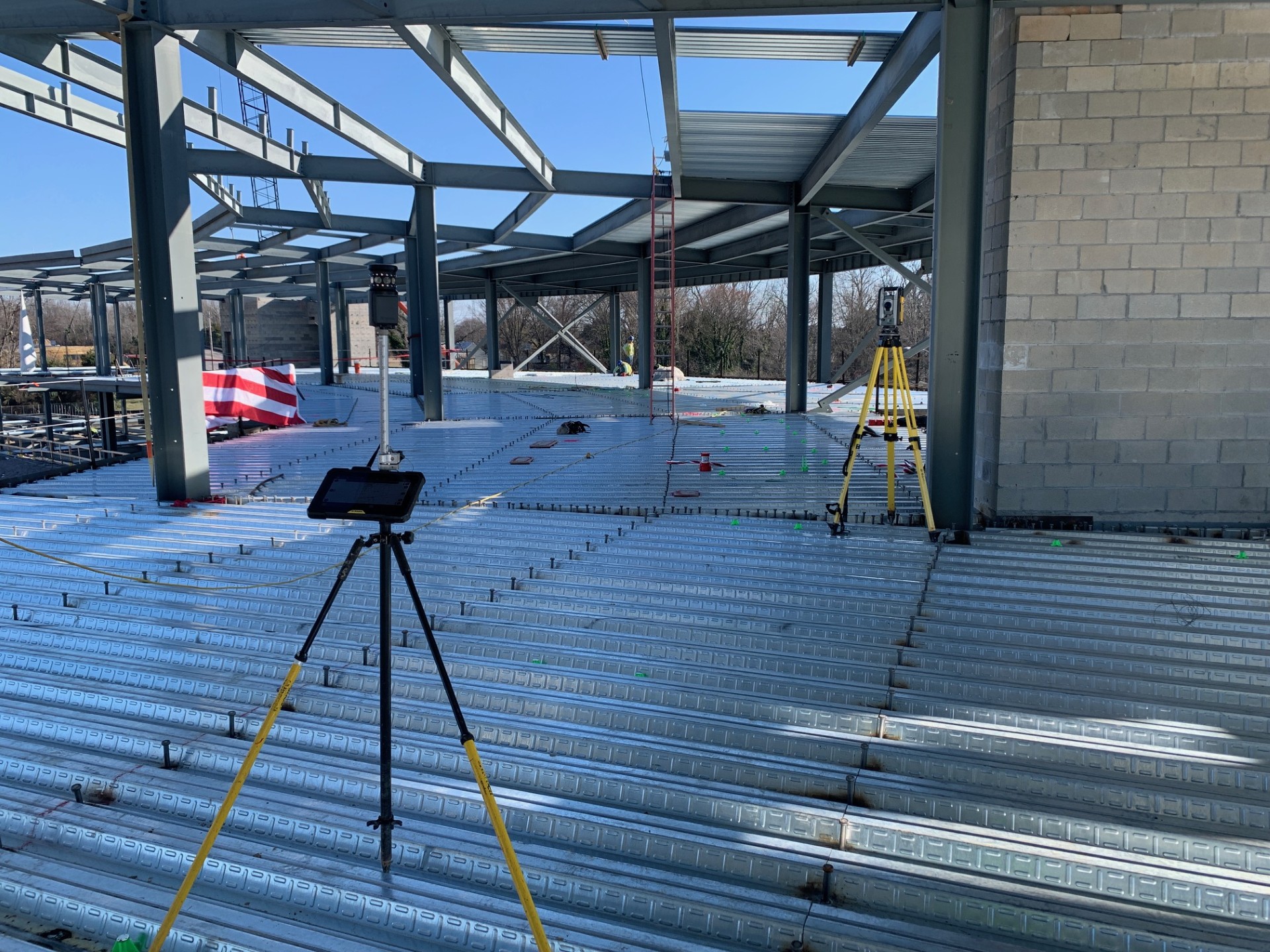
This guide’s focus—separates control establishment, validation, and trade-layout responsibilities without making engineering claims.—starts with defining the purpose, confirming the governing inputs and coordinate basis, assigning ownership, and releasing only information that is ready for its intended use. The sections below turn that answer into project controls a general contractor, trade partner, fabricator, or project manager can review before the relevant field or coordination work begins.
Start with the project datum
Construction control connects field measurements to the project coordinate basis. Layout points are downstream locations derived for specific installations, so the two should not be treated as interchangeable marks.
Treat start with the project datum as a project control rather than an informal conversation. Record the applicable floor or zone, file revision, responsible contact, and downstream activity. That simple discipline helps a construction layout services scope remain traceable when schedules or geometry change. It also gives the field team a clear reason to proceed, pause, or request clarification. Document the datum and the control source before deriving trade points.
Separate establishment from use
A party may establish or certify control while another party consumes that control for layout. Naming those roles prevents a field operator from being assigned responsibility that belongs elsewhere.
The practical value appears when the office decision can be recognized at the work face. For construction control and layout responsibility, that means the model, point, mark, report, or scan must connect to a physical location and a named construction decision. If the connection is unclear, more data will not automatically create certainty. Create a responsibility matrix for control establishment, preservation, and use.
- Identify the specific decision connected to separate establishment from use.
- Confirm the controlling file, field reference, or measured condition for separate establishment from use.
- Record the owner, release status, and next construction layout services action tied to separate establishment from use.
Protect the control network
Control can be disturbed, obstructed, or lost as construction advances. Layout points placed from compromised control may be internally consistent yet wrong relative to the project.
A strong plan also defines the boundary around protect the control network. CCLS should not be expected to invent missing design intent, approve another party’s work, or infer a tolerance that the project has not supplied. The contractor can protect the schedule by resolving those boundaries before the affected crew depends on the information. Identify protected primary control and a process for reporting suspected movement.
Treat layout points as purpose-built
A hanger point, sleeve center, wall line, and anchor location serve different field decisions. Their naming, elevation, offset, and reference information should reflect that purpose.
This checkpoint deserves a place in the look-ahead schedule. The input should be available early enough to review, the work area should be physically ready, and the response path should be active if the field condition differs from the released information. On a Southeast United States assignment, those basics are more useful than a broad technology claim. Define each point family and the installation decision it supports.
- Identify the specific decision connected to treat layout points as purpose-built.
- Confirm the controlling file, field reference, or measured condition for treat layout points as purpose-built.
- Record the owner, release status, and next construction layout services action tied to treat layout points as purpose-built.
Verify before extending
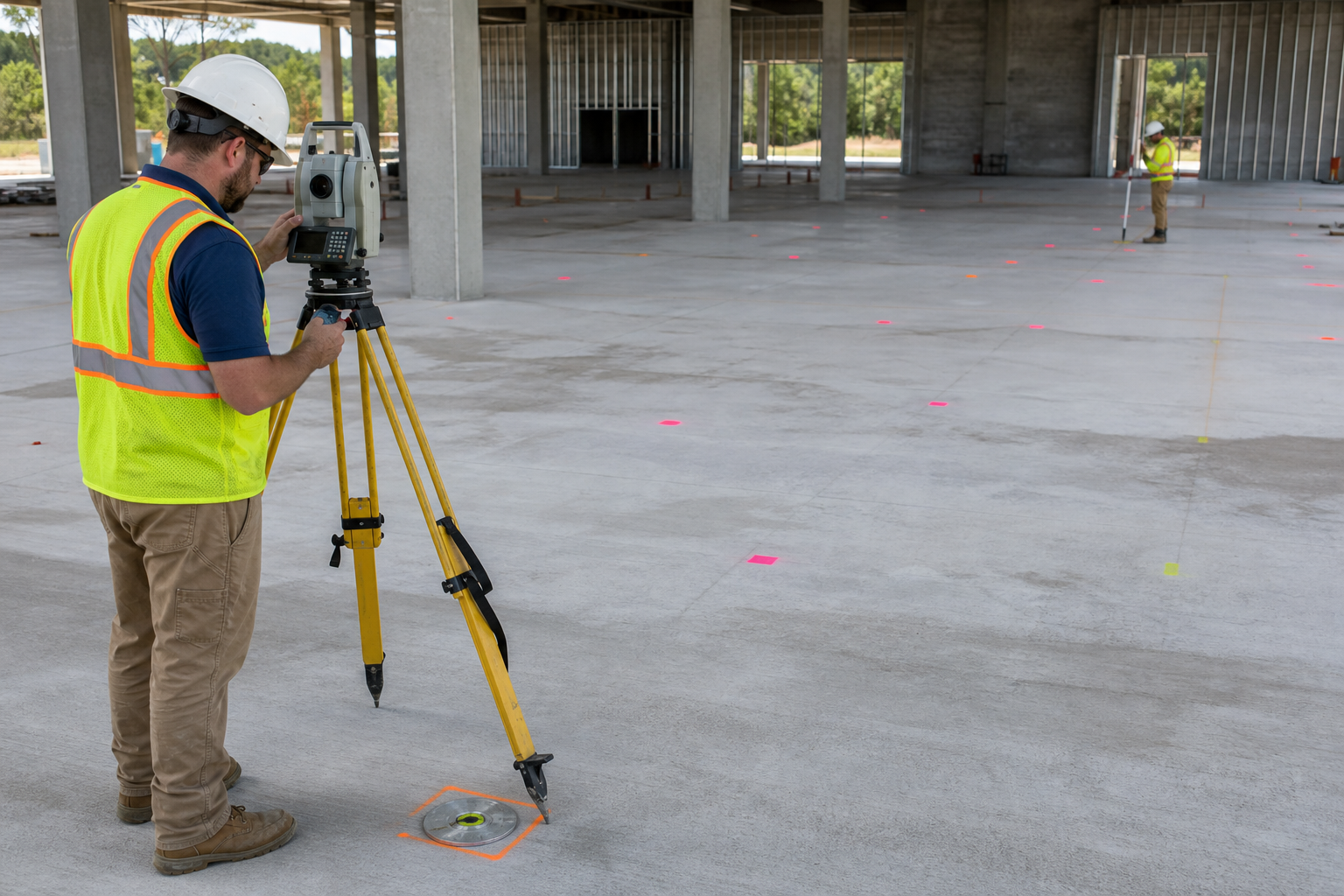
Extending layout across floors or zones without an independent check can carry a control problem farther into the project. Verification should occur before production layout expands.
Documentation should be proportionate but specific. A dated record tied to verify before extending, the controlling revision, and the affected zone can answer later questions without forcing the team to reconstruct events from email attachments. It should describe what was observed or completed without implying a certification outside the contracted scope. Use a known check point or other approved verification step at each new setup.
Make ownership visible in revisions
A changed model may alter layout points without changing the control network. Conversely, revised control can affect every downstream point even when model geometry is unchanged.
The team should test this part of the workflow with a representative example before expanding it across the project. A small proof can reveal coordinate, access, naming, visibility, model-status, or interpretation issues while the correction is still contained. That is especially useful when the released information feeds several downstream trades. Label whether each release changes control, derived points, or both.
- Identify the specific decision connected to make ownership visible in revisions.
- Confirm the controlling file, field reference, or measured condition for make ownership visible in revisions.
- Record the owner, release status, and next construction layout services action tied to make ownership visible in revisions.
Record exceptions without assigning design authority
Field observations can reveal an apparent mismatch, but the layout operator should report the condition rather than redesign it. The responsible project party decides how to proceed.
When conditions change, update the controlled source and communicate the field impact. Adding a second file or mark without retiring the first creates ambiguity. A disciplined response names what changed, what remains valid, what work is on hold, and who can release the next step. Pause the affected points and route the discrepancy through the agreed channel.
Close the loop with field records
A durable record shows the control used, the file revision, the setup or check performed, and the affected work zone. That history helps teams investigate questions without relying on memory.
For Southeast United States, the useful checkpoint is not a generic promise about close the loop with field records. The team should be able to identify the governing input, the person who owns the decision, the release condition, and the field evidence connected to that checkpoint. CCLS can support the digital-to-field portion of the process, while design, survey, engineering, code, and acceptance duties remain with the parties assigned to them. Keep concise records tied to dates, zones, and released files.
- Identify the specific decision connected to close the loop with field records.
- Confirm the controlling file, field reference, or measured condition for close the loop with field records.
- Record the owner, release status, and next construction layout services action tied to close the loop with field records.
For start with the project datum, a productive review should also compare the planned workflow with a representative real condition. Ask the field team what information is immediately understandable, what requires interpretation, and what would cause them to stop. Then incorporate that feedback into the controlled package before broader release. Document the datum and the control source before deriving trade points.
Questions to take into the next project meeting
- What evidence shows that start with the project datum is ready for the affected zone?
- What evidence shows that separate establishment from use is ready for the affected zone?
- What evidence shows that protect the control network is ready for the affected zone?
- What evidence shows that treat layout points as purpose-built is ready for the affected zone?
- What evidence shows that verify before extending is ready for the affected zone?
- What evidence shows that make ownership visible in revisions is ready for the affected zone?
For Construction Control Points vs. Layout Points: Who Owns What?, a useful next step is to review these questions against the current look-ahead schedule rather than waiting for a field crew to discover a missing decision. The right answer can differ by floor, system, and phase in Southeast United States. What should remain consistent is the chain from approved information to a recognizable field action and a documented response when the actual condition differs.
Teams applying the close the loop with field records guidance can review CCLS’s construction technology services and discuss the specific project scope. For a project-specific conversation, contact CCLS. The consultation can identify the needed inputs, suitable service, and practical next checkpoint without assuming responsibilities that belong to the project’s design or licensed professionals.