
Overhead Hanger, Sleeve, and Penetration Layout: What Gets Coordinated First? is a practical question for Southeast United States project teams because the answer affects when information is trusted, how field work is sequenced, and who must respond when conditions change. The goal is not to add technology for its own sake. It is to build a traceable path from a project decision to usable field information.
CCLS provides Construction Layout Services as part of a broader digital-to-field workflow. The useful angle in this guide is a sequencing decision guide, deliberately distinct from the excluded broad draft on the same components. The discussion stays within verified CCLS capabilities and does not turn layout, scanning, or model coordination into an unsupported guarantee.
This guide’s focus—a sequencing decision guide, deliberately distinct from the excluded broad draft on the same components.—starts with defining the purpose, confirming the governing inputs and coordinate basis, assigning ownership, and releasing only information that is ready for its intended use. The sections below turn that answer into project controls a general contractor, trade partner, fabricator, or project manager can review before the relevant field or coordination work begins.
Begin with coordinated routing
Hanger, sleeve, and penetration points depend on the routes and elevations they support. Layout should follow coordinated geometry rather than serve as a substitute for unresolved coordination.
This checkpoint deserves a place in the look-ahead schedule. The input should be available early enough to review, the work area should be physically ready, and the response path should be active if the field condition differs from the released information. On a Southeast United States assignment, those basics are more useful than a broad technology claim. Release only zones with stable routing and ownership.
Separate deck work from overhead work
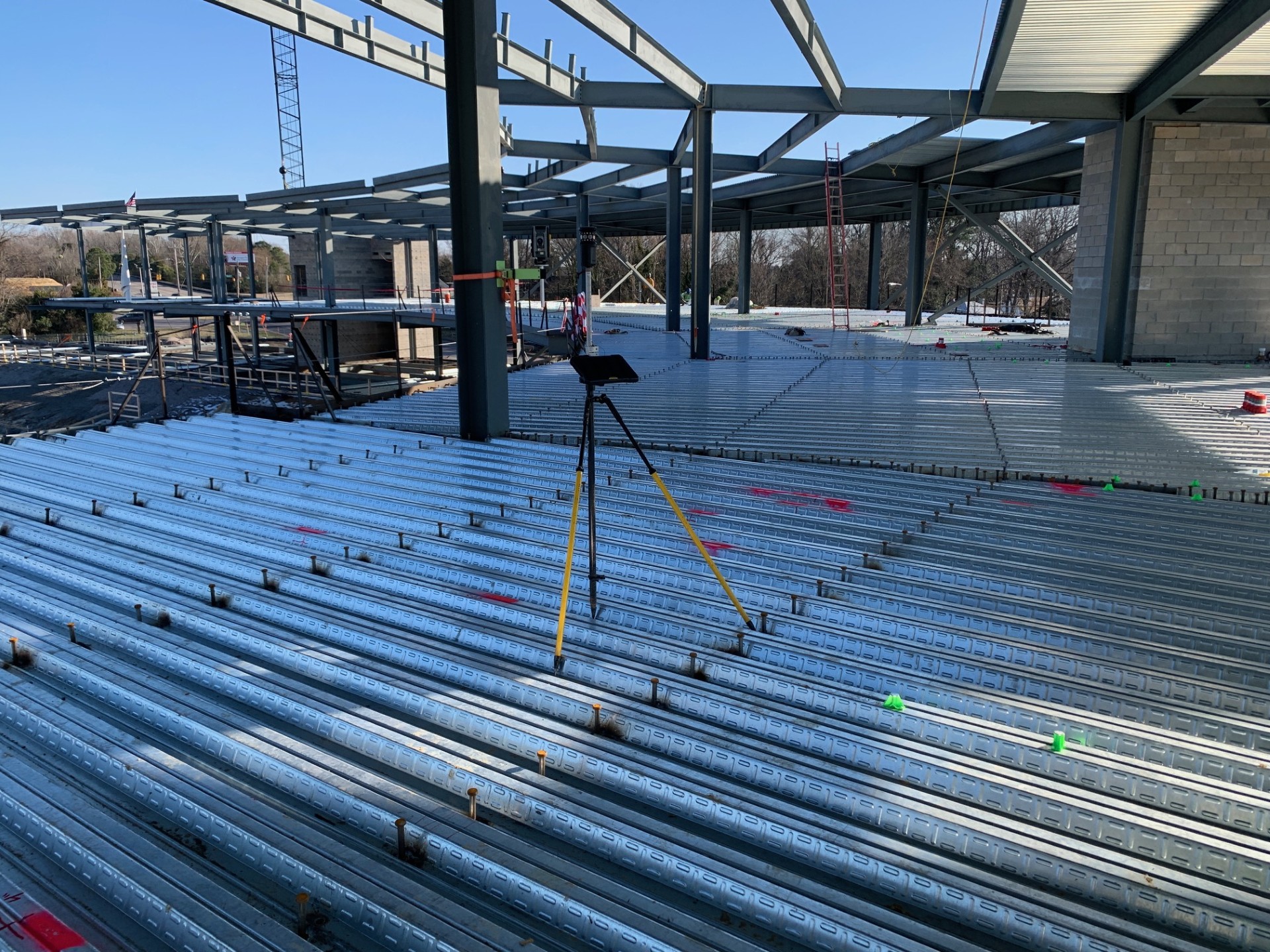
Points placed before a pour or on metal deck support different activities than points projected to an overhead structure after enclosure. Their timing and physical references should be explicit.
Documentation should be proportionate but specific. A dated record tied to separate deck work from overhead work, the controlling revision, and the affected zone can answer later questions without forcing the team to reconstruct events from email attachments. It should describe what was observed or completed without implying a certification outside the contracted scope. Group points by installation surface and construction milestone.
- Identify the specific decision connected to separate deck work from overhead work.
- Confirm the controlling file, field reference, or measured condition for separate deck work from overhead work.
- Record the owner, release status, and next construction layout services action tied to separate deck work from overhead work.
Protect structural and access constraints
A coordinated route can still conflict with structural zones, edge distances, access needs, or installation sequencing. Those questions belong in the model review before field release.
The team should test this part of the workflow with a representative example before expanding it across the project. A small proof can reveal coordinate, access, naming, visibility, model-status, or interpretation issues while the correction is still contained. That is especially useful when the released information feeds several downstream trades. Resolve constraints with the responsible project parties before export.
Sequence sleeves before dependent systems
Sleeves and penetrations can establish openings that later systems rely on. Late changes may affect several trades, so the release order should reflect those dependencies.
When conditions change, update the controlled source and communicate the field impact. Adding a second file or mark without retiring the first creates ambiguity. A disciplined response names what changed, what remains valid, what work is on hold, and who can release the next step. Tie sleeve approval to downstream hanger and routing releases.
- Identify the specific decision connected to sequence sleeves before dependent systems.
- Confirm the controlling file, field reference, or measured condition for sequence sleeves before dependent systems.
- Record the owner, release status, and next construction layout services action tied to sequence sleeves before dependent systems.

Use recognizable field references
Installers need to know whether a mark represents a center, edge, offset, elevation, or reference line. A point without context can create ambiguity.
For Southeast United States, the useful checkpoint is not a generic promise about use recognizable field references. The team should be able to identify the governing input, the person who owns the decision, the release condition, and the field evidence connected to that checkpoint. CCLS can support the digital-to-field portion of the process, while design, survey, engineering, code, and acceptance duties remain with the parties assigned to them. Pair point naming with a consistent physical reference convention.
Plan around deck and trade production
Fast-moving decking or installation crews can overtake layout if zones are released too late. The look-ahead should provide enough stable information for layout to stay ahead.
Treat plan around deck and trade production as a project control rather than an informal conversation. Record the applicable floor or zone, file revision, responsible contact, and downstream activity. That simple discipline helps a construction layout services scope remain traceable when schedules or geometry change. It also gives the field team a clear reason to proceed, pause, or request clarification. Review release readiness by zone during short-interval planning.
- Identify the specific decision connected to plan around deck and trade production.
- Confirm the controlling file, field reference, or measured condition for plan around deck and trade production.
- Record the owner, release status, and next construction layout services action tied to plan around deck and trade production.
Handle changes as controlled rework
When coordination changes after layout, the team should identify affected marks and decide whether they need removal, replacement, or supplemental notation.
The practical value appears when the office decision can be recognized at the work face. For coordination sequence for overhead layout, that means the model, point, mark, report, or scan must connect to a physical location and a named construction decision. If the connection is unclear, more data will not automatically create certainty. Issue a targeted change package instead of silently adding new points.
Document what was actually laid out
Field records should connect placed points to the approved file and work zone. That record supports follow-up without implying that layout alone verifies final installation.
A strong plan also defines the boundary around document what was actually laid out. CCLS should not be expected to invent missing design intent, approve another party’s work, or infer a tolerance that the project has not supplied. The contractor can protect the schedule by resolving those boundaries before the affected crew depends on the information. Retain zone, revision, date, and point-family information.
- Identify the specific decision connected to document what was actually laid out.
- Confirm the controlling file, field reference, or measured condition for document what was actually laid out.
- Record the owner, release status, and next construction layout services action tied to document what was actually laid out.
For begin with coordinated routing, a productive review should also compare the planned workflow with a representative real condition. Ask the field team what information is immediately understandable, what requires interpretation, and what would cause them to stop. Then incorporate that feedback into the controlled package before broader release. Release only zones with stable routing and ownership.
Questions to take into the next project meeting
- What evidence shows that begin with coordinated routing is ready for the affected zone?
- What evidence shows that separate deck work from overhead work is ready for the affected zone?
- What evidence shows that protect structural and access constraints is ready for the affected zone?
- What evidence shows that sequence sleeves before dependent systems is ready for the affected zone?
- What evidence shows that use recognizable field references is ready for the affected zone?
- What evidence shows that plan around deck and trade production is ready for the affected zone?
For Overhead Hanger, Sleeve, and Penetration Layout: What Gets Coordinated First?, a useful next step is to review these questions against the current look-ahead schedule rather than waiting for a field crew to discover a missing decision. The right answer can differ by floor, system, and phase in Southeast United States. What should remain consistent is the chain from approved information to a recognizable field action and a documented response when the actual condition differs.
Teams applying the document what was actually laid out guidance can review CCLS’s construction technology services and discuss the specific project scope. For a project-specific conversation, contact CCLS. The consultation can identify the needed inputs, suitable service, and practical next checkpoint without assuming responsibilities that belong to the project’s design or licensed professionals.