
Utilizing Safety Technology for Enhanced Construction Safety: Comprehensive Strategies and Innovations
Construction safety technology encompasses hardware, software, and integrated digital services that identify hazards, prevent incidents, and improve worker well-being through data-driven controls and procedures. Implemented correctly, these systems reduce injuries, streamline compliance, and enable proactive risk mitigation so projects run more predictably and with fewer disruptions.
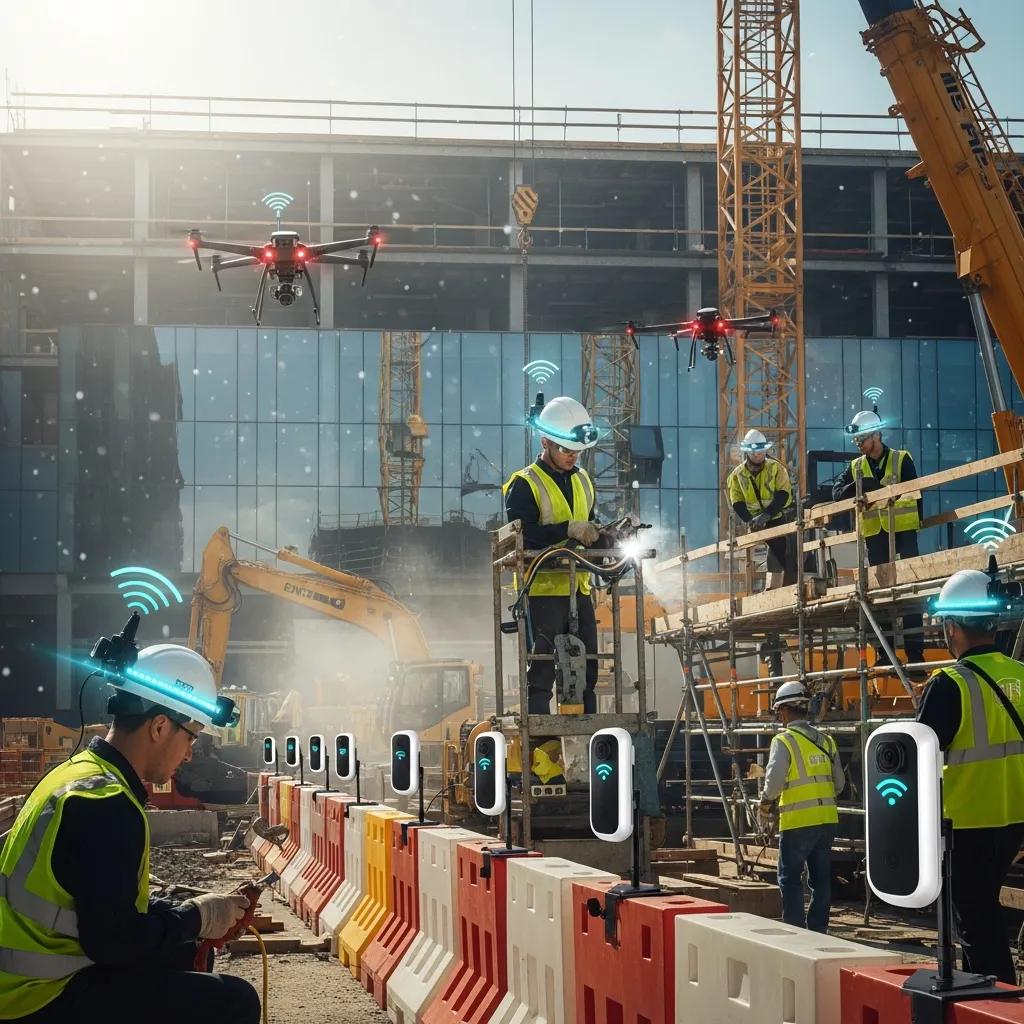
This article explains how safety technology — including wearables, AI-driven computer vision, IoT environmental sensors, drones, AR/VR training, and digital delivery platforms like VDC and BIM — functions together to create safer job sites.
Readers will learn practical benefits, device characteristics, implementation workflows, and how digital construction services support deployment and verification. Each H2 section examines a core area (benefits, wearables, AI, IoT, drones/AR/VR, and VDC/BIM/3D scanning) with concrete examples and implementation guidance for site monitoring safety and safety technology construction. By the end, you will have a tactical sense of which technologies to prioritize, how they integrate, and where coordinated digital services add the greatest safety value.
What Are the Key Benefits of Construction Safety Technology?
Construction safety technology delivers measurable outcomes by detecting hazards early, enforcing safe zones, and supplying managers with actionable data to prevent incidents. These systems work through sensors, real-time analytics, and automated workflows that convert raw signals into alerts, trend reports, and prescriptive interventions to reduce accidents and improve compliance. The main operational benefits include fewer injuries, faster incident response, stronger regulatory documentation, and improved productivity through less rework and downtime. Below is a concise list of primary benefits that organizations can expect when investing in integrated safety technology.
- Reduced Accidents and Injuries: Real-time detection and automated alerts limit exposure to hazardous conditions.
- Improved Compliance and Reporting: Digital logs and automated reports simplify audits and regulatory adherence.
- Faster Emergency Response: Location tracking and geofencing speed rescue and medical actions.
- Data-Driven Risk Mitigation: Predictive analytics prioritize high-risk tasks and times for intervention.
- Worker Health and Well-being: Biometric and environmental monitoring reduce fatigue and heat-stress incidents.
These benefits translate into operational advantages that reduce schedule risk and lower total cost of ownership for projects. The next section compares categories of safety technologies and maps each to common safety outcomes so teams can prioritize investments.
Different safety technologies map to distinct outcomes and operational attributes, enabling targeted selection based on project risk profile.
| Technology Category | Core Attribute | Typical Safety Outcome |
|---|---|---|
| Wearables (helmets, vests) | Personal sensing + location | Faster incident alerts and PPE compliance tracking |
| Computer vision systems | Video analytics | Automated hazard detection and unsafe act identification |
| IoT environmental sensors | Continuous environmental telemetry | Early detection of gas, heat, noise, or particulate hazards |
| Geofencing & tracking | Virtual boundaries + asset tracking | Prevents access to restricted zones and reduces collisions |
| Drones & 3D scanning | Remote inspection + point clouds | Identifies hard-to-see hazards and verifies as-built conditions |
This comparison clarifies how selected technologies serve specific safety goals and why an integrated approach yields amplified benefits. The following subsections explain how technology concretely reduces accidents and improves compliance.
How Does Safety Technology Reduce Accidents and Injuries?
Safety technology reduces accidents primarily by detecting hazard indicators earlier than human observation and by automating immediate protective actions. Sensors and cameras feed into analytics that issue real-time alerts, trigger machine interlocks, or enforce geofence barriers to remove people from danger zones. Predictive models identify repeating patterns—such as near-miss clusters or high-risk work sequences—so supervisors can change sequences or add controls before an incident occurs. For example, a combination of wearable location tracking and proximity alerts around heavy equipment can prevent striking incidents by stopping machinery when a worker enters a danger envelope. These mechanisms rely on reliable data flows and clear response protocols, which are essential to turn alerts into effective interventions and thereby reduce injury rates on site.
In What Ways Does Technology Improve Compliance and Worker Well-being?
Technology improves compliance by automating documentation, producing timestamped records, and maintaining continuous logs that satisfy regulatory inspections without manual paperwork. Computer vision, wearables, and digital checklists detect PPE usage and log compliance events automatically, reducing administrative burden and enabling focused corrective actions. Biometric sensors and environmental monitors track heat stress, fatigue indicators, and exposure levels, prompting breaks or job rotation to preserve worker health. Collected data also supports continuous improvement: safety managers analyze trends to refine training and shift patterns, which enhances long-term well-being. Clear digital trails and proactive health monitoring both raise workforce safety standards and lower the likelihood of costly compliance failures.
For teams seeking vendor partners that translate these benefits into field-ready solutions, Conway Coordination and Layout Services (CCLS) brings core capabilities—precision layout with Trimble Robotic Total Station, integrated VDC/BIM workflows, and safety-focused simulation—to practical deployments. CCLS’s integrated digital workflows and simulation-driven risk mitigation provide concrete examples of how the benefits above materialize in project execution.
Which Wearable Safety Devices Are Transforming Construction Sites?
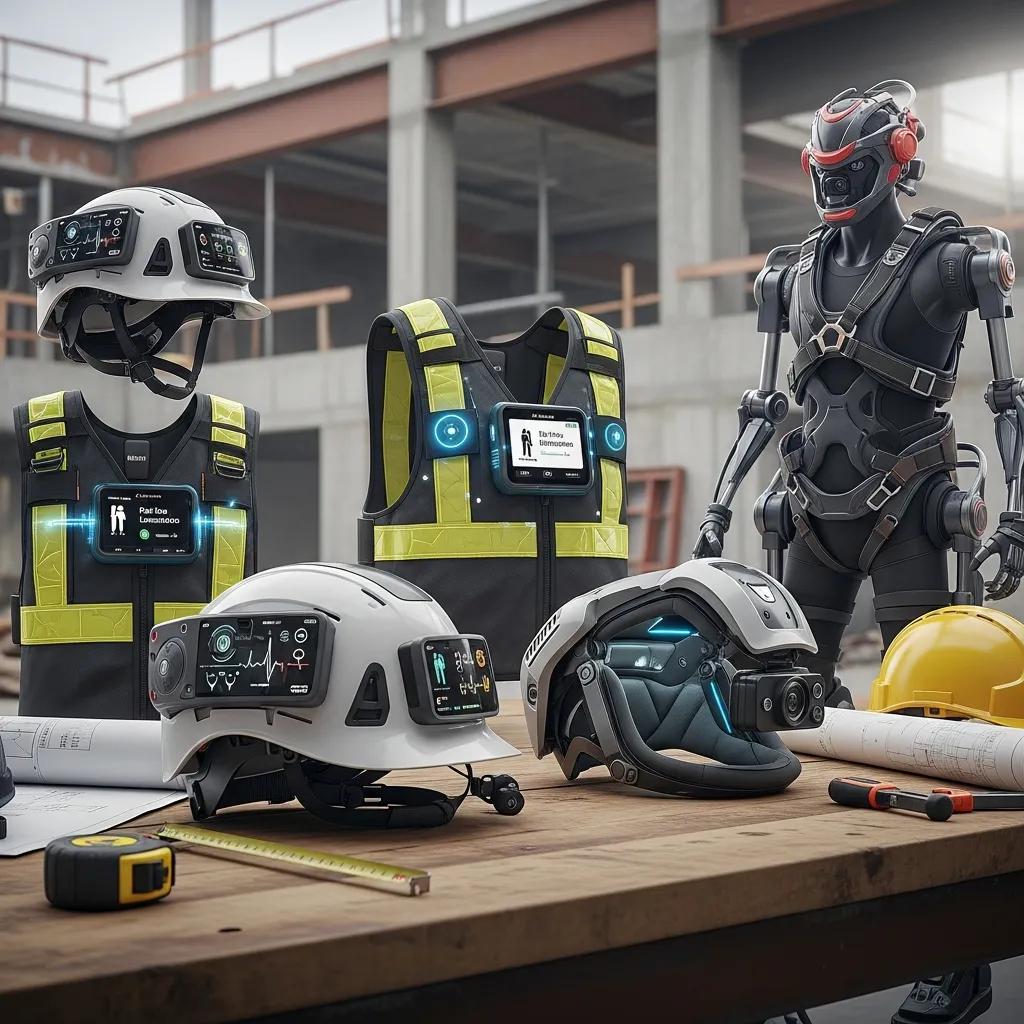
Wearable safety devices are personal, networked tools that continuously monitor worker condition and location to prevent incidents and speed emergency response. These devices typically combine sensors (accelerometers, gyroscopes), GPS or ultra-wideband positioning, and wireless connectivity to report falls, impacts, biometric anomalies, and proximity breaches. When wearables stream data to a centralized site monitoring safety platform, supervisors gain live situational awareness to manage teams and equipment more safely.
- Smart Helmets: Detect impacts, enable hands-free communication, and integrate with cameras for situational awareness.
- Smart Vests and Wristbands: Monitor heart rate, body temperature, and location to prevent heat stress and detect falls.
- Exoskeletons: Provide mechanical support for lifting and repetitive tasks to reduce musculoskeletal disorders.
These devices require robust connectivity and clear data governance to be effective; connectivity planning and platform integration should be part of procurement decisions.
| Device Type | Key Feature | Safety Outcome |
|---|---|---|
| Smart Helmet | Impact & proximity sensors + comms | Faster incident detection and coordinated response |
| Smart Vest/Wristband | Biometric monitoring + GPS | Heat-stress prevention and location-based rescue |
| Exoskeleton | Load assistance (passive/active) | Reduced strain injuries and improved ergonomics |
Selecting wearables depends on the dominant hazards of a project—height risks favor fall-detection helmets, extreme climates favor biometric monitoring—so align device choice to the site profile. The next subsections describe helmet and vest features and how exoskeletons function in practice.
What Features Do Smart Helmets and Vests Offer for Worker Protection?
Smart helmets and vests integrate multiple sensors and communications layers to protect workers by detecting hazardous events and enabling rapid coordination. Common features include impact detection, built-in two-way radios or speaker-microphone systems, location tracking for emergency response, and LED indicators to signal status to nearby equipment operators. Some helmets now support on-board cameras that feed video to remote safety managers for live assessments, while vests can monitor vitals and ambient conditions to trigger alerts when thresholds are exceeded. Implementation considerations include battery life, data privacy, network coverage on site, and the need to funnel device outputs into a unified safety analytics platform to ensure alerts translate into timely actions.
How Do Exoskeletons Prevent Injuries and Enhance Ergonomics?
Exoskeletons assist workers by redistributing loads and supporting joints during repetitive or heavy tasks, reducing the biomechanical forces that lead to musculoskeletal disorders. Passive exoskeletons use springs or dampers to transfer weight, while active systems employ powered actuators for more dynamic assistance; both reduce spinal loading and fatigue during lifting or overhead work. Use-cases include material handling, overhead installations, and tasks with high repetition, where exoskeletons have shown measurable reductions in perceived effort and muscular strain. Adoption challenges include worker training, maintenance, heat buildup, and ensuring ergonomic fit, but when paired with administrative controls and training, exoskeletons can significantly lower the incidence of chronic injuries.
How Is Artificial Intelligence Enhancing Construction Site Safety?
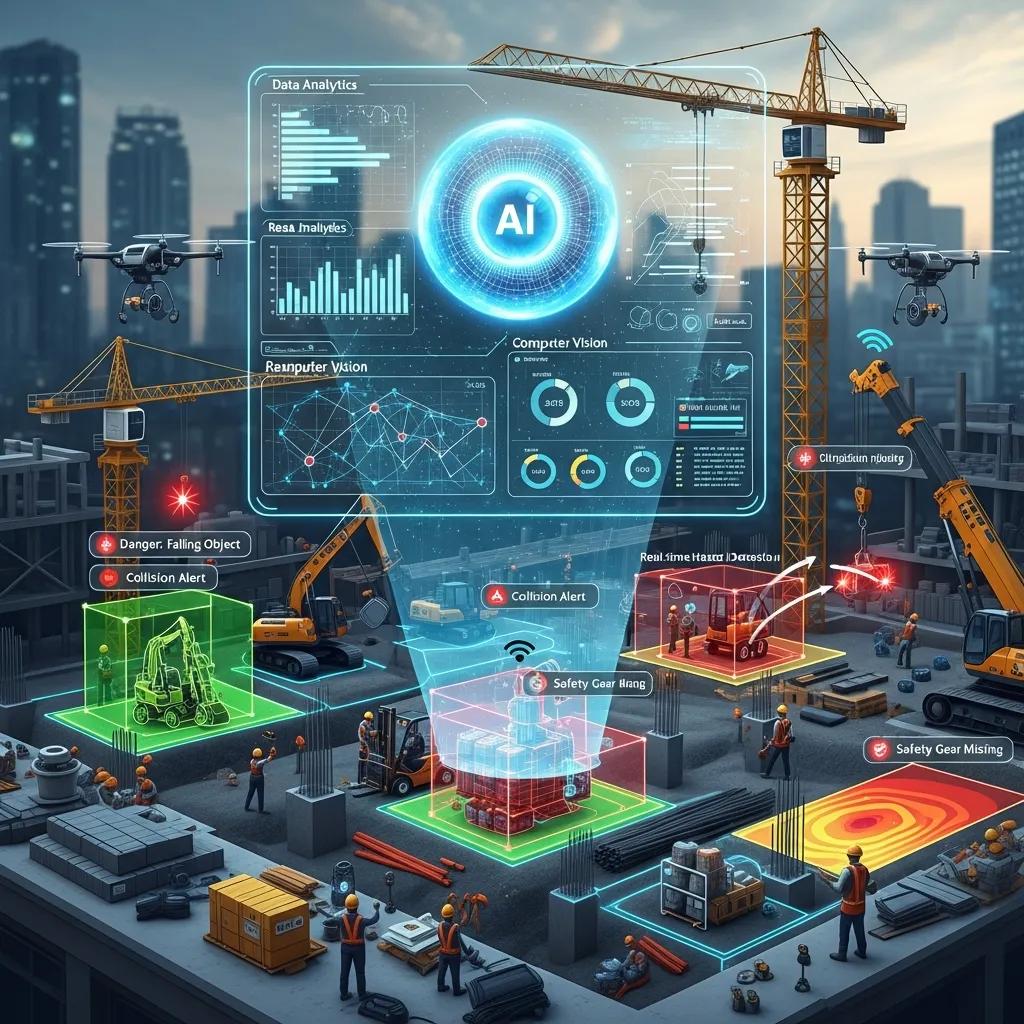
Artificial intelligence enhances safety by transforming large streams of visual and sensor data into prioritized insights that human teams can act upon. AI applications in construction safety typically involve computer vision models that analyze video feeds for unsafe acts and predictive analytics that surface conditions correlated with incidents. These models provide continuous, objective monitoring beyond what supervisors can watch in real time and create a data foundation for preventive interventions. Below is a short list of AI-driven safety capabilities that materially improve site risk management.
- Computer Vision Hazard Detection: Identifies unsafe acts and missing PPE from camera feeds.
- Predictive Analytics: Forecasts high-risk periods and locations based on historical and live data.
- Automated Reporting: Converts detections into incident logs and trend dashboards for safety teams.
These capabilities depend on well-labeled training data and careful integration with on-site processes to ensure alerts are actionable and trustworthy. The next paragraphs describe hazard detection and PPE compliance workflows in more detail.
What Role Does AI Play in Hazard Detection and Predictive Analytics?
AI plays two complementary roles: real-time detection of visible hazards and predictive scoring of risk trends before incidents occur. Computer vision models use video and image inputs to identify unsafe behaviors—such as workers in exclusion zones or not wearing required PPE—and issue immediate alerts. Predictive models aggregate sensor telemetry, past incident data, weather, and schedule information to assign risk scores to tasks or shifts, enabling preemptive control measures.
Successful integration requires high-quality labeled datasets, edge processing or sufficient bandwidth for video analytics, and clear escalation procedures so the system’s outputs become part of daily site workflows rather than ignored noise.
How Does AI Monitor PPE Compliance and Automate Safety Reporting?
AI monitors PPE compliance by applying object-detection models to camera feeds and wearable sensor inputs to determine whether required equipment is present and properly used. Detected noncompliance generates timestamped logs and alerts that feed into automated reporting systems, producing audit-ready records and trend summaries. Privacy and accuracy are central considerations: models need to be tuned to site-specific uniforms and PPE types to reduce false positives, and policies must balance monitoring benefits with worker privacy expectations. When paired with change management and training, automated PPE monitoring reduces human inspection load and accelerates corrective actions.
The potential for computer vision to automate and enhance PPE compliance, moving beyond manual supervision, is a significant area of ongoing research and development.
Computer Vision for PPE Compliance in Construction Safety
Computerized compliance of Personal Protective Equipment (PPE) is an emerging topic in academic literature that aims to enhance workplace safety through the automation of compliance and prevention of PPE misuse (which currently relies on manual employee supervision and reporting). Although trends in the scientific literature indicate a high potential for solving the compliance problem by employing computer vision (CV) techniques, the practice has revealed a series of barriers that limit their wider applications.
IoT-Bayes fusion: Advancing real-time environmental safety risk monitoring in underground mining and construction, M Mousavi, 2025
What Are the Applications of IoT in Real-Time Construction Safety Monitoring?
IoT systems connect distributed sensors and assets to provide continuous environmental and equipment telemetry that supports timely interventions. IoT applications on construction sites include gas detection, temperature and dust monitoring, equipment position tracking, and geofencing enforcement — all feeding into centralized site monitoring safety platforms.
Research further emphasizes the critical role of IoT in developing innovative real-time safety risk monitoring systems for dynamic construction environments.
Real-time IoT Safety Risk Monitoring in Construction
This research aims to develop an innovative real-time safety risk monitoring system for dynamic and remote monitoring, analysis, and control of safety risks within underground mining and construction environments.
IoT-Bayes fusion: Advancing real-time environmental safety risk monitoring in underground mining and construction, M Mousavi, 2025
- Environmental Monitoring: Gas, temperature, noise, and particulate sensing for immediate hazard alerts.
- Asset Tracking: Real-time location of heavy equipment and tools to prevent collisions and theft.
- Geofencing: Enforcing restricted areas and automating machine interlocks around hazardous zones.
Designing IoT deployments involves defining alert thresholds, telemetry retention policies, and integration points so sensor data becomes actionable rather than merely archival.
How Do Environmental Sensors Detect Hazardous Conditions?
Environmental sensors detect hazardous conditions by measuring physical properties such as gas concentration, ambient temperature, relative humidity, particulate levels, and noise exposure and then comparing readings to predefined safety thresholds. When a threshold is exceeded, systems can trigger audible alarms, push notifications to supervisors, or initiate equipment shutdowns to mitigate risks. Aggregated sensor data also enables trending analyses that reveal chronic exposure problems and inform engineering controls. Implementing sensors effectively requires calibration schedules, redundancy for critical measurements, and a plan to integrate alerts into crew workflows so responses are timely and standardized.
What Is the Role of Geofencing and Equipment Tracking in Risk Mitigation?
Geofencing establishes virtual boundaries that, when paired with worker wearables and equipment tags, enforce restricted-area access and prevent dangerous interactions between people and machines. Equipment tracking uses GPS or UWB positioning to show asset locations in real time, supporting collision avoidance systems and efficient dispatch. Together, these technologies reduce unauthorized entry into hazardous zones, speed emergency extraction, and enable automated safety actions such as slowing equipment near workers. Successful geofencing requires careful zone design, testing for false triggers, and processes to handle exceptions; regular verification ensures the enforcement remains aligned with evolving site conditions.
How Do Drones and AR/VR Technologies Improve Construction Safety Training and Surveillance?
Drones and AR/VR extend the reach of safety programs by enabling remote inspections and immersive training that reduce frontline exposure to hazards. Drones capture aerial and thermal imagery for hard-to-reach areas, accelerating hazard identification without sending personnel into risk zones. AR overlays and VR simulations use accurate 3D models to rehearse high-risk tasks and provide on-the-job guidance, improving retention and reducing on-site mistakes.
- Remote Inspections: Drones inspect elevations, confined spaces, and thermal anomalies without exposing workers.
- Immersive Training: VR enables scenario rehearsal and hazard recognition before workers enter live environments.
- On-Site Guidance: AR overlays step-by-step procedures and hazard markers on physical contexts using BIM-sourced models.
Integration with 3D scanning and BIM ensures drone outputs and AR/VR scenarios reflect accurate as-built conditions, which increases realism and relevance for safety teams. The next sections detail drone inspection workflows and the training benefits of AR/VR applications.
In What Ways Do Drones Conduct Site Inspections and Hazard Identification?
Drones conduct inspections by following planned flight paths to gather RGB, thermal, or LiDAR data from façades, roofs, and other hard-to-reach areas, producing orthophotos and point clouds that reveal defects, heat signatures, and access issues. Collected data is processed into 3D models or stitched imagery that safety and VDC teams analyze to identify fall hazards, structural concerns, and temporary works issues without exposing inspectors. Flight planning, regulatory compliance for operations, and data processing pipelines determine how efficiently drone findings convert into safety actions. When drone data integrates with BIM and 3D scans, teams achieve a verified picture of site conditions for safety reviews and planning.
How Are AR and VR Used for Immersive Safety Training and On-Site Guidance?
VR creates immersive, repeatable simulations that rehearse high-risk sequences—such as tower erection or confined-space entry—allowing workers to practice responses without physical risk. AR overlays contextual instructions, hazard highlights, and checklists onto the worker’s field of view during tasks, reducing cognitive load and preventing procedural errors. Measuring training effectiveness involves pre/post assessments and field performance metrics to ensure scenario learning transfers to safer work behavior. Tightly coupling AR/VR content to BIM and 3D scan data enhances realism and ensures guidance aligns with the latest site conditions.
How Do VDC, BIM, and 3D Scanning Services Support Safety Technology Implementation?
VDC, BIM, and 3D scanning provide the digital foundation that ensures safety technologies operate against accurate, synchronized models and verified site data. BIM enables clash detection, temporary works modeling, and model-based safety reviews that prevent unsafe conditions before crews mobilize. VDC supports logistic sequencing and hazard simulation to optimize site layouts and access for safer operations. 3D scanning supplies verified as-built point clouds that update digital models and feed AR/VR scenarios, drone comparisons, and geofence boundaries.
Experts agree that VDC and BIM are exceptionally well-suited for planning safe construction, particularly in hazard analysis and site-specific safety strategies.
VDC and BIM for Construction Safety Planning
VDC for Safety – Construction Phase VDC/BIM is well suited for planning the safe construction. Hazard analysis and site specific safety planning all offer the most opportunities to utilize VDC for improving safety.
Virtual Design & Construction for Safer Construction Projects, 2015
The following mini-process summarizes how these services work together to implement safety technology effectively.
- Model: Develop accurate BIM models and integrate discipline data to identify potential conflicts.
- Simulate: Use VDC workflows to simulate access, sequencing, and hazard scenarios before physical work.
- Implement & Verify: Deploy sensors, wearables, and AR/VR content mapped to as-built scans to ensure on-site fidelity.
This model → simulate → implement approach guarantees safety systems reflect actual field conditions and that controls are validated against reality. Below is a table mapping specific CCLS services to safety outputs to illustrate operational impact.
| Service | Function | Safety Output |
|---|---|---|
| VDC Consulting | Sequence and logistics simulation | Optimized access and reduced site conflicts |
| 3D Scanning | As-built point cloud capture | Verified conditions for AR overlays and geofencing |
| BIM & Coordination | Model clash detection and temporary works | Prevented unsafe installations and schedule-driven hazards |
Conway Coordination and Layout Services (CCLS) specializes in precisely these enabling capabilities: robotic total station layout for construction accuracy, VDC consulting to simulate and optimize site logistics, and 3D scanning plus BIM coordination to feed safety systems with verified digital models. Project teams can use these services to accelerate the model → simulate → implement cycle and reduce risk before field execution. For project stakeholders seeking implementation support, CCLS’s integrated approach demonstrates how precision layout and validated models translate into safer, more reliable jobsite operations.
How Does BIM Facilitate Safety Planning and Clash Detection?
BIM facilitates safety planning by providing a coordinated, model-based environment where interdisciplinary clashes and temporary works conflicts are detected before physical installation. Clash detection tools identify spatial conflicts that could create unsafe working conditions during assembly, allowing teams to adjust sequencing, design protective measures, or redesign components. Model-based safety reviews also enable visualization of access routes, lifting zones, and temporary supports so planners can design safer site sequences. Communicating model-driven mitigations to field teams closes the loop: coordinated models become the source of truth for safety briefings and control placement.
What Are the Benefits of VDC and 3D Scanning for Hazard Simulation and Site Verification?
- Accurate modeling: Ensures safety planning reflects real conditions.
- Validated controls: Confirms mitigation measures are implemented.
- Continuous feedback: Scans inform updates to AR/VR and analytics models.
These capabilities reduce surprises during execution and support a proactive, evidence-based safety program that combines technology with disciplined onsite verification.