
Environmental Compliance in Construction Projects: Key Regulations and Sustainable Practices
Environmental compliance in construction means meeting federal, state, and local laws that control water, air, waste, and ecological impacts to avoid fines, delays, and reputational risk. Current research shows that early integration of environmental impact assessment, stormwater planning, and digital modeling reduces regulatory friction and accelerates approvals, so teams that prioritize compliance reduce rework and change orders. This guide explains the primary environmental regulations that affect construction, how site environmental impact assessment (EIA) supports permitting, the influence of sustainable building standards, stormwater requirements under the Clean Water Act, hazardous waste and air emission controls, and practical technology-enabled approaches — including BIM, VDC, and 3D scanning — to manage compliance. For projects seeking technical support, Conway Coordination and Layout Services (CCLS) provides VDC consulting, BIM modeling and coordination, Robotic Total Station layout, and 3D scanning services that align with compliance workflows while the rest of this article focuses on regulatory requirements, on-the-ground best management practices, and actionable steps teams can apply. The next section lists the main laws construction teams must know and summarizes how each typically affects project permitting and execution.
What Are the Main Environmental Regulations Governing Construction Projects?

Major environmental statutes set the baseline for construction compliance by regulating water quality, air emissions, hazardous waste, and federal review for projects that touch public lands or require federal action. Understanding the regulated aspect and practical requirements helps project teams determine which permits, monitoring, and mitigation are needed before breaking ground. Contractors and owners should treat these laws as complementary: federal law provides the framework while state and local rules fill in permitting details and enforcement practices.
Different federal laws impose specific obligations on construction projects and typically require documentation and operational controls.
| Law | Regulated Aspect | Practical Requirements for Construction Projects |
|---|---|---|
| Clean Water Act (CWA) | Water discharges and stormwater | Obtain NPDES/stormwater permits; implement BMPs; perform inspections and monitoring |
| Clean Air Act (CAA) | Air emissions from equipment and processes | Control dust and equipment emissions; permit stationary sources; comply with state implementation plans |
| National Environmental Policy Act (NEPA) | Federal agency decision environmental review | Prepare EA/EIS when federal funding or permits trigger federal action; public consultation |
| Resource Conservation and Recovery Act (RCRA) | Hazardous waste generation and disposal | Characterize wastes, use manifests, arrange licensed disposal, and maintain records |
| Comprehensive Environmental Response, Compensation, and Liability Act (CERCLA) | Contamination and emergency response | Investigate releases, notify agencies, and coordinate response actions if contamination is found |
This comparison clarifies how each law maps to common construction obligations, and it sets the stage for how project-level assessments and technologies support regulatory compliance.
Which Federal Laws Impact Construction Environmental Compliance?
Federal statutes like the Clean Water Act, Clean Air Act, NEPA, RCRA, and CERCLA form the backbone of environmental compliance for many construction activities by defining which discharges, emissions, and wastes are regulated. The Clean Water Act specifically governs point-source discharges and stormwater via the NPDES program, often requiring construction stormwater permits for sites disturbing one acre or more. The Clean Air Act and state air rules control dust, fugitive emissions, and equipment exhaust, sometimes triggering permit applications or emissions controls for certain activities. NEPA requires environmental reviews (EA/EIS) when federal funding, permits, or land use decisions are involved, producing documentation and public review steps that can materially affect schedules and mitigation needs. These statutes require early identification of potential impacts and concrete control measures, which is why teams routinely start regulatory scoping during preconstruction to align designs and sequences with permit conditions.
How Do State and Local Regulations Affect Construction Projects?
State and local regulations layer additional requirements on top of federal law and often define permit thresholds, inspection frequencies, and enforcement approaches that vary by jurisdiction. State environmental agencies implement federal programs and can require more stringent stormwater controls, local erosion and sediment control plans, or notifications tied to regional water quality priorities. Municipalities may enact green building ordinances, tree protection rules, noise restrictions, and local stormwater codes that affect sequencing, hours of operation, and erosion control details. Because these rules differ regionally, construction teams should engage local permitting authorities early to reconcile federal requirements with state and municipal permits, incorporate local standards into contract documents, and avoid last-minute redesigns that can delay approvals.
How Does Site Environmental Impact Assessment Support Regulatory Compliance?
A site Environmental Impact Assessment (EIA) is a structured process that identifies baseline conditions, predicts potential impacts, and defines mitigation measures to meet permit requirements and reduce project risk. EIAs work by screening a project, scoping significant issues, collecting baseline data, analyzing impacts, and recommending avoidance or mitigation measures that feed directly into permit applications and contract specifications. When EIAs are done early, they allow teams to sequence work to protect sensitive habitats, size stormwater controls appropriately, and craft monitoring and reporting protocols required by regulators. The steps below summarize how an EIA supports permitting and practical compliance at the site level.
Indeed, the strategic importance of EIA for integrating broader sustainability goals into construction projects is well-recognized in academic literature.
EIA Compliance for Sustainable Construction
Environmental Impact Assessment (EIA) has become a central instrument for integrating environmental, social, and economic considerations into public construction projects. This article evaluates EIA compliance in public infrastructure development and examines its implications for sustainable development.
Evaluation of environmental impact assessment compliance in public construction projects and its implications for sustainable development, 2025
EIA processes typically follow a defined workflow that produces permit-ready documentation and mitigation plans.
- Screening and scoping: Determine which resources need evaluation and what permits may be triggered.
- Baseline data collection: Gather topography, hydrology, soils, species presence, and contamination history.
- Impact analysis and mitigation: Quantify potential effects and propose specific control measures and monitoring.
These steps produce concrete deliverables — baseline reports, mitigation plans, and permit exhibits — that regulators use to evaluate and condition approvals, and they create a roadmap for construction sequencing to minimize environmental effects.
What Role Do VDC and 3D Scanning Play in Environmental Impact Assessments?
VDC and 3D scanning supply precise spatial data and integrated models that make EIAs more accurate, defensible, and easier to convert into permit exhibits and monitoring plans. High-resolution 3D point clouds capture existing topography, drainage patterns, and built features, reducing uncertainty in baseline assessments and improving earthwork estimates. VDC integrates environmental layers — such as hydrology, soil limits, and protected zones — into construction sequencing and logistics models to test scenarios that avoid sensitive areas and demonstrate feasible mitigation. In practice, these technologies shorten the feedback loop between designers and regulators by producing model-based evidence of proposed controls and expected outcomes; for example, a 3D model can show how temporary detention measures fit into a phased grading plan without expanding the disturbance footprint. CCLS’s VDC capability supports this approach by producing coordinated models and as-built documentation that map directly to permit exhibits and monitoring requirements.
Further emphasizing the value of advanced visualization, research highlights the benefits of integrating 3D tools into the early stages of environmental impact assessment.
3D Tools for Early Environmental Impact Assessment
The idea of environmental impact analysis readily linked to 3D products at the very early stage of the design process, the value of 3D for the assessment of cost and environmental impact.
Integration of 3D tool with environmental impact assessment (3D EIA), N Dawood, 2007
How Are Potential Environmental Risks Identified and Mitigated on Construction Sites?
Identifying environmental risks on construction sites begins with a systematic checklist and field verification: sediment runoff, spills, dust, habitat disturbance, and unknown contamination are common categories that regulators focus on. Risk identification relies on baseline data, inspections, and digital tagging of sensitive features in the model so that sequencing, access routes, and staging avoid vulnerable zones. Mitigation commonly includes erosion and sediment controls (silt fences, sediment basins), containment and secondary containment for fueling areas, dust suppression and equipment tuning to minimize emissions, and timing work windows to avoid breeding seasons or migratory periods. Regular inspection, maintenance, and documentation — including photographic logs and inspection forms tied to a project’s model — are required to demonstrate active compliance during inspections. These documentation practices lead directly into how sustainable standards and materials management influence long-term project outcomes.
What Are Sustainable Building Regulations and Their Effects on Construction Practices?
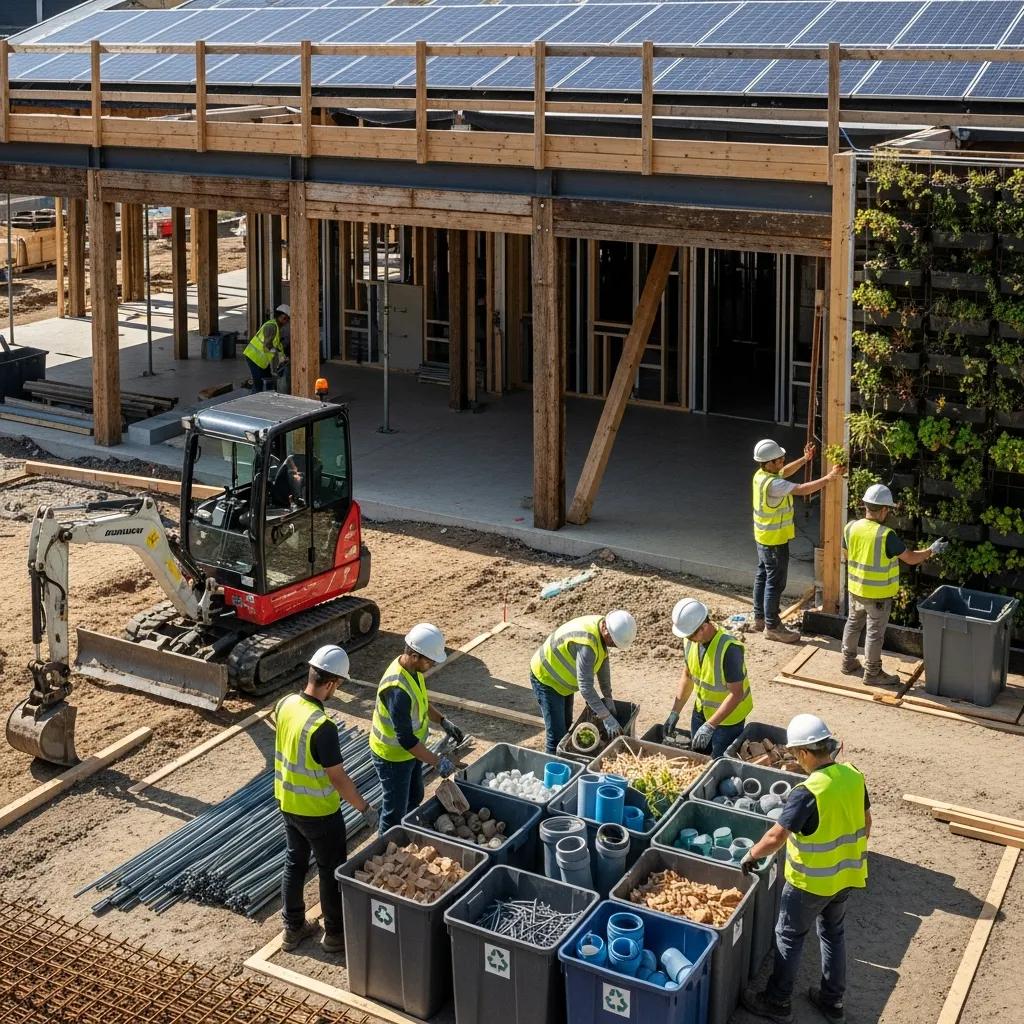
Sustainable building regulations and voluntary standards like LEED and local green codes influence procurement, waste management, energy use, and material disclosure requirements on construction projects. These frameworks typically require material transparency, waste diversion targets, energy efficiency measures, and sometimes site-level stormwater or heat-island mitigation, all of which change how teams select suppliers and plan logistics.
The list below highlights how sustainable rules typically translate into on-site actions and documentation.
- Material sourcing: Require documentation of recycled content, regional materials, or low-VOC certifications.
- Waste management: Set diversion targets and mandate tracking of disposed and recycled tonnage.
- Efficiency measures: Demand energy- and water-efficiency strategies reflected in construction sequencing and testing.
Adopting these practices early in design and procurement supports faster green certifications and reduces the risk of corrective work that could conflict with environmental controls.
How Do Green Building Standards Influence Material and Waste Management?
Green building standards influence material selection and waste handling by requiring quantified material takeoffs, reporting of material attributes, and explicit waste diversion strategies during construction. BIM is particularly useful here because it can generate accurate material quantities and link components to product data that meet low-emission or recycled-content requirements. Contractors use BIM to forecast waste streams, plan on-site sorting, and design temporary storage that supports recycling, which reduces landfill disposal and generates the paper trail necessary for compliance credits. Procurement language and subcontract scopes must reflect these standards so that suppliers provide compliant products and waste haulers provide reporting; integrating these obligations into the model helps ensure constructability without compromising environmental controls. This focus on materials ties directly to benefits that sustainable construction delivers for owners and regulators.
What Are the Benefits of Adopting Sustainable Construction Practices?
Adopting sustainable construction practices provides measurable regulatory, financial, and reputational benefits, including faster approvals when mitigation is clearly documented, lower operating costs through efficient systems, and improved community relations that reduce project opposition. Owners often see reduced lifecycle costs from energy- and water-saving measures, while contractors report fewer change orders when material selections and waste plans are resolved early. Sustainable practices can also make projects eligible for incentives or credits in some jurisdictions, providing financial upside beyond compliance. The combined effect—regulatory alignment, cost savings, and market differentiation—creates a strong business case for integrating sustainability into standard project workflows and digital models.
How Does the Clean Water Act Ensure Stormwater and Water Quality Compliance in Construction?
The Clean Water Act (CWA) enforces water quality by regulating discharges to waters of the United States, and for construction this commonly means obtaining NPDES stormwater permits and implementing best management practices (BMPs) to control runoff. NPDES-related construction permits typically require erosion and sediment controls, inspection protocols, monitoring where specified, and documentation demonstrating permit conditions are met. Modeling runoff and phasing earthwork to minimize exposed soil are key strategies that both reduce pollutant loads and satisfy permit requirements. The table below maps common stormwater control techniques to how BIM and VDC can implement them and the typical compliance outcomes regulators expect.
The following table shows how digital modeling supports stormwater controls and permit documentation.
| Stormwater Control Technique | Use Case / BIM-VDC Implementation | Benefit / Regulatory Outcome |
|---|---|---|
| Sediment basins and traps | Model basin volumes and grading in BIM to validate capacity | Demonstrates adequate retention and reduces turbidity at discharge points |
| Perimeter controls (silt fence) | Place and sequence perimeter controls in VDC logistics model | Minimizes off-site sediment transport and shows installed measures in permit exhibits |
| Temporary stabilization (hydroseed, matting) | Coordinate stabilization timelines with construction phases in the model | Ensures timely implementation and supports inspection records |
| Detention and infiltration design | Simulate runoff and peak flow in BIM hydrology analysis | Provides quantitative evidence for permit approvals and sizing |
This mapping clarifies how model-based workflows produce the deliverables regulators expect and support defensible permit submissions that show anticipated water quality outcomes.
What Are Effective Stormwater Management Strategies Using BIM and VDC?
BIM and VDC enable effective stormwater strategies by modeling hydrology, testing control placement, and producing permit-ready plan sets that show both temporary and permanent controls with sequencing aligned to actual construction. By running runoff simulations in the model, teams can size basins, retention areas, and infiltration features to meet permit criteria and demonstrate mitigation efficacy numerically. VDC coordinates logistics so temporary controls stay operative during phasing, and digital deliverables — annotated views, cut/fill reports, and construction timelines — become part of the inspection and monitoring package. For projects needing implementation support, Conway Coordination and Layout Services offers BIM and VDC consulting that helps translate hydrologic models into construction documents and inspection-ready exhibits that satisfy NPDES and local stormwater authorities.
How Can Construction Projects Prevent Site Runoff and Water Pollution?
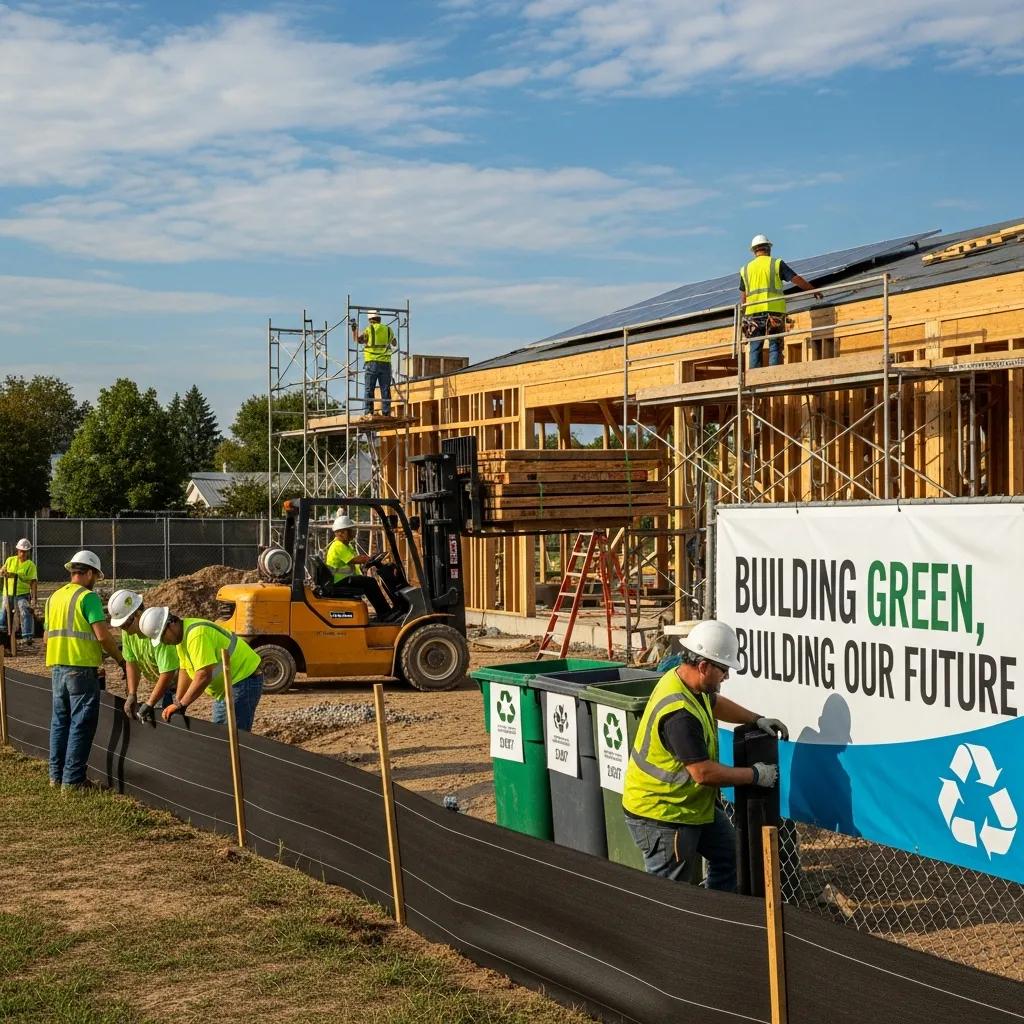
Preventing runoff and water pollution requires combining physical BMPs with disciplined sequencing, inspection, and recordkeeping so that controls remain effective during storms and active work. Common on-the-ground measures include stabilized construction entrances, phased clearing and grading to minimize exposed soil, silt fences, sediment traps, and lined stockpile areas to prevent sediment-laden runoff. Regular inspection intervals, prompt maintenance, and photographic logs tied to a digital permit folder demonstrate proactive compliance and reduce inspector observations. Integrating BMP locations and inspection schedules into the project model ensures visibility across trades and enables faster corrective action, which in turn reduces the likelihood of enforcement actions or dewatering that can disrupt the schedule.
How Are Hazardous Waste and Air Emissions Managed Under Construction Environmental Laws?
Hazardous waste on construction sites is managed under RCRA, CERCLA, and reporting rules that require proper characterization, packaging, manifesting, and disposal through licensed facilities, while air emissions are controlled under the Clean Air Act and state programs with measures to limit dust and equipment exhaust. Construction teams must classify wastes (e.g., contaminated soils, solvents, asbestos-containing materials), document chain-of-custody, and ensure transporters and disposal facilities are properly licensed. Air emissions management relies on dust suppression, emissions controls on diesel equipment, and compliance with any required permits for stationary sources or larger-scale demolition and renovation activities. Digital documentation and precontract surveys reduce uncertainty and improve regulatory defensibility during inspections and audits.
What Regulations Govern Hazardous Waste Disposal and Pollution Prevention?
RCRA provides the framework for hazardous waste characterization, storage, and transport, requiring manifest systems, proper containers, and recordkeeping for generator status and waste minimization efforts. CERCLA addresses historic contamination and emergency response, triggering investigation and cleanup obligations if releases are discovered that pose a threat to human health or the environment. EPCRA requires notification in some cases of hazardous chemical releases and inventory reporting for certain facilities. Construction compliance steps include conducting a hazardous materials survey, classifying wastes by regulatory code, using manifests for off-site transport, contracting licensed disposal, and maintaining auditable records to show compliance with timelines and notification rules. Following these procedures minimizes liability and supports timely regulatory closure.
How Do Digital Construction Technologies Aid in Hazardous Material Management?
Digital technologies such as 3D scanning, BIM, and integrated material databases make hazardous material management more precise and auditable by identifying suspect conditions, tagging hazardous zones in models, and linking MSDS information directly to model components for tracking. 3D scans of existing structures reveal concealed conditions and potential asbestos or lead-containing materials, reducing surprises during demolition. BIM can host material properties and disposal instructions, produce location-based manifests, and generate checklists for handling and transport that are exportable for regulators. These model-based records improve transparency during inspections and create an auditable trail that demonstrates adherence to hazardous waste handling and pollution prevention requirements.
How Do CCLS’s Precision Services Facilitate Environmental Compliance in Construction?
CCLS offers a portfolio of precision services—VDC consulting, BIM modeling and coordination, Robotic Total Station layout, and 3D scanning—that directly support environmental compliance through accurate documentation, clash detection to reduce rework, and precise layout to protect limits of disturbance. Each service maps to compliance functions: VDC and BIM create permit-ready exhibits and sequencing plans; 3D scanning supplies baseline point clouds that underpin EIAs; robotic layout enforces control locations in the field to prevent accidental encroachment. The table below shows specific services, the compliance functions they fulfill, and the tangible deliverables regulators accept during permitting and inspection.
| CCLS Service | Compliance Function | Benefit / Deliverable for Permitting |
|---|---|---|
| VDC Consulting | Model-based sequencing and logistics | Phased construction plans and permit exhibits demonstrating protected zones |
| BIM Modeling & Coordination | Quantity takeoffs and material transparency | Material schedules and waste forecasts used for green code submissions |
| 3D Scanning & Point Clouds | Accurate baseline as-built documentation | High-resolution topography and existing-condition exhibits for EIAs |
| Robotic Total Station Layout | Precision field layout of controls and limits | Staked limits of disturbance and accurate as-built records for inspections |
This alignment shows how precision deliverables reduce permit risk, support inspection responses, and document compliance in ways regulators recognize.
In What Ways Do VDC and BIM Reduce Errors and Support Regulatory Adherence?
VDC and BIM reduce errors by enabling clash detection, precise sequencing, and simulation of construction activities so that rework—often a source of environmental disturbance—is minimized. By resolving spatial conflicts virtually, teams avoid field corrections that could disturb erosion controls, contaminate soils, or require additional earthwork that impacts water quality. Sequencing models make it possible to protect sensitive features and schedule protective measures at the right times, while BIM-produced deliverables provide standardized documentation for permit applications and monitoring plans. These capabilities translate into fewer environmental incidents, clearer compliance demonstrations, and a reduction in the administrative burden associated with responding to regulatory inquiries.
How Does Robotic Total Station Layout Enhance Environmental Controls on Site?
Robotic total station layout provides the precision necessary to enforce limits of disturbance, place erosion controls exactly where designed, and stake protected areas so crews can clearly see and avoid sensitive zones, reducing accidental encroachment. Precise staking reduces the risk of over-excavation and misplacement of BMPs, which in turn limits the need for corrective actions that can generate additional sediment or require reinstatement of controls. Accurate as-built records from robotic total station layout also create defensible documentation for inspections and audits, showing regulators that controls were installed as specified. Together with model-based planning, precision layout ensures field execution matches permit exhibits and design intent.
- Request a consultation: Contact Conway Coordination and Layout Services to discuss VDC, BIM, 3D scanning, or Robotic Total Station needs for compliance-focused projects.
- Model integration: Work with CCLS to integrate environmental layers and sequences into coordinated models for permitting and field execution.
- Documentation package: Use CCLS deliverables as part of permit submittals and inspection evidence to demonstrate accurate baseline data and installed controls.
These steps illustrate how technical service providers translate digital workflows into tangible compliance outcomes that reduce risk and streamline permitting.