
Creating Comprehensive Site Safety Protocols for Construction
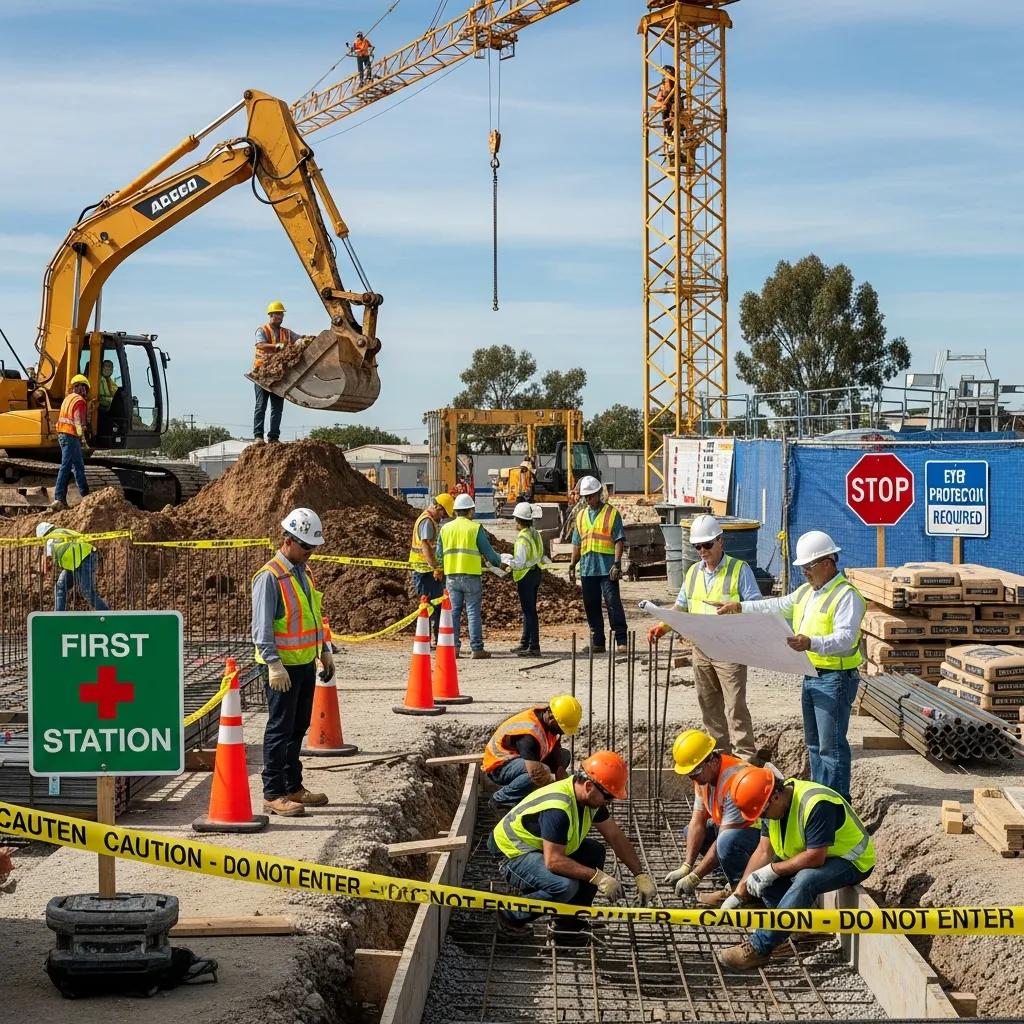
Creating Comprehensive Site Safety Protocols for Construction: Effective Planning and Risk Mitigation A construction site safety protocol is a coordinated set of procedures, controls, and documentation designed to prevent incidents, ensure regulatory compliance, and protect workers, equipment, and schedules. By combining site-specific risk assessment, clear hazard communication, emergency response planning, and monitoring, project teams reduce exposures and support proactive construction safety management. This guide explains how to build a construction safety plan that leverages digital construction safety solutions—BIM, VDC, 3D scanning, and precision layout—to identify hazards before work begins and to validate safety-critical components in the field. Readers will learn essential plan components, how VDC enhances proactive prevention, ways BIM supports training and emergency response, the role of robotic total station layout in fall prevention and anchor verification, modern training and simulation best practices, and strategies for embedding a durable safety culture. The article emphasizes practical steps, semantic techniques for risk communication, and examples of technologies that map to each safety-plan element to prepare teams for safer execution. What Are the Essential Components of a Construction Safety Plan? A comprehensive construction safety plan defines hazards, assigns controls, and documents roles so that risks are reduced before and during execution. Core components include site-specific risk assessment and job hazard analysis (JHA), hazard communication (HAZCOM) compliant with OSHA and GHS principles, emergency response and egress planning, PPE and equipment control protocols, and monitoring plus continuous improvement processes such as audits and incident reporting. Each component functions together: risk assessment identifies exposures, HAZCOM ensures workers know hazards and controls, emergency planning maps response actions, PPE controls reduce residual risk, and audits close the loop through corrective action. Below is a concise list of these essential components optimized for quick reference and featured-snippet clarity, followed by a comparison table that maps each component to supporting digital services and technologies. This list summarizes the components readers should prioritize when drafting a site safety protocol and prepares the reader to examine how site-specific assessments use digital inputs like scans and layout data. The essential components of a construction safety plan include the following: Site-Specific Risk Assessment (JHA): Identify hazards by location and task, prioritize by likelihood and severity. Hazard Communication (HAZCOM): Maintain written programs, labels, SDS access, and training for trades and contractors. Emergency Response & Egress Planning: Define evacuation paths, muster points, and incident roles for rapid response. PPE and Equipment Controls: Specify required PPE, inspection routines, and equipment locking/tagging procedures. Monitoring, Audits & Incident Reporting: Implement audits, near-miss reporting, and continuous improvement loops. Component Key Attributes Technology / Service Application Risk Assessment & JHA Hazard identification and prioritization by location/task 3D scanning and point clouds to detect spatial hazards; model-based risk registers Hazard Communication (HAZCOM) SDS access, labeling, contractor coordination Digital SDS management integrated with CDE; model-linked labeling for hazardous zones Emergency Response Egress paths, muster points, staging BIM-derived egress overlays and emergency staging in model views PPE & Equipment Controls Requirements, inspection logs, controls Mobile inspection workflows and digital checklists tied to model locations Monitoring & Audits Audit cadence, incident tracking, corrective actions Virtual safety audits via 3D scans; integrated reporting dashboards for continuous improvement How Does Site-Specific Risk Assessment Inform Safety Protocols? Site-specific risk assessment systematically identifies hazards tied to the unique geometry, sequencing, and equipment on a project and then ranks them to guide controls and sequencing decisions. Assessments begin with walkdown surveys and data capture—site reconnaissance, photos, and increasingly 3D scanning and point-cloud surveys—to generate accurate spatial context for every work area. Once hazards are mapped, teams assign likelihood and consequence scores to prioritize mitigations and to define time-bound controls that are incorporated into the JHA and the schedule. An accurate assessment that includes digital inputs reduces judgment calls in the field and improves the fidelity of emergency egress and temporary works planning, which will be discussed in the HAZCOM and emergency planning subsection. This understanding of risk scoring and digital inputs naturally transitions to the hazard communication systems needed to keep field teams informed and compliant. What Are the Key Elements of OSHA-Compliant Hazard Communication Programs? OSHA-compliant HAZCOM relies on a written program, consistent labeling, accessible Safety Data Sheets (SDS), and documented worker training to ensure that chemical and physical hazards are known and controlled. Programs should specify responsibilities for SDS maintenance, provide digital access for contractors, and adopt GHS-aligned labeling and pictograms to reduce misinterpretation on busy sites. Digital tools streamline SDS distribution and link hazardous material locations to BIM or site mapping so crews can see where specific hazards intersect with their tasks. Training is the final control: documented, trade-specific sessions that reference the site SDS repository and practical labeling applications are essential to make HAZCOM effective. Having covered HAZCOM, the next section will show how Virtual Design and Construction (VDC) extends these preventive controls through model-based analysis and virtual audits. How Does Virtual Design and Construction Enhance Construction Site Safety? Virtual Design and Construction (VDC) is a model-driven workflow that integrates design, schedule, cost, and safety to identify and mitigate hazards before work starts, improving proactive construction safety management. VDC enables clash detection to find spatial conflicts that could create hazardous field conditions, supports virtual safety audits by exposing risky access or sequencing issues in model views, and uses 4D/5D sequencing to separate high-risk activities in time and space. These capabilities reduce the need for unsafe field rework, support safer logistics planning, and link mitigation actions to the construction schedule and cost baseline. Below is a short list of VDC safety capabilities and a table mapping specific VDC construction services and the risk types they prevent and the project stage where they are most effective. The synergy between VDC, BIM, and laser scanning is further underscored by recent findings that emphasize their combined power in creating detailed 3D models and ensuring data quality throughout a project’s lifecycle. VDC, BIM, and Laser Scanning for Construction Safety & Accuracy An essential component of VDC is Building Information Modeling (BIM), which allows the creation of detailed 3D models
Navigating Project Financing for Construction Ventures
Construction Loans, Project Financing, and Capital for Projects: Building Smarter, Lower-Risk Construction Outcomes In today’s construction environment, access to construction loans, effective project financing construction strategies, and reliable capital for projects is just as critical as skilled labor and quality materials. Rising costs, tighter lending standards, compressed schedules, and increasing project complexity mean that financial decisions are now deeply intertwined with technical execution on the jobsite. For contractors, developers, lenders, and project owners across South Carolina and throughout the Southeast, controlling financial risk is no longer just about interest rates and loan terms—it’s about certainty. Certainty in quantities. Certainty in layout. Certainty that what is financed is exactly what gets built. That is where technology-driven construction partners play a vital role. Conway Coordination and Layout Services (CCLS), established in 2020, is a South Carolina–based construction technology company specializing in precision layout, BIM coordination, and VDC consulting. By leveraging advanced Trimble Robotic Total Station technology, 3D scanning, and model-driven workflows, CCLS helps contractors reduce costly errors, protect project budgets, and strengthen financial confidence across every phase of construction. This article explores how construction loans and project financing work, why capital efficiency matters more than ever, and how precision layout and coordination directly support financially successful construction projects. Understanding Construction Loans in Modern Building Projects A construction loan is a short-term financing solution used to fund the cost of building a commercial or industrial project. Unlike traditional mortgages, construction loans are typically disbursed in stages—known as “draws”—as work is completed. How Construction Loans Work Most construction loans follow a structured process: Pre-approval and underwriting Budget and schedule review Draw-based disbursements Inspections and progress verification Conversion to permanent financing or payoff Lenders release funds only when milestones are met, making schedule accuracy and construction documentation essential. Any delay, rework, or scope conflict can stall funding, increase carrying costs, and threaten project viability. This is why lenders increasingly scrutinize not just financial statements, but also construction processes, coordination strategies, and the qualifications of key project partners. Project Financing Construction: More Than Just Money Project financing construction refers to the structured approach used to fund a project based primarily on its projected cash flow and performance rather than the balance sheet of a single entity. This method is common in: Large commercial developments Industrial facilities Healthcare and pharmaceutical projects Infrastructure-adjacent construction Multi-building campuses In these environments, risk mitigation is paramount. Financial partners want assurance that: The design is constructible Site conditions are verified Trade coordination is resolved before installation Layout errors won’t trigger cascading delays Precision-driven construction technology reduces uncertainty, which directly improves lender confidence. Capital for Projects: Why Efficiency Protects Investment Securing capital for projects is only half the challenge. Protecting that capital throughout execution is where most financial risk lives. Every dollar wasted on: Layout errors Field conflicts Rework Schedule overruns Trade stacking Change orders …reduces project returns and strains lender relationships. According to industry research, construction errors can account for up to 30% of total project costs, a figure that has caught the attention of financial institutions nationwide. This reality has pushed owners and lenders to prioritize teams that integrate technology, verification, and coordination early. The Financial Impact of Precision Layout and Coordination Precision layout is no longer a “nice-to-have.” It is a financial safeguard. Conway Coordination and Layout Services supports financially sound construction by delivering: Robotic Total Station layout for exact field placement Verified as-built conditions through 3D scanning BIM modeling and clash detection before installation Point cloud integration to align models with reality These services directly reduce risk during construction loan draw inspections, helping projects stay on schedule and within budget. Learn more about CCLS’s comprehensive offerings on their Services page. Why Lenders Care About Layout Accuracy Modern lenders understand that technical execution drives financial performance. Inaccurate layout can cause: Structural misalignment MEP conflicts Prefabrication failures Inspection failures Delayed draws Increased interest carry When layout is driven directly from coordinated models using robotic technology, lenders gain confidence that funded work matches approved plans. This is especially critical in draw-based construction loans, where payment depends on verified progress. Robotic Total Station Layout: Financial Risk Reduction in Action One of the most powerful tools in modern construction finance is Robotic Total Station (RTS) layout. Through Robotic Total Station Layout services, CCLS ensures that field installations match design intent with millimeter-level accuracy. Financial Benefits of RTS Layout Fewer change orders Reduced rework costs Faster inspections Improved prefabrication success More predictable schedules For lenders, this means fewer surprises. For owners, it means protected capital. For contractors, it means stronger margins. BIM and VDC: Aligning Financing with Reality Building Information Modeling (BIM) and Virtual Design and Construction (VDC) are no longer limited to large, high-profile projects. They are now essential tools for financial clarity. Through VDC Construction Services and VDC Consulting Services, CCLS helps project teams: Resolve conflicts before construction begins Validate quantities tied to loan budgets Improve sequencing to protect schedules Reduce RFIs and field revisions When models are coordinated early, project financing assumptions are far more likely to hold true. 3D Scanning and As-Built Verification Existing conditions are one of the biggest unknowns in construction financing. CCLS uses advanced 3D Scanning and 3D Point Cloud Rendering and Model Integration to capture reality before construction begins—or when conditions change mid-project. Why This Matters Financially Eliminates guesswork Supports lender inspections Prevents scope creep Enables accurate prefabrication Protects capital allocations For renovation, expansion, and industrial projects, point cloud data often makes the difference between profit and loss. BIM Modeling and Coordination as a Financial Strategy Through BIM Modeling and Coordination, CCLS helps ensure that structural, architectural, and MEP systems coexist without conflict. From a financing standpoint, this means: Fewer contingency draws More predictable cash flow Stronger lender trust Reduced claims and disputes Coordinated models allow capital to be deployed efficiently, rather than reactively. Real-World Results That Protect Capital CCLS’s work across South Carolina and the Carolinas demonstrates how technical precision supports financial success. On complex projects involving accelerated schedules, confidential industrial facilities, and multi-building campuses,
Marketing Strategies for Modern Construction Companies
Building Visibility and Demand: Construction Marketing, Contractor Advertising, and Lead Generation in Construction In the construction industry, reputation and relationships have always mattered. But as markets become more competitive and projects more complex, relying solely on word-of-mouth is no longer enough. Today’s successful firms combine strong operational performance with intentional construction marketing, strategic contractor advertising, and consistent lead generation for construction. Marketing is no longer just about logos or brochures—it is about clearly communicating capability, precision, and reliability to the right decision-makers at the right time. Supporting construction firms that want to stand out for the right reasons is Conway Coordination and Layout Services (CCLS), a South Carolina–based construction technology company specializing in precision layout, BIM coordination, VDC consulting, 3D scanning, and point cloud integration. Since 2020, CCLS has helped contractors strengthen their market position by delivering accuracy, consistency, and professionalism on complex projects across the Southeast. Why Construction Marketing Matters More Than Ever Construction marketing has evolved significantly over the past decade. Owners, developers, and general contractors now research partners online long before making contact. They look for evidence of experience, technical capability, and consistency—not just low bids. Effective construction marketing helps firms: Differentiate from competitors Attract higher-quality opportunities Reinforce trust and credibility Support long-term growth Marketing works best when it reflects real operational strengths. For firms that invest in technology, coordination, and precision, marketing becomes a natural extension of how they work. Construction Marketing Built on Proof, Not Promises In construction, credibility is everything. Marketing messages that exaggerate capabilities or lack real-world backing quickly lose trust. Strong construction marketing focuses on: Demonstrated expertise Clear service explanations Project experience Professional presentation CCLS exemplifies this approach by aligning its marketing with actual jobsite performance—highlighting precision layout, BIM coordination, and VDC expertise that directly impact project outcomes. Potential clients can explore these services through the CCLS Services page. Contractor Advertising: Targeting the Right Audience Contractor advertising is most effective when it speaks directly to the needs of decision-makers. In construction, this often includes: General contractors Construction managers Project executives Specialty trade leaders Advertising should focus on solving real problems—such as coordination errors, schedule pressure, and risk mitigation—rather than generic claims. Well-executed contractor advertising emphasizes: Accuracy and reliability Experience with complex projects Ability to integrate with project teams For technical service providers like CCLS, advertising reinforces the message that precision and coordination reduce risk and protect schedules. Digital Advertising in Construction Digital platforms have transformed contractor advertising by allowing firms to target specific roles, regions, and project types. Common digital advertising channels include: Search engines for service-based queries Industry websites and publications LinkedIn and professional networks When advertising aligns with a firm’s core strengths, it attracts prospects who value quality and long-term partnerships—not just price. Lead Generation in Construction: Quality Over Quantity Lead generation in construction is not about collecting as many inquiries as possible—it is about generating the right leads. High-quality construction leads: Match a firm’s expertise Align with capacity and resources Offer realistic margins CCLS benefits from lead generation strategies that emphasize technical competence and coordination expertise, attracting contractors who value precision and accountability. How Expertise Drives Better Construction Leads Firms that clearly articulate their niche tend to generate better leads. For example, companies that specialize in: BIM coordination Precision layout Complex commercial or industrial projects naturally attract clients seeking those capabilities. CCLS focuses its messaging on layout accuracy, BIM integration, and VDC workflows—filtering out low-fit opportunities and supporting more productive business development. Content as a Construction Marketing Tool Educational content plays a growing role in construction marketing. Articles, guides, and FAQs help establish authority while answering common questions from potential clients. Effective content supports: Search visibility Trust-building Long-term lead generation CCLS leverages educational content to explain how layout, BIM, and VDC improve project outcomes—helping prospects understand value before the first conversation. For examples, visit the CCLS News section. Lead Generation Through Trust and Transparency In construction, trust often determines who gets invited to bid—or who gets repeat work. Lead generation efforts that emphasize transparency and professionalism tend to convert better over time. Trust-building elements include: Clear service descriptions Real project examples Professional communication Potential clients can review completed work through the CCLS Portfolio, reinforcing confidence before engagement. Marketing Technical Services in Construction Marketing technical construction services requires clarity. Decision-makers need to understand how a service_RELATIONSHIP: The final response appears to have been cut off mid-sentence (“Marketing technical construction services requires clarity. Decision-makers need to understand how a”). I need to continue and finish the article to reach ~2,200–2,600 words, include internal links naturally (up to 6+), include address/phone, company link already used, and South Carolina focus. No images. Let’s continue seamlessly and complete sections: explaining technical services marketing, alignment with BIM/VDC/layout, local SEO/service areas, calls to action, leadership, conclusion. Ensure links don’t exceed too many—already used Services, News, Portfolio. We can add About Us, Contact Us, Robotic Total Station Layout, BIM modeling and coordination—be mindful not to overdo. Let’s finish. …how a service works, why it reduces risk, and what outcome it delivers. Vague language or buzzwords do not resonate with experienced construction professionals. Effective marketing for technical services focuses on: Clear explanations of process Specific problems solved Measurable project benefits CCLS communicates its value by explaining how precision layout, BIM coordination, and VDC consulting directly reduce rework, protect schedules, and improve field execution—benefits that matter to contractors and project managers. For example, robotic layout is not marketed as “advanced technology,” but as a way to eliminate interpretation errors and keep trades moving. You can learn more about this capability through Robotic Total Station Layout. Aligning Marketing With Real Project Performance One of the most common mistakes in construction marketing is overpromising. Firms that market capabilities they cannot consistently deliver often struggle with reputation damage and poor client retention. Strong construction marketing aligns with: Actual project experience Proven workflows Real team expertise CCLS’s marketing reflects the way the company operates in the field—hands-on leadership, disciplined coordination, and a focus on accuracy. This alignment helps ensure that leads generated
Your Top Questions About Construction Layout & VDC Answered
Construction Layout, VDC, and BIM Services FAQ Answers to the Most Common Questions Contractors Ask As construction technology continues to advance, many contractors, project managers, and owners find themselves navigating new tools, terminology, and workflows. Questions about layout accuracy, BIM coordination, and VDC processes are becoming increasingly common—especially on complex commercial, industrial, and healthcare projects. This construction layout FAQ, combined with answers to common VDC questions and a detailed BIM services FAQ, is designed to provide clear, practical explanations based on real jobsite experience—not just theory. Supporting projects across the Southeast is Conway Coordination and Layout Services (CCLS), a South Carolina–based construction technology company specializing in precision layout, BIM coordination, VDC consulting, 3D scanning, and point cloud integration. Since 2020, CCLS has helped contractors eliminate errors, reduce rework, and execute projects with confidence by turning digital coordination into field-ready accuracy. Construction Layout FAQ What is construction layout? Construction layout is the process of transferring design information from drawings or digital models onto the jobsite. This includes marking the exact locations of walls, penetrations, embeds, sleeves, hangers, anchor bolts, and equipment so they can be installed accurately. Modern construction layout uses robotic total stations and BIM data rather than traditional tape measures and string lines. Why is construction layout so important? Even small layout errors can lead to major consequences, including rework, schedule delays, and system conflicts. Accurate layout ensures that structural, architectural, and MEP systems align correctly from the start. On large or complex projects, layout accuracy directly impacts: Schedule reliability Installation efficiency Coordination between trades Overall project cost How does robotic total station layout work? Robotic total station layout uses survey-grade instruments that read digital coordinates directly from coordinated BIM models. Instead of interpreting drawings manually, layout points are placed with extreme accuracy—often within fractions of an inch. CCLS specializes in this approach using Trimble robotic technology. Learn more about the process on the Robotic Total Station Layout page. What types of projects benefit most from professional layout services? Professional construction layout is especially valuable on: Commercial buildings Industrial and manufacturing facilities Healthcare and hospital projects Retail developments Renovations and retrofits Any project with tight tolerances, dense systems, or aggressive schedules benefits from precision layout. When should layout services be brought into a project? Layout services should be involved as early as possible—ideally once coordinated BIM models are available. Early involvement allows layout teams to identify potential constructability issues and ensure models are field-ready before installation begins. VDC Questions (Virtual Design and Construction) What is VDC in construction? VDC, or Virtual Design and Construction, is a process that uses digital models and data to plan, coordinate, and execute construction work. VDC focuses on how technology is used—not just the tools themselves. It integrates BIM, scheduling, coordination, and layout into a unified workflow. How is VDC different from BIM? BIM is a modeling process, while VDC is a broader strategy. BIM creates the digital model; VDC uses that model to support construction planning, coordination, and execution. In short: BIM = the model VDC = the process What problems does VDC help solve? VDC helps reduce: Coordination conflicts RFIs and change orders Field rework Schedule delays It also improves collaboration between designers, contractors, and trade partners. What services are included in VDC construction services? CCLS provides VDC services that may include: Coordination workflow setup Clash detection strategy Model review and constructability analysis Integration of BIM with layout and scheduling You can learn more on the VDC construction services page. When is VDC most valuable? VDC is especially valuable on: Multi-trade projects Fast-track schedules Projects using prefabrication Healthcare and industrial facilities The more complex the project, the more value VDC delivers. Can VDC help with prefabrication? Yes. VDC is critical for prefabrication because it ensures systems are coordinated and validated before fabrication begins. This reduces waste, improves quality, and shortens installation time. BIM Services FAQ What are BIM services in construction? BIM services involve creating, coordinating, and managing digital models that represent a building’s physical and functional characteristics. These models support design coordination, clash detection, and accurate construction planning. What does BIM coordination mean? BIM coordination is the process of aligning models from multiple trades—such as mechanical, electrical, plumbing, fire protection, and structural—into a single coordinated model. This process identifies conflicts before they reach the jobsite. CCLS specializes in this process through BIM modeling and coordination. Who benefits most from BIM services? BIM services benefit: General contractors Mechanical, electrical, and plumbing contractors Owners and developers Healthcare and industrial facility managers Anyone responsible for schedule, cost, or quality benefits from improved coordination. How does BIM reduce rework? By identifying clashes digitally, BIM prevents conflicts that would otherwise be discovered during installation. Resolving issues virtually is far faster and less expensive than fixing them in the field. Are BIM services useful for renovations? Absolutely. Renovations often involve incomplete or outdated drawings. BIM combined with reality capture provides accurate existing-condition data that supports safe and efficient renovation planning. CCLS supports this through 3D scanning and point cloud model integration. How accurate are BIM-based layout points? When coordinated models are paired with robotic total station layout, accuracy is extremely high—often far exceeding traditional layout methods. This ensures that what is coordinated digitally is built correctly in the field. Does BIM replace traditional drawings? No. BIM complements drawings rather than replacing them. While drawings remain contractual documents, BIM provides additional clarity and coordination support that drawings alone cannot. Combining Layout, VDC, and BIM for Best Results The greatest value comes when construction layout, VDC, and BIM services are used together. CCLS integrates all three to create a closed-loop accuracy system: BIM models are coordinated VDC workflows guide execution Layout is performed directly from coordinated data This integration reduces errors and improves overall project performance. Common Questions About Reality Capture What is 3D scanning in construction? 3D scanning captures existing conditions using laser technology to create detailed point clouds. These point clouds are used for coordination, verification, and visualization. Why use point clouds with BIM? Point clouds
Critical Worker Safety Training Programs for Construction
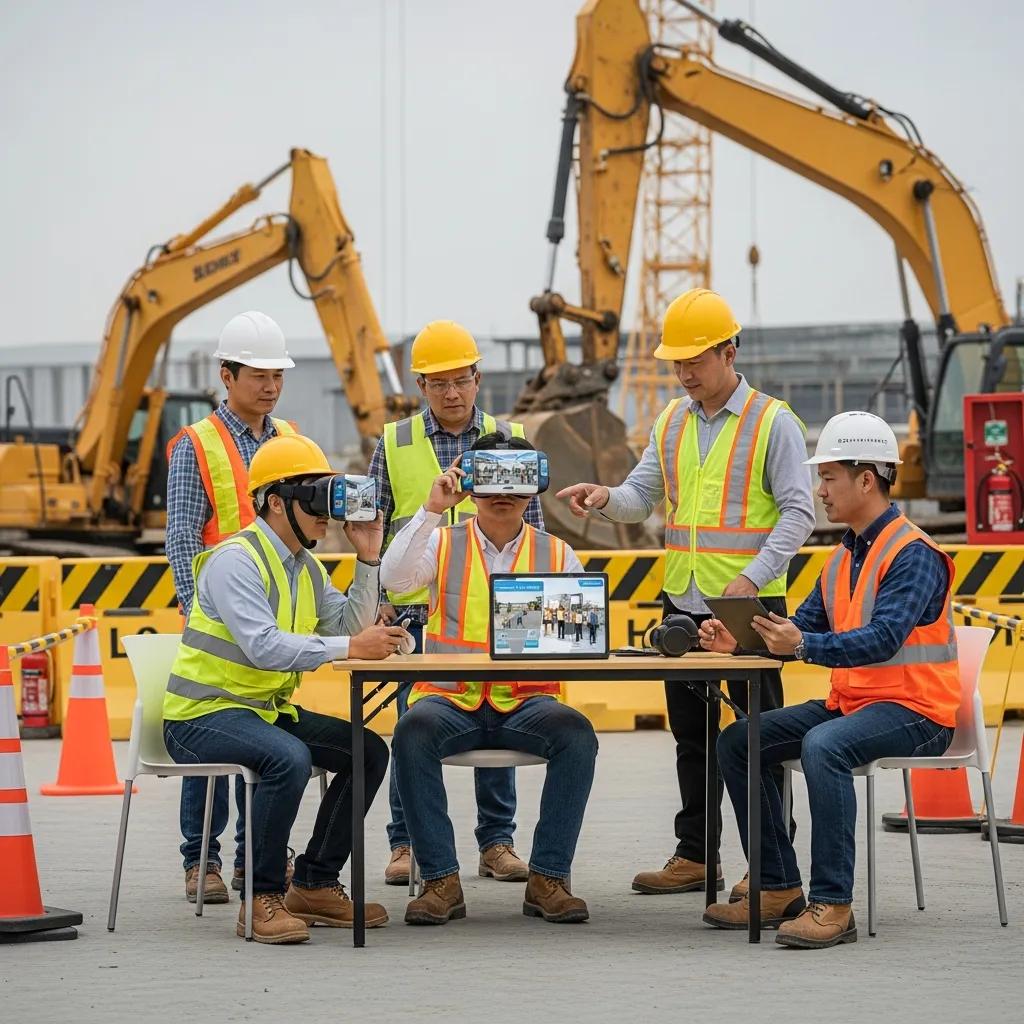
Critical Worker Safety Training Programs for Construction: Enhancing Site Safety with VDC, BIM, and Precision Technologies Construction safety training increasingly relies on digital coordination rather than only classroom drills; Virtual Design and Construction (VDC), Building Information Modeling (BIM), and precision layout technologies provide actionable insights that reduce exposure, prevent errors, and improve on-site decision making. This article explains how these technologies function as practical extensions of worker safety training by enabling hazard simulation, clash detection, and highly accurate layout verification that collectively lower incident risk. Readers will learn how VDC and BIM map to formal risk management processes, the safety advantages of robotic total station and 3D scanning workflows, and how to combine digital tools with training programs for measurable results. The guidance is designed for safety managers, project coordinators, and construction firms seeking to align training curricula with model-driven site planning and verification. We cover VDC applications, BIM risk management, precision layout benefits, digital solutions for hazard prevention, case vignettes illustrating outcomes, and practical integration steps to operationalize model findings in toolbox talks and safety briefings. Indeed, advanced technologies are increasingly recognized for their potential to significantly enhance the quality and effectiveness of safety training content in the construction industry. Advanced Technologies for Construction Safety Training Purpose – On-the-job training in the construction industry is an issue that requires increased efforts in order to improve safe working conditions. Nowadays, new advanced technologies are applicable to improve the quality of training contents. Site Training Tool developed by the authors stands as a pioneer of a new training methodology geared towards the development of current safety management practices. Site training tool: a gamification-oriented approach in VDC industry, 2022 How Does Virtual Design and Construction Improve Construction Safety? Virtual Design and Construction (VDC) is a coordinated, multidiscipline process that uses schedule-linked models, simulations, and visualizations to identify hazards before crews mobilize. By simulating construction sequences and site logistics in a virtual environment, VDC reduces worker exposure to dangerous conditions and allows teams to test mitigation strategies without putting people at risk. The mechanism is simple: transform design and schedule data into dynamic scenarios that reveal congestion, egress limitations, and interaction points between crews and equipment, then translate those findings into controls and procedures. The outcome is fewer on-site improvisations, clearer work sequencing, and better-informed safety briefings that directly lower incident probability. This comprehensive approach to VDC is crucial for streamlining project management and enhancing overall construction accuracy. VDC & BIM: Enhancing Construction Accuracy & Reducing Errors VDC is a cutting-edge approach that integrates digital technologies, 3D modeling, and real-time collaboration to streamline project management and coordination. By creating a digital twin of the physical project, VDC allows stakeholders to visualize, analyze, and optimize every aspect of the construction process from conception to completion. This method significantly enhances design and construction accuracy, reduces costly errors, minimizes rework, and accelerates project timelines. Revolutionizing Construction: The Synergy of VDC/BIM, Laser Scanning and Dusty Robotics, 2024 VDC delivers several practical mechanisms for safety improvement: Hazard simulation shows conflict points and unsafe access before ground is broken. 4D sequencing aligns tasks to reduce simultaneous exposures and congested zones. Site logistics modeling optimizes routing for materials and equipment to prevent pedestrian-equipment conflicts. These capabilities inform toolbox talks and pre-task briefings, and the next section details the primary VDC construction services used to simulate hazards and optimize site logistics. What Are the Key VDC Applications for Hazard Simulation and Site Logistics? Key VDC applications include 4D sequencing, equipment and material flow simulation, and immersive visual walkthroughs that identify falls, trips, and collision risks prior to field work. 4D sequencing overlays schedule data on the model to show when work zones will overlap, allowing safety teams to stage tasks to minimize concurrent exposures. Material and equipment flow simulation reduces congestion by testing delivery windows and crane positioning, which lowers the chance of unexpected interactions between trades. Virtual crew walkthroughs and annotated model views serve as focused training inputs that make toolbox talks more concrete and actionable. Different VDC outputs translate into specific safety actions: Use sequence-based visualizations to set exclusion zones and times. Produce annotated walkthroughs for crew-level briefings and permit boards. Test alternative routing and laydown areas virtually to prevent unsafe onsite rerouting. These modeled scenarios feed directly into risk registers and control measures, which is the subject of the following subsection. VDC Application Primary Function Safety Benefit 4D Sequencing Schedule-model integration Identifies concurrent work exposures and optimizes timing Equipment Flow Simulation Simulates crane and vehicle movements Reduces pedestrian-equipment conflicts and congestion Virtual Walkthroughs Immersive crew visualization Reveals fall/trip hazards and access issues before mobilization This comparison shows how targeted VDC applications convert modeling effort into concrete safety controls that can be relayed to crews and safety managers. How Does VDC Facilitate Proactive Risk Assessment and Accident Prevention? VDC facilitates proactive risk assessment by producing evidence-based model outputs that populate risk registers and drive mitigation planning rather than relying on anecdotal field observations. The process begins with model-based identification of likely incident scenarios, followed by quantitative evaluation of exposure duration and frequency; teams then test mitigation strategies in the virtual environment to verify effectiveness before field implementation. This model-to-register workflow enables safety managers to prioritize high-risk sequences and to design controls that are validated through simulation rather than trial-and-error. The result is fewer surprise hazards, more predictable work zones, and documented rationale for controls that inspectors and stakeholders can review. When simulations suggest a residual risk, those findings are translated into specific actions such as revised access routes, temporary barriers, or modified sequencing, ensuring that prevention is built into the plan rather than applied reactively. The next major topic explains how Building Information Modeling complements VDC by centralizing information for risk management and regulatory compliance. In What Ways Does Building Information Modeling Support Construction Risk Management? Building Information Modeling (BIM) centralizes geometric, schedule, and systems data into an authoritative model that safety teams can query to detect clashes, coordinate trades, and document compliance controls. BIM reduces site risk
Utilizing Safety Technology for Enhanced Construction Safety

Utilizing Safety Technology for Enhanced Construction Safety: Comprehensive Strategies and Innovations Construction safety technology encompasses hardware, software, and integrated digital services that identify hazards, prevent incidents, and improve worker well-being through data-driven controls and procedures. Implemented correctly, these systems reduce injuries, streamline compliance, and enable proactive risk mitigation so projects run more predictably and with fewer disruptions. This article explains how safety technology — including wearables, AI-driven computer vision, IoT environmental sensors, drones, AR/VR training, and digital delivery platforms like VDC and BIM — functions together to create safer job sites. Readers will learn practical benefits, device characteristics, implementation workflows, and how digital construction services support deployment and verification. Each H2 section examines a core area (benefits, wearables, AI, IoT, drones/AR/VR, and VDC/BIM/3D scanning) with concrete examples and implementation guidance for site monitoring safety and safety technology construction. By the end, you will have a tactical sense of which technologies to prioritize, how they integrate, and where coordinated digital services add the greatest safety value. What Are the Key Benefits of Construction Safety Technology? Construction safety technology delivers measurable outcomes by detecting hazards early, enforcing safe zones, and supplying managers with actionable data to prevent incidents. These systems work through sensors, real-time analytics, and automated workflows that convert raw signals into alerts, trend reports, and prescriptive interventions to reduce accidents and improve compliance. The main operational benefits include fewer injuries, faster incident response, stronger regulatory documentation, and improved productivity through less rework and downtime. Below is a concise list of primary benefits that organizations can expect when investing in integrated safety technology. Reduced Accidents and Injuries: Real-time detection and automated alerts limit exposure to hazardous conditions. Improved Compliance and Reporting: Digital logs and automated reports simplify audits and regulatory adherence. Faster Emergency Response: Location tracking and geofencing speed rescue and medical actions. Data-Driven Risk Mitigation: Predictive analytics prioritize high-risk tasks and times for intervention. Worker Health and Well-being: Biometric and environmental monitoring reduce fatigue and heat-stress incidents. These benefits translate into operational advantages that reduce schedule risk and lower total cost of ownership for projects. The next section compares categories of safety technologies and maps each to common safety outcomes so teams can prioritize investments. Different safety technologies map to distinct outcomes and operational attributes, enabling targeted selection based on project risk profile. Technology Category Core Attribute Typical Safety Outcome Wearables (helmets, vests) Personal sensing + location Faster incident alerts and PPE compliance tracking Computer vision systems Video analytics Automated hazard detection and unsafe act identification IoT environmental sensors Continuous environmental telemetry Early detection of gas, heat, noise, or particulate hazards Geofencing & tracking Virtual boundaries + asset tracking Prevents access to restricted zones and reduces collisions Drones & 3D scanning Remote inspection + point clouds Identifies hard-to-see hazards and verifies as-built conditions This comparison clarifies how selected technologies serve specific safety goals and why an integrated approach yields amplified benefits. The following subsections explain how technology concretely reduces accidents and improves compliance. How Does Safety Technology Reduce Accidents and Injuries? Safety technology reduces accidents primarily by detecting hazard indicators earlier than human observation and by automating immediate protective actions. Sensors and cameras feed into analytics that issue real-time alerts, trigger machine interlocks, or enforce geofence barriers to remove people from danger zones. Predictive models identify repeating patterns—such as near-miss clusters or high-risk work sequences—so supervisors can change sequences or add controls before an incident occurs. For example, a combination of wearable location tracking and proximity alerts around heavy equipment can prevent striking incidents by stopping machinery when a worker enters a danger envelope. These mechanisms rely on reliable data flows and clear response protocols, which are essential to turn alerts into effective interventions and thereby reduce injury rates on site. In What Ways Does Technology Improve Compliance and Worker Well-being? Technology improves compliance by automating documentation, producing timestamped records, and maintaining continuous logs that satisfy regulatory inspections without manual paperwork. Computer vision, wearables, and digital checklists detect PPE usage and log compliance events automatically, reducing administrative burden and enabling focused corrective actions. Biometric sensors and environmental monitors track heat stress, fatigue indicators, and exposure levels, prompting breaks or job rotation to preserve worker health. Collected data also supports continuous improvement: safety managers analyze trends to refine training and shift patterns, which enhances long-term well-being. Clear digital trails and proactive health monitoring both raise workforce safety standards and lower the likelihood of costly compliance failures. For teams seeking vendor partners that translate these benefits into field-ready solutions, Conway Coordination and Layout Services (CCLS) brings core capabilities—precision layout with Trimble Robotic Total Station, integrated VDC/BIM workflows, and safety-focused simulation—to practical deployments. CCLS’s integrated digital workflows and simulation-driven risk mitigation provide concrete examples of how the benefits above materialize in project execution. Which Wearable Safety Devices Are Transforming Construction Sites? Wearable safety devices are personal, networked tools that continuously monitor worker condition and location to prevent incidents and speed emergency response. These devices typically combine sensors (accelerometers, gyroscopes), GPS or ultra-wideband positioning, and wireless connectivity to report falls, impacts, biometric anomalies, and proximity breaches. When wearables stream data to a centralized site monitoring safety platform, supervisors gain live situational awareness to manage teams and equipment more safely. Smart Helmets: Detect impacts, enable hands-free communication, and integrate with cameras for situational awareness. Smart Vests and Wristbands: Monitor heart rate, body temperature, and location to prevent heat stress and detect falls. Exoskeletons: Provide mechanical support for lifting and repetitive tasks to reduce musculoskeletal disorders. These devices require robust connectivity and clear data governance to be effective; connectivity planning and platform integration should be part of procurement decisions. Device Type Key Feature Safety Outcome Smart Helmet Impact & proximity sensors + comms Faster incident detection and coordinated response Smart Vest/Wristband Biometric monitoring + GPS Heat-stress prevention and location-based rescue Exoskeleton Load assistance (passive/active) Reduced strain injuries and improved ergonomics Selecting wearables depends on the dominant hazards of a project—height risks favor fall-detection helmets, extreme climates favor biometric monitoring—so align device choice to the site
Tips for Streamlining the Construction Permitting Process

How to Expedite Construction Permits: Expert Tips for Streamlining the Construction Permitting Process Permit delays cost time and money across every construction project, often stemming from incomplete documentation, coordination failures, and mismatched expectations with permitting authorities. This article explains how targeted pre-submission workflows, Virtual Design and Construction (VDC), Building Information Modeling (BIM), and precision layout technologies reduce review cycles and increase first-pass approvals, delivering measurable schedule and cost benefits. You will learn to identify the most common causes of permit delays, apply clash detection and sequencing to tighten submissions, present BIM outputs that satisfy compliance checks, and use robotic layout and as-built verification to ensure inspection readiness. The guidance includes practical checklists, EAV comparison tables for VDC/BIM/layout choices, and real-world examples illustrating permit efficiencies achieved through technology and better coordination. Read on for actionable, regulator-focused tactics to improve permit application efficiency and reduce resubmission risk across projects in the Southeastern U.S. and similar jurisdictions. Indeed, optimizing the entire permit processing timeline is a key focus for construction projects aiming for efficiency. Optimizing Construction Permit Processing Time by evaluating and optimizing the process time for construction permits of construction permits are shown in Figure 31.2. The following study has been discussed processing optimization Evaluation and optimization of processing time for construction permits, S Kewate, 2024 What Are the Common Causes of Construction Permit Delays? Construction permits are commonly delayed when submissions lack required metadata, present uncoordinated disciplines, or fail to address jurisdiction-specific code interpretations, and these problems directly extend review cycles and conditional approvals. Incomplete drawings, missing specifications, and unclear phasing force reviewers to request clarifications, while interdisciplinary clashes between structural, MEP, and architectural drawings generate resubmissions and lengthy rework. Jurisdictional misunderstandings—such as incorrect code references or omitted fire egress sequencing—often require supplemental reviews. Early identification of these issues lets teams assemble consolidated, reviewer-friendly submittals that minimize back-and-forth. Incomplete documentation or missing metadata that prevents automated or manual code checks. Design coordination failures and clashes between disciplines that require revisions. Jurisdictional or code interpretation errors that necessitate clarification or correction. Late engagement with permitting authorities and lack of pre-application coordination. On-site discrepancies uncovered at inspection that delay final approvals. These causes point to predictable process fixes and technological interventions; the next subsection details the regulatory and documentation gaps most likely to slow approvals. Which Regulatory and Documentation Challenges Slow Permit Approvals? Regulatory and documentation errors typically include missing code citations on drawings, absent material specifications, and lack of essential form appendices — each of which halts automated checks or forces manual reviewer inquiries. Reviewers expect clear metadata (e.g., fire ratings, material standards, egress capacities) directly embedded or indexed so they can validate compliance without extra requests. A short pre-submission validation checklist reduces resubmissions: confirm metadata completeness, attach required forms and appendices, and cross-reference code sections on key sheets. Implementing this checklist before filing reduces common omissions and decreases reviewer queries that otherwise extend permit timelines. Addressing these document-level challenges enables better coordination workflows; next we examine how poor design coordination compounds permit delays. How Do Coordination Issues and Inaccurate Plans Impact Permit Timelines? Coordination failures—such as unresolved MEP/structural clashes or inconsistent elevations—create reviewer uncertainty and frequently produce conditional approvals or outright rejections, adding days or weeks to project schedules. For example, a requested mechanical chase revision can trigger multiple discipline updates and re-drawing cycles that cascade through the submittal. Establishing pre-permit coordination workflows, including interdisciplinary model reviews and documented clash logs, prevents these rework loops. A disciplined coordination process produces consistent plan sets and reduces the number of review-resubmit cycles, improving the chance of first-pass permit approval and limiting schedule exposure. Reducing coordination-related delays leads naturally to leveraging model-based methods like VDC, which we explore next. How Can Virtual Design and Construction Accelerate Permit Approvals? Virtual Design and Construction (VDC) accelerates permit approvals by unifying model-based coordination, clash detection, and sequencing simulations into a single pre-submission workflow that clarifies reviewer intent and reduces rework. By simulating construction sequencing and resolving interdisciplinary conflicts before submittal, VDC lowers the number of reviewer comments and provides visual evidence for compliance checks. This mechanism shortens permit review cycles because reviewers receive consolidated, traceable deliverables instead of fragmented, conflicting documents. Early VDC engagement also supports site logistics and regulatory condition simulations, which reduce conditional approvals tied to phasing or egress concerns. VDC services provide several direct permit-focused benefits and are best understood by their specific components. Clash Detection and Resolution: Automated identification of geometric conflicts reduces the number of design resubmissions. 4D Sequencing Simulations: Time-based phasing visuals demonstrate compliant staging and egress plans. Consolidated Documentation: Single-source outputs simplify reviewer validation and minimize contradictory drawings. These components translate to fewer reviewer questions and faster approvals when combined in a disciplined VDC workflow. The table below compares common VDC components and the permit-value they deliver. VDC Components Attribute Permit Value Automated Clash Detection Identifies conflicts across disciplines Reduces resubmissions and reviewer queries 4D Sequencing Time-based construction phasing Demonstrates code-compliant staging and reduces conditional approvals Consolidated Deliverables Single-source coordinated outputs Eases reviewer validation and lowers review cycles This comparison shows how each VDC component maps to specific permit-review improvements and why integrating them early reduces overall permit risk. Conway Coordination and Layout Services (CCLS) offers VDC consulting that applies these exact mechanisms—clash detection, sequencing, and consolidated submittals—to help projects present reviewer-ready packages. As a family-owned firm specializing in VDC, BIM, and high-precision layout, CCLS focuses on delivering coordinated deliverables that simplify regulatory review while maintaining inspection-readiness. For teams evaluating third-party VDC support, a targeted engagement that documents clash resolution counts and sequencing visuals is the most direct path to measurable permit-cycle reductions. The next subsections explain clash detection mechanics and sequencing benefits in permit contexts. What Role Does Clash Detection Play in Preventing Permit Rejections? Clash detection flags geometric and schedule conflicts between disciplines before drawings are exported for permit review, preventing reviewer discoveries that usually trigger resubmissions. The workflow typically runs automated clash reports, assigns responsible parties to resolve issues, and documents resolutions with revision notes and
Accurate Layout for Schools & University Campuses
Building for Learning: Education Construction Layout, School BIM, and University Campus VDC Educational facilities are built to last for generations. From elementary schools and high schools to expansive university campuses, these environments must balance safety, functionality, flexibility, and long-term durability—all while meeting tight budgets and strict public oversight. Errors during construction can lead to delays, cost overruns, and operational challenges that affect students, faculty, and staff for years. That is why education construction layout, advanced school BIM, and structured university campus VDC have become essential tools in modern academic construction. Supporting education projects across the Southeast is Conway Coordination and Layout Services (CCLS), a South Carolina–based construction technology company specializing in precision layout, BIM coordination, VDC consulting, 3D scanning, and point cloud integration. Since 2020, CCLS has helped contractors and construction managers deliver accurate, efficient, and future-ready educational facilities with confidence. Why Educational Construction Requires a Higher Level of Accuracy Schools and universities present unique challenges compared to other building types. These projects often involve: Large floor plates and repetitive layouts Dense MEP systems above classrooms and labs Strict life-safety and accessibility requirements Public funding accountability Long-term operational flexibility Mistakes in layout or coordination can impact not only construction schedules, but also the learning environment itself. Education construction layout ensures that every wall, penetration, hanger, and system is placed exactly as designed—supporting safety, acoustics, technology integration, and future adaptability. CCLS delivers survey-grade layout using Trimble Robotic Total Station technology, ensuring educational facilities are built accurately the first time. Education Construction Layout: From Classrooms to Campuses Layout accuracy is critical in educational facilities because consistency and repetition are common. Minor deviations can compound across dozens—or hundreds—of classrooms, labs, or dormitory rooms. CCLS provides education construction layout services that support: Classroom and corridor wall layout Ceiling system coordination MEP hanger and sleeve placement Penetrations for data, power, and AV systems Equipment pads for mechanical rooms and labs By laying out directly from coordinated BIM models, CCLS eliminates guesswork and ensures layout aligns with approved construction documents. Learn more about this precision-driven approach through Robotic Total Station Layout. School BIM: Coordinating Systems for Safe, Functional Learning Spaces School BIM plays a vital role in managing the complexity of modern educational buildings. Today’s schools integrate advanced HVAC systems, security infrastructure, IT networks, fire protection, and specialized lab equipment—often within tight ceiling spaces. BIM allows these systems to be coordinated digitally before installation, reducing conflicts and improving constructability. CCLS supports school BIM by providing: Trade coordination and model integration Clash detection and resolution Constructability reviews focused on field conditions Alignment between design changes and layout execution This process reduces RFIs, change orders, and installation delays—critical on projects with fixed academic calendars. Learn more about these services through BIM modeling and coordination. University Campus VDC: Managing Large, Multi-Building Projects University campuses often consist of multiple buildings constructed simultaneously or in phases over several years. Managing coordination across these projects requires more than isolated BIM models—it requires a comprehensive VDC strategy. University campus VDC provides the structure needed to coordinate multiple stakeholders, trades, and schedules across a complex academic environment. CCLS provides university campus VDC services that help teams: Standardize coordination workflows across buildings Align BIM models with construction schedules Support phased construction and occupancy Reduce conflicts between adjacent projects This approach is especially valuable on active campuses where construction must coexist with students, faculty, and daily operations. Learn more about this strategic support through VDC construction services and VDC consulting services. Supporting Future Flexibility Through BIM and VDC Educational buildings must adapt over time to changing curriculum, technology, and enrollment needs. BIM supports this long-term flexibility by creating accurate digital records of building systems. School BIM and university campus VDC help owners by: Documenting as-built conditions accurately Supporting future renovations and expansions Reducing uncertainty during facility upgrades CCLS helps ensure that BIM data remains aligned with real-world conditions through accurate coordination and layout. Prefabrication Opportunities in Educational Construction Prefabrication is increasingly used in educational projects to reduce schedules and improve quality—especially for repetitive classroom layouts and MEP systems. BIM and VDC support prefabrication by validating: Module dimensions Connection points and tolerances Installation sequencing CCLS supports prefab strategies by ensuring coordinated models and layout data are accurate before fabrication begins—reducing waste and rework onsite. Reality Capture for Existing Schools and Campus Renovations Many education projects involve renovations or additions to existing facilities. In these cases, accurate documentation of existing conditions is critical. CCLS uses 3D scanning and point cloud integration to capture existing school and campus environments with exceptional accuracy. This data allows teams to: Coordinate new systems around existing infrastructure Validate ceiling and plenum space Reduce surprises during demolition Learn more about these services through 3D scanning and 3D point cloud rendering and model integration. Safety, Accessibility, and Compliance Through Accurate Layout Educational facilities must comply with strict life-safety, accessibility, and building code requirements. Accurate layout plays a key role in meeting these standards. Education construction layout supports: ADA-compliant pathways and clearances Fire-rated wall and penetration placement Proper routing of life-safety systems By executing layout precisely from coordinated models, CCLS helps projects pass inspections and meet regulatory requirements with confidence. Bridging Digital Coordination and Field Execution A coordinated BIM model only delivers value if it is built accurately. Educational projects cannot afford disconnects between digital coordination and field installation. CCLS bridges this gap by integrating school BIM and university campus VDC with robotic total station layout—ensuring digital coordination becomes physical accuracy. This integration provides: Direct layout from coordinated BIM data Consistent accuracy across buildings and phases Reduced rework during installation Leadership Grounded in Construction Experience CCLS is led by Nathan Conway, whose background spans commercial plumbing, BIM coordination, and precision layout. His hands-on experience ensures educational projects are approached with both technical expertise and practical field understanding. Nathan remains actively involved in coordination and layout execution, ensuring education facilities receive the attention and accuracy they require. Learn more about the team on the About Us page. Serving Education Projects Across the Southeast Headquartered in South
Impact of Zoning Laws on Construction Projects

Impact of Zoning Laws on Construction Projects: Comprehensive Guide to Compliance and Challenges Zoning laws are municipal and regional regulations that control land use, building form, and site development; they shape what can be built where, how tall structures may be, how close they sit to property lines, and what activities are permitted. Understanding zoning laws matters for construction projects because these rules directly determine design feasibility, permitting pathways, and financial risk, and research shows early compliance planning reduces late-stage redesign by a significant margin. This guide explains the mechanics of zoning — from district types and technical metrics like floor area ratio to procedural routes such as rezoning and variance applications — and shows how digital workflows can identify conflicts before physical work begins. Readers will learn how zoning affects site planning and massing, common developer challenges, how Virtual Design and Construction (VDC) and Building Information Modeling (BIM) help ensure compliance, cost and schedule impacts of non-compliance, regional nuances across the southeastern U.S., and real-world case narratives of precision layout and coordination. Throughout the article, practical checklists, comparison tables, and actionable mitigation strategies will prepare project teams to reduce delays, control costs, and present stronger permit submissions. How Do Zoning Regulations Affect Construction Project Planning? Zoning regulations establish the rules that translate planning policy into constraints on building form and use; they operate by assigning land use districts and overlay rules that set permitted uses, setbacks, maximum heights, lot coverage, and floor area ratio (FAR), and they produce direct consequences for site layout, footprint sizing, and program distribution. Because these regulations define the allowable massing and program envelope, they shape early feasibility studies and drive which permit path a project will follow, which in turn affects schedule and contingency budgeting. Project teams that evaluate zoning metrics at the schematic stage can iterate massing alternatives quickly and avoid late-stage redesign. The following table summarizes common zoning components and their immediate planning implications to support early decision-making. This comparison highlights how each zoning attribute affects design choices and permitting steps. Zoning Component What It Regulates Direct Planning Implication Setbacks Minimum distance from property lines Constrains footprint, affects parking and circulation layouts Height limits Maximum building elevation Dictates vertical massing, affects structural and MEP strategies Floor Area Ratio (FAR) Ratio of gross floor area to lot area Determines allowable density and program mix Lot coverage Percent of lot covered by impervious structures Influences landscaping, stormwater design, and open space The table clarifies the tangible trade-offs teams must model during feasibility. Understanding these trade-offs leads naturally into identifying which zoning district types and overlays will govern a given project and how those categories alter allowed uses and development intensity. What Are the Key Types of Zoning and Land Use Designations? Zoning and land use designations categorize parcels by permitted uses and development standards, with common types including residential, commercial, industrial, mixed-use, and various overlay districts such as historic preservation or environmental protection. Residential zoning typically limits building types, density, and often parking requirements, which affects unit counts and amenity planning; commercial zoning governs retail, office, and service uses with different loading and access expectations. Industrial zones prioritize logistics and heavier utility loads while restricting residential uses, whereas mixed-use zones allow combined residential and commercial programs but often impose design or ground-floor activation requirements. Overlay zones, like historic or riparian overlays, layer additional restrictions—such as façade guidelines or buffer requirements—over base zoning and frequently require additional agency coordination. Recognizing the applicable district and overlays early clarifies anticipated permit conditions and informs whether rezoning or special approvals might be necessary. These distinctions matter because each designation creates different constraints on height, setbacks, and allowable density; understanding them guides the next step of translating numeric zoning metrics into design decisions. How Do Zoning Laws Influence Building Height, Setbacks, and Density? Height limits, setbacks, lot coverage, and floor area ratio are the primary numeric controls that define a project’s allowable volume and footprint; together they convert planning policy into precise dimensional constraints that designers must satisfy. Height limits cap vertical scale and often affect structural system selection and rooftop equipment decisions, while setbacks establish required clearances that shape building orientation and site circulation. FAR controls effective density by limiting total floor area relative to lot size, which forces trade-offs between unit sizes, the number of floors, or program distribution. Practical verification uses simple calculations—FAR = total gross floor area / lot area—and checklist-driven checks for setbacks, measured from record lot lines or easements. Project teams should include these numeric checks in early schematic models to test compliance scenarios and identify where variances or design adjustments may be required. Confirming these metrics early avoids late-stage redesign and sets the stage for targeted documentation during permitting and any public hearings that may follow. What Are Common Zoning Challenges Faced by Property Developers? Zoning challenges for developers range from procedural hurdles like rezoning and variance approvals to substantive constraints such as strict setbacks, parking minimums, and environmental overlays; these issues commonly cause redesign, delayed permits, and budget increases. Procedural obstacles include public hearings, inter-agency reviews, and appeal periods that add schedule risk; substantive obstacles can force reductions in unit count, changes to program, or added mitigation measures like stormwater upgrades. Emerging challenges include increasing emphasis on environmental buffers in coastal areas and tighter historic district controls in older downtowns. Teams that anticipate these hurdles and prepare clear visual materials and model-based analyses tend to secure approvals faster and with fewer conditions. Below are the top zoning challenges developers face and how they typically manifest in projects. Setback and height constraints: Force reduced floor area or complex massing changes that affect program and cost. Rezoning and variance requirements: Invite public scrutiny and timelines that can extend months. Parking and amenity requirements: Increase site demand for space and can reduce buildable area. Environmental and historic overlays: Require mitigation, special studies, or design compromises. These challenges highlight why early technical verification and stakeholder engagement are essential; the next section explains the administrative
Ensuring OSHA Compliance for Construction Site Safety
Ensuring OSHA Compliance for Construction Site Safety: Comprehensive Guide to Standards and Risk Management OSHA compliance in construction means meeting federal safety and health standards that prevent workplace injuries, control hazards, and document risk-management actions on site. This guide explains why staying current with OSHA construction standards in 2025 matters — including updates to PPE fit expectations and the rising role of digital documentation — and shows how precise layout, VDC, BIM, and 3D scanning reduce exposures and streamline compliance. Readers will gain a clear map of key standards (with CFR citations), practical fall protection implementation, prevention tactics against top violations, how safety management systems work, updated PPE obligations, and how VDC supports hazard simulation and audit-ready records. Throughout, the emphasis is on actionable steps project teams can use to align site practices with OSHA requirements while minimizing rework, stoppages, and exposure. The article weaves in how specialists in precise layout and digital coordination support these goals without replacing core safety responsibilities held by employers and competent persons. What Are the Key OSHA Construction Safety Standards in 2025? OSHA construction safety standards set minimum requirements across fall protection, hazard communication, scaffolding, ladders, PPE, excavation/trenching, and electrical work to reduce occupational risks on worksites. These standards appear primarily in 29 CFR 1926 and related subparts, and recent 2025 emphasis includes clearer PPE fit expectations and enhanced expectations for documentation and multi-employer communication. The practical benefit of knowing exact citations and scopes is faster corrective action, clearer training content, and more defensible audit records. Below is a concise list of the most-referenced construction standards with one-sentence benefits for each. Fall Protection (29 CFR 1926.501–.503): Reduces fatal falls through required systems and procedures. Hazard Communication (29 CFR 1910.1200 adapted to construction sites): Ensures workers know chemical hazards and SDS locations. Scaffolding (29 CFR 1926.451): Protects access and work-at-height with design and inspection controls. Ladders (29 CFR 1926.1053): Minimizes slips and improper ladder use through correct selection and placement. PPE (various 29 CFR 1926 subparts; 2025 fit emphasis): Ensures correct protection and fit to be effective. Excavation/Trenching (29 CFR 1926.650–.652): Prevents cave-ins via sloping, shoring, and trench boxes. Electrical (29 CFR 1926, Subpart K): Reduces electrocution and arc-flash risk through lockout/tagout and clearances. These standards form a practical checklist that safety managers use to prioritize inspections and training; the next subsections outline the fall protection and hazard communication rules you’ll enforce on site. Which OSHA regulations govern construction fall protection requirements? Fall protection in construction is governed principally by 29 CFR 1926.501 and implementing sections that define when fall protection is required, who is responsible, and which systems qualify. Employers must provide protection at specified heights, assess tasks for exposure, and train workers on proper system use, inspection, and limitations. Typical triggers include work on unprotected sides and edges, hoist areas, leading edges, and roofs, and each trigger maps to a preferred control such as guardrails, safety nets, or personal fall arrest systems. Understanding the regulation’s scope lets project teams plan anchor locations, access routes, and temporary edge protection in advance to avoid stoppages and citations. How do OSHA standards address hazard communication on construction sites? OSHA’s Hazard Communication framework requires chemical suppliers and employers to provide Safety Data Sheets (SDS), proper labeling, and training so workers can identify and control chemical risks on-site; this applies in multi-employer contexts where host, controlling, and subcontracting employers must coordinate. Key on-site practices include centralized SDS access, consistent labeling of temporary containers, and toolbox training tied to specific work tasks—especially when contractors bring different chemical inventories. Multi-employer worksites must identify who maintains SDS records and who trains exposed workers to prevent confusion during inspections or emergencies. Clear documentation and assigned responsibilities reduce citation risk and improve emergency response coordination. Standard Area OSHA Reference (CFR) Practical Requirement & Digital Mitigation Fall Protection 29 CFR 1926.501–503 Requires guardrails, PFAS, nets where applicable; digital layout and BIM locate anchor points and plan access routes to reduce unprotected edges. Hazard Communication 29 CFR 1910.1200 (applied) Requires SDS, labeling, training; centralized digital SDS libraries and tagged model elements improve on-site access and training alignment. Scaffolding 29 CFR 1926.451 Requires design, load ratings, and inspection; 3D scanning verifies installed scaffold geometry against design and inspection checkpoints. Excavation/Trenching 29 CFR 1926.650–652 Requires sloping/shoring/trench boxes; VDC sequencing and subsurface mapping reduce surprise exposures and guide protective system placement. This EAV-style mapping shows how each standard’s legal requirement connects to a practical digital mitigation option that reduces exposure and supports audit-ready records. How Can Construction Fall Protection Requirements Be Effectively Implemented? Effective implementation of fall protection combines engineering controls, administrative planning, PPE, and digital planning tools to anticipate hazards before work begins. The approach begins with a hazard assessment that identifies where workers face fall exposures and which engineered solutions provide the highest reduction in risk. Integrating layout verification, BIM coordination, and established inspection cycles ensures anchor points, edge protections, and access paths are placed and maintained correctly. The following checklist provides a short, practical implementation sequence that construction teams can apply during preconstruction and active phases. Conduct a model-based hazard assessment to identify potential fall exposures and required controls. Specify engineering controls (guardrails, nets, PFAS anchor points) in the temporary works packages and layout deliverables. Verify anchor and temporary protection placement in the field with layout instruments and 3D scanning prior to worker exposure. Enforce inspection and training cycles with documented records tied to model elements and inspection photos. These steps prioritize eliminating exposures through engineering and planning before relying on PPE and administrative controls; the next paragraphs explain types of systems and how digital tools support prevention. What are the main types of fall protection systems mandated by OSHA? OSHA recognizes guardrail systems, safety net systems, personal fall arrest systems (PFAS), positioning systems, and administrative controls as primary means to control fall risk, each suited to different work scenarios. Guardrails are preferred where continuous edge protection is feasible, safety nets are for areas where guardrails are impractical, and PFAS protect individual workers who