
Understanding Virtual Design and Construction (VDC)
Understanding Virtual Design and Construction: Comprehensive Guide to Principles, Benefits, and Implementation Virtual Design and Construction (VDC) is a multidisciplinary methodology that applies digital models, integrated workflows, and project production management to improve design, construction, and lifecycle outcomes. This guide explains what VDC is, why it matters for commercial and industrial projects, and how teams use BIM, reality capture, and coordinated processes to reduce risk and accelerate delivery. Readers will learn VDC principles including the POP model, how VDC differs from Building Information Modeling (BIM), measurable benefits such as reduced rework and improved schedule certainty, and practical steps to implement VDC on real projects. The article maps core topics across definition and history, semantic distinctions with BIM, a benefits-oriented view with evidence-oriented tables, implementation best practices and technology selection, a focused section on CCLS LLC’s VDC services, and emerging trends shaping the next phase of digital construction. Throughout, target keywords like “VDC principles,” “VDC vs BIM,” and “VDC implementation” are integrated to clarify concepts and support practical adoption for owners, general contractors, and VDC practitioners. What Is Virtual Design and Construction? Definition, History, and Core Principles Virtual Design and Construction (VDC) is a structured method that uses digital representations and coordinated processes to manage design, construction, and handover activities for better predictability. It operates by combining 3D models, schedule and cost dimensions, stakeholder alignment sessions, and production management to produce measurable project outcomes. VDC matters because it shifts decision-making earlier in the delivery cycle, enabling teams to identify conflicts, optimize sequencing, and plan prefabrication before costly field work begins. Understanding these mechanics leads naturally to VDC’s historical roots and the academic work that formalized its principles, which explains how the VDC consulting services organizes VDC practice. How Did VDC Originate and Evolve in Construction? VDC grew from academic research into integrated project delivery and digital modeling, with early formulation and promotion by research centers focused on improving construction productivity. Initial work emphasized the combination of modeled products and collaborative processes, which later evolved as commercial BIM tools and reality-capture hardware matured. As BIM adoption expanded, VDC practices incorporated 4D (schedule) and 5D (cost) modeling, clash detection, and on-site verification using scanners and robotic layout systems. These milestones illustrate how VDC moved from concept to mainstream practice, and set the stage for contemporary workflows that include Integrated Concurrent Engineering (ICE) sessions and Project Production Management (PPM) principles. What Are the Core Principles and the POP Model of VDC? The POP model—Product, Organization, Process—captures VDC’s core architecture by mapping artifacts, roles, and workflows to project outcomes. Product refers to the digital deliverables (BIM models, 3D scans, federated models) that represent built scope; Organization covers the project stakeholders, roles, and collaboration routines such as ICE sessions; Process addresses the sequence of decisions and production management approaches like PPM and prefabrication sequencing. Together these elements enable continuous alignment between design intent and construction execution, reducing ambiguity and enabling predictable production. A practical example is MEP coordination: the product is a federated MEP model, the organization runs coordination ICE workshops, and the process sequences prefabrication with 4D simulation to ensure timely delivery. How Does VDC Differ from Building Information Modeling? Clear Comparison and Semantic Distinction VDC is a holistic management methodology that uses Building Information Modeling as a core technology; BIM itself is the collection of digital models and data used within VDC workflows. In practice, VDC defines governance, meeting cadences, production rules, and outcomes, while BIM provides the digital artifacts—geometric models, embedded metadata, and clash reports—that enable those outcomes. This distinction matters for teams deciding where to invest: governance and PPM produce behavioral change and aligned decisions, while BIM tools deliver the technical means to execute. Before the comparison table, note that the following table outlines scope, purpose, typical actors, and primary outputs to make the semantic difference explicit and scannable. Domain VDC (Methodology) BIM (Technology/Data) Scope Holistic project delivery management including POP model and PPM Digital modeling of building elements and metadata Purpose Improve predictability, coordination, and production outcomes Provide precise geometric and attribute data for design and analysis Typical Actors Owners, VDC managers, ICE facilitators, production teams Architects, modelers, BIM coordinators, clash analysts Primary Outputs Aligned schedules, coordinated production plans, reduced rework 3D models, clash reports, quantifiable quantities This table clarifies that VDC and BIM are complementary: VDC sets the rules and metrics, while BIM supplies the data and models that make those rules executable. The next subsection explains BIM’s specific role within VDC workflows. What Is BIM and Its Role Within VDC? BIM is the structured digital representation of physical and functional characteristics of a facility, producing 3D geometry, component metadata, and extractable quantities used across the project lifecycle. Within VDC, BIM models feed clash detection, schedule simulation (4D), and cost integration (5D), enabling earlier identification of constructability issues and better procurement of prefabricated assemblies. Common BIM deliverables include federated models for coordination, COBie-like data exports for handover, and clash reports used during ICE sessions to drive decisions. Understanding BIM’s role shows why model quality and data discipline are prerequisites for effective VDC deployment and measurable reductions in field rework. What Are the Key Differences Between VDC and BIM? The core differences between VDC and BIM lie in intent, scope, and metrics: VDC measures production outcomes and enforces process, whereas BIM measures model completeness and data fidelity. VDC emphasizes governance, continuous stakeholder alignment, and production metrics like throughput and percent plan complete, while BIM emphasizes model content, levels of development, and exportable data. Stakeholder responsibilities differ too—VDC requires facilitation and production management, and BIM requires meticulous modeling and data governance. Recognizing these differences helps teams assign roles and prioritize investments that generate measurable project benefits rather than isolated model improvements. What Are the Key Benefits of VDC in Construction Projects? Enhancing Efficiency and Collaboration VDC delivers several high-impact benefits by aligning digital models, production planning, and stakeholder collaboration to reduce uncertainty and field disruptions. The primary benefits include fewer clashes and rework, improved schedule predictability through 4D sequencing, tighter cost
Guide to Navigating Local Building Codes & Permits
Construction Permits, Local Building Codes, and Municipal Regulations in Modern Construction Every successful construction project begins long before the first piece of equipment arrives on site. Navigating construction permits, local building codes, and municipal regulations is one of the most critical—and often underestimated—phases of the construction process. When these requirements are misunderstood or overlooked, projects face delays, redesigns, failed inspections, and unexpected costs. As buildings become more complex and jurisdictions enforce stricter oversight, contractors must align design intent, permitting requirements, and field execution with precision. This is where construction technology and coordination expertise make a measurable difference. Conway Coordination and Layout Services (CCLS) helps contractors translate regulatory requirements into accurate, buildable execution through robotic layout, BIM coordination, VDC consulting, and verification services. Based in South Carolina and serving projects across North Carolina, Virginia, Georgia, and Florida, CCLS supports commercial and industrial construction teams navigating regulatory complexity with confidence. Understanding Construction Permits Construction permits are official approvals issued by local authorities that authorize specific construction activities. Permits exist to ensure buildings are safe, code-compliant, and suitable for occupancy. Common construction permits include: Building permits Electrical permits Plumbing permits Mechanical permits Fire protection permits Zoning and land-use approvals Each permit type comes with documentation requirements, inspections, and approval milestones. Failing to obtain or comply with permits can result in stop-work orders, fines, or forced demolition of non-compliant work. Why Construction Permits Impact Project Schedules Permits directly affect project timelines. Delays in permitting can stall mobilization, disrupt sequencing, and push back inspections and occupancy. Permit-related delays often occur due to: Incomplete or inaccurate drawings Conflicts between design and code requirements Poor coordination between trades Inconsistent documentation Accurate coordination and verification help ensure permit submissions align with how the building will actually be constructed—reducing resubmittals and review cycles. Local Building Codes: The Foundation of Compliance Local building codes establish minimum standards for safety, structural integrity, accessibility, energy efficiency, and fire protection. Most jurisdictions adopt versions of national model codes—such as the International Building Code (IBC)—with local amendments. Local building codes regulate: Structural design and materials Means of egress Fire resistance and life safety systems Accessibility requirements Energy and sustainability standards Mechanical, electrical, and plumbing systems Because codes vary by jurisdiction, contractors must understand not only the base code, but also local amendments and enforcement practices. The Role of Municipal Regulations in Construction Municipal regulations extend beyond building codes and permits. Cities and counties impose additional rules governing: Zoning and land use Setbacks and height restrictions Utility connections Stormwater management Environmental protection Traffic and right-of-way access Municipal regulations often involve multiple departments, each with its own review and inspection process. Coordinating these requirements requires accurate documentation and clear communication across project teams. Why Regulatory Issues Often Arise in the Field Many regulatory problems are not caused by poor design, but by gaps between approved documents and field execution. Common issues include: Layout deviations from approved plans Field changes not reflected in permit documents Trade conflicts affecting code-required clearances Misaligned inspections due to sequencing issues Once work deviates from approved permits, inspectors may require corrections or re-submittals—causing delays and added cost. BIM Coordination as a Regulatory Support Tool Building Information Modeling (BIM) plays an increasingly important role in meeting permit and code requirements. Through BIM Modeling and Coordination, CCLS helps teams ensure that designs submitted for permitting are coordinated and buildable. BIM coordination supports regulatory compliance by: Identifying code conflicts early Coordinating systems to meet clearance requirements Reducing RFIs during plan review Improving accuracy of permit drawings When permit documents align with coordinated models, approval processes become more predictable. Robotic Layout and Permit Compliance Once permits are approved, construction must match what was submitted. Deviations—intentional or accidental—can lead to failed inspections. Using advanced Trimble Robotic Total Station technology, CCLS provides layout services that ensure construction aligns precisely with approved plans. This helps contractors: Maintain code-required dimensions Meet inspection criteria Avoid rework due to layout errors Support documentation accuracy Learn more about this technology through Robotic Total Station Layout Services. VDC Consulting for Navigating Municipal Regulations Virtual Design and Construction (VDC) helps teams manage regulatory requirements proactively. Through VDC Construction Services and VDC Consulting Services, CCLS assists contractors in: Aligning design intent with local regulations Coordinating regulatory-driven constraints Planning inspection sequencing Reducing surprises during approvals This integrated approach minimizes risk and improves regulatory outcomes. 3D Scanning for Existing Conditions and Permitting Renovation and adaptive reuse projects often face regulatory challenges due to undocumented or outdated conditions. CCLS provides 3D Scanning Services to capture accurate as-built conditions. These scans allow teams to: Validate existing dimensions Identify non-compliant conditions early Support permit revisions Reduce assumptions during design Scanned data can be integrated into BIM environments using 3D Point Cloud Rendering and Model Integration, creating reliable documentation for regulatory review. Construction Permits in Commercial and Industrial Projects Commercial and industrial projects often require layered permits and phased approvals. These projects may involve: Multiple inspection agencies Specialized occupancy classifications Fire marshal reviews Environmental compliance CCLS supports commercial and industrial contractors by providing accurate coordination and layout services that align construction with permit requirements. Examples of this work can be found in the CCLS Portfolio. Regional Experience With Local Jurisdictions While South Carolina is CCLS’s primary geographic focus—serving Charleston, Myrtle Beach, Greenville, Greer, and Clemson—the company also supports projects across North Carolina, Virginia, Georgia, and Florida. Each region has unique enforcement practices, inspection timelines, and regulatory expectations. CCLS’s regional experience helps contractors anticipate and navigate these differences effectively. Leadership Rooted in Practical Construction Experience Founded in 2020, Conway Coordination and Layout Services is family-owned and led by Nathan Conway, who brings over 20 years of hands-on construction experience. This real-world perspective ensures regulatory requirements are addressed practically—supporting compliance without disrupting construction flow. Learn more about the company’s approach on the About CCLS page. The Cost of Regulatory Non-Compliance Failure to meet construction permit requirements, local building codes, or municipal regulations can result in: Stop-work orders Failed inspections Costly rework Schedule delays Legal exposure By contrast, projects that integrate coordination and verification
Best Practices for Construction Accounting & Reporting
Construction Accounting, Job Costing, and Financial Reporting in Construction: Why Precision in the Field Drives Precision in the Books In construction, financial success doesn’t start in the accounting office—it starts on the jobsite. Accurate construction accounting, reliable job costing, and trustworthy financial reporting construction processes all depend on one critical factor: how accurately work is planned, coordinated, and executed in the field. As projects grow more complex and margins tighten, contractors and owners can no longer afford disconnects between design, installation, and financial tracking. Every layout error, coordination miss, or rework event ripples directly into job cost overruns, distorted financial reports, and strained cash flow. This is why forward-thinking construction teams increasingly rely on technology-driven partners who help align field execution with financial reality. Conway Coordination and Layout Services (CCLS), founded in 2020, is a South Carolina–based construction technology company specializing in precision layout, BIM coordination, and VDC consulting. By leveraging advanced Trimble Robotic Total Station technology, 3D scanning, and model-based workflows, CCLS helps contractors build with accuracy—so their financial data reflects what actually happens in the field. This article explores how construction accounting works, why job costing accuracy is essential, and how precision layout and coordination directly support clean, defensible financial reporting. The Role of Construction Accounting in Project Success Construction accounting differs from standard accounting because every project is unique. Unlike manufacturing or retail, construction involves: Project-based revenue recognition Variable labor and material costs Draw-based payments Change orders and contingencies Long project timelines To manage this complexity, construction accounting relies heavily on accurate cost allocation and real-time data from the field. When field execution is inaccurate, accounting systems inherit bad data—leading to misleading reports, budget surprises, and delayed decision-making. Why Job Costing Is the Backbone of Construction Accounting Job costing tracks labor, materials, equipment, and overhead for each individual project. It answers essential questions such as: Is this project profitable? Where are costs exceeding estimates? Which scopes are underperforming? Are change orders covering true impacts? For job costing to be accurate, work must be installed exactly as planned—or deviations must be clearly documented. Precision layout reduces unplanned labor hours, rework, and material waste, making job costing far more reliable. Financial Reporting Construction Depends on Field Accuracy Financial reporting construction processes—such as work-in-progress (WIP) reports, cost-to-complete forecasts, and percentage-of-completion calculations—are only as accurate as the data behind them. When layout errors cause: Rework Schedule delays Trade stacking Unplanned material purchases …those impacts distort financial reports and obscure true project performance. Precision in the field creates clarity in the financials. How Field Errors Corrupt Job Cost Data Even small layout inaccuracies can create significant accounting distortions. Common consequences include: Labor overruns recorded as productivity issues Material waste coded as purchasing errors Delays misattributed to scheduling failures Change orders that don’t reflect true root causes These distortions make it harder for project managers, controllers, and executives to identify real problems. By eliminating layout-driven rework, construction accounting teams gain cleaner, more actionable data. Precision Layout as a Financial Control Tool Precision layout isn’t just an operational advantage—it’s a financial control. Through Robotic Total Station Layout, CCLS ensures that installations match coordinated models with millimeter-level accuracy. Financial Benefits of Precision Layout Reduced unplanned labor costs Lower material waste Fewer corrective work tickets Cleaner cost codes More predictable cash flow For accounting teams, this translates into job cost reports that actually reflect performance—not damage control. BIM and VDC Improve Cost Forecasting Accuracy Building Information Modeling (BIM) and Virtual Design and Construction (VDC) play a growing role in financial predictability. Through VDC Construction Services and VDC Consulting Services, CCLS helps resolve conflicts before they reach the field. Accounting Impacts of BIM & VDC Fewer RFIs that stall billings Reduced contingency consumption More accurate cost-to-complete forecasts Improved earned-value tracking When scopes are coordinated early, job costing assumptions are far more likely to hold. 3D Scanning Supports Accurate Cost Allocation Existing conditions are a major source of budget risk—especially in renovations and expansions. CCLS uses advanced 3D Scanning to capture precise as-built conditions before work begins. Why This Matters for Accounting Prevents underestimated labor scopes Reduces surprise material needs Improves estimate-to-actual comparisons Strengthens change order justification Accurate starting conditions lead to cleaner cost breakdowns and stronger financial reporting. BIM Coordination Reduces Cost Variance Through BIM Modeling and Coordination, CCLS helps align structural, architectural, and MEP systems. From an accounting standpoint, this reduces: Scope overlap between trades Double-billing disputes Reallocation of costs between phases Margin erosion from avoidable conflicts Well-coordinated projects generate fewer accounting exceptions—and fewer uncomfortable conversations. Construction Accounting in Fast-Tracked Projects Accelerated schedules increase accounting risk. When work proceeds out of sequence or corrections are rushed, costs can be misclassified or missed entirely. Precision layout supports fast-track projects by: Allowing multiple trades to work confidently Reducing corrective labor Keeping production aligned with schedules Stabilizing earned-value reporting For controllers and CFOs, this stability is invaluable. Real-World Financial Clarity Through Precision Across South Carolina and the Carolinas, CCLS has supported projects where accurate execution directly protected financial performance: Fast-paced healthcare facilities Confidential industrial and pharmaceutical projects Multi-building commercial developments In several cases, precision layout and coordination helped teams finish ahead of schedule and under budget, protecting both margins and financial forecasts. Examples can be found on the Portfolio page. Geographic Considerations in the Southeast Construction accounting challenges vary by region. In South Carolina and throughout North Carolina, Georgia, Florida, and Virginia, contractors face: Aggressive growth-driven schedules Labor shortages affecting productivity Weather-related delays Tight inspection windows CCLS’s technology-driven approach helps stabilize field execution, allowing accounting teams to plan with greater confidence despite regional volatility. Family-Owned Accountability Meets Financial Discipline CCLS is proudly family-owned and operated, led by Nathan Conway, whose 20+ years of construction experience shape the company’s commitment to precision and accountability. That culture matters to accounting teams. When field leaders take ownership of accuracy, financial teams spend less time reconciling problems and more time guiding strategy. Learn more about the company’s leadership on the About page. How Precision Supports Audits and Lender Reviews Clean financial reporting
Effective Risk Management Strategies in Construction
Project Risk Assessment and Construction Risk Management in Modern Building Projects Every construction project carries risk. From design conflicts and site conditions to scheduling delays and budget overruns, unmanaged risk is one of the primary reasons projects fail to meet expectations. As construction projects grow more complex and margins become tighter, project risk assessment, construction risk management, and risk mitigation construction strategies are no longer optional—they are essential. Modern construction risk management goes far beyond insurance policies and safety plans. It now includes digital coordination, precision layout, accurate modeling, and proactive decision-making before problems reach the jobsite. Companies that identify and mitigate risk early gain a significant advantage in cost control, scheduling, and overall project success. This is where Conway Coordination and Layout Services (CCLS) plays a critical role. By combining advanced construction technology with decades of real-world experience, CCLS helps contractors reduce uncertainty, eliminate costly errors, and deliver projects with confidence. Founded in 2020, CCLS is a South Carolina–based construction technology company specializing in precision layout, BIM coordination, and VDC consulting. Family-owned and operated, the company is led by Nathan Conway, who brings more than 20 years of construction experience and a strong focus on accuracy, reliability, and proactive problem solving. Understanding Project Risk Assessment in Construction Project risk assessment is the systematic process of identifying, analyzing, and prioritizing potential risks that could negatively impact a construction project. These risks can affect cost, schedule, quality, safety, or compliance. Common categories of construction risk include: Design and coordination risks Site and existing condition risks Schedule and sequencing risks Budget and cost escalation risks Safety and compliance risks Trade coordination and installation risks The earlier these risks are identified, the more cost-effective they are to resolve. Addressing a conflict in a digital model is significantly cheaper than fixing it in the field after materials have been installed. Why Construction Risk Management Starts Before the Jobsite Effective construction risk management begins long before ground is broken. Many of the most expensive project failures stem from assumptions made during early planning stages that were never validated. Key early-stage risk factors include: Incomplete or conflicting design documents Unverified existing conditions Poor trade coordination Unrealistic schedules Inadequate constructability review CCLS helps mitigate these risks by working with project teams during preconstruction and design coordination phases, ensuring that potential issues are identified early and addressed proactively. Through advanced BIM modeling and coordination, CCLS allows teams to visualize risks before they become real-world problems. Digital Coordination as a Risk Reduction Tool Digital coordination has become one of the most powerful tools for managing construction risk. When design, structural, and MEP systems are coordinated in a shared digital environment, conflicts can be resolved before they impact the schedule. Key risk reduction benefits of digital coordination include: Early clash detection Improved trade communication Clearer installation sequencing Reduced RFIs and change orders CCLS provides comprehensive VDC construction services that support proactive risk management by aligning digital intent with field execution. Risk Mitigation Construction Through Precision Layout One of the most overlooked aspects of risk mitigation construction is layout accuracy. Even the best-coordinated design can fail if it is not transferred accurately to the field. Traditional manual layout methods introduce variability and human error, increasing the likelihood of: Misaligned structural elements Incorrect MEP placement Rework and schedule delays Inspection failures CCLS mitigates these risks by using advanced Trimble Robotic Total Station technology to deliver precise layout directly from coordinated digital models. Learn more about this capability through Robotic Total Station Layout services. Managing Risk in Complex and High-Tolerance Projects Commercial and industrial projects often involve tight tolerances, complex systems, and overlapping trades. In these environments, even small errors can cascade into major delays and cost overruns. High-risk project characteristics include: Dense MEP systems Multi-level coordination requirements Advanced structural systems Prefabricated or modular components CCLS helps manage these risks by ensuring that all systems are coordinated digitally and laid out with precision—reducing uncertainty and improving installation confidence. Existing Conditions: A Major Source of Risk Renovation, retrofit, and expansion projects present unique challenges. Existing conditions are often undocumented or inaccurately represented, creating significant risk during construction. Unverified existing conditions can lead to: Field conflicts Redesign and rework Delayed inspections Unexpected cost increases To address this, CCLS uses high-accuracy 3D scanning to capture real-world conditions before construction begins. These scans are converted into accurate digital models using 3D point cloud rendering and model integration. This approach allows teams to assess risk based on reality—not assumptions. Construction Risk Management Through VDC Consulting Virtual Design and Construction (VDC) plays a central role in modern risk management strategies. VDC allows teams to simulate construction sequences, validate constructability, and identify risk points early. Through VDC consulting services, CCLS supports contractors by: Reviewing constructability Evaluating sequencing risks Coordinating trade interactions Reducing uncertainty during execution This proactive approach helps projects stay on schedule and within budget. Regional Experience and Risk Awareness Local knowledge plays a critical role in effective construction risk management. Codes, inspection practices, climate conditions, and site constraints vary by region and can significantly impact risk exposure. While South Carolina is the primary geographic focus for CCLS, the company also supports projects in North Carolina, Virginia, Georgia, and Florida when scope and logistics align. Primary South Carolina service areas include: Charleston Myrtle Beach Greenville Greer Clemson This regional familiarity allows CCLS to anticipate local risk factors and help teams navigate them efficiently. Risk Management Across Project Types Project risk assessment and mitigation strategies vary by project type, but the core principles remain consistent. CCLS supports risk mitigation across: Commercial office buildings Industrial and manufacturing facilities Healthcare and laboratory projects Educational institutions Large-scale infrastructure projects Examples of projects involving complex coordination and risk reduction can be viewed in the CCLS Portfolio. Leadership and Experience in Risk Mitigation Technology alone cannot eliminate risk. It must be guided by experience and sound judgment. CCLS is led by Nathan Conway, whose 20+ years in construction provide a practical understanding of where projects are most vulnerable—and how to prevent issues before they
Strategies for Winning Construction Bids & Accurate Estimating
Bid Management, Construction Bidding, and Project Estimating: How Precision in Planning Wins Profitable Projects Winning construction work is no longer just about being the lowest number on bid day. In today’s competitive environment, successful contractors rely on disciplined bid management, accurate construction bidding, and data-driven project estimating to protect margins, control risk, and deliver profitable projects. As labor costs rise, schedules compress, and owners demand certainty, estimating errors can be just as damaging as field mistakes. A bid that looks good on paper but fails in execution often leads to change orders, disputes, rework, and eroded trust. This is why forward-thinking construction teams increasingly integrate technology, verification, and constructability into their bidding process—long before the first shovel hits the ground. Conway Coordination and Layout Services (CCLS), established in 2020, is a South Carolina–based construction technology company specializing in precision layout, BIM coordination, and VDC consulting. By using advanced Trimble Robotic Total Station technology, 3D scanning, and model-based workflows, CCLS helps contractors bridge the gap between estimates and reality—improving bid accuracy and long-term profitability. This article explores how modern bid management works, why construction bidding must evolve, and how precision-driven planning strengthens project estimating outcomes. The Role of Bid Management in Construction Success Bid management is the structured process of tracking opportunities, assembling bid packages, coordinating inputs, reviewing risk, and submitting proposals that align with a contractor’s capabilities and financial goals. Effective bid management includes: Opportunity qualification Scope review and risk assessment Trade and vendor coordination Estimate validation Schedule alignment Margin protection Poor bid management often leads to rushed estimates, missed scope items, and aggressive pricing that cannot be supported in the field. Disciplined bid management prioritizes accuracy over volume, ensuring that only well-understood projects are pursued. Construction Bidding Has Become More Complex Modern construction bidding faces challenges that didn’t exist a decade ago: Incomplete or evolving design documents Design-assist and fast-track delivery models Prefabrication requirements Accelerated schedules Increased owner scrutiny In this environment, bids based solely on 2D drawings and assumptions carry significant risk. Owners increasingly favor teams that demonstrate constructability, coordination, and execution certainty during the bidding phase—not just competitive pricing. Project Estimating: Where Profit Is Won or Lost Project estimating is more than counting quantities and applying unit costs. It is a prediction of how work will actually be performed. Accurate estimates depend on: Verified quantities Realistic sequencing Clear scope boundaries Known site conditions Coordinated trades When estimates rely on assumptions instead of verification, contractors are forced to absorb the difference during construction. Precision-driven estimating reduces these unknowns. Why Estimates Fail: The Hidden Cost of Assumptions Many estimating failures stem from a single root cause: assumptions. Common estimating risks include: Inaccurate control points Unverified existing conditions Overlooked clashes between systems Unrealistic labor productivity assumptions Missing coordination scope These issues rarely appear during bid review—but they surface quickly once construction begins. When that happens, margins disappear. Precision Layout as an Estimating Advantage Precision layout is often thought of as a construction-phase service, but its value begins much earlier. Through Robotic Total Station Layout, CCLS helps contractors translate coordinated models into real-world accuracy. Estimating Benefits of Precision Layout Confirms constructible design intent Supports accurate labor forecasting Reduces contingency padding Improves confidence in tight bids Aligns estimates with execution When estimators know work will be installed exactly as planned, they can price projects more aggressively—and more safely. BIM and VDC Improve Bid Confidence Building Information Modeling (BIM) and Virtual Design and Construction (VDC) are increasingly used to validate bids before submission. Through VDC Construction Services and VDC Consulting Services, CCLS supports contractors by identifying conflicts and constructability issues early. How BIM Strengthens Construction Bidding Reduces scope gaps Identifies clashes before pricing Improves quantity accuracy Aligns schedules with reality When BIM is used during estimating, bids are based on coordinated scope—not hope. 3D Scanning Eliminates Guesswork in Renovation Bids Renovation and expansion projects are notorious for hidden conditions. CCLS provides advanced 3D Scanning to capture accurate existing conditions before bids are finalized. Why This Matters for Estimating Prevents underestimating demolition scope Improves accuracy of tie-in pricing Reduces unforeseen field conditions Strengthens change order defensibility Accurate existing-conditions data allows estimators to price renovation work with confidence. BIM Coordination Reduces Bid Risk Through BIM Modeling and Coordination, CCLS helps resolve trade conflicts before they affect pricing. From an estimating standpoint, this reduces: Overlapping scope between trades Double-counted quantities Missing coordination allowances Unplanned labor costs Coordinated models lead to coordinated bids. Bid Management in Fast-Track and Design-Assist Projects Fast-track and design-assist delivery methods place additional pressure on estimators. In these projects: Designs evolve after bid submission Scope clarity develops over time Pricing must adapt without eroding margins Precision layout and coordination help teams manage this risk by maintaining alignment between evolving designs and field execution. Real-World Results: Winning and Delivering Profitable Work Across South Carolina and the Carolinas, CCLS has supported contractors on projects where accurate planning made the difference between profit and loss: Accelerated healthcare facilities Confidential industrial projects Multi-building commercial developments In multiple cases, early coordination and precision layout helped teams deliver work on time and under budget, validating the original estimates and protecting margins. Examples can be reviewed on the Portfolio page. Geographic Considerations in the Southeast Bidding Market In South Carolina and throughout North Carolina, Georgia, Florida, and Virginia, construction bidding is influenced by: Rapid population growth Labor shortages Tight inspection windows Weather-related schedule risk CCLS helps contractors stabilize execution in these conditions, allowing estimators to price risk accurately instead of padding bids excessively. Family-Owned Accountability That Supports Estimating Integrity CCLS is proudly family-owned and operated, led by Nathan Conway, whose 20+ years of construction experience influence every project. This hands-on leadership ensures that planning decisions are grounded in field reality—an invaluable asset during estimating and bid review. Learn more about the team on the About page. How Precision Supports Bid Reviews and Owner Confidence Owners increasingly evaluate bids based on more than price. They look for: Constructability understanding Risk mitigation strategies Technology adoption Execution credibility Precision layout, BIM coordination,
Understanding Trimble Robotic Total Station Technology
Understanding Trimble Robotic Total Station Technology: Benefits, Applications, and Precision in Construction Layout Trimble Robotic Total Station (RTS) technology is a motorized, automated surveying and layout system that combines precise angular and distance measurement with continuous tracking to deliver millimeter- to sub-centimeter-level placement on construction sites. This article explains how Trimble RTS improves accuracy, reduces rework, and integrates with modern digital construction workflows like BIM and VDC to streamline layout tasks. Readers will learn the core benefits of RTS, the primary construction applications where it outperforms manual methods, the technical features that enable one-person operation, and how RTS ties into software like Trimble FieldLink for model-driven field execution. The piece also compares RTS to traditional surveying approaches, summarizes quantifiable industry outcomes, and presents real-world examples including how CCLS LLC applies Trimble RTS services in commercial and industrial projects. Throughout, the content uses semantic relationships and practical checklists so MEP contractors, layout crews, and construction managers can evaluate RTS for their next project. What Are the Key Benefits of Using Trimble Robotic Total Station Technology? Trimble RTS delivers several core benefits that directly address common construction layout challenges: it increases placement accuracy, speeds point collection through automation, enables single-operator workflows, and connects field execution to BIM-based coordinates for better coordination. These mechanisms—automated tracking, precision optics, and software-driven point import/export—reduce human error and rework while improving schedule reliability. The benefits below summarize the top value drivers that owners and contractors cite when adopting robotic total stations. Trimble RTS provides the following primary advantages: Pinpoint Accuracy: Precise angular and distance measurement yields millimeter-to-sub-centimeter placement for critical layout tasks. One-Person Operation: Automated tracking and remote control allow a single skilled operator to perform field layout safely and efficiently. Digital Integration: Direct BIM-to-field workflows via Trimble FieldLink minimize translation errors between model coordinates and physical points. Speed and Productivity: Faster point acquisition and continuous tracking reduce time on repetitive layout tasks and improve crew utilization. Reduced Rework and Improved Safety: Fewer layout mistakes lower rework costs and decrease worker exposure in congested areas. These benefits work together to shorten schedules and increase predictability on complex projects. Understanding how the technology creates accuracy gains helps explain the cost and quality improvements that follow. Introductory comparison of how benefits are achieved and what they mean on-site precedes a focused breakdown table showing benefit, mechanism, and practical value. Different RTS features drive measurable advantages on the jobsite: vdc construction services Benefit How Achieved Practical Value Accuracy Automated tracking and high-precision distance measurement Millimeter-level placement that reduces layout errors and rework Productivity One-person operation and fast point collection Faster completion of layout tasks and fewer labor hours BIM Integration Direct import/export of model points via FieldLink Fewer coordinate translation errors and better coordination with trades This table highlights how RTS components map to tangible project-level outcomes and supports selection decisions for contractors evaluating layout approaches. How Does Trimble RTS Enhance Accuracy and Reduce Rework in Construction? Trimble RTS enhances accuracy through continuous prism or prismless tracking, precision optics, and onboard compensation systems that maintain alignment and measurement integrity under field conditions. The system’s automated tracking and MagDrive motorization stabilize the instrument and follow the target in real time, while SurePoint-style compensators correct small prism offsets to maintain true point positioning. As a result, layout errors caused by human mis-aiming or inconsistent setups are minimized, which translates directly into reduced rework. Practical tolerances depend on site control and setup quality, but RTS systems commonly achieve millimeter-to-sub-centimeter repeatability for typical construction tasks. For example, precise anchor bolt layouts and MEP stub-up points are placed within design tolerances more consistently, decreasing fit-up conflicts during installation. Understanding these mechanisms clarifies why RTS often reduces field corrections and improves first-time installation success. This accuracy foundation leads naturally to the workflow efficiency that comes from single-operator execution and streamlined BIM handoffs. In What Ways Does One-Person Operation Improve Jobsite Efficiency? One-person operation turns the RTS from a two-person survey task into an efficient single-operator workflow by combining remote instrument control, automated tracking, and tablet-based interfaces for point management. The operator uses Trimble FieldLink or controller software to send model coordinates to the RTS, stand at the layout point, and confirm placement while the robotic head tracks and measures automatically. This approach reduces required personnel and coordination complexity, enabling faster layout cycles and simpler scheduling. Labor savings create secondary benefits: fewer personnel on congested floors improves safety and reduces coordination overhead between trades. For contractors, one-person operation often shortens daily layout windows and allows redeployment of labor to installation activities. Practical tips include pre-loading BIM points, validating control points at the start of a shift, and using automated routines for repetitive hanger and penetration layouts. These operational efficiencies complement the accuracy improvements described previously and support stronger ROI calculations for RTS adoption. Which Applications and Use Cases Are Best Suited for Robotic Total Stations? Robotic total stations are best suited for construction activities that require precise point placement, repeatable measurements, and close coordination with model-based design. Typical applications include MEP layout, anchor bolt and structural placement, concrete form and foundation layout, overhead hanger positioning, and as-built verification for quality control. The combination of accuracy, speed, and BIM integration makes RTS particularly valuable on commercial, industrial, and technically complex projects where tolerances are tight. The list below outlines the top applications and a one-line rationale for each to help teams match RTS capabilities to project needs: VDC consulting services MEP Layout and Mechanical Installations: Enables direct transfer of model coordinates to field points to reduce clashes and misplacements. Anchor Bolt and Structural Layout: Provides precise embed location verification to prevent costly corrections. Concrete and Foundation Layout: Ensures forms and embeds are set to design tolerances for long-term structural integrity. Overhead Hangers and Penetrations: Facilitates quick, repeatable placement for suspended systems and penetrations above finished ceilings. As-Built Verification and Scanning: Supports fast collection of measured points for QA/QC and model reconciliation. These use cases show where RTS delivers the most value and where teams should prioritize investment
The Advantages of Automated Construction Layout Systems
The Advantages of Automated Construction Layout Systems for Precision, Efficiency, and Cost Savings Automated construction layout systems combine robotic total stations, VDC/BIM workflows, and 3D scanning to transfer design intent from digital models to the field with repeatable, millimeter-class accuracy. This article explains how these systems work, why they reduce rework and schedule risk, and how they deliver measurable cost and safety benefits on commercial and industrial projects. Many construction teams struggle with inconsistent stakeout, misaligned MEP installations, and time-consuming manual verification; automated layout addresses those pain points by automating point placement, enabling single-operator workflows, and linking field measurements back to model data for immediate verification. Readers will learn the mechanisms behind robotic total station layout, the role of point clouds and BIM in verification, the VDC practices that prevent clashes and speed fabrication, and the typical ROI drivers that justify automation investments. Along the way we highlight practical examples and industry-oriented metrics, and note how a specialist provider such as CCLS LLC (Conway Coordination and Layout Services) applies Trimble Robotic Total Station technology and integrated VDC/BIM services to commercial and industrial projects across the Southeastern U.S. — including how teams can evaluate a potential engagement. With that roadmap, the article begins by quantifying precision and describing the tools that deliver it. How Do Automated Construction Layout Systems Enhance Precision and Accuracy? Automated construction layout systems enhance precision by using robotic total stations and model-based coordinate transfer to place layout points with millimeter-level repeatability, reducing human transcription errors and cumulative offsets. The mechanism pairs a digital BIM coordinate system with field control and a robotic instrument that automatically angles and distances to predefined points, producing consistent results for anchor bolts, MEP hangers, and structural layouts. These systems improve verification workflows by enabling immediate comparison of as-built measurements to the BIM model, which shortens the feedback loop between field and design teams. Below is a compact comparison of typical precision attributes to illustrate how components contribute to accuracy on site. The table below summarizes typical precision attributes for key layout technologies and how they support accurate placement. Tool / System Characteristic Typical / Illustrative Value Robotic Total Station (RTS) Field positioning accuracy Millimeter-level (±3–5 mm typical) 3D Laser Scanning Capture resolution Sub-centimeter to millimeter-class point clouds BIM Coordination Clash detection accuracy Significant reduction in onsite clashes (model-driven) This table provides illustrative values to show how instrumentation, capture, and model coordination combine to deliver reliable accuracy; the next section details the RTS advantages that underpin those numbers and how one-person workflows translate accuracy into productivity. What Benefits Do Robotic Total Stations Provide in Construction Layout? Robotic Total Stations provide automated point staking and single-operator workflows that compress labor hours while maintaining repeatable positioning for structure and MEP work. The instrument automates target tracking and angular/distance measurement so one trained operator can traverse a layout sequence faster than traditional two-person manual methods, which reduces labor cost and scheduling friction. Typical advantages include millimeter-level repeatability, high throughput for dense point sets, and reliable reference to established control networks that preserve coordinate integrity across phases. Robotic stations are particularly effective for anchor bolt verification, overhead hanger placement, and precision slab or column layout, where small positional errors cascade into costly rework. These operational gains create a direct link between measurement fidelity and reduced downstream corrections, which leads naturally into how 3D scanning supports verification workflows. How Does 3D Scanning Support Accurate Site Verification and As-Built Documentation? 3D laser scanning captures dense point clouds that document existing conditions quickly and with high spatial fidelity, enabling precise registration to BIM for as-built comparison and verification. The typical workflow is: scan the area, register and process point cloud data, align the cloud to the project model, and perform dimensional or geometric checks to identify deviations before fabrication or installation. This workflow reduces surprises in renovation and retrofit work, accelerates as-built delivery for turnover, and supports clash identification when combined with federation models. Point-cloud-to-BIM integration also shortens the RFI cycle by providing visual evidence and measurable offsets that drive corrective actions instead of iterative field measurements, which transitions into VDC and BIM’s role in preventing those clashes upstream. In What Ways Do VDC and BIM Improve Construction Efficiency and Coordination? VDC and BIM improve efficiency by creating a single source of truth for design intent, enabling clash detection, and allowing teams to simulate sequencing and prefabrication before field work begins. The mechanism links coordinated models to schedules and logistics so teams can plan installation sequences, validate access and tolerances digitally, and prepare fabrication-ready deliverables. These practices reduce onsite uncertainty, minimize RFIs, and speed installation when model elements are transferred directly to automated layout systems. The table below maps VDC/BIM features to practical outcomes on construction projects, illustrating how digital coordination translates into measurable site performance. Digital Practice Core Feature Typical Project Outcome VDC Coordination Clash detection and sequencing Fewer field clashes and smoother installation sequencing BIM Modeling Fabrication-ready models Reduced shop reworks and improved prefab fit Model-to-Field Transfer Coordinate export for RTS Faster, more accurate layout with less manual interpretation This mapping demonstrates how VDC and BIM are not abstract deliverables but operational tools that feed automated layout, which in turn improves productivity and reduces risk. The next subsections explain VDC workflows and the fabrication advantages of BIM in practice. How Does Virtual Design and Construction Streamline Project Workflows? Virtual Design and Construction streamlines workflows by simulating construction sequences, validating site logistics, and linking the schedule with model-based tasks to reduce onsite surprises and rework. VDC teams create staged model views and interfaces with project schedules so installers and layout crews can see the exact coordinate sets needed for each phase. This pre-planning shortens lead times for prefabrication, reduces change orders from late clash discovery, and clarifies tolerances for subcontractors—leading to smoother handoffs into automated layout execution. The net effect is less downtime and more predictable milestone attainment, which sets up the fabrication advantages discussed next. What Are the Advantages of BIM Modeling for Collaboration and Fabrication? BIM
The Rise of Mass Timber in Sustainable Building
Construction Supply Chain Challenges and Building a Resilient Supply Chain The construction industry depends on one critical factor more than most realize: a reliable supply chain. Materials must arrive on time, in the correct quantities, and according to precise specifications. When this process breaks down, projects experience delays, cost overruns, and cascading coordination issues. In today’s environment, construction supply chain disruptions, material procurement challenges, and the need for a resilient supply chain have become central concerns for contractors and project owners alike. From global manufacturing slowdowns to transportation bottlenecks and labor shortages, supply chain uncertainty is now a defining characteristic of modern construction. Successfully navigating these challenges requires more than reactive purchasing—it demands proactive planning, accurate coordination, and precision execution. This is where Conway Coordination and Layout Services (CCLS) plays an important role. By combining advanced construction technology with decades of field experience, CCLS helps contractors reduce the downstream impacts of supply chain volatility through better planning, sequencing, and execution. Founded in 2020, CCLS is a South Carolina–based construction technology company specializing in precision layout, BIM coordination, and VDC consulting. Family-owned and operated, the company is led by Nathan Conway, who brings over 20 years of construction experience and a strong focus on accuracy, reliability, and proactive problem solving. Understanding the Construction Supply Chain The construction supply chain encompasses every step involved in sourcing, manufacturing, transporting, and installing materials on a jobsite. Unlike other industries, construction supply chains are highly fragmented and project-specific, making them particularly vulnerable to disruption. Key components of the construction supply chain include: Material manufacturers and fabricators Distributors and suppliers Transportation and logistics providers On-site storage and handling Installation sequencing Any breakdown at one stage can impact the entire project timeline. Material Procurement Challenges in Today’s Market Material procurement challenges have intensified in recent years due to a combination of global and local factors. Contractors are now facing longer lead times, fluctuating pricing, and limited availability for critical materials. Common procurement challenges include: Extended fabrication lead times Sudden price increases Limited supplier availability Inconsistent material specifications Transportation delays These issues force contractors to make decisions earlier in the project lifecycle, often before designs are fully coordinated—introducing additional risk if plans change. Why Supply Chain Disruptions Affect the Entire Project Supply chain problems rarely exist in isolation. When materials are delayed or substituted, the effects ripple throughout the project. Supply chain disruptions can lead to: Schedule compression and resequencing Trade stacking and congestion Increased labor costs Field rework due to substitutions Inspection and approval delays This is why supply chain resilience must be addressed at the coordination and planning level—not just at procurement. Building a Resilient Supply Chain Through Planning A resilient supply chain is one that can absorb disruptions without derailing the project. In construction, resilience is built through foresight, flexibility, and coordination. Key elements of a resilient construction supply chain include: Early material identification Accurate digital coordination Clear installation sequencing Reduced rework and waste Strong communication between trades CCLS supports these goals by helping teams align material decisions with accurate models and field execution from the outset. BIM as a Supply Chain Risk Management Tool Building Information Modeling (BIM) has become a powerful tool for addressing construction supply chain challenges. BIM allows teams to identify materials early, coordinate systems accurately, and reduce uncertainty before procurement begins. Through advanced BIM modeling and coordination, CCLS helps project teams: Finalize material quantities earlier Reduce design ambiguity Support prefabrication and off-site manufacturing Minimize late-stage changes When materials are locked into a coordinated model, procurement becomes more predictable and less reactive. VDC and Sequencing to Reduce Procurement Risk Virtual Design and Construction (VDC) plays a critical role in mitigating supply chain risk by improving construction sequencing and planning. Through VDC construction services and VDC consulting services, CCLS works with contractors to: Optimize installation sequences Reduce material handling conflicts Support just-in-time delivery strategies Minimize on-site storage requirements This level of planning allows projects to adapt more easily when procurement challenges arise. Precision Layout and Material Efficiency Material shortages make waste more costly than ever. Inaccurate layout leads to misaligned installations, damaged materials, and rework—all of which strain an already fragile supply chain. CCLS mitigates this risk through precision layout using Trimble Robotic Total Station technology. By transferring coordinated digital models directly to the field, robotic layout ensures materials are installed correctly the first time. Learn more about this capability through Robotic Total Station Layout services. Existing Conditions and Supply Chain Risk Renovation and expansion projects often face additional material procurement challenges because existing conditions are unknown or poorly documented. Unexpected conflicts can force last-minute material changes that delay procurement and installation. CCLS addresses this risk by using high-accuracy 3D scanning to capture real-world conditions. These scans are converted into usable digital models using 3D point cloud rendering and model integration. This process reduces uncertainty and supports more reliable material planning. Reducing Dependency on Last-Minute Procurement One of the biggest threats to supply chain resilience is late design changes. When materials are selected or modified late in the project, procurement becomes rushed and costly. CCLS helps reduce this dependency by: Encouraging early coordination Supporting constructability reviews Validating designs before procurement Reducing field-driven changes These practices allow contractors to lock in materials earlier and negotiate more favorable lead times and pricing. Regional Supply Chain Awareness Local and regional factors play a significant role in supply chain reliability. Transportation access, regional suppliers, and inspection practices all influence procurement timelines. While South Carolina is the primary geographic focus for CCLS, the company also supports projects in North Carolina, Virginia, Georgia, and Florida when scope and logistics align. Primary South Carolina service areas include: Charleston Myrtle Beach Greenville Greer Clemson This regional knowledge helps teams anticipate local supply chain constraints and plan accordingly. Supply Chain Challenges Across Project Types Construction supply chain issues affect nearly every sector, but their impact varies by project type. CCLS supports projects across: Commercial office construction Industrial and manufacturing facilities Healthcare and laboratory environments Educational institutions Infrastructure and large-scale developments
Essential Fire Safety Regulations for Construction Projects
Fire Safety Construction, Building Fire Codes, and Fire Prevention in Modern Buildings Fire safety is one of the most critical responsibilities in modern construction. From protecting lives and property to meeting legal and insurance requirements, fire safety construction, building fire codes, and fire prevention building strategies must be integrated into every phase of a project. When fire safety is addressed early through precise coordination and accurate layout, projects move faster, inspections go smoother, and long-term risks are significantly reduced. This is where advanced construction technology plays a vital role. Conway Coordination and Layout Services (CCLS), a South Carolina–based construction technology company, helps contractors execute fire safety requirements with precision using robotic layout, BIM coordination, VDC consulting, and 3D scanning. By translating fire code requirements from design models directly into the field, CCLS ensures that what’s approved on paper is built correctly—down to the inch. Founded in 2020 and led by industry veteran Nathan Conway, CCLS supports commercial and industrial projects across South Carolina, with additional service coverage in North Carolina, Virginia, Georgia, and Florida. Why Fire Safety Construction Matters More Than Ever Fire safety construction is about more than meeting code—it’s about protecting people, operations, and investments. A single mistake in fire-rated assemblies, egress routes, or life safety systems can lead to: Failed inspections Delayed occupancy Costly rework Increased liability Heightened fire risk As buildings become more complex—incorporating advanced MEP systems, tighter layouts, and mixed-use occupancy types—the margin for error shrinks. Accurate coordination and layout are no longer optional; they are essential. Understanding Building Fire Codes Building fire codes establish minimum safety requirements for preventing, controlling, and responding to fires. In most commercial and industrial projects, fire safety is governed by a combination of: International Building Code (IBC) International Fire Code (IFC) NFPA standards (including NFPA 13, 72, and 101) State and local amendments Fire codes regulate nearly every aspect of a building, including: Fire-resistance ratings Fire walls and partitions Exit access and egress width Stairways and exit enclosures Fire alarm and detection systems Fire sprinkler placement Smoke control systems While design professionals specify these requirements, construction accuracy determines compliance. Even small deviations—such as misaligned sprinkler heads or improperly framed fire-rated walls—can trigger violations. The Hidden Risk of Fire Code Errors in the Field Many fire safety failures occur not because the design was wrong, but because the field installation didn’t match the design intent. Common issues include: Fire-rated walls built in the wrong location Improper wall thickness affecting fire ratings Incorrect spacing of sprinkler heads Obstructed egress routes Door openings framed incorrectly Penetrations not coordinated with firestop requirements These issues often stem from outdated drawings, poor coordination between trades, or manual layout errors. Once installed, correcting them is expensive and disruptive. Precision Layout and Fire Safety Compliance Fire safety construction is dimension-sensitive. Exit widths, stair clearances, fire separations, and system spacing must meet exact requirements. This is where robotic layout becomes a powerful compliance tool. Using advanced Trimble Robotic Total Station technology, CCLS transfers fire safety–critical dimensions directly from coordinated BIM models to the jobsite. This ensures: Fire-rated walls are laid out precisely Exit paths align with approved plans Shaft openings match fire-resistance requirements Equipment and penetrations are properly coordinated Learn more about this approach through Robotic Total Station Layout Services. BIM Modeling and Fire Safety Coordination Fire safety elements intersect with nearly every trade—architecture, structural, HVAC, electrical, plumbing, and fire protection. Without proper coordination, conflicts are inevitable. CCLS provides advanced BIM Modeling and Coordination services to resolve these conflicts before construction begins. BIM allows teams to: Visualize fire-rated assemblies Coordinate sprinkler, ductwork, and lighting Validate egress routes and stair layouts Detect clashes affecting life safety systems Maintain code-required clearances By resolving these issues virtually, contractors avoid costly field changes and inspection delays. VDC Consulting and Fire Prevention Planning Fire prevention building strategies must be planned holistically. Fire-rated assemblies, detection systems, suppression systems, and egress routes must function together—not independently. Through VDC Construction Services and VDC Consulting Services, CCLS helps project teams: Identify fire safety risks early Validate code compliance during preconstruction Coordinate life safety systems across trades Reduce RFIs related to fire code interpretation Improve inspection readiness This proactive approach supports safer buildings and more predictable project outcomes. Fire Prevention Building Strategies in Modern Construction Fire prevention building design focuses on limiting ignition sources, controlling fire spread, and ensuring rapid evacuation. Effective fire prevention strategies include: Compartmentalization through fire-rated walls Proper placement of fire dampers and smoke barriers Clear, unobstructed egress routes Accurate sprinkler coverage Reliable detection and alarm systems Proper coordination of penetrations and firestopping Each of these strategies relies on accurate execution, not just good design. 3D Scanning for Fire Safety Verification In renovation and retrofit projects, existing conditions rarely match original drawings. This creates significant fire safety risks if not addressed early. CCLS provides 3D Scanning Services to capture accurate as-built conditions, allowing teams to: Verify fire wall locations Confirm ceiling heights and plenum space Identify undocumented penetrations Validate existing egress dimensions Scanned data can be integrated into coordinated models using 3D Point Cloud Rendering and Model Integration, giving contractors a reliable foundation for fire prevention upgrades. Fire Safety in Commercial and Industrial Projects Fire safety construction plays a critical role across a wide range of project types, including: Manufacturing facilities Warehouses and distribution centers Healthcare buildings Educational campuses Office buildings Municipal and government facilities Industrial projects, in particular, require careful coordination due to higher fuel loads, specialized equipment, and complex layouts. CCLS’s experience in commercial and industrial coordination ensures fire safety systems are integrated without disrupting operations. You can see examples of this work in the CCLS Portfolio. Regional Fire Code Expertise Across the Southeast While South Carolina is CCLS’s primary service area—covering Charleston, Myrtle Beach, Greenville, Greer, and Clemson—the company also supports projects throughout North Carolina, Virginia, Georgia, and Florida. Each state and jurisdiction may adopt fire codes differently or enforce unique amendments. CCLS’s regional experience helps contractors navigate these differences while maintaining consistent fire safety standards across multi-state projects. Leadership Rooted
Implementing Advanced Fall Protection Systems
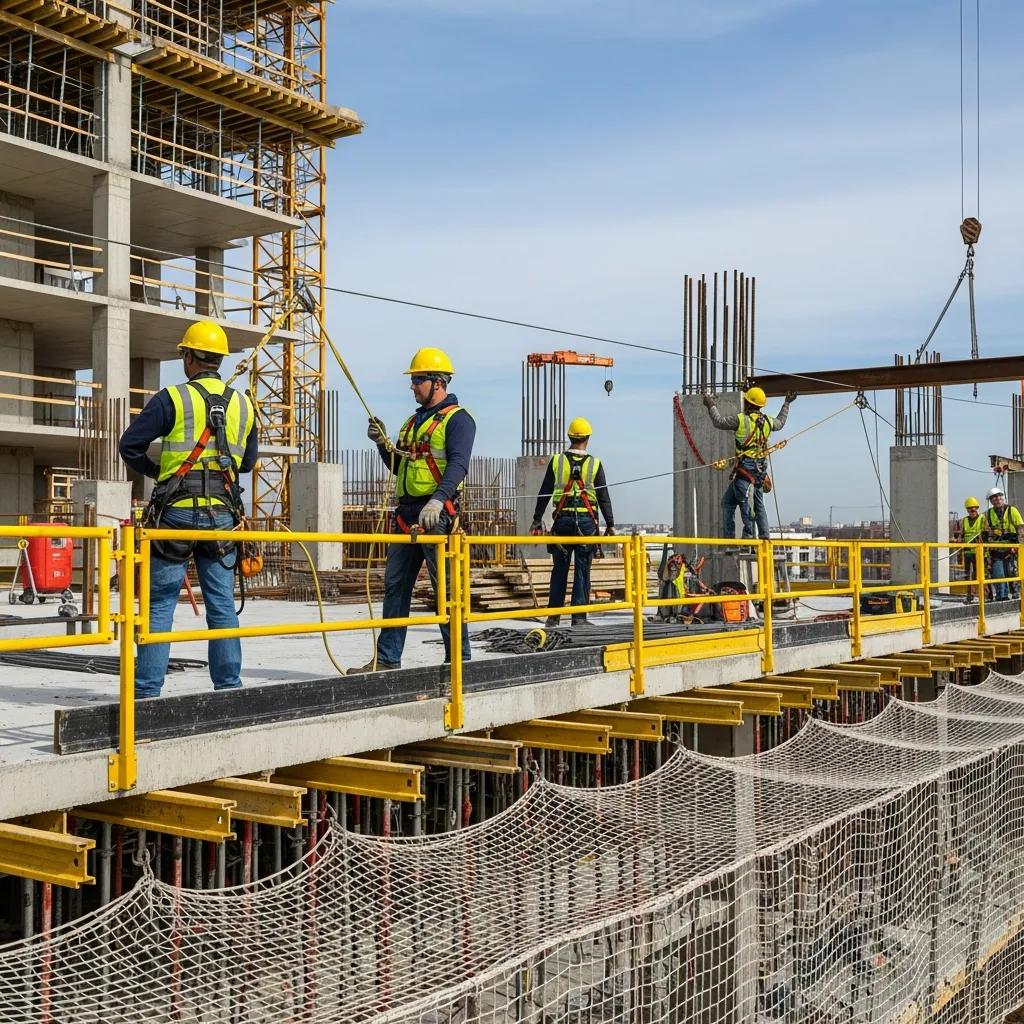
Implementing Advanced Fall Protection Systems in Construction: Precision Planning and Compliance for Safety Advanced fall protection systems combine engineered hardware, planning workflows, and verification technologies to reduce risk of falls and ensure regulatory compliance on construction sites. Precision planning—rooted in VDC and BIM workflows—aligns fall protection design with structural layouts and site logistics, producing clearer installation instructions and measurable verification artifacts. Projects benefit from this approach through fewer field changes, better inspection readiness, and demonstrable adherence to OSHA fall protection requirements. This article explains the regulatory baseline, provides a step-by-step methodology for developing a comprehensive fall protection plan, and details component-level layout guidance for personal fall arrest systems. It then explores edge protection strategies, the role of advanced technologies such as 3D scanning and Robotic Total Station layout, and the consulting services that help teams translate models into field-ready safety systems. Throughout, readers will find practical lists, comparison tables, and verification workflows to support implementation of fall protection construction solutions on mid-to-large projects. What Are the OSHA Fall Protection Requirements for Construction Sites? OSHA fall protection requirements set minimum thresholds and performance standards that determine when and how employers must provide fall protection on construction sites. The rules specify fall protection triggers, acceptable systems, and employer responsibilities for planning, training, and documentation, establishing a compliance framework that directly informs system selection and layout tolerances. Understanding these standards early ensures that anchor point specifications, guardrail layouts, and PFAS designs meet required load ratings and inspection criteria. The following bullets summarize the core regulatory requirements that drive plan development and field verification. Employers must provide fall protection at elevations where work exposes employees to falls of 6 feet or more above a lower level, as defined in OSHA construction rules. Acceptable fall protection includes personal fall arrest systems, guardrails, safety nets, and other systems meeting prescribed performance criteria. Employers are responsible for training, maintaining inspection records, and ensuring systems are installed and inspected by competent persons. These high-level requirements translate into concrete project actions such as specifying anchor-point load capacities, recording inspection logs, and integrating model-based verification into submittals, which is the next area we examine in practical planning terms. Which OSHA Standards Govern Fall Protection in Construction? OSHA standards governing construction fall protection provide the specific citations and practical implications project teams must follow. Key references include the primary construction fall protection provisions in 29 CFR 1926 Subpart M and the detailed performance criteria for systems, which together define when systems are required and how they must perform. Practically, these standards require employers to identify competent persons, retain documentation of inspections, and ensure that anchors and components meet rated strengths. Project teams should treat these citations as binding design constraints that inform anchor spacing, orientation, and permissible clearance distances for PFAS systems. Project teams typically convert regulatory citations into design tolerances and checklist items that become part of the fall protection plan and the BIM model notes. Translating code language into model parameters—such as required anchor strength and minimum guardrail heights—ensures that coordination between design, layout, and installation reduces the risk of noncompliance during inspection. How Do OSHA Requirements Impact Fall Protection Planning? OSHA requirements shape fall protection planning by establishing design thresholds and documentation obligations that a fall protection plan must meet. These rules inform every stage of the plan—from hazard assessment and system selection to installation verification and training—by setting measurable criteria for anchor design, inspection intervals, and rescue readiness. For example, anchor points must meet strength ratings and orientation requirements that the layout team must verify in the field and document for auditors. A short checklist below converts these regulatory obligations into immediate planning actions. Identify competent persons and responsible parties for inspections and approvals. Specify anchor capacities, guardrail heights, and PFAS clearance distances in model deliverables. Maintain inspection records, training certifications, and as-built verification artifacts. Turning these obligations into model-based deliverables and site verification checkpoints reduces ambiguity during installation and supports audit-ready compliance evidence, which we will address next in the context of developing a comprehensive fall protection plan. How to Develop a Comprehensive Fall Protection Plan for Construction Projects? A comprehensive fall protection plan translates regulatory requirements and site-specific hazards into a coordinated sequence of design, procurement, layout, installation, and verification actions. The plan begins with a hazard assessment and proceeds through system selection, location-specific layout tolerances, model-based simulations, installation sequencing, inspection protocols, and training deliverables. Each element needs an identified responsible party and a clear verification method—often combining BIM deliverables, as-built scans, and precision layout reports. Below is a succinct step list designed for quick operational adoption. The following numbered steps present a high-level methodology for producing a complete fall protection plan: Conduct a site hazard assessment to map fall exposure and identify critical edges. Select appropriate protection systems (guardrails, PFAS, nets) based on task risk. Specify anchor designs and load criteria in the project model and design documents. Integrate fall protection elements into BIM/VDC for clash detection and sequencing. Produce procurement and installation schedules aligned with trade work and logistics. Verify installation with layout reports, 3D scans, and competent-person inspections. Train personnel on system use, inspection workflows, and rescue procedures. Maintain documentation and inspection logs for audit and continuous improvement. These steps form the backbone of a fall protection plan and map directly to deliverables that can be assigned, reviewed, and validated through model-based coordination. The next table maps plan elements to responsible parties and verification methods, providing a practical EAV reference for project teams. Different plan elements require clear ownership and verification to ensure traceable compliance and field-ready installation. Plan Element Responsible Party Deliverable / Verification Method Hazard Assessment Safety Lead / VDC Coordinator Site hazard map and exposure report validated in BIM model System Design Design Engineer Design drawings and anchor specifications with load calculations Layout & Installation Layout Contractor / Installer Robotic Total Station layout reports and installation checklists Inspection & QA Competent Person / Safety Officer Inspection logs and as-built 3D scan comparison Training & Rescue Safety Manager Training