
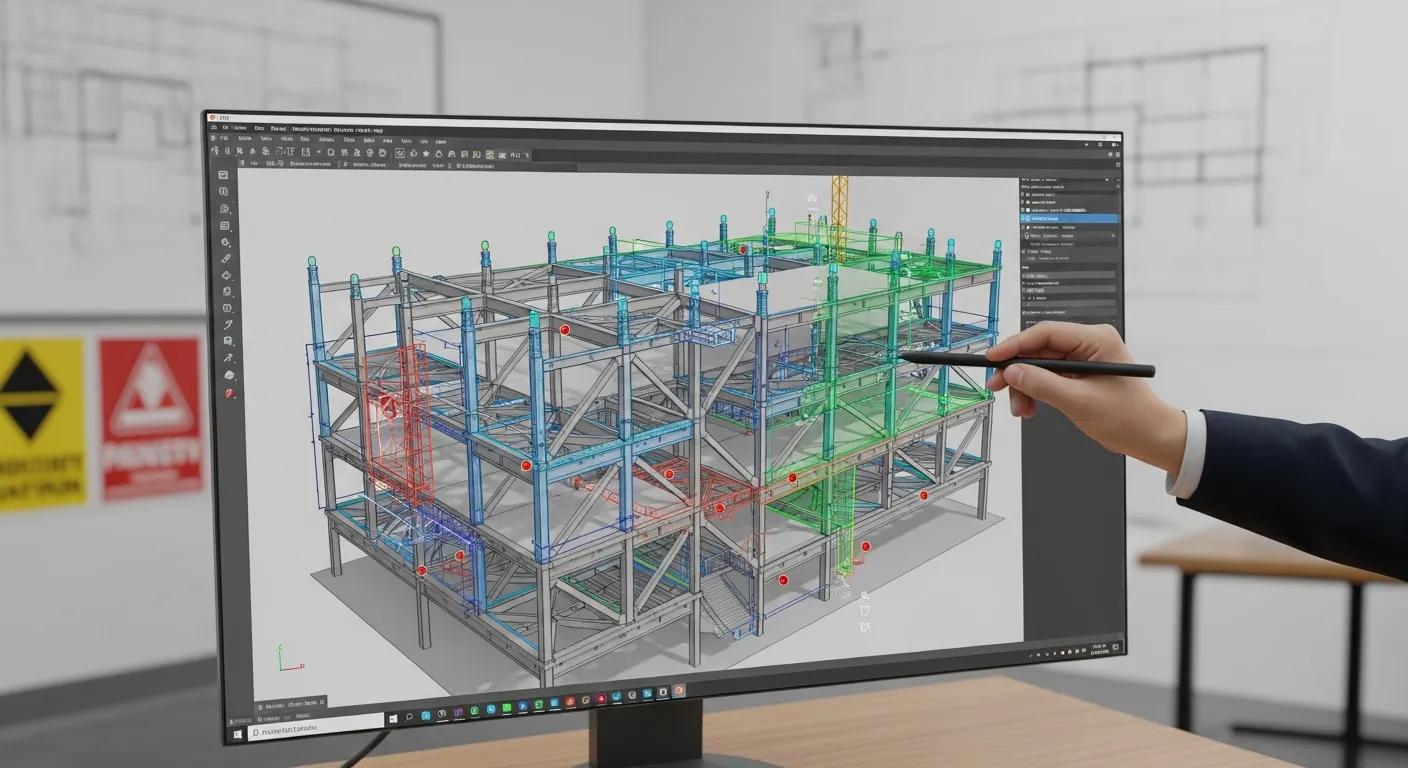
Structural BIM Modeling — Richmond, VA: Practical, Fabrication‑Ready Solutions for Precision and Efficiency
Structural BIM modeling combines precise 3D geometry, embedded data, and coordinated workflows to produce buildable structural models that cut field errors and keep projects moving in Richmond, VA. This guide shows how structural BIM becomes a single, data‑rich source of truth for projects that face tight sites, historic renovation constraints, and local code demands. You’ll see how modern tools and repeatable workflows raise model accuracy, reduce RFIs, and speed fabrication. We cover the core building blocks of structural BIM, steel and concrete modeling best practices, coordination steps that prevent rework, and how 4D/5D workflows tie models to schedule and cost. Practical deliverables — fabrication‑ready shop models, anchor bolt verification, rebar schedules — and model‑to‑field methods using Revit, clash detection platforms, and total‑station integration are highlighted throughout. Next, we define structural BIM and outline three immediate benefits for Richmond projects.
What is Structural BIM Modeling and Why is it Essential for Richmond Projects?
Structural BIM modeling produces coordinated, information‑rich 3D models of a building’s structural systems to improve accuracy, fabrication readiness, and cross‑discipline collaboration. We capture geometry, material properties, connection details, and metadata in authoring tools like Revit and Tekla, then federate discipline models for clash detection and constructability review. The outcome is fewer onsite surprises, fewer RFIs, and clearer handoffs to fabricators and layout crews — a vital advantage in Richmond where constrained sites and renovation work magnify the cost of mistakes. With that context, it helps to break down the model components that make a structural BIM deliverable useful on site and in the shop.
Structural BIM rests on a set of interdependent elements that make models actionable for design, fabrication, and layout. Geometry represents beams, columns, plates, and slabs; metadata includes material grades, section sizes, and fabrication attributes; connection families and parameters capture bolting and welding requirements; and a versioned federation process keeps structural, MEP, and architectural models coordinated. Those elements feed downstream outputs — shop drawings, NC files, anchor bolt schedules, and rebar lists — which reduce fabrication errors and speed installation. Next, we’ll look at how these pieces improve collaboration and delivery accuracy.
Structural BIM improves construction accuracy and team collaboration by enabling iterative model handoffs, automated clash detection, and documented resolution workflows that prevent rework. Typical delivery moves from model authoring to federation, clash runs, prioritized issue assignment, and tracked resolutions in coordination reports. That shortens the feedback loop between engineers, fabricators, and contractors. Catching clashes early and resolving them in the model reduces on‑site coordination time, minimizes schedule impacts, and improves quality control during erection and concrete placement. The following section explains how providers turn these workflows into repeatable delivery processes for Richmond projects.
For Richmond projects, the primary benefits of structural BIM are improved constructability, fabrication readiness, and reliable on‑site verification — outcomes that lower cost risk and improve schedule predictability. Those advantages matter most on steel and concrete work where anchor bolt placement, rebar coordination, and shop model accuracy directly affect field productivity. With those benefits in mind, the next section explains how CCLS translates capability into consistent delivery.
How Does CCLS Deliver Expert Structural BIM Services in Richmond, VA?
CCLS delivers structural BIM through a disciplined intake‑to‑delivery workflow that emphasizes accuracy, repeatable coordination, and model‑to‑field verification for Richmond projects. Our services center on structural authoring, shop and fabrication model preparation, clash coordination, and construction layout driven by verified models — all aligned to contractor and fabricator needs. We use a federated coordination cadence, QA checks, and integration tools to produce fabrication‑ready outputs and coordination reports that reduce RFIs and downstream change orders. Below are the core steps in our delivery process and the client benefits each step provides.
CCLS follows a structured project delivery process:
- Project intake and scope alignment to define deliverables and exchange formats.
- Model authoring and validation to produce fabrication‑ready models and schedules.
- Federation and clash detection with prioritized issue tracking for fast resolution.
- Field verification and layout support using model‑driven workflows for installation accuracy.
This stepwise approach improves constructability and reduces rework by aligning model outputs with site installation needs. The next subsection describes the specific modeling capabilities CCLS applies to structural work.
Overview of CCLS’s Structural BIM Modeling Capabilities
CCLS offers structural BIM deliverables built around contractor and fabricator workflows: Revit‑based structural authoring, shop model preparation, connection detailing, and coordinated clash deliverables. Typical outputs include fabrication‑ready models, GA drawings, anchor bolt schedules, and coordination reports formatted for downstream use in fabrication and installation. We support integrated structural–MEP coordination and provide validated files in common exchange formats so steel shops and precast manufacturers receive clear handoffs. That capability set naturally extends into how we integrate field technology to close the loop between model and site.
Advanced Technologies Used: Trimble Robotic Total Station and Revit Integration
We pair Revit/Fabrication models with Trimble Robotic Total Station workflows for direct model‑to‑field verification and layout execution. This integration translates anchor bolt and embed positions from the model into control points on site, improving placement accuracy and cutting layout rework during erection. Field verification cycles confirm model fidelity and feed adjustments back into the model, creating a closed loop that increases reliability for both steel erection and concrete placement. These technology links translate directly into measurable gains in precision; next we cover steel‑specific benefits.
What Are the Benefits of Steel BIM Modeling for Structural Projects in Richmond?
Steel BIM produces shop‑ and fabrication‑ready models that capture connection details, bolt patterns, and erection sequences to reduce shop errors, speed fabrication, and improve field installation efficiency. When models include connection‑level detail and NC exports, fabricators get precise geometry and tolerances that reduce rework in the shop and on site. Those fabrication‑ready outputs also improve coordination of anchor bolts and embeds, lowering the risk of misaligned connections during erection. The practical result is fewer RFIs, less downtime, and more predictable erection schedules for Richmond steel projects.
Steel Detailing and Fabrication Models for Enhanced Precision
Steel detailing in BIM focuses on connection‑level geometry, tolerance control, and data exports that feed fabrication workflows. Detailed models include bolt patterns, clip angles, plate dimensions, and weld annotations; those attributes support NC exports and part lists for cutting, drilling, and assembly. Producing fabrication‑ready models reduces interpretation errors, supports automated fabrication, and shortens lead times by delivering unambiguous instructions to steel shops. After detailing, teams validate anchor and embed locations to ensure installation matches model intent.
Anchor Bolt Verification and Structural Steel Coordination
Anchor bolt verification ties model anchor locations and embed schedules into site layout and field‑check workflows to prevent misalignment during steel erection and concrete work. Validation steps include exporting anchor schedules from the model, running pre‑pour layout checks with total‑station workflows, and performing post‑pour verification before erection. These verification cycles reduce misplaced anchors — a common cause of costly on‑site adjustments and schedule delays — and feed results back into coordination reports to close the loop between model and field.
Below is a quick comparison of steel BIM deliverables against the attributes fabricators and layout teams care about, to help select the right outputs for a project.
Fabrication deliverables and their value for steel projects:
| Deliverable | Characteristic | Value |
|---|---|---|
| Shop/Fabrication Model | Connection‑level geometry and NC exports | High fabrication accuracy and reduced shop rework |
| Anchor Bolt Schedule | Embedded coordinates and tolerance data | Improved anchor placement and erection alignment |
| GA Drawings and Part Lists | Clear assembly instructions and quantities | Faster shop setup and better inventory control |
How Does Concrete BIM Modeling Optimize Structural Engineering in Virginia?
Concrete BIM captures reinforcement geometry, precast element definitions, and formwork interfaces to reduce clashes, improve pour sequencing, and enable prefabrication coordination across structural and MEP scopes. Modeling rebar with accurate bends, spacing, and cover parameters produces rebar schedules and shop drawings that minimize field changes and simplify installation. Precast coordination within the model clarifies lifting points, grout joints, and connection details so panels are delivered ready to set. These model‑driven practices reduce cast‑in‑place errors and support safer, faster concrete workflows across Virginia.
Reinforcement modeling emphasizes precise bar geometry, bending data, and clash checks with embedded items and MEP penetrations to avoid field conflicts and wasted labor. Modeled rebar assemblies generate detailed schedules and bending lists fabricators use for offsite prefabrication, reducing site labor and improving placement accuracy. Coordination with structural engineers and precast manufacturers captures tolerances and lifting requirements before fabrication, enabling smoother logistics and quicker installation. The following subsection lists the specific deliverables and touchpoints that support those outcomes.
Reinforcement Modeling and Precast Concrete Coordination
Reinforcement modeling produces accurate bar geometry, bend charts, and rebar schedules that cut installation errors and support offsite prefabrication when appropriate. The workflow includes authoring rebar in Revit or Tekla, running clash checks against embeds and MEP services, and exporting shop drawings for bending and fabrication. Precast coordination adds connection dimensions, grout pockets, and lifting hardware notes so manufacturers can prep panels with minimal field adjustment. These outputs speed erection sequencing and keep concrete work on schedule by aligning designer intent with fabrication capability.
Below is a concise comparison of concrete BIM categories and the outcomes they deliver for project teams.
Concrete BIM categories and expected outcomes:
| Concrete Category | Attribute | Outcome |
|---|---|---|
| Rebar Modeling | Accurate geometry and bending data | Fewer placement errors and efficient prefabrication |
| Precast Coordination | Connection and lifting definitions | Reduced site adjustments and faster erection |
| Formwork Modeling | Interface and tolerance checks | Improved pour quality and less rework |
Concrete Formwork and Structural Integrity through BIM
Modeling formwork and interfaces lets teams evaluate tolerance chains, sequencing, and temporary works before physical assembly — reducing cast defects and protecting structural integrity. BIM‑led formwork planning identifies clashes with embeds, rebar, and MEP so fixes happen in the model instead of in the field, saving labor and materials. Visualizing pour sequences and formwork erection in 3D helps contractors plan shoring, access, and inspections so complex slabs and cores meet design requirements. These formwork practices naturally feed into the multi‑trade coordination that follows.
What Role Does BIM Coordination Play in Structural Engineering Services in Richmond?
BIM coordination is the operational backbone that ties structural models to MEP, architectural, and fabrication models so teams can detect clashes early, assign responsibility, and document resolution — all to speed delivery. Coordination enforces model federation, scheduled clash runs, and prioritized issue lists stakeholders use to assign fixes and track closure. That collaborative process reduces RFIs, cuts change‑order risk, and improves predictability on complex Richmond sites. The subsection below outlines a practical clash detection cycle and the tools commonly used.
Multi-Trade Clash Detection and Resolution Processes
Multi‑trade clash detection follows a repeatable cycle: aggregate discipline models into a federation, run clash detection with tools like Navisworks or similar platforms, prioritize clashes by impact, assign responsibility, and document resolutions in coordination reports. Regular coordination sprints and a defined meeting cadence ensure open issues are reviewed, solutions are modeled, and the federation is updated for the next run. This formal approach converts potential field conflicts into actionable model changes, reducing site coordination time and allowing contractors to plan installation sequences with confidence. The next subsection addresses structural/MEP interface practices.
Structural-MEP Coordination for Streamlined Project Delivery
Effective structural–MEP coordination manages penetrations, hanger locations, and load‑bearing interfaces so systems coexist without rework. Workflows include defining penetration allowances in the structural model, mapping hanger and support locations relative to ceiling and service zones, and validating load paths for embeds. Regular coordination sprints and clear responsibilities for design changes reduce on‑site improvisation and support predictable installation sequences. These coordination practices set the stage for advanced scheduling and budgeting using 4D and 5D BIM, discussed next.
Coordination steps to reduce clashes and accelerate delivery:
- Prepare discipline models with consistent levels of detail and shared parameter conventions.
- Federate models and run scheduled clash detection with documented triage processes.
- Assign responsibility, model the solution, and update federations until clashes are closed.
Those steps create a reproducible coordination rhythm that minimizes field disruptions and supports reliable construction sequencing. The next section explains how linking schedule and cost to the model produces added value.
How Can 4D and 5D Structural BIM Services Improve Construction Management?
4D and 5D BIM extend structural models with time and cost so teams can visualize sequencing and quantify budget impacts more clearly. 4D links model elements to the schedule to simulate erection, pours, and temporary works; 5D attaches cost items to quantities so teams can run scenario analyses and speed change‑order review. Combined, these dimensions let project teams compress schedules, reduce site conflicts, and make procurement decisions that protect margins. The subsections below give practical examples of sequencing and cost mapping along with a compact table of time and cost benefits.
Construction Sequencing with 4D BIM for Richmond Projects
4D BIM improves sequencing by linking model elements to schedule tasks and producing animated simulations of erection, pour, and assembly activities that reveal conflicts before they occur on site. This supports logistics planning, temporary works design, and resource allocation by letting teams visualize crane operations, laydown areas, and concurrent trades. For Richmond projects with tight urban sites, 4D simulations help contractors stage deliveries and reduce site congestion. Integrating 4D with coordination cycles reduces mobilization surprises and informs procurement and labor planning.
Cost Estimation and Budgeting through 5D BIM Integration
5D BIM connects quantities from the federated model to cost data and vendor rates so teams can quickly evaluate budget impacts and change orders. Extracting quantities directly from the model and mapping them to cost codes produces more accurate estimates and enables comparison of alternatives — for example different connections or prefabrication strategies — based on modeled cost outcomes. This capability supports transparent change management and helps owners and contractors make cost‑informed design decisions. Together, 4D and 5D create a clearer picture of schedule and budget tradeoffs for strategic execution.
Below is a compact mapping of common 4D and 5D items to their time and cost impacts for quick comparison.
4D/5D mapping of sequence and cost outcomes:
| Dimension | Attribute | Impact |
|---|---|---|
| 4D (Sequence) | Construction sequence linked to model elements | Time savings from fewer conflicts and better logistics |
| 5D (Cost) | Quantity‑to‑cost mapping from the model | Budget transparency and faster change‑order analysis |
| Combined | Scenario simulations (time + cost) | Optimized sequencing with measurable schedule and cost benefits |
If your Richmond project needs predictable outcomes from structural BIM, Conway Coordination and Layout Services (CCLS) offers consultations and project assessments to align modeling, coordination, and layout with your goals. We emphasize precision, reliability, and efficiency and use model‑driven field verification with tools like Trimble Robotic Total Station and Revit integration to deliver fabrication‑ready models and reduce costly errors. To see how 4D/5D modeling and coordination can de‑risk your project, request a consultation — our team, including Nathan Conway, responds quickly to scope modeling and coordination services that match your needs.
- Schedule a model review: We assess existing models and coordination gaps and recommend a targeted action plan.
- Define deliverables: Agree on fabrication outputs, clash cadence, and field verification steps.
- Start a coordination sprint: Run federated clashes, perform field checks, and deliver iterative model updates to reduce risk.
These steps move project teams from planning to verified execution with minimal rework and clearer budget control.
Frequently Asked Questions
What types of projects benefit most from Structural BIM modeling?
Structural BIM is most valuable on complex projects with tight site constraints — urban developments, renovations, and large commercial buildings. These scopes need precise coordination between structural, mechanical, electrical, and plumbing systems. Using structural BIM lets teams catch clashes early, streamline communication, and improve collaboration, which reduces cost and keeps schedules on track. BIM modeling and coordination is crucial for these processes.
How does Structural BIM modeling impact project timelines?
Structural BIM speeds timelines by enabling faster decisions and reducing costly rework. The iterative nature of model coordination supports real‑time updates so issues are resolved before they reach the site. Adding 4D sequencing further helps teams visualize and optimize construction steps, cutting downtime and improving overall schedule performance.
What are the key differences between Steel BIM and Concrete BIM modeling?
Steel BIM centers on connection‑level detailing, bolt patterns, and fabrication readiness so steel components fit together precisely during erection. Concrete BIM focuses on reinforcement geometry, formwork interfaces, and pour sequencing to minimize errors in concrete placement. Both aim to improve accuracy and efficiency but address different material‑specific needs.
How does CCLS ensure quality in their Structural BIM services?
CCLS maintains quality through a disciplined workflow of model validation, clash detection, and field verification. Our federated coordination approach integrates models from all disciplines, runs scheduled clash checks, and documents resolutions. Regular QA reviews and feedback loops between design and field teams ensure deliverables are fabrication‑ready and meet project requirements.
What role does technology play in Structural BIM modeling?
Technology is central. We use authoring tools like Revit for model creation and pair models with Trimble Robotic Total Station for model‑to‑field verification. Those tools enable precise layout execution, reduce errors, and streamline communication between the office and site. Real‑time data flow between model and field improves reliability and decision‑making.
Can Structural BIM modeling help reduce costs on construction projects?
Yes. Structural BIM reduces costs by minimizing errors, improving coordination, and increasing productivity. Early clash detection avoids expensive field rework, and 5D BIM gives faster, more accurate change‑order analysis by linking quantities to costs. The result is better budget control and fewer surprises during construction.
Conclusion
Structural BIM modeling delivers measurable advantages for Richmond projects: greater accuracy, smoother collaboration, and lower cost risk. By combining focused workflows with field verification and modern tools, teams can deliver projects on schedule and within budget. To put these benefits to work, reach out to CCLS for a tailored structural BIM plan — our team will help you translate model clarity into predictable field results.