
Point Cloud Rendering & Integration in Columbia, SC
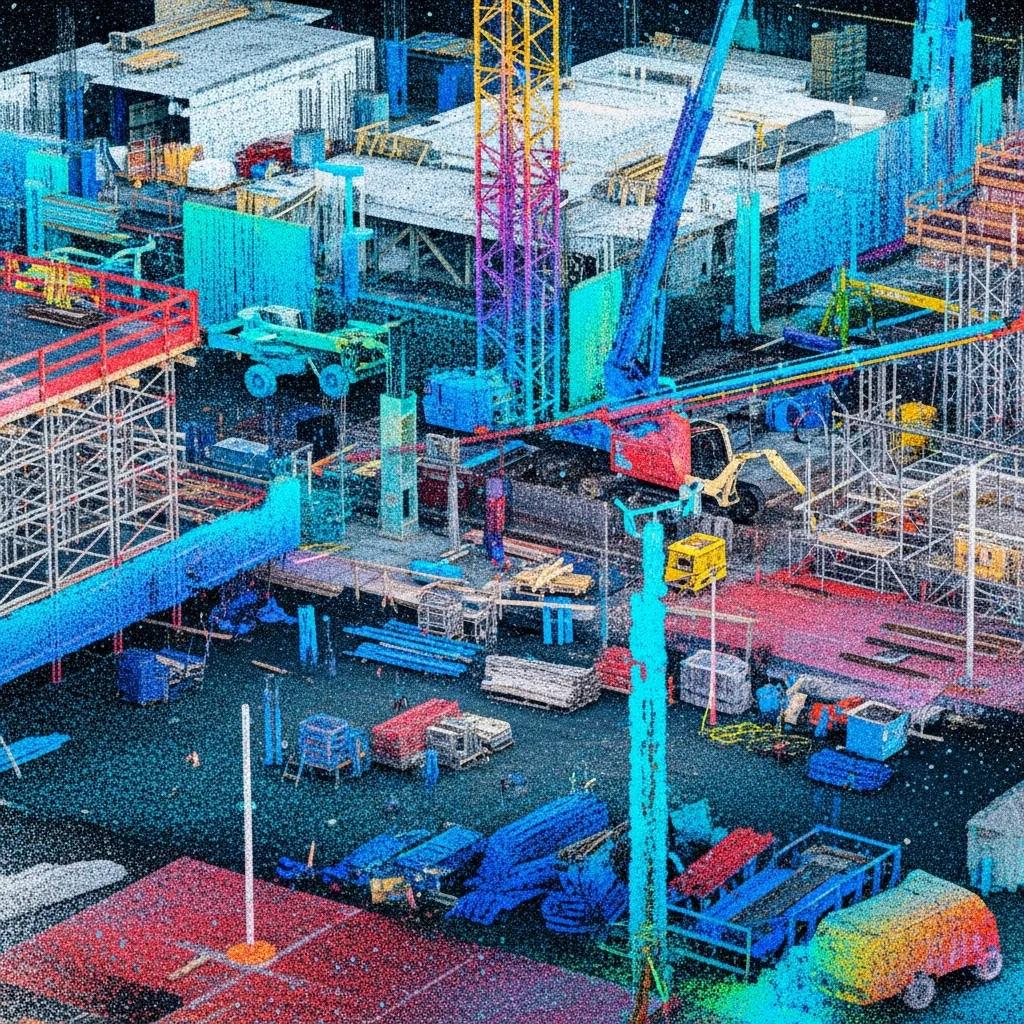
Point Cloud Rendering & BIM Integration — Columbia, SC: Services, Workflow, and Project Benefits Point cloud rendering and BIM integration turn dense 3D scan data into reliable, usable models that simplify construction, renovation, and facility-management work in Columbia, SC. This guide defines point cloud rendering, shows how reality-capture tools like 3D laser scanners and LiDAR feed model-based workflows, and explains why precise point-cloud-to-BIM conversion matters for local projects. You’ll get a clear capture-to-delivery pipeline, an overview of the technologies and QA practices that produce trustworthy as-built documentation, and practical benefits—less rework, earlier clash detection, and better prefabrication. We also cover industry-specific uses for healthcare, industrial, commercial, and historic preservation work, and show how digital-twin strategies extend scan-derived BIM into operations. A concise FAQ and onboarding checklist help Columbia project teams plan capture windows, realistic schedules, and clear deliverables. What is Point Cloud Rendering and How Does It Support Construction in Columbia, SC? Point cloud rendering visualizes registered 3D scan points from a site so designers, contractors, and owners can confirm existing conditions, measure deviations, and build accurate base models for design and construction. It combines dense spatial coordinates from terrestrial scanners or drone LiDAR with software that produces TruViews, textured meshes, or navigable point-cloud viewers—an immediate visual record of as-built conditions. The practical upside: teams verify dimensions, catch clashes before field work, and reduce the schedule delays and costly rework that come from unknown conditions. In Columbia—where renovations, campus upgrades, and industrial retrofits are common—rendered point clouds shape design decisions and make coordination meetings data-driven and focused on constructability. Knowing capture methods and handoff deliverables helps teams request the right level of detail for their downstream BIM needs. Understanding 3D Laser Scanning and Point Cloud Data Capture 3D laser scanning records millions of spatial points by timing laser returns from surfaces, producing dense point clouds that represent geometry and surface reflectivity across complex sites. Terrestrial scanners are best for interiors and façade details; drone-mounted LiDAR is efficient for exterior topography and roof geometry. Both approaches rely on a control strategy—targets, GNSS, or cloud-to-cloud registration—to guarantee spatial accuracy. Typical best practices include establishing control, scanning with adequate overlap, using registration targets where needed, and capturing supplemental imagery for textured outputs. Accuracy depends on instrument class and workflow: high-resolution terrestrial scanners and robotic total stations deliver the fidelity required for tight-tolerance MEP and structural coordination. These capture fundamentals feed directly into converting raw scans into structured BIM assets ready for construction use. How Point Cloud Data Converts into BIM Models for Precise Project Execution Scan-to-BIM converts raw point clouds into semantic, parametric BIM models by segmenting geometry, classifying elements, and modeling to agreed Levels of Detail and reliability for construction. Typical steps include registration, noise filtering, classification of structural and MEP components, model authoring in Revit (or similar), and validation against the point cloud with deviation analysis and QA checkpoints. Clients should specify LOD—LOD 200 for coordination or LOD 300–350 for fabrication/prefab—so modelers build families and constrained geometry suitable for clash detection and shop production. QA checks such as section comparisons, point-to-surface deviation reports, and federated model reviews confirm the BIM represents the as-built condition before handoff to estimating, VDC coordination, or shop drawings. Clear deliverable lists and acceptance criteria remove ambiguity and support precise field execution. How Does CCLS Deliver Accurate Point Cloud to BIM Conversion Services? Point cloud to BIM conversion needs a structured workflow, precision instruments, and quality-control gates to produce models that integrate with construction teams’ processes. Conway Coordination and Layout Services (CCLS) focuses on precision layout and model interoperability to reduce rework and streamline coordination for Columbia’s construction and industrial clients. We combine reality capture with modeled deliverables—registered point clouds, validated Revit models, and clash-ready federated files for VDC reviews. If you’re ready to move from scans to coordinated models, schedule a consultation with Conway Coordination and Layout Services to scope capture, define LOD, and set QA acceptance criteria. Scope & Control: Agree on deliverables, LOD, and control requirements with project stakeholders. Data Capture: Execute terrestrial scanning, targeted LiDAR, or total-station layout to gather site data. Processing & Registration: Register scans, remove noise, and georeference data for consistency. Modeling: Author parametric BIM elements in Revit to the specified LOD and classification. QA/QC & Handoff: Validate models against the point cloud, produce clash reports, and deliver interoperable files. This five-step workflow aligns conversion work with client schedules and delivers coordination value that reduces RFI-driven delays and improves prefabrication outcomes. Below is an introductory comparison of common capture instruments and typical deliverables to help teams choose the right approach for their project. Tool Characteristic Typical Deliverable Trimble Robotic Total Station High-precision layout and survey control; integrates field-to-model checks Control points, as-built verification reports, layout stake files Terrestrial Laser Scanner Very high-density interior/exterior geometry capture Registered point cloud, TruViews, textured meshes LiDAR Drone Fast exterior coverage and access to hard-to-reach surfaces Topographic point clouds, orthophotos, roof geometry Use this comparison to balance speed and fidelity based on project tolerances and site access conditions. Technologies Used: Trimble Robotic Total Station and Revit Integration Reliable layout and model handoffs depend on instrument–software interoperability. Trimble Robotic Total Stations provide field accuracy for staking and model validation, while Revit is the primary authoring environment for BIM deliverables. Robotic total stations enable coordinate-verified staking and quick as-built checks to confirm modeled geometry matches field conditions—critical for tight-tolerance MEP and structural elements. Revit models produced from vetted point clouds can be federated in Navisworks or another coordination platform for clash detection and model review. Best practices include maintaining a coordinated datum and naming conventions, exporting neutral formats when necessary, and providing clear metadata so downstream teams can use models for prefabrication, estimating, and site layout. Typical tools integrated: Trimble Robotic Total Station for precision layout and verification.Revit for BIM authoring and parametric families.Navisworks/Coordination Platforms for clash detection and federated review. These integrations reduce ambiguity between the field and model and accelerate the move from scanned reality to build-ready documentation. Step-by-Step Process of Point Cloud Processing
3D Laser Scanning Services in Charlotte, NC
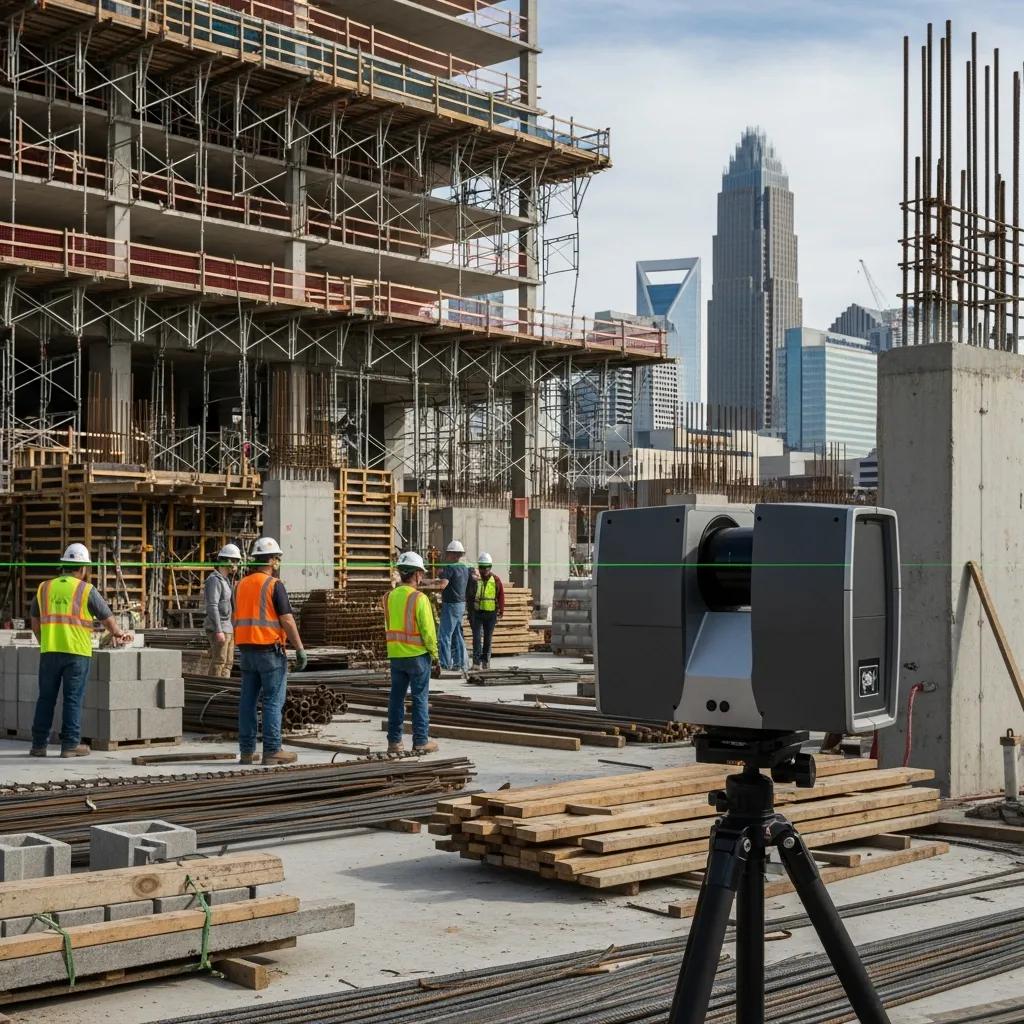
3D Laser Scanning in Charlotte, NC — Precise Reality Capture for Construction and Industry 3D laser scanning is a non-contact reality-capture method that produces high-density point clouds with millimeter-level accuracy. In Charlotte, that accuracy helps contractors, MEP trades, and renovation teams verify as-built conditions, coordinate complex systems, and speed prefabrication. This article walks through how scanning captures reliable as-built data, why it often outperforms conventional surveying on complicated sites, and how scan data plugs into BIM and VDC workflows used by today’s contractors and facility managers. You’ll also find the step-by-step workflow from kickoff to delivery, common file types and use cases, industry applications across Charlotte, and how to engage Conway Coordination and Layout Services (CCLS) for local reality-capture work. What is 3D Laser Scanning and How Does It Benefit Charlotte Construction Projects? 3D laser scanning uses LiDAR to record millions of surface points and produce a dense, three-dimensional record of existing conditions—ideal for accurate as-built documentation and digital twins. Scanners measure distance with time-of-flight or phase-shift returns to generate point clouds with millimeter-grade fidelity. For Charlotte projects, that fidelity lowers rework, speeds coordination between trades, and reduces exposure to risky measurements in active zones. Below we explain how the technology captures dependable as-built data and why teams increasingly choose scanning over traditional surveying on complex jobsites. Practical benefits construction teams see right away include: Millimeter-level accuracy: Dense captures reduce dimensional uncertainty during design and prefabrication. Faster site coverage: Complex MEP, structural, and architectural geometry is recorded more efficiently than point-by-point surveys. Improved safety and access: Non-contact scanning minimizes the need to enter confined or hazardous areas. Those gains translate to fewer RFIs, fewer change orders, and stronger schedule confidence for general contractors and specialty trades. The next section details the capture mechanics behind these outcomes. How Does 3D Laser Scanning Capture Accurate As-Built Data? Scanners emit laser pulses and measure either the time-of-flight or phase shift of the return to determine precise distances, storing each measurement as a 3D point. A single scan position can return millions of points; multiple positions are registered together using control targets, total station ties, or GNSS where available to create a single, project-aligned coordinate system. QA steps—registration checks, loop-closure verification, and comparisons to survey control—confirm the cloud meets millimeter tolerances. With validated point clouds, BIM modelers and contractors can make design and fabrication decisions based on measured conditions instead of assumptions. Next, we compare those capabilities with what traditional surveying delivers on real-world sites. What Are the Key Advantages of 3D Scanning Over Traditional Surveying? Where conventional surveys provide discrete control points and linear measurements, 3D scanning captures continuous surface geometry and rich context—especially valuable in areas with tight MEP routing, curved architecture, or congested mechanical rooms. A single comprehensive scan can answer many downstream questions and reduce repeat site visits; traditional surveying often requires targeted returns when new questions arise. Scanning complements survey control rather than replaces it, combining accuracy with the contextual detail teams need for clash detection, prefabrication, and visual validation. Why Choose CCLS for 3D Laser Scanning Services in Charlotte, NC? CCLS pairs specialized reality-capture expertise with coordination and layout services to deliver a full pathway from field capture to BIM/VDC-ready assets for Charlotte clients. Family-owned and locally focused, we use proven workflows to produce precise as-built documentation, tailored models, and coordination support that lower downstream risk. CCLS prioritizes millimeter-level accuracy, smooth scan-to-BIM handoffs, and delivery schedules aligned with contractors’ prefabrication and installation needs. Below we summarize the equipment and QA practices that make those results repeatable. To make value clear, this table maps core features to outcomes you’ll see on projects. Service Feature What It Means Benefit to Client Precision Reality Capture Millimeter-level point clouds with validated survey control Less rework and reliable prefabrication Integrated VDC/BIM Workflows Direct scan-to-BIM conversion and coordination services Faster clash resolution and coordination cycles Client-Centric Partnership Collaborative scoping and delivery planning Deliverables built to meet contractor schedules Comprehensive Layout Services Field layout and verification tied to scan data Smoother handoff from model to field execution What Technologies and Equipment Does CCLS Use for Precise Scanning? We deploy industry-leading scanners and supporting survey instruments chosen for range, density, and the job at hand: short-range, high-density LiDAR for interiors; long-range scanners for façades and yards; and robotic total stations or GNSS for reliable georeferencing. Data is delivered in standard formats compatible with Revit, Navisworks, and common point-cloud toolchains. Equipment strategy is selected per project—dense interior scans for MEP coordination, long-range captures for exteriors, and hybrid approaches for mixed-use sites—so the capture supports your modeling and installation needs. Correct hardware choice sets the stage for registration and QA to confirm collected data meets project tolerances and schedule windows. How Does CCLS Ensure Accuracy and Efficiency in Every Project? Our QA/QC process is layered: field control setup, redundant scans and overlap, targeted registration checks, and validation against survey control points. In the field we establish control with targets or total station ties and capture overlapping positions to support robust registration. Post-processing combines automated and manual registration, noise filtering, and deviation checks. We manage turnaround by agreeing on deliverable formats up front and using optimized processing pipelines to produce point clouds, CAD extractions, or BIM models on schedule. Typical QA metrics include registration residuals and control-point deviations that verify the point cloud fits project tolerances. These practices feed a standardized workflow clients can rely on—outlined in the next section. Service Feature Typical Checkpoint Client-Facing Outcome Field Control Establishment Target setup / total station tie Georeferenced point cloud Redundant Scans Overlap and re-scan of complex zones Stronger registration reliability Post-Processing QA Residual and deviation reporting Confidence in delivered assets What is the Step-by-Step Process of 3D Laser Scanning at CCLS? CCLS follows a clear, client-focused workflow from consultation through delivery to reduce uncertainty and align outputs with construction and BIM needs. We begin with a project kickoff to confirm scope, deliverable formats, access windows, and target accuracy. Field capture follows with established safety measures and control setup. Processing,
MEP Layout with Robotic Total Station in Raleigh, NC
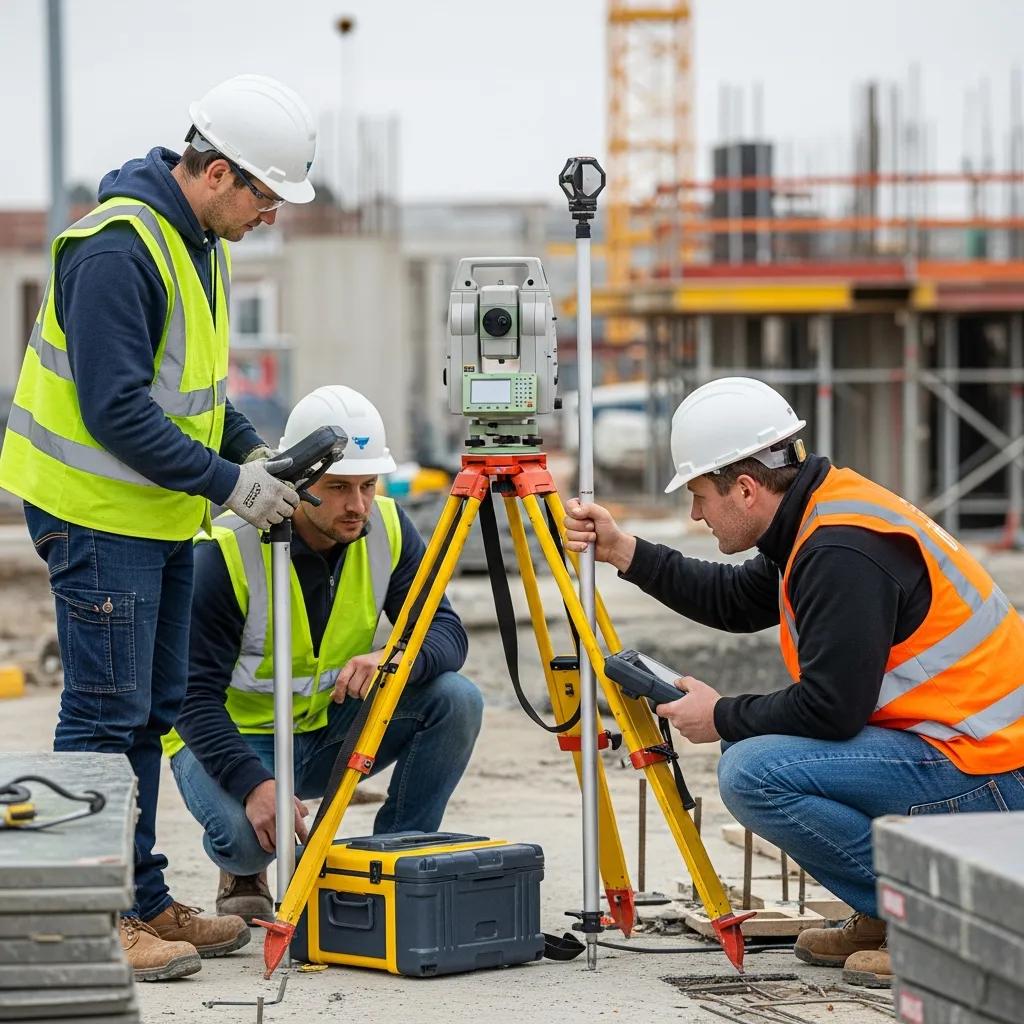
MEP Layout with Robotic Total Station in Raleigh, NC: Precision Construction Services for Optimal Project Outcomes MEP layout using a Robotic Total Station (RTS) is the field process of locating mechanical, electrical, and plumbing systems by driving stakeout points from the model with near–millimeter accuracy. This piece explains how RTS stakeouts translate BIM coordinates into reliable field locations, why that accuracy matters for schedule and budget control, and how VDC practices close the loop between model and site on Raleigh projects. You’ll find a clear RTS field workflow, the practical advantages of Trimble systems, steps for VDC/BIM integration, and measurable on-site benefits like productivity gains and improved safety. We reference Conway Coordination and Layout Services (CCLS) as a local example of a team applying Trimble RTS and VDC methods in the Triangle—illustrating how precise coordination produces verifiable project outcomes. The article is arranged in focused sections: a technical primer on RTS-driven MEP layout, reasons to hire Raleigh-based layout specialists, practical VDC/BIM integration steps, side-by-side benefits, and how to request a local consultation. Keywords such as Raleigh MEP coordination, Robotic total station Raleigh, and Trimble total station Raleigh appear throughout to help teams searching for local precision layout services. What is MEP Layout with Robotic Total Station and How Does It Enhance Construction Precision? MEP layout with a Robotic Total Station is a model-driven method for placing design-intent coordinates on the structure using an automated surveying instrument. In practice, teams export BIM or CAD stakeout points into RTS controller software, set a reliable station, then use a prism or reflectorless measurement to position hangers, anchor bolts, sleeves, and other components to design tolerances. That consistent spatial reference between model and site reduces clashes and costly field adjustments. When RTS data is tied into project workflows, layout cycles shorten, a single operator can handle many stakeouts, and verified as-built records are captured to update the model. This operational foundation makes the field steps and Trimble-specific benefits that follow straightforward to implement on Raleigh jobs. How Does Robotic Total Station Technology Work in MEP Layout? Robotic Total Station systems operate by loading model coordinates into the instrument controller, establishing a precise station point, and guiding the operator to each stakeout location using a prism or reflectorless laser with millimeter accuracy. The usual workflow starts with exporting stakeout files from the model, setting up and orienting the RTS on known control points, and then using the RTS to navigate to and confirm each coordinate. Field measurements and stakeout confirmations flow back into the VDC environment as CSV exports or point-cloud updates, enabling iterative QA/QC between designers and crews. Single-operator features and automated tracking reduce crew size and human error, while consistent data formats preserve traceability and speed verification. That model→station→stakeout→model loop ensures the digital design governs field placement and supports BIM reconciliation. What Are the Key Advantages of Using Trimble Total Station for Construction Layout in Raleigh? Trimble Total Station systems deliver millimeter-level accuracy, dependable software interoperability, and a mature data ecosystem—qualities well suited to Raleigh projects that require tight MEP tolerances. Trimble hardware and controllers support direct import/export with standard BIM/CAD formats and keep stakeouts repeatable across multiple setups, which matters for anchor bolt verification and complex interior hanger layouts. Using established Trimble workflows speeds stakeout, reduces measurement variability, and produces auditable verification that contractors and owners can trust. On Raleigh projects where schedules are tight and prefabrication plays a role, these capabilities translate into fewer field corrections, predictable shop interfaces, and clearer as-built documentation for commissioning. Local teams who standardize on Trimble RTS gain repeatable processes that minimize surprises and meet tighter tolerances on critical MEP elements. Why Choose Professional Raleigh MEP Layout Services for Your Construction Project? Hiring professional Raleigh MEP layout specialists aligns design intent with field execution by combining surveying technology, coordination expertise, and local project know-how to lower risk and cut rework. Experienced providers offer repeatable workflows—model validation, stakeout planning, field verification, and QA/QC reporting—that convert BIM coordinates into verified installations and help general contractors keep projects on schedule. Below is a table mapping common services to the problems they fix and the outcomes project teams typically see when they hire professional layout support. Service What It Solves Typical Outcome/Metric MEP layout (RTS stakeout) Misplaced hangers, conduit, anchor bolts Installation tolerance in millimeters; fewer rework hours VDC consulting Poor sequencing and coordination Fewer install clashes; higher prefabrication yield 3D scanning / as-built capture Unknown existing conditions Accurate point cloud for retrofit and verification How Does Expert MEP Coordination Reduce Errors and Rework in Raleigh Projects? Expert MEP coordination reduces errors and rework by addressing clashes, sequencing, and stakeout planning before crews install systems. Coordination work includes model review sessions, prioritized clash resolution, and staged stakeout lists that match installation windows—steps that cut last-minute field compromises. Field verification loops—where stakeout feedback updates the model—create a continuous QA/QC cycle that catches deviations early and limits schedule ripple effects. That front-loaded approach turns design-time detection into fewer change orders and faster commissioning, and it supports prefabrication with verified coordinates that reduce shop-fit issues. Less rework not only saves labor and materials but also improves confidence in milestone handovers. What Industries Benefit Most from Precision MEP Layout in Raleigh, NC? Many Raleigh industries gain from precision MEP layout because of tight tolerances, regulatory requirements, or equipment alignment needs. Healthcare facilities need exact placement of medical gas lines and ceiling supports to meet compliance and sterile-environment standards. Manufacturing and industrial sites depend on precise utility routing and anchor bolt locations for machine alignment. Commercial offices and high-rises rely on coordinated MEP hangers and penetrations to protect finishes and ceiling heights. Historic renovations use careful as-built capture and constrained RTS workflows to avoid invasive corrections and preserve existing fabric. Across these sectors, model-driven layout reduces risk and speeds reliable handover. How Does VDC and BIM Integration Improve MEP Layout Accuracy with Robotic Total Stations? VDC and BIM integration raise layout accuracy by using the model as the single source of truth, running clash
Structural Layout with Robotic Total Station in Tampa, FL
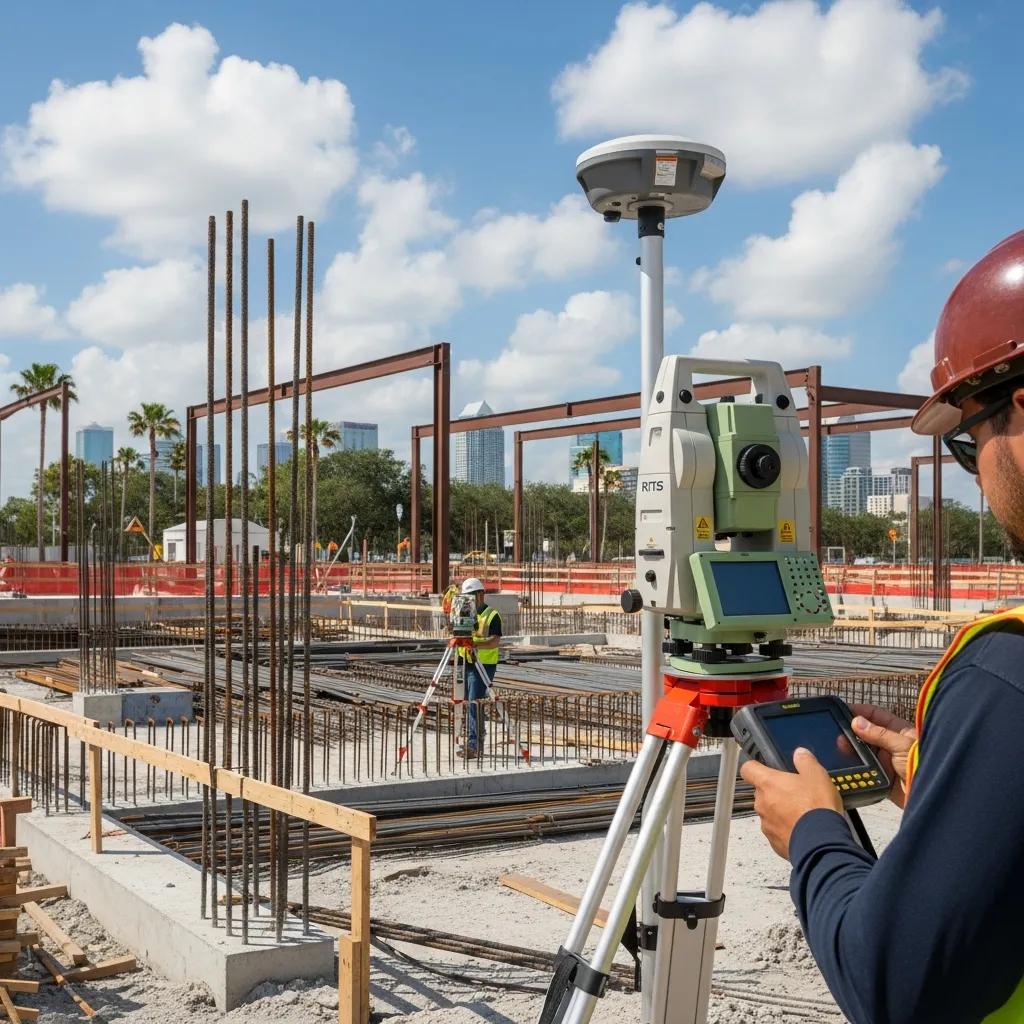
Structural Layout with a Robotic Total Station in Tampa, FL — Precision Construction Solutions by CCLS Using a Robotic Total Station (RTS) for structural layout lets a single operator place model coordinates on the ground with millimeter-level accuracy. That precision aligns foundations, anchor bolts, structural steel, and MEP hangers to BIM locations so assemblies fit as designed — cutting rework and schedule risk. Tampa projects add local variables such as sandy soils, high humidity, and compressed weather windows, so dependable control and verification are essential. RTS workflows combine accurate instruments, a robust control network, and digital verification to address those challenges. This article explains why RTS is the right choice for Tampa structural work, outlines core RTS services for foundations and MEP, shows how BIM and VDC integrate with field stakeout, and offers practical anchor-bolt and foundation procedures, example deliverables, and guidance for engaging Conway Coordination and Layout Services (CCLS) on Southeastern projects. Why choose Robotic Total Station layout for structural projects in Tampa? Robotic Total Station layout automates stakeout by combining electronic distance measurement and motorized tracking so a single operator can place points directly from the model. That workflow removes common human-transfer errors and delivers the tight tolerances needed to keep foundations and structural elements on line. On Tampa jobs — where schedules are tight, soils can settle, and multiple trades must coordinate — RTS reduces rework, shortens installation sequences, and improves safety by cutting repetitive manual measurements and limiting ground disturbance. Compared with manual methods or two-person total station setups, RTS delivers repeatable results faster and with fewer personnel, boosting productivity and lowering labor costs on time-sensitive projects. In practice, RTS also speeds mobilization, provides consistent verification, and improves BIM-to-field interoperability to avoid clashes. The next section summarizes the technical advantages of RTS versus traditional layout methods. What advantages does Robotic Total Station technology offer over traditional methods? Robotic Total Stations bring automation, single-operator efficiency, and integrated field software that accelerate stakeout and verification compared with manual layout. Because the instrument uses model coordinates for direct stakeout, operator-to-operator variability drops and placement errors for anchor bolts and hangers decline. When paired with Trimble field tools, RTS lets teams quickly re-establish control, repeat stakeout points, and make on-the-fly coordinate updates — reducing crew hours on site and speeding turnover between trades. These gains help contractors meet compressed timelines without sacrificing dimensional control. To see how precision translates to fewer mistakes, the next section looks at concrete examples of error reduction and rework avoidance. How does precision layout reduce errors and rework in Tampa construction? Precision layout reduces errors by getting installations right the first time, preventing common issues such as misplaced anchor bolts or offset MEP hangers that trigger corrective work. RTS cuts out manual coordinate conversions and transcription steps where human error often occurs, and verification scans confirm placements before pours or equipment installs. For example, fixing a misplaced anchor bolt after concrete cures can cost a full day of labor plus specialty remediation; avoiding that single mistake protects both schedule and budget. Routine pre-install checks and as-built snapshots improve downstream trade coordination and reduce lifecycle cost impacts. Comprehensive structural layout services using Robotic Total Stations in Tampa RTS workflows support a wide range of structural layout services: foundation and anchor bolt layout, structural steel alignment, MEP hanger placement, overhead systems, and as-built capture with 3D scanning. Each task follows a consistent workflow: model import, coordinate system alignment, control setup, stakeout, and verification documentation with task-specific tolerances and deliverables. Typical outputs include stakeout reports, verified coordinate tables, annotated as-built photos, and reconciliation logs that demonstrate tolerance compliance. Below is a concise comparison of common RTS service applications and their typical attributes to help contractors set expectations. Service Application Typical Accuracy Primary Deliverable Foundation & Anchor Bolt Layout Millimeter to centimeter tolerance Anchor coordinate verification report MEP Hanger & Penetration Layout ±5–15 mm depending on assembly Hanger and penetration stakeout sheet Overhead Hanger & Structural Steel Layout Millimeter alignment for critical connections Structural control and as-built snapshots 3D Scanning / As-Built Documentation Sub-centimeter capture Registered point cloud and annotated QA report This table shows how each RTS application maps to contractor needs and how deliverables support quality control and installability. A quick list of common services follows. Foundation and anchor bolt stakeout with verification steps to avoid embedded misplacement. MEP hanger, sleeve, and penetration layout coordinated with trade installations. Structural steel layout for column and connection alignment. 3D scanning for accurate as-built capture and model reconciliation. These service descriptions set the stage for a step-by-step look at foundation and anchor bolt workflows. Conway Coordination and Layout Services (CCLS) delivers these workflows with Trimble Robotic Total Station technology from a family-owned, client-focused practice that values precision, digital integration, and responsiveness across the Southeastern U.S. We translate BIM models to field coordinates, maintain rigorous control networks, and produce verification packages that support contractor QA/QC. Our Tampa experience ensures workflows account for local site conditions and scheduling constraints. The section below walks through our foundation and anchor bolt process. How does CCLS perform foundation and anchor bolt layouts with precision? CCLS starts by importing the approved BIM or structural model and confirming the project coordinate system for direct model-to-field transfer. We establish a stable control network tied to project benchmarks and run redundancy checks to detect settlement or control drift — a common concern in sandy soils. Stakeout is performed with a Trimble Robotic Total Station that automates point placement while the crew verifies each anchor location and logs tolerances in verification reports. Finally, we deliver as-built photos and measurement logs for owner acceptance so contractors can proceed with confidence and minimize remediation risk. The steps above describe our control and documentation sequence; the next section covers RTS support for MEP and overhead systems. What are the key features of MEP and overhead layout services in Tampa? RTS layout for MEP and overhead systems centers on precise hanger locations, sleeve and penetration placement, and multi-discipline routing coordination to ensure installability.
Comparing As-Built to Design Models with Point Clouds
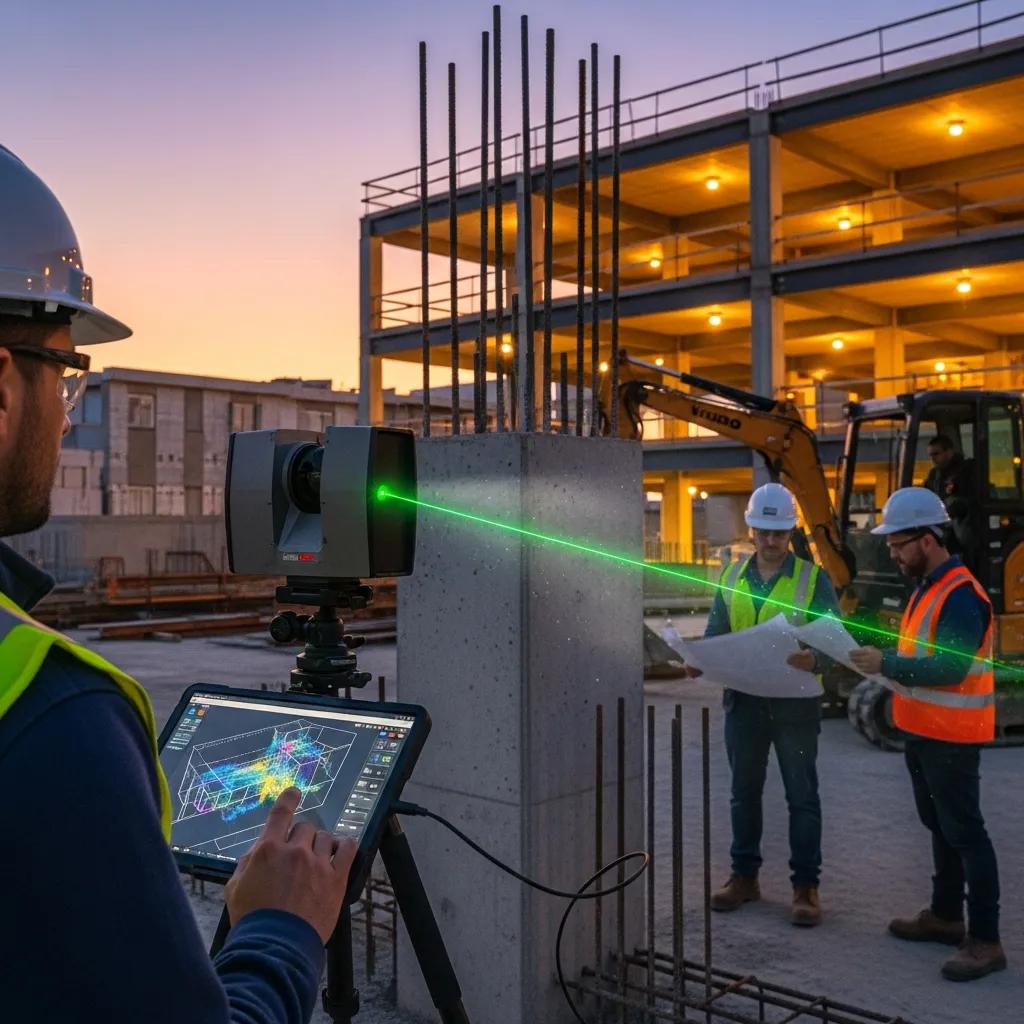
As-Built vs. Design: Using Point Clouds for Precise Deviation Analysis and Construction Validation Verifying built work against design intent with point clouds is a practical, high-value step in modern construction quality control. Point clouds—dense collections of XYZ measurements captured by 3D laser scanners or photogrammetry—recreate the jobsite with millimeter-level detail so teams can run automated deviation checks against BIM models. Below we walk through what as-built vs. design comparisons look like, how point-cloud captures enable reliable verification, the operational workflow for deviation analysis, recommended tools, and the schedule and cost benefits of catching issues early. You’ll also get hands-on guidance for capture and processing, tips for reading heatmaps and reports, and interoperability choices that reduce manual handoffs. Throughout, we include practitioner advice and brief context on provider roles to help teams adopt workflows that cut rework and produce defensible handover documentation. What Is As-Built to Design Model Comparison and Why Is It Essential? As-built to design comparison is the measured process of matching field geometry—captured as point clouds or reconstructed as-built models—against the design model to quantify where the built environment differs from intent. The workflow depends on registering scans to project coordinates, aligning the BIM model, and calculating distance-based deviation metrics that feed heatmaps, contours, and trade-ready reports. The core value is objective, early detection of discrepancies so teams can avoid costly rework, manage compliance, and keep schedules on track. Below are the primary, practical outcomes teams expect from a systematic comparison program. These points summarize the operational value that motivates adoption and supports measurement-driven decision making. Catch dimensional errors early—before they trigger change orders or rework. Provide clear pass/fail acceptance outputs for trades and inspectors to speed approvals. Create accurate as-built records that support facilities management and digital twin handover. The sections that follow explain why real-world builds diverge from designs and outline the main stakeholder benefits. Knowing where discrepancies come from makes it easier to design capture and analysis workflows that surface the most important variances. How Do As-Built Models Differ from Design Models? Design models show intended geometry and dimensions; as-built captures show what was actually installed on site. Differences stem from site conditions, field changes, change orders, installation tolerances, and gaps in documentation—typical examples include MEP routing offsets, slab thickness variations, or shifted precast elements. Small dimensional drift can lead to clashes, prefabrication issues, or downstream rework if trades build from incorrect assumptions. Measuring the gap between intent and reality lets teams target corrections, update models when needed, and issue clear work directives. Identifying common divergence sources informs capture strategies and comparison workflows that prioritize the variances with the biggest impact. What Are the Key Benefits of Comparing As-Built and Design Models? Side-by-side comparisons convert subjective field observations into measurable deviation data that project teams can act on. Typical measurable improvements include fewer RFIs and change orders, reduced onsite rework, and more predictable commissioning and handover. Deliverables from verification—annotated heatmaps, deviation tables, and updated as-built models—also improve operations and simplify digital-twin handoff. The list below summarizes the primary benefits from different stakeholder viewpoints. Lower rework and change-order costs by spotting deviations before downstream installations. Faster coordination and fewer clashes by applying objective geometry comparisons and trade-specific thresholds. Clearer handover documentation for operations teams, supporting accurate asset records and lifecycle planning. These outcomes explain why teams prioritize point-cloud-driven validation. The next section shows how point cloud capture delivers the fidelity and measurements needed for that analysis. How Does Point Cloud Technology Enable Accurate As-Built Verification? Point cloud methods produce dense spatial datasets that represent as-built geometry with XYZ coordinates, intensity, and sometimes color—attributes that let teams compare real surfaces to BIM geometry precisely. Captures come from tripod-mounted LiDAR, mobile SLAM rigs, or drone photogrammetry/LiDAR; each approach balances density, accuracy, coverage, and logistics depending on trade and environment. The major advantage is traceable, repeatable measurement that becomes the authoritative reference for deviation analysis and quality assurance. Reliable verification requires thoughtful capture planning, control strategies, and robust processing that preserve positional integrity across the dataset. The subsections below define point clouds and describe the processing steps needed to prepare data for comparison. Good capture and preprocessing are the foundation for registration and deviation outputs the team can trust. What Is a Point Cloud and How Is It Generated by 3D Laser Scanning? A point cloud is a dataset of geo-referenced points from range sensors where each point contains coordinates and often reflectance—together they recreate surfaces and volumes of the built environment. Tripod-mounted terrestrial LiDAR captures high-density scans for interiors and critical zones; mobile SLAM systems speed corridor captures; and drones (photogrammetry or LiDAR) cover façades and roofs at varying resolution. Trade-offs include density versus coverage and occlusion challenges in congested MEP areas that require extra setups. Common raw formats include E57, LAS, and proprietary scanner captures, which are then converted into platform-friendly files for processing and analysis. How Are Point Clouds Processed for Construction Quality Control? Processing for quality control typically includes registration (aligning multiple scans into one coordinate system), noise filtering, decimation, segmentation, and georeferencing to survey control. From there, surfaces and objects are extracted for model comparison. QA checks focus on registration residuals, control tie-in accuracy with survey measurements, and scan density versus trade tolerances. Segmentation separates slabs, walls, piping, and equipment so deviation checks target the correct BIM elements. A clean, documented processing pipeline makes deviation outputs defensible during contractor review and owner acceptance. What Are the Step-by-Step Workflows for Deviation Analysis Using Point Clouds? Deviation analysis follows a repeatable sequence from capture planning through formal reporting, with QA gates at every stage to ensure traceability. Typical steps are: scan planning and control, in-field capture with validation checks, registration and cleanup, alignment to the design model, tolerance-based comparison, visualization (heatmaps and isolines), and delivery of deviation reports for trades and stakeholders. Each step maps inputs to outputs and defines QA responsibilities so teams can scale consistent, reliable procedures across phases and disciplines. The table below lays out the principal workflow steps operational teams use
Strategies for Achieving Energy Efficiency in Buildings
Proven Strategies for Energy-Efficient Buildings: Optimization, Construction Precision, and Sustainable Practice Buildings consume energy for heating, cooling, lighting, and daily operations. Improving energy efficiency means cutting that consumption while keeping occupants comfortable and systems reliable. This article lays out practical, construction-ready approaches — from passive envelope strategies to VDC-enabled energy modeling and survey-grade layout for HVAC — that reduce schedule risk, lower lifecycle costs, and protect modeled performance through construction and turnover. We organize the content into five focused sections: core strategies, how Virtual Design and Construction (VDC) preserves performance, precise renewable integration, retrofit workflows for existing stock, and how smart building systems tie back to layout decisions. Along the way we highlight the technical tools (energy modeling, clash detection, as-built capture, sensor siting) and operational impacts (reduced thermal bridging, fewer field changes, cleaner commissioning) with field-tested coordination practices and example services that deliver those outcomes. Too often modeled targets don’t survive construction because design intent is lost in the field. This guide emphasizes continuity — from model to site and from turnover to operations. You’ll find actionable checklists, comparison tables, and coordination workflows that link sustainable construction practices to measurable energy savings. Industry keywords such as energy efficient buildings, BIM energy modeling, VDC for energy efficiency, precision layout for HVAC, and 3D scanning energy audit are woven into the text to support clarity and discoverability for practitioners. What Are the Key Strategies for Enhancing Building Energy Efficiency? Improving building energy performance centers on three goals: reduce loads, increase system efficiency, and ensure measured operation through design-to-field continuity. That means prioritizing passive measures to lower demand, optimizing MEP systems and routing to cut distribution losses, integrating on-site generation where it makes sense, and enabling operations with smart controls and continuous commissioning. The payoff is lower site energy, better occupant comfort, and closer alignment between as-modeled and in-use performance. Below are the primary strategies, presented to help teams make early, high-impact decisions. Top strategies for energy-efficient buildings include: Passive envelope and passive design: Lower heating and cooling demand with continuous insulation, airtight detailing, high-performance glazing, and orientation choices that limit thermal bridging. High-efficiency HVAC and optimized distribution: Right-size equipment and design duct and piping runs to reduce friction losses and simplify precise commissioning. Renewable energy integration: Coordinate solar, geothermal, or wind systems with structure and electrical design to maximize on-site generation and minimize losses. Digital workflows and modeling: Use BIM energy modeling and VDC to simulate performance, detect clashes, and sequence construction so efficiency gains survive installation. Operational controls and smart systems: Deploy sensors, BMS integration, and automated controls for demand response, daylight harvesting, and ongoing commissioning. These priorities set the framework for the technical enablers that follow — including how precision layout and digital twins help keep modeled performance intact through construction and into operations. At Conway Coordination and Layout Services (CCLS) we support many of these strategies by delivering precision layout and digital coordination that bridge model intent to field execution. Our VDC consulting and BIM coordination translate energy models into buildable sequences, and we use Robotic Total Station layout, 3D scanning, and point-cloud integration to verify as-built conditions against design. Combining VDC with survey-grade layout reduces rework and helps ensure HVAC routing, insulation continuity, and renewable interfaces are installed within the tolerances needed to achieve predicted performance. The brief vendor perspective above illustrates a practical workflow; the remainder of this guide focuses on neutral, broadly applicable techniques. How Does Precision Layout Improve Energy Performance in Buildings? Precision layout places envelope components, penetrations, and MEP runs within the tolerances required to preserve thermal continuity and system efficiency. Properly aligned insulation, continuous air barriers, and correctly located sleeves prevent thermal bridging and air leakage that would otherwise raise loads. For distribution systems, carefully laid-out ductwork and piping avoid offsets and kinks that increase pressure drop and raise fan and pump energy. In the field, survey-grade methods — like robotic total station layout and coordinate verification — reduce adjustments and rework, leading to fewer performance-compromising fixes and a more predictable commissioning process. Practical examples make this clear: sleeve alignment within design tolerance maintains insulation continuity at penetrations, and accurately placed duct risers prevent offset-induced pressure losses that can measurably raise fan energy. These precision wins are directly tied to earlier design choices and prepare projects for digital model verification and as-built validation. What Role Do Sustainable Construction Practices Play in Energy Optimization? Sustainable construction practices turn modeled savings into real-world performance by enforcing correct materials, installation quality, and sequencing that protect design intent. Staged air-sealing inspections, correct insulation orientation, detailed window flashing, and pre-commissioning checks are simple but powerful examples. Energy models cannot fully anticipate sloppy workmanship or sequencing conflicts; rigorous quality controls, inspection checklists, and coordinated trade sequencing reduce those risks and preserve modeled savings. Coordination that includes regular design-to-field reviews, model-driven checklists, and targeted third-party verification creates a safety net where complexity is high. Those practices naturally lead to digital verification and scanning workflows that capture as-built conditions and feed commissioning rounds before turnover. How Does Virtual Design and Construction Optimize Energy Performance? Virtual Design and Construction (VDC) preserves design efficiencies during construction by combining coordinated models, simulation, clash detection, and sequencing. VDC ties energy modeling to constructability reviews so energy-saving details remain achievable in the field, and it enables prefabrication and sequencing that reduce site variability. Interoperable models, automated clash workflows, and simulation-driven decisions minimize thermal bridging, reduce MEP conflicts, and shorten schedules — all positive contributors to a building’s energy goals. Below are the specific VDC mechanisms that consistently deliver value. VDC drives energy outcomes through several mechanisms: Energy modeling integration: Linking BIM to analysis tools supports iterative trade-offs that lower loads and refine equipment sizing. Clash detection and coordination: Finding MEP conflicts early prevents on-site fixes that can compromise thermal or airflow performance. Sequencing and prefabrication: Model-driven off-site fabrication and clear install sequences reduce tolerances lost to field adaptations. To compare common VDC/BIM features and expected outcomes, the table below summarizes how specific capabilities translate
3D Scanning for Renovation Projects in Jacksonville, FL
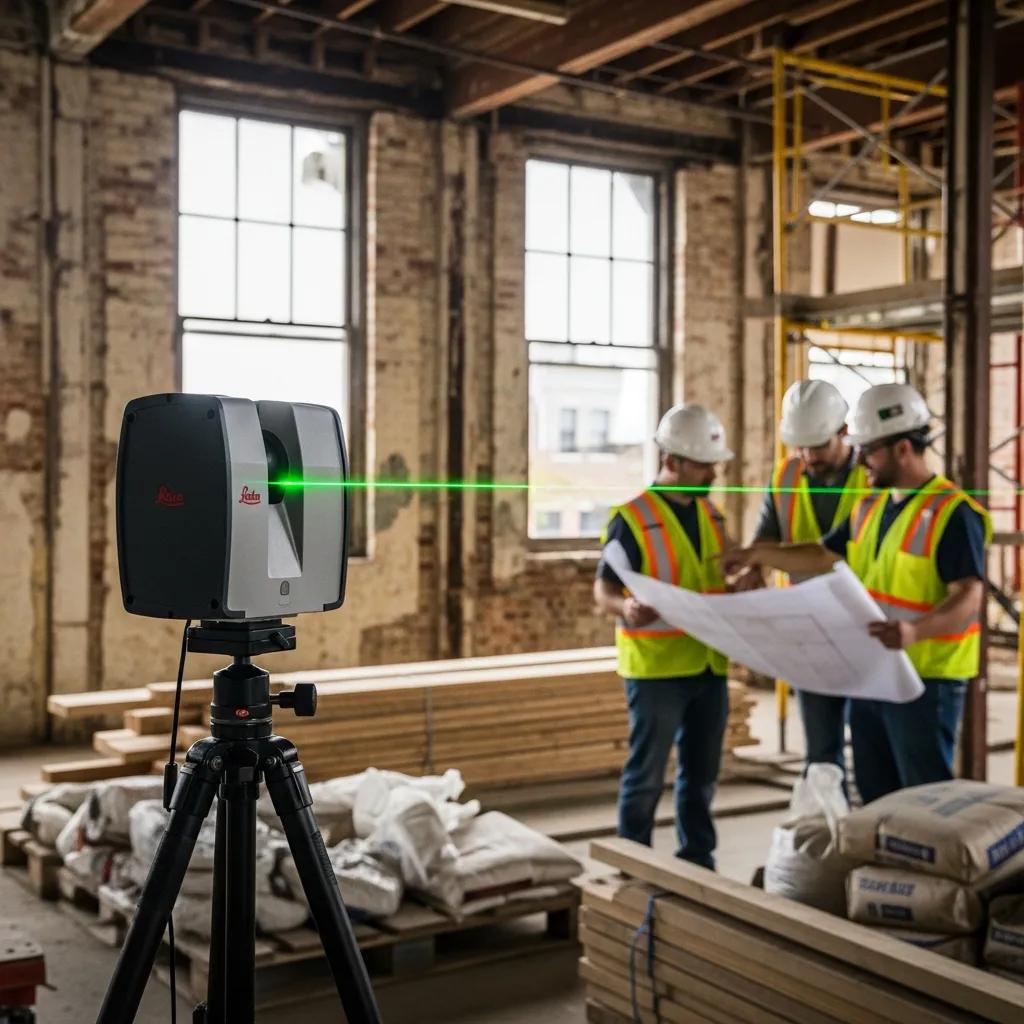
Precision 3D Laser Scanning for Renovation Projects in Jacksonville, FL: Enhancing Accuracy and Efficiency 3D laser scanning captures highly detailed spatial data to document existing building conditions and directly solves the core renovation problem: inaccurate as‑built information that causes delays and costly rework. By producing millimeter‑level point clouds and scan‑derived deliverables, reality capture gives designers and contractors the verified measurements they need to make faster, evidence‑based decisions that reduce uncertainty and keep schedules on track. This piece explains why 3D laser scanning matters for Jacksonville renovations, how reality capture improves outcomes, which specialized applications deliver the most value locally, and a practical, step‑by‑step workflow from site assessment through BIM deliverables. You’ll see how LiDAR scanning, Trimble Robotic Total Station checks, and scan‑to‑BIM modeling support MEP coordination, historic preservation, prefabrication, and digital‑twin creation — all framed around actionable choices and predictable results when you work with a regional provider that links scanning to BIM and VDC processes. Why Is 3D Laser Scanning Essential for Renovation Projects in Jacksonville? 3D laser scanning is essential because it creates a verifiable, high‑resolution record of existing conditions that replaces unreliable or outdated drawings — a single source of truth teams can trust. The method is simple and proven: terrestrial LiDAR and targeted photogrammetry capture millions of measurement points to form a point cloud designers and trades use for planning and verification. That verified dataset reduces change orders, improves prefabrication accuracy, and shortens approval cycles for permitting and contractor buy‑in. In Jacksonville — where older buildings, coastal exposures, and complex MEP systems are common — accurate as‑built documentation prevents surprises during demolition and retrofit work, lowering both schedule and cost risk for local projects. Here are three primary advantages that make scanning indispensable for renovation work in the region: Accuracy: Millimeter‑accurate point clouds remove dimensional uncertainty for design and fabrication, so teams build to the right dimensions the first time. Reduced Rework: Reliable data cuts RFI volume and costly field corrections, saving time and budget on active job sites. Faster Timelines: Rapid capture and streamlined scan‑to‑BIM workflows accelerate design and prefabrication, helping projects meet tighter schedules. Those benefits translate into measurable improvements on real projects, and they set the stage for how scanning prevents errors and speeds delivery in practice. How Does 3D Scanning Eliminate Costly Errors and Rework? Accurate 3D scans eliminate errors by creating an objective measurement baseline that designers and contractors reference throughout a renovation, cutting ambiguity and misinterpretation. Point cloud data enables clash detection and precise prefabrication dimensions, which minimizes in‑field adjustments and change orders during installation. For example, using scan‑derived models to pre‑validate MEP routing or structural penetrations reduces guesswork and prevents expensive on‑site modifications. The point cloud also serves as an auditable record teams can use to resolve disputes or verify scope during progress reviews. This single‑source approach closes gaps between survey, design, and construction teams, improving coordination and reducing rework‑related delays on the job. Lasting reductions in errors and claims require integrating scan data into BIM and coordination platforms — a topic we cover next as it relates directly to schedule acceleration. In What Ways Does 3D Scanning Accelerate Renovation Timelines? 3D scanning shortens timelines by compressing site measurement into hours rather than days and enabling parallel workflows where design and procurement proceed while site work continues. Fast capture reduces repeat site visits and speeds decisions because stakeholders review the same verified point cloud remotely. Prefabrication benefits immediately: shop drawings and modular components can be manufactured to exact scan‑derived dimensions, cutting installation time and limiting plant or facility downtime. Early clash detection in Revit or Navisworks prevents late‑stage design stalls and supports more reliable scheduling. Together, these time savings shorten procurement cycles and let contractors sequence work with greater confidence. Those faster timelines depend on consistent QA of scan data and smooth handoffs into modeling tools, which brings us to the broader set of benefits reality capture services provide. What Are the Key Benefits of Reality Capture Services for Jacksonville Renovations? Reality capture services deliver practical benefits that improve cost certainty, safety, coordination, and regulatory compliance for renovation projects in Jacksonville. Core deliverables — raw point clouds, 2D CAD extractions, modeled BIM files, and digital‑twin packages — serve different stakeholders (surveyors, designers, fabricators, facility managers), so choosing the right output is critical to success. These services also reduce time spent in hazardous areas and give accurate spatial references for temporary works and demolition, improving site safety. In procurement and bidding, reliable quantities and dimensions from scans produce more accurate estimates and fewer surprises during execution — a distinct advantage for local owners and contractors. The table below compares common deliverables to help teams select the right product for their objectives: Purpose Characteristic Typical Delivery Time Point Cloud (raw) High‑resolution measurement points in E57/PTS format for survey verification and downstream modeling 1–5 days after capture 2D CAD Drawings Extracted plan, elevation, and section lines for permitting and retrofit documentation 3–7 days after processing 3D BIM Model LOD‑based Revit model from point cloud for coordination and fabrication workflows 1–4 weeks depending on LOD Digital Twin Package Integrated BIM + metadata + 360 imagery for operations and asset management 2–4 weeks with asset tagging This comparison clarifies trade‑offs between turnaround, fidelity, and intended use. Choose the deliverable that matches whether your priority is quick verification, coordination‑ready models for clash detection, or long‑term facility data for operations. How Does Accurate As-Built Documentation Improve Project Outcomes? Accurate as‑built documentation improves project outcomes by enabling precise quantity takeoffs, reliable budgets, and fewer scope changes during construction. When contractors and estimators use scan‑derived drawings, bids reflect actual conditions instead of assumptions, which reduces contingency buffers and surprises. During construction, verified dimensions lower RFIs and change orders because designers and field teams work from the same dimensional dataset. For owners, comprehensive documentation supports lifecycle planning and simplifies future renovations or maintenance. These benefits compound into lower total project cost and better schedule adherence across renovation phases. Accurate deliverables also promote collaborative coordination processes — where scan‑to‑BIM
Point Cloud to BIM Conversion Services in Tampa, FL
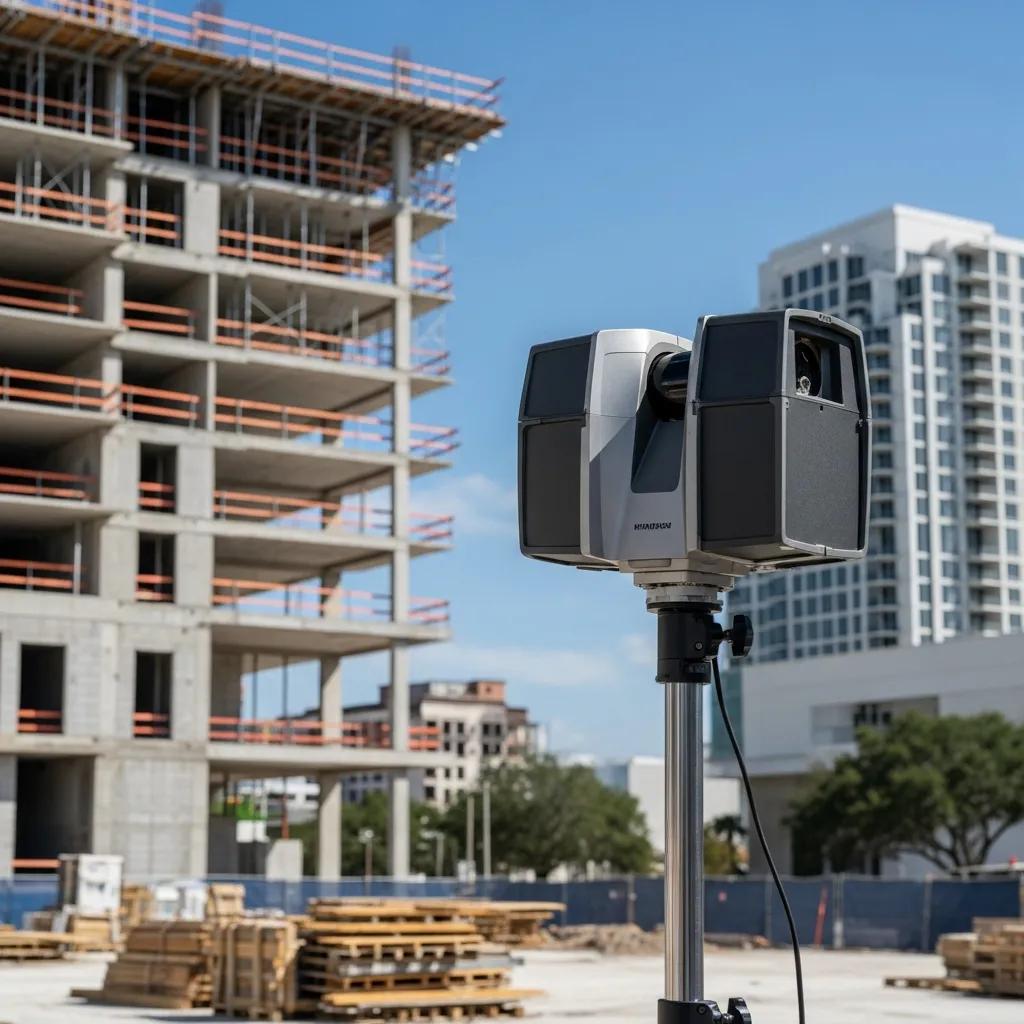
Point Cloud to BIM Conversion Services — Tampa, FL: Precise 3D Scan to Revit Modeling for Reliable Construction Outcomes We turn high-density 3D laser scan data into intelligent, parametric BIM models that help design teams, contractors, and owners make confident decisions on Tampa projects. Below we explain how field reality capture becomes coordinated Revit models, why that matters for commercial, industrial, and healthcare facilities in the region, and how these digital deliverables reduce rework and speed schedules. You’ll find a clear end-to-end workflow from capture to handover, discipline-specific expectations for architectural, structural, and MEP modeling, plus common file formats and LOD conventions for integration. We also outline local services a Tampa provider can deliver, the precision tools and software we use, and measurable benefits for facility management and historic preservation. Finally, we offer practical next steps so Tampa teams know how to request a consultation and what outcomes to expect from a point-cloud-to-Revit conversion. What is Point Cloud to BIM and Why is it Essential for Tampa Construction Projects? Point cloud to BIM is the process of converting registered 3D laser scan data into structured, parametric BIM models that teams use to coordinate design, verify existing conditions, and produce accurate as‑built documentation. The work extracts geometric features from millions of points, classifies them into building elements, then reconstructs those elements as semantic Revit families or parametric objects at LOD 300–400. The conversion delivers precise geometry, embedded metadata, and file interoperability for coordination platforms — all of which reduce field rework and improve sequencing across Tampa’s diverse building stock. Projects that begin with reality capture typically experience fewer RFI-driven delays and lower risk during phased renovations or complex MEP retrofits. Locally, point cloud to BIM delivers practical benefits: better constructability reviews, faster clash-detection cycles, and dependable as‑built baselines for facility teams. Those outcomes matter in Tampa where retrofit work and MEP complexity often compress schedules and increase coordination demands. How Does Point Cloud to BIM Transform 3D Laser Scanning Data into Intelligent BIM Models? The process begins by registering multiple scan positions into a single, georeferenced dataset, then cleaning and classifying point clusters that represent walls, slabs, ductwork, and structural members. Automated feature extraction and AI-assisted segmentation speed up objectization, while experienced modelers perform manual modeling and quality checks so parametric elements meet design intent and LOD requirements. The outcome is a semantic Revit model where relationships and attributes are explicit (for example, wall → contains → opening), enabling downstream workflows like clash detection and digital-twin creation. Our pipeline balances automation with expert verification to deliver both accurate geometry and useful metadata for construction coordination and facility management. That transformation readies the project for trade-specific modeling strategies that prioritize MEP routing accuracy and structural tolerances during coordination. What Are the Key Benefits of Point Cloud to BIM for Tampa’s Commercial and Industrial Sectors? Point cloud to BIM produces verified as‑built models that reduce surprises and rework on site by supplying accurate spatial data for coordination and procurement. This accuracy accelerates clash detection, provides clearer fabrication guidance for MEP contractors, and shortens downtime for industrial facilities during shutdowns. Owners and facility managers gain lifecycle value through digital twins that embed asset metadata and support preventive maintenance. For Tampa’s commercial and industrial sectors, those advantages mean lower costs, tighter schedules, and improved safety during renovations and expansions. These sector-specific gains naturally lead into the practical workflow teams follow to capture, process, and model point clouds for use in Revit and coordination platforms. What is the Step-by-Step Workflow for Point Cloud to BIM Conversion in Tampa? A disciplined workflow turns point-cloud capture into an actionable BIM asset: mobilize for capture, register and clean the data, extract features, model to the agreed LOD, validate with QA and clash detection, and deliver interoperable files. Each phase uses specific tools and produces defined outputs so stakeholders can track accuracy and scope. Field control and survey ties establish coordinate systems so models align with site layout and future work; modeling conventions translate point clusters into parametric elements for LOD 300–400. Following these steps reduces ambiguity downstream and smooths integration with VDC processes used by Tampa design and construction teams. Quick reference: the table below compares core workflow steps, the tools we commonly use, and typical deliverables so project managers know what to expect at each phase. Introductory EAV table: workflow step compared to tools and output. Phase Tools / Software Output / Deliverable Field Capture 3D laser scanners, Trimble Robotic Total Station, LiDAR drones Registered point cloud (E57, LAS) with control Point Cloud Processing Autodesk ReCap, cloud processing tools Cleaned, classified point cloud (noise removed) BIM Modeling Autodesk Revit, Navisworks Discipline BIM (RVT, IFC), LOD 300–400 QA & Coordination Navisworks, clash detection tools Clash reports, model QA sign-off This side‑by‑side view clarifies the role of equipment and software in delivering construction-ready BIM models and leads into discipline-specific modeling and coordination tasks. How is 3D Laser Scanning and Point Cloud Data Captured and Processed? Capture begins with site reconnaissance and setting control using survey instruments like total stations and reference targets to ensure geospatial accuracy between scan positions. Static terrestrial scanners and, when appropriate, LiDAR drones collect dense point clouds that are registered, filtered, and colorized in processing software to create a single, consistent dataset. Processing steps include noise removal, point classification (structural, architectural, MEP), and generation of orthophotos or sections to guide modeling. Precise capture and rigorous processing reduce ambiguity and directly improve the fidelity of the resulting Revit model. Those processing outputs feed discipline-specific modeling where classified points are translated into parametric elements for architectural, structural, and MEP use. How are Architectural, Structural, and MEP BIM Models Created from Point Clouds? Each discipline applies different modeling heuristics: architectural teams model walls, openings, and finishes; structural teams focus on beams, columns, and foundations; MEP teams extract conduits, ducts, and equipment with routing logic. Modelers use the processed point cloud as a tracing and verification layer, creating families and parametric objects that match geometry and attached metadata to
Automated Construction Layout Services in Atlanta, GA
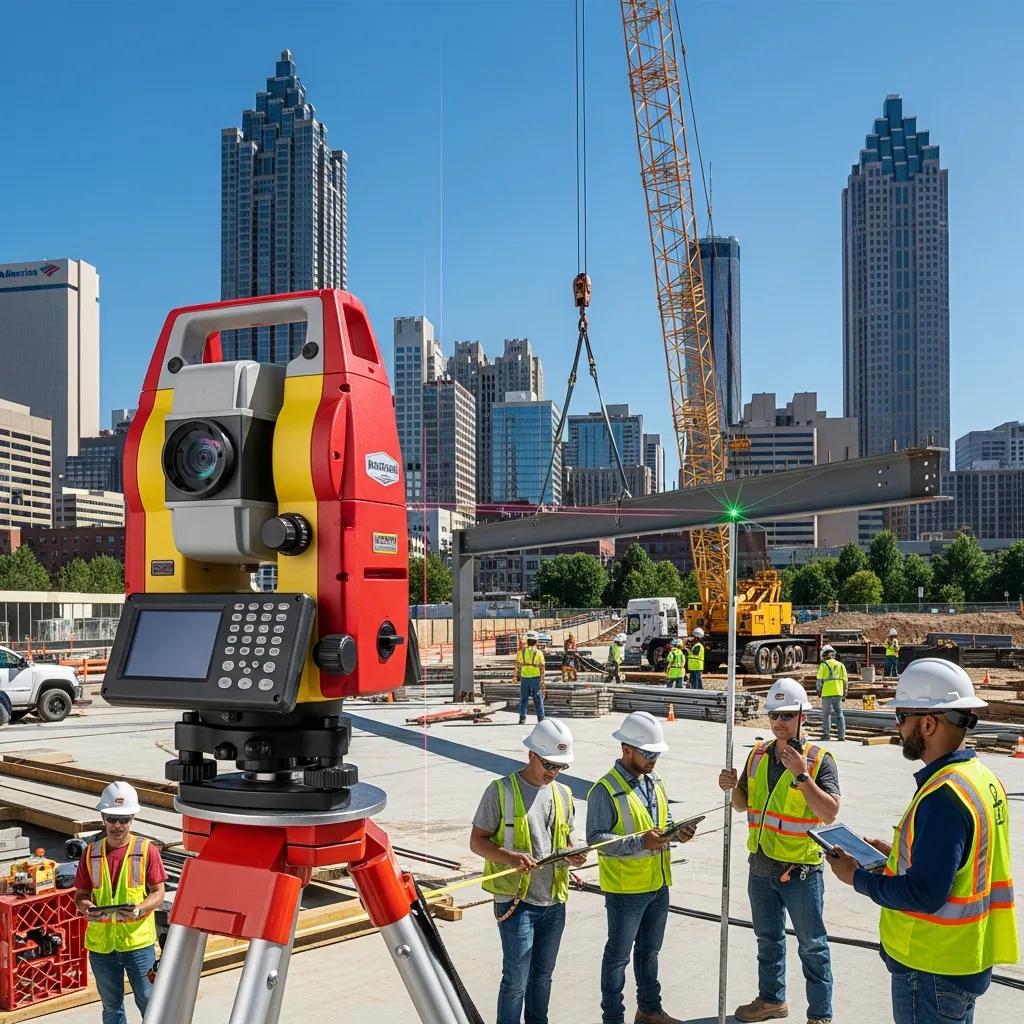
Automated Construction Layout Services in Atlanta, GA: Precision Solutions with Robotic Technology Automated construction layout uses robotic positioning systems, model-driven coordinates, and reality-capture workflows to place building elements with millimeter-level precision—anchored by Robotic Total Station technology. This guide shows how automated layout cuts rework, tightens trade coordination, and keeps schedules on track for Atlanta projects by linking BIM, VDC, and 3D scanning to field execution. You’ll get a clear picture of what automated layout looks like in practice, how Trimble Robotic Total Station workflows improve accuracy, which core services drive measurable results, and how point-cloud integration prevents common coordination issues. We also call out regional considerations for Atlanta teams and explain how an experienced provider blends technology and process to deliver reliable field outcomes. By the end, you’ll understand trade-specific uses, expected tolerances, efficiency gains, and how to engage a precision layout partner for complex MEP, structural, or renovation work in the Atlanta market. What Are Automated Construction Layout Services and Their Benefits in Atlanta? Automated construction layout ties digital models to survey-grade hardware and coordinated field workflows so model coordinates are placed directly on-site as control points. In practice, BIM coordinates are imported into a Robotic Total Station or similar robotic platform, which then marks points on slabs, walls, or overhead systems with repeatable accuracy and far fewer manual transcription errors. For Atlanta projects—where sites are tight and MEP scopes are dense—the main advantages are greater precision, faster field work, less rework, and more predictable schedules. Understanding these benefits helps project teams evaluate automated layout as a practical risk-reduction and productivity tool across design-bid-build, design-build, and renovation deliveries. Automated layout delivers four principal benefits for regional projects: Precision Placement: Millimeter-level layout reduces tolerance failures and fit-up problems during assembly. Reduced Rework: Fewer positional errors on the first pass cut labor and material waste. Faster Field Execution: Remote control and direct coordinate import shorten layout cycles. Improved Coordination: Model-driven points streamline trade sequencing and prefabrication readiness. Those advantages translate into measurable project improvements. Next we explain how Robotic Total Station hardware delivers that accuracy in the field. Introductory comparison of core automated layout technologies and their primary benefits. Technology Key Attribute Primary Benefit Robotic Total Station Remote-target positioning and model import Millimeter-level layout accuracy BIM Coordination Federated model and clash detection Reduced field clashes and RFIs VDC Consulting Workflow sequencing and model validation Improved constructability and scheduling 3D Laser Scanning Point-cloud capture of existing conditions Accurate as-built baselines for renovation work How Does Robotic Total Station Technology Enhance Construction Accuracy? A Robotic Total Station combines automated target tracking, high-resolution angular measurement, and direct BIM coordinate import to perform repeatable, documented layout. The instrument locks onto prisms or reflective targets and follows them while an operator—or a remote system—places model coordinates as points, lines, or datums on the structure. Because coordinates flow directly from the model to the device, manual transfer errors that cause misalignment are largely eliminated. In real-world conditions, structural and MEP layout tolerances typically fall within a few millimeters to low centimeters depending on site constraints—enough to significantly reduce fit-up issues and on-site rework. Knowing how the instrument operates clarifies where time and quality improvements come from on active schedules. What Efficiency Gains Do Automated Layout Services Provide to Atlanta Projects? Automated layout shortens staking, hanger placement, and anchor verification by removing repetitive manual measures and enabling remote operation—clear wins for schedule performance. Teams using automated workflows report faster layout cycles and lower rework rates because model points convert directly to field marks, eliminating repeated re-checks and improvisation that stall progress. That reliability speeds trade coordination: prefabrication and sequencing depend on stable control points, allowing off-site fabrication with greater confidence and fewer change orders. On compressed schedules—multi-story core builds or rapid renovations—those time savings translate to cost avoidance and improved float management. The next section shows how experienced providers roll these technologies into Atlanta workflows. How Does Conway Coordination and Layout Services Lead in Atlanta’s Automated Layout Market? Conway Coordination and Layout Services (CCLS) focuses on bringing Robotic Total Station workflows together with VDC, BIM coordination, and 3D scanning to deliver precise layout across the Southeast, with deep service coverage in Atlanta. Our capabilities include Trimble Robotic Total Station deployments, model-driven layout processes, and reality-capture verification—a technology stack built to support accurate field execution and clean digital handoffs. We emphasize reliability, practical technology use, and a proven regional track record—qualities that help general contractors and trade partners reduce layout risk and move installations more smoothly. For teams evaluating providers, CCLS offers consultation-led engagements that align layout deliverables with coordination schedules and prefabrication milestones to maximize constructability. Conway’s approach pairs field-proven robotic hardware with disciplined BIM and VDC practices so layout deliverables are both accurate and actionable. That integration reduces RFIs and on-site delays because model points, clash reports, and control checks are validated before crews mobilize. The following sections explain how our institutional experience and Trimble-specific methods apply to Atlanta projects that require precision and timely delivery. What Unique Advantages Does CCLS Offer with Over 20 Years of Expertise? With two decades of regional experience, CCLS anticipates constructability challenges, tightens trade sequencing, and enforces quality controls often missed during early coordination. That institutional knowledge shows up as focused pre-layout audits, practical sequencing recommendations for MEP and structural teams, and hands-on problem solving that keeps work moving. Our familiarity with Southeastern project constraints—tight urban sites, phased renovations, and dense MEP networks—lets us adapt workflows to minimize schedule disruption. The result is fewer surprises during installation and a smoother move from design models to field layout, improving predictability for contractors and owners alike. How Does CCLS Integrate Trimble Technology for Precision Layout? We use Trimble Robotic Total Station features—remote control, automated targeting, and data import/export—to sync model coordinates with field execution through repeatable, documented workflows. Our typical sequence includes a model audit, coordinate export to the instrument, staged layout passes for control and punch-walk verification, and post-layout scanning or verification to confirm installed positions. Data exchanges between Trimble systems
Precise MEP BIM Modeling for Integrated Systems
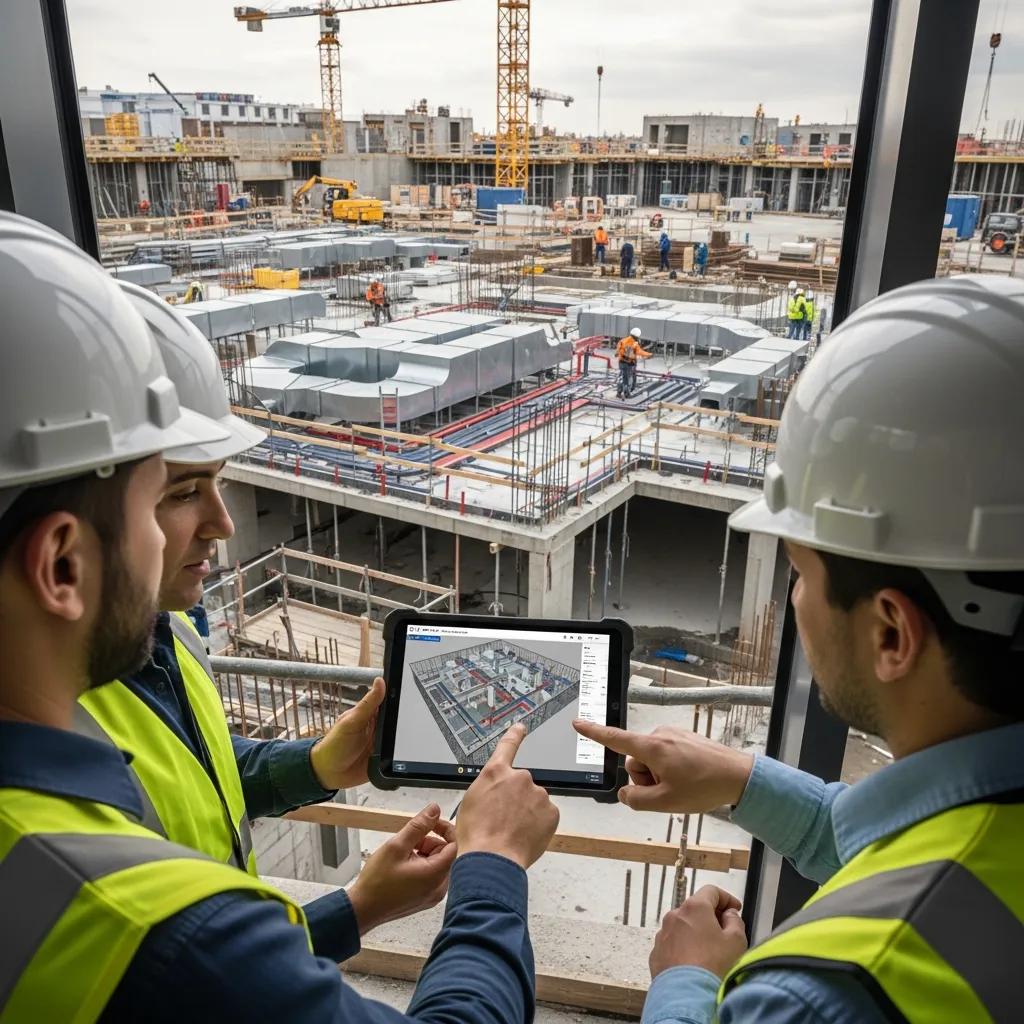
Precise MEP BIM Modeling for Integrated Systems: Comprehensive Services and Benefits Precise MEP BIM modeling creates detailed mechanical, electrical, and plumbing models that reflect design intent, installation tolerances, and fabrication requirements for integrated building systems. This guide shows how accuracy in MEP BIM reduces clashes, produces fabrication-ready outputs, and supports downstream workflows like robotic total station layout and scan-to-BIM verification. You’ll find the core deliverables—federated models, clash reports, and LOD-specific shop models—and practical benefits of early coordination, from fewer RFIs to dependable installation sequencing. The guide follows the lifecycle from HVAC and plumbing modeling techniques through multi-trade clash detection and prefabrication support, and it closes with how to request a consultation with a specialist. Key terms such as MEP BIM coordination, HVAC BIM, plumbing BIM, fabrication-ready BIM, 3D scanning, and Trimble Robotic Total Station are used to align technical detail with actionable workflows. What is Precise MEP BIM Modeling and Why is it Essential for Integrated Systems? Precise MEP BIM modeling defines systems at the level of detail and tolerance needed to coordinate trades, support prefabrication, and enable accurate field layout. It translates design geometry into federated models that drive clash detection and fabrication outputs. The method is simple in concept: accurate component families, defined clearances, and LOD-aligned geometry allow automated clash runs and create fabrication-ready exports that reduce on-site rework. Primary benefits include earlier detection of spatial conflicts, better procurement accuracy, and faster field installation because the model reflects real installation constraints. Typical deliverables are coordinated Revit models, federated Navisworks checks, clash detection reports, and shop-model exports prepared for fabrication. Recognizing these deliverables clarifies why integrated systems modeling improves predictability and constructability and how MEP BIM strengthens coordination across trades. The next subsection explains how federated models and workflows directly improve mechanical, electrical, and plumbing coordination. How Does MEP BIM Modeling Enhance Mechanical, Electrical, and Plumbing Coordination? MEP BIM modeling improves coordination by creating a single federated model where mechanical, electrical, and plumbing systems are reviewed together to find and resolve spatial conflicts before construction. Federation enables centralized clash detection, assigns responsibility to specific trades, and tracks resolution with documented changes—reducing ambiguity. For example, a duct reroute found in coordination can be resolved in the model and exported to shop drawings, avoiding costly field changes during installation. This process strengthens communication through annotated clash reports and meeting minutes, results in fewer RFIs, and supports more predictable schedules. Version control and clear documentation ensure clashes stay closed and verified before fabrication or layout begins. What Technologies Ensure Precision in MEP BIM Modeling? Achieving precision in MEP BIM depends on a coordinated set of field-capture, modeling, and coordination tools—each producing verifiable geometry and layout instructions. 3D scanning captures point clouds that serve as the as-built reference for scan-to-BIM conversion and preserve real-world tolerances. Revit is used to author LOD 300/350/400 components while Navisworks or similar tools federate models and run clash detection. On-site layout hardware like Trimble Robotic Total Stations converts model coordinates into precise field pick points so anchors and hangers match installed conditions. QA/QC validates model-to-field tolerances and ties elements to fabrication metadata, producing fabrication-ready shop models and reliable layout deliverables. In practice, point-cloud verification informs model updates and layout hardware executes placement with millimeter-level control. How Does HVAC BIM Modeling Optimize Building Performance and Energy Efficiency? HVAC BIM modeling improves building performance by enabling accurate system sizing, duct routing, and equipment placement that together enhance airflow and reduce energy loss. The core approach is simulation-informed modeling: engineers use BIM geometry to analyze airflow, pressure loss, and equipment interactions, iterating geometry and components until performance targets are met. Deliverables such as coordinated duct layouts, equipment families, and performance-linked schedules let designers and commissioning agents verify system behavior before installation, cutting redesigns and boosting operational efficiency. Below we compare common HVAC BIM components and show how component-level modeling supports measurable efficiency gains. Below is a focused comparison of common HVAC BIM components and their modeled outcomes. Component Modeling Attribute Energy / Airflow Outcome Ductwork modeling LOD 300–350 routing with diameter and insulation Lower pressure loss and more balanced airflow via optimized routing AHU & equipment families Performance curves and clearance envelopes Accurate load matching and easier maintenance access Diffusers & grilles Placement with throw patterns and CFM assignment Better occupant comfort and fewer rebalancing cycles This comparison shows how component-level modeling links directly to measurable performance improvements and informs commissioning decisions. When you specify HVAC BIM deliverables, include precise schedules, isometrics, and fabrication-ready exports to bridge design and construction. What Are the Key Components of HVAC BIM Modeling Services? Key HVAC BIM deliverables include duct routing with LOD definitions, equipment families for AHUs and pumps, system schedules, and fabrication-ready isometrics. These outputs specify geometry, performance data, and installation clearances so mechanical contractors can prefabricate sections and plan reliable installation sequencing. LOD expectations (for example, LOD 300 for coordination and LOD 350–400 for fabrication) define detail level and metadata, enabling shop drawing exports and CNC-ready outputs. Properly authored families include performance curves and access-space metadata to support commissioning and facility operations. Clear documentation reduces on-site surprises and helps ensure installed systems meet design performance. Below is a short business-focused callout describing HVAC BIM capabilities from a specialized provider. Conway Coordination and Layout Services (CCLS) supports HVAC BIM with scan-to-BIM conversion, detailed ductwork coordination, and coordination-ready AHU modeling. Our workflows combine 3D scanning and robotic layout tools to validate clearances and ensure modeled AHUs, VAVs, and duct systems match field conditions and fabrication tolerances. With deliverables defined, the next subsection explains how HVAC BIM drives airflow improvements and tighter system integration on complex projects. How Does HVAC BIM Improve Airflow and System Integration? HVAC BIM improves airflow by enabling simulation-informed routing and clearance checks that reduce turbulence and pressure loss across duct networks. Typical strategies include placing diffusers and balancing devices early in the model, running targeted CFD or airflow checks when needed, and iterating duct sizes and transitions to meet CFM and static pressure goals. Integration checks with structural and